

Disability Sign World (DSW) is a non-profit Organization Working with Persons With Disabilities (PWDs) alongside Vulnerable and Street Children in Uganda
Kabale Uganda
Joined January 2020
- Tweets965
- Following160
- Followers922
- Likes3.1K


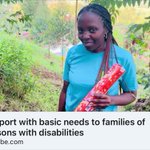

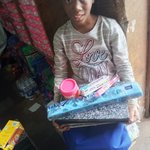


Seeing the children’s excitement when you visit their homes & take time to engage them in conversation is truly heartwarming. These simple acts of kindness help children with disabilities feel loved, valued, and included.@BugembeNelson @UNADeaf @bobnkwangu @LftWUG @Olivenamutebi


Through our routine visits, we stay connected with the individuals and families we serve, provide ongoing support, and strengthen relationships while promoting inclusion, dignity, and well-being. @Mglsd_UG @SNUPA6 @bobnkwangu @UNADeaf @Olivenamutebi @CommunitiesOrg @UNADeaf


Disability Sign World empowers family members of PWDs to achieve financial support, independence, and social recognition. @EduPlastics1 @emmyarineitwe @USEmbassyUganda @ByomireGorretti @rlceastafrica @reachahand @EpilepsyFdn


It’s about the moments we create, the stories we share & the positive impact we make in the lives of children with disabilities.
@BugembeNelson @BugembeNelson @SNUPA6 @IdiwaNgo @UADeaf @cehurduganda @nuwodu @WorldVisionUg @EstherKyozira @reachahand @LeonardCheshire @Olivenamutebi


Subscribe to our YouTube for more of our work. @SNUPA6 @SBagalaliwo @emmyarineitwe @JOYFORCHILDREN @TwezuuleF @HumNabimanya @LftWUG @STFUganda @EstherKyozira @WashFellowship @CultonScovia @MPWDAdisability @UNADeaf @USEmbassyUganda @Mglsd_UG @OgikPeter
youtu.be/z02oU96wbjI?si=-PYt…

Like and subscribe to our YouTube channel for more of our activities
youtu.be/vY1PyUhly1k?si=EmpP…
As back-to-school continues for our special children,
Dear parents and caregivers, please support them in acquiring an education equal to that of any other child. @giz_uganda @cbmWorldwide @CommunitiesOrg @LftWUG @OgikPeter


Check out Disability Sign World's video! #TikTok vt.tiktok.com/ZSq7SWGmf/
Again this December for Persons with Disabilities. @NaffeTusobola @BugembeNelson @MPWDAdisability @DisabRightsFund @BugweriDLG @ByomireGorretti @SNUPA6 @Mglsd_UG @SBagalaliwo @cheshire_ug @albinismumbrell
Being Deaf does not mean your opportunities in life are over.
Deaf people have the same chances and potential as anyone else.
This week, we celebrate that truth and encourage you to aim higher. @UNADeaf @BIDOADEAF @WFDeaf_org


Everything has its own first time.. we start small and we shall get there @TwezuuleF @NUDIPU @nuwodu @HumNabimanya @SNUPA6 @NaffeTusobola


It’s back to school as usual at DSW! We’re committed to ensuring children with disabilities, have the essentials and support needed to access quality education.
Inclusion matters. Every child deserves the opportunity to learn and thrive.
@BugembeNelson @nuwodu @CommunitiesOrg


It’s always exciting moments to share with families of PWDs.. bringing joy and happiness to them. @emmyarineitwe @BgembeNelson @IdiwaNgo @Olivenamutebi @musiisimen48068 @SarahTBlakie @HumNabimanya @JOYFORCHILDREN @viva_plan @cbmWorldwide @cehurduganda @BirungiFound @NUDIPU


We can never stop sharing knowledge with parents of children with disabilities, because learning never ends. It’s always a pleasure to share, learn, and support one another toward better well-being.@TwezuuleF @Mglsd_UG @emmyarineitwe @FlepUganda @EduPlastics1 @reachahand @SNUPA6


Disability Sign World retweeted

JustIn @CommunitiesOrg represented by ED @ConsultAlbert attending the #4thEdition Joint Review Mission, 2026 for Kigezi Sub Region,
Theme: the role of Governance, leadership, and partnership in strengthening client centred health services and the mission has brought together Key Health Stakeholders including Min of Health @CHRISBARYOMUNS1 the GOH, District Health Officers, health facility in-charges, Health Unit Management Committee (HUMC) chairpersons, political and technical leaders, development partners, CSOs, religious and cultural leaders, health workers and other key stakeholders from Kigezi Sub Region.
Reliable Health facilities are client centred, functional, consistent and well staffed @GAMateeka DHO Chair and DHO Kabale.
The Kigezi Sub-region - Kabale, Rubanda, Rukiga, Kisoro, Kanungu, Rukungiri has made notable progress in expanding access to primary healthcare over the past decade. However, compared to national aspirations and better-performing regions, the sub-region continues to face persistent challenges in equitable access, quality of care, health workforce distribution, and Sexual and Reproductive Health and Rights (SRHR) service delivery, particularly in remote and mountainous communities.
Nationally, Uganda has approximately 8,600 functional health facilities, with about 74% of approved health worker positions filled, reflecting gradual improvements in health system capacity.
However, rural regions such as Kigezi continue to experience shortages of doctors, midwives, specialist personnel, medicines, and diagnostic equipment, with lower-level health facilities bearing the greatest burden.
Uganda's public expenditure on health remains at approximately 6–7% of the national budget, well below the Abuja Declaration target of 15%, limiting investments in health infrastructure, workforce expansion, and service quality.
Maternal and reproductive health indicators illustrate both progress and remaining gaps. Uganda's maternal mortality ratio has declined significantly over the past two decades—from over 500 deaths per 100,000 live births in the 1990s to an estimated 189–284 deaths per 100,000 live births depending on the reporting methodology—but remains well above the Sustainable Development Goal target of fewer than 70 deaths per 100,000 live births. Skilled birth attendance has increased nationally to approximately 74%, and almost all pregnant women receive at least one antenatal care (ANC) visit. Within Kigezi, health-facility performance on institutional maternal mortality has continued to improve and remains comparatively strong relative to several other sub-regions of Uganda. According to the Ministry of Health Annual Health Sub-Programme Performance Report FY2024/25, Kigezi's Institutional Maternal Mortality Ratio (IMMR) declined from 71 maternal deaths per 100,000 health-facility deliveries in FY2022/23, to 63.4 in FY2023/24, and further to 46.9 in FY2024/25. During FY2024/25, the sub-region recorded 57,573 health-facility deliveries and 27 maternal deaths, compared with 55,178 deliveries and 35 maternal deaths in FY2023/24.
This performance places Kigezi well below the national institutional maternal mortality ratio of 69.1 per 100,000 deliveries in FY2024/25, indicating meaningful progress in facility-based maternal health outcomes.
Kobugabe Joanita – Communication Officer, Rubanda DLG
District Health Officers (DHOs) in the Kigezi sub-region have appealed to Government for increased support in providing adequate ICT equipment, connectivity and digital infrastructure to health facilities to facilitate the effective transition to electronic health information systems.
The call was made during the 4th Kigezi Regional Joint Review Mission (JRM) 2026, being held from 1st to 2nd September 2026 at Volcano Hotel, Rubanda District. The mission brings together key stakeholders in the health sector to review achievements, identify persistent challenges and develop strategies for improving healthcare service delivery across the Kigezi sub-region.
The review is providing an opportunity for stakeholders to assess progress in areas including immunisation, maternal and child health, HIV services, tuberculosis control, disease surveillance and other health programmes, while examining gaps that continue to affect the quality and accessibility of healthcare services.
The Chairperson of the Kigezi Regional DHOs Forum and Kabale District Health Officer, @GilbertMateeka, called upon stakeholders to strengthen leadership, accountability and client-centred care at health facilities emphasising the critical role of health facility in-charges and HUMC chairpersons in ensuring that resources invested in health facilities translate into improved health outcomes for communities.
He urged health facility leaders to ensure that facilities remain clean, functional, accountable, responsive and welcoming to clients, while supporting health workers to effectively perform their duties.
Also highlighted are the persistent health challenges affecting the region, including preventable maternal and neonatal deaths, adolescent health challenges, malnutrition, communicable diseases, and gaps in access to and quality of healthcare services.
The #stakeholders also called for stronger partnerships among political leaders, technical teams, religious and cultural leaders, development partners and communities, noting that improving health outcomes requires collective responsibility.
On the fight against corruption, the DHOs expressed support for Government's anti-corruption efforts while appealing for allegations to be properly investigated before action is taken, in order to protect innocent health workers from being unfairly implicated.
They urged health workers to uphold the highest standards of professionalism, integrity and ethical conduct in the execution of their duties.
The DHOs further emphasised that client-centred care should involve respect, dignity, confidentiality, safety, compassion and timely attention to patients.
Health workers were encouraged to avoid unnecessary delays, absenteeism, lateness and neglect of duty, which can undermine public confidence in the health system.


The smiles and happiness we want to create around children and families of Persons with disabilities 😀🥰@CommunitiesOrg @incpart @SBagalaliwo @reachahand @USEmbassyUganda @EstherKyozira @emmyarineitwe @TwezuuleF @Olivenamutebi @albinismumbrell @EduPlastics1 @UNAPD @SNUPA6


Together we transform lives of Persons with Disabilities. One family at a time💪🏾👌 @BugembeNelson @ByomireGorretti @USEmbassyUganda @Mglsd_UG @incpart @LftWUG @MPWDAdisability @bobnkwangu @SNUPA6 @Olivenamutebi @UNADeaf @emmyarineitwe @SBagalaliwo @cehurduganda @doris_keisha
We are committed to delivering compassionate, high-quality services to families of persons with disabilities, with the goal of creating positive and lasting change in their lives. One family at a time. @Oyoodenis5 @NUDIPU @emmyarineitwe @CommunitiesOrg @SBagalaliwo @IdiwaNgo


Disability Sign World brings services directly to homes of persons with disabilities, overcoming mobility challenges & Kabale District’s hilly terrain. We don’t wait for people to come to us we go to them. That is our uniqueness. @Oyoodenis5 @TwezuuleF @albinismumbrell @incpart


