

Systematic investor/trader, Kevin C Maki, PhD QV/MT investing = quality, value/momentum, trend Research scientist/educator, long-time investor/trader
SW Florida
Joined July 2023
- Tweets8.1K
- Following5.3K
- Followers3.5K
- Likes8.6K


This is fascinating. I knew Warren and Charlie designed compensation systems to align interests, but did not know the specifics.

on incentive comp
BUFFETT: But [Ted and Todd] are perfect, and we pay them each a salary of a million dollars a year, and we give them 10 percent of the amount by which their portfolios beat the S&P. So that if they beat the S&P by 10 points, they get one point, for example, and we get nine points. But we do it on a three-year rolling basis so you don’t get the seesaw effect. And each one gets paid 80 percent based on their own efforts and 20 percent based on the other person’s, so that they have every incentive to operate in a collaborative way rather than sit there jealously guarding their own ideas and hoping the other guy doesn’t do very well.
--
WARREN BUFFETT: Well, we’ve always been more concerned about how our record is achieved than the precise record itself. And with both Todd and Ted, Charlie and I were struck by, not only a good record, but intellectual integrity and qualities of character, a real commitment to Berkshire, a lifelong-type commitment. And we’ve seen hundreds and hundreds of good records in our lifetimes; we haven’t seen very many people we want to have join Berkshire.
But these two are perfect, and we pay them each a salary of a million dollars a year, and we give them 10 percent of the amount by which their portfolios beat the S&P. So that if they beat the S&P by 10 points, they get one point, for example, and we get nine points. But we do it on a three-year rolling basis so you don’t get the seesaw effect. And each one gets paid 80 percent based on their own efforts and 20 percent based on the other person’s, so that they have every incentive to operate in a collaborative way rather than sit there jealously guarding their own ideas and hoping the other guy doesn’t do very well.
So it’s a — I don’t think we could have a better — it’s the same structure on pay, basically, that we had with Lou Simpson for 20-some years, except he did not have a partner. To the extent that they employ people underneath them, that comes out of their performance record, and it’s worked far better than either Charlie and I had hoped, and we had pretty high hopes. We had 1 3/4 billion with each of them at year end, but we’ve added another billion each on March 31, so they’re running 2 3/4 billion apiece.

Systematic Investment Research & Education retweeted

The biggest winners doesn't reveal themselves on day one..
My weekend study is complete.
I wanted to know how quickly we could identify the biggest winners..
He's said it on stream: "some of the best setups go right away.. but sometimes they don't."
Turns out most don't.
Measured by R, the top 10% of Qullamaggies trades it looks like this:
Day 1: 5/83 in the top 10%
Day 3: 26/83 in the top 10%
Day 5: 50/83 in the top 10%
Day 10: 77/83 in the top 10%
Last one needed 15 days..

‼️WEEKEND STUDY SESSION: how many days until we know we have a winner?
WHY
"Some of the best setups either go right away, they go straight up.. but sometimes they don't. Sometimes they come down and are very close to stop you out. And sometimes they stop you out and then go."
299 of his 828 breakout entries hit the stop on entry day. 440 on the second day.
The 245 that were still open after day 5 add up to +1,555R on the 10-day exit. Everything that closed before adds up to -562R.
So the losers are cut fast, and the profits are in the rest.
What we don't have is the win-rate post ante, day by day. I know our overall winrate, but I've never checked the winrate on day 2, 3, 4 or 5.
THE WORK (2 to 3 hours)
1. Open 30 breakout entries in date order.
2. On each chart, look at the entry candle only. Write down two things: did his stop hold through the day, and where it closed against his entry, in R
3. Move to the close of day 3. Same two things. Then day 5.
4. Then find the exit.
5. Count. Of the trades still open after day 1, how many ended green? Same for day 3 and day 5. Then the second count: on day 1, could the ones that ended big be told from the rest by where they closed?
WHAT I'M AFTER
Four win rates: one at the buy, after day 1, after day 3, after day 5. I have the first one. If the other three move the way I think they do, it changes how I sit through day 2.
I have borrowed stil concept from someone who trades intraday with great success, who doubled his avg. gain in a setup because he cut his losers faster.
Systematic Investment Research & Education retweeted

Updated year to date returns across major markets.

Systematic Investment Research & Education retweeted

Good morning, market participants 🤑
The homie Benjamin Franklin once said, "An investment in knowledge pays the best interest." What are you learning today?
Systematic Investment Research & Education retweeted

I'm thrilled to share the latest episode of the #RicherWiserHappier podcast: my conversation with Matt Ludmer, founder & CEO of Aligned Wealth Management & author of a new book, "The Right Mountain: Practical Wisdom for Achieving True Wealth."
Listen: tinyurl.com/yz6zzv93
Watch: youtu.be/1cjGwxNEvFo

Systematic Investment Research & Education retweeted

From the Trend Following replicator:
"Whoever coined the term trend following honestly owes a huge apology to everybody in this business." [laughter] @andrewdbeer1
Trend following is one of the most accurate descriptions of an investment strategy ever coined.
youtu.be/-IvPOjyFFBk?si=bmO6…

Systematic Investment Research & Education retweeted

Chasing Skew in Trend Following
We analyzed more than 1,500 trades from a futures trend program to dig into one of the most praised characteristics of CTA funds… positive skew.
Our findings suggest that the positive asymmetry often credited to trend following isn’t quite what investors actually experience day in, day out…
Interestingly, our results are in line with what Robert Carver @investingidiocy (former Portfolio Manager at Man AHL) and Eric Crittenden (Founder and CIO of Standpoint) have pointed out.
The full article, including the program’s trading rules, is available at the link in the first comment. 👇

Systematic Investment Research & Education retweeted

This is not the type of sector rotation you tend to see in healthy market environments.


Systematic Investment Research & Education retweeted

THIS WEEK IN TREND | 9 OCTOBER 2026
More Markets Rose. Fewer Trends Persisted.
Twenty-eight of 49 futures markets finished higher, twice the previous weeks number. Yet the TTU Trend Barometer slipped to 50%, while the SG Trend Index climbed to +16.14% year to date.
A reminder that rising prices and persistent trends are not necessarily the same thing.
For trend followers, the opportunity lies in persistence, not predicting direction.
Read the full report: atstradingsolutions.com/this…
#TrendFollowing #SystematicTrading #GlobalMacro #OutlierHunting

Systematic Investment Research & Education retweeted
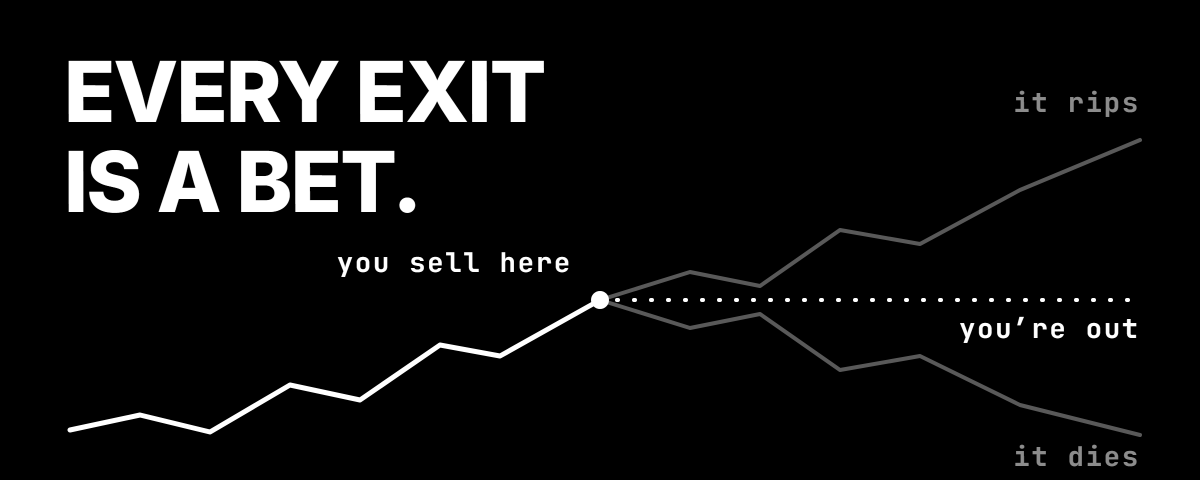
Selling everything at the close of day 5 to day 8 kept 85% to 95% of what the 10-day trail made.
Working on a new article which I think will make most swing traders rethink their sell rules 🧙♂️
Systematic Investment Research & Education retweeted

“...protect yourself by selling your stock before the loss assumes larger proportions.” - Jesse Livermore amazon.com/dp/B0H11KHVN4


Systematic Investment Research & Education retweeted

Avoid the trap of taking suboptimal trades because trades that meet your entry conditions are not materializing. - Jack Schwager @jackschwager 130/n lnk.to/marketwizardsnextgene…

Systematic Investment Research & Education retweeted

Learn from your mistakes, but don't dwell on them; focus on improving your future trades
- Linda Bradford Raschke

ALT Trading Quote - Linda Bradford Raschke
Systematic Investment Research & Education retweeted
The exhaustive study of charts has been the pathway to success for many successful traders. - George Coyle @gfc4 129/n lnk.to/marketwizardsnextgene…
Systematic Investment Research & Education retweeted

Quote for the Day: “Face reality as it is, not as it was or as you wish it to be.” -Jack Welch
#KFQuoteForTheDay

Systematic Investment Research & Education retweeted
Successful trading is about capital preservation first, and capital appreciation second
- Alexander Elder

ALT Trading Quote - Alexander Elder
Spot on.

Lately, I'm thinking a lot about AI, the market, and trading edges.
What will probably happen?
My base scenario:
What we can see with AI in general is that things are changing quickly. We also know that edges do appear and disappear.
Of course, it depends on whether they are beta-driven or alpha-driven.
Beta-driven edges tend to stay longer, maybe the factor is getting weaker over the long term.
Alpha-driven edges are more the competition game and they are getting arbed away with the growing competition.
I believe that in the age of AI edges will disappear much faster, especially simple alpha-driven ones. They'll be exploited quicker to their liquidity limits.
And trading broad portfolios while working on new edges in a semi-automated way is the only way to survive going forward.
The market is already pretty competitive, and it will be more competitive than ever.
Who won't use AI heavily will have hard times.
Systematic Investment Research & Education retweeted

AQR: When inflation news dominates growth, bonds fail to diversify equities.
Instead, commodities step up.. offering true diversification against both stocks and bonds. 📉📊 @soberlook thedailyshot.com/subscribe/
