

Applying the science to the individual l Sports Science & High Performance Coaching I PhD
Austria
Joined April 2016
- Tweets7.6K
- Following1.2K
- Followers3.8K
- Likes11.4K





Pinned Tweet
Really happy to see our latest work published in @MSSEonline
Myself, @peter__leo and @JeroenSwart look at the relationship between physiological characteristics and durability in male professional cyclists
journals.lww.com/acsm-msse/A…


Spragg Performance retweeted

FPCA paper finally out: journals.humankinetics.com/v…
Spragg Performance retweeted

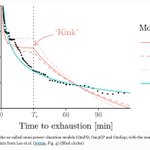
A small thread on the data we presented at the cycling science conference ‘The Effect of Rate of W′ Utilisation and Acute Fatigue on W′ Reconstitution’ happy to share the presentation if anyone wants a copy as well, the abstract paper will be out later and the full paper too.
Amazing the sentence ‘excessive-volume low-intensity training’ got through review! It certainly shouldn’t have in this abstract


Spragg Performance retweeted

Come and join us at @TudorProCycling
3 great opportunities here…
#sportsdirector
#performanceanalyst
#datascientist
linkedin.com/posts/tudor-pro…
Spragg Performance retweeted

Former pro cyclo-cross racer Corey Coogan Cisek assesses the problem of relative energy deficit in sport – REDs – drawing on her own battle with the condition cyclingweekly.com/fitness/re…

Spragg Performance retweeted

with @dr_o_girard, our last commentary : The Benefits of Research-Embedded Training Camps in Sport Sciences
doi.org/10.1123/ijspp.2024-0…

Spragg Performance retweeted

Vigh-Larsen et al. reveal that fatiguing high-intensity intermittent exercise significantly decreases maximal Na+-K+-ATPase activity in human skeletal muscle. This was assessed using a novel NADH-coupled assay. A crucial insight into muscle fatigue!
link.springer.com/article/10…

Nice study (and thread)! TLDR - individualised training prescription
This quoted post is unavailable.
This is wild (in academic terms!)

Who reviewed this paper?
A few days ago @gcabanac tweeted about a paper that had published a remark that it had been forced to cite irrelevant papers. You can see the tweet here: buff.ly/3UMIguf. We remarked that if it was not so serious, it would be funny.
Since reading that tweet, we have not been able to get it out of our head, so we thught that we would document it in a little more detail. We are doing this for three reasons.
1️⃣ In our view, it descerves more detail to be made available.
2️⃣ We'd like these details to be be kept as a matter of public record, so we are posting similar posts on our X account and our LinkedIn account.
3️⃣ It should be of interest to this community, so we hope that this raises even further the ethical issues around this topic.
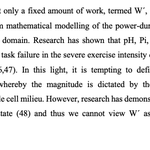
The first image shows the paper that we are looking at. What is interesting is the text that appears on at the end of the introduction (highlighted in red). This appears to show that the reviewer insisted that a set of 13 papers be cited, else they would not accept the paper. It would be interesting to see the review repport, so that we could be certain what had been said. If you want to see the paper, it is available here: buff.ly/4fndXm0
In the rest of this 🧵, we show the papers that have been asked to be cited (i.e. [35]-[47]). These have been taken from the paper mentioned above. You'll notice (as we have highlighted it) that every paper is "et al." meaning, of course, that there are quite a few authors on each paper.
Gicven that we cannot see all the authors, the other images on this 🧵 shows the full set of authors on each of these 13 papers.
We leave it an an exercise for the reader to hazard a guess as to the reviewr is?

Spragg Performance retweeted
Now recruiting for my last PhD project. You’ll get some great insights into your physiology and cycling performance. Please RT and Share. 📧 [email protected]

Spragg Performance retweeted

Happy to share our new pre-print on the effect of low glycogen availability on cell signalling and metabolite levels in human single fibers. @SebastianEdman @MobergPhD @ruaslab
biorxiv.org/content/10.1101/…


Spragg Performance retweeted
A study reveals that the distance between the endoplasmic reticulum and mitochondria is crucial for optimal mitochondrial Ca2+ uptake and oxidative metabolism. This is an important finding in terms of muscular energy efficiency.🔬
nature.com/articles/s42003-0…

Spragg Performance retweeted

The problem with well-known science and fitness influencers is that they're so concerned with gaining followers and notoriety that they prioritize sharing content over validating its accuracy. The result is widespread misinformation.
As one would expect but nice to see it confirmed! CP is all about getting O2 to the muscle and then using it!
Interesting that some measures of mito activity correlate with W' - showing again it's not just an 'anaerobic capacity'

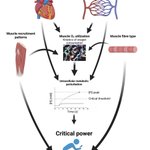
New research highlights the link between skeletal muscle mitochondria and critical power in active individuals! The study found key mitochondrial correlates that enhance performance. Understanding these mechanisms could improve training strategies! 🚴♂️🦠 physoc.onlinelibrary.wiley.c…

Spragg Performance retweeted

Carbon Monoxide Rebreathing as a Doping Method—A Toxic Debate -
Our letter is out! PM for more details if needed
analyticalsciencejournals.on…

Spragg Performance retweeted

(1/6) This study onlinelibrary.wiley.com/doi/… published in 2024 by @Spragg_Perform @peter__leo @JeroenSwart @andreagiorgi @borjamartinezg for me (Gabriele) is one of the most interesting durability's papers applied on cycling performance. (Infographic posted below in the profile).

Spragg Performance retweeted

Really neat study collects massive training/recovery data, then uses machine learning to determine which factors best predict next-day recovery.
The key point: the most important variables *on average* are not the best variables *for each individual*.
outsideonline.com/health/tra…

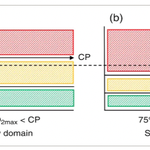
Exercise intensity domains describe qualitatively the response to continuous exercise at a given intensity - it’s really not that hard to understand