
Researcher @IGBMC interested in chromatin and cell fate decisions | Former postdoc in Adrian Bird's lab (University of Edinburgh)
Strasbourg, France
Joined December 2019
- Tweets33
- Following438
- Followers212
- Likes110


Pinned Tweet
Our study on MeCP2 & heterochromatin is finally published @NatureComms. Great collaboration with researchers @WTcell @roslininstitute @mpi_ie and @VIBLifeSciences.
nature.com/articles/s41467-0…
Raphaël Pantier retweeted

Genetic gatekeepers of gametogenesis? TET proteins jointly jam germline specification, synergistically steering cells towards somatic fates.
Justin Gutkowski's new #preLight talks about the work of @R_Pantier and the team. Have a look!
prelights.biologists.com/hig…
Raphaël Pantier retweeted

Just a few days left to apply! Join the RNA Dynamics in Cancer group @CRUK_MI as a Postdoc!

📢 Join the RNA Dynamics in Cancer group at CRUK Manchester as a Postdoctoral Researcher! Dive into impactful work on diet, RNA modification, and cancer progression.
Learn more and apply here: cruk.manchester.ac.uk/recrui… (MI/24/58)
#CancerResearch #RNA #PostdocOpportunity @CR_UK

Raphaël Pantier retweeted

Pleasure to continue our collaboration with @mdrwilson and group and play a small part in this study which is now out in the paper version. Read on to learn more about DNMT3A's interaction with H3K36me2 and H2AK119Ub modified nucleosomes:
embopress.org/doi/full/10.10…
#epigenetics
Raphaël Pantier retweeted

Analyzing whole genome DNA methylation data? Our new method MethyLasso is out in NAR! It can help you identify regions with low or partial methylation (LMR, UMR, DMV, PMD, PMD) or differentially methylated regions (DMR) and was benchmarked against others
doi.org/10.1093/nar/gkae880

Raphaël Pantier retweeted

Happy to share two post-doc papers co-authored with the amazing @AnaMonteagudo4 and @teresa_urli. We had amazing collaborators for both projects, even our supervisor @maxvcg joined in on the experimenting!
1: pubmed.ncbi.nlm.nih.gov/3918…
2: rdcu.be/dXXqh
Raphaël Pantier retweeted

“cBAF generates subnucleosomes that expand OCT4 binding and function beyond DNA motifs at enhancers.” Amazing story by @matthieu_gerard @Marina_Nocente. Congrats to all the authors.
nature.com/articles/s41594-0…

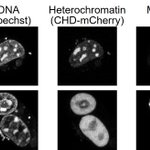
In short, we show that MeCP2 localisation is independent of heterochromatin, and that heterochromatic “condensates” (also known as chromocenters) are not conserved across mammals. For more information, please see our paper, as well as this thread:
xitter.cf/R_Pantier/status/16581…

Here is our latest work in which we explored the relationship between MeCP2, heterochromatin and DNA methylation using live-cell imaging.
This is a collaboration with Tom Burdon @roslininstitute, Thomas Jenuwein @mpi_ie and Claude Libert @VIBLifeSciences.
biorxiv.org/content/10.1101/…

Raphaël Pantier retweeted

Research assistant/lab manager position open in Adrian Bird’s lab. Come and join us!
elxw.fa.em3.oraclecloud.com/…
Raphaël Pantier retweeted

Want to visualise ALL AlphaMissense predictions?
huggingface.co/spaces/kashya…


AlphaMissense, a tool by DeepMind, can help researchers learn more about the effects that missense mutations have on disease, and could help identify previously unknown disease-causing genes, according to a new Science study.
Learn more: scim.ag/49l

Here is our latest work in which we explored the relationship between MeCP2, heterochromatin and DNA methylation using live-cell imaging.
This is a collaboration with Tom Burdon @roslininstitute, Thomas Jenuwein @mpi_ie and Claude Libert @VIBLifeSciences.
biorxiv.org/content/10.1101/…
MeCP2 localisation to foci in mouse cells depends on the Methyl-CpG-binding domain (MBD) with no features of phase separation (dispensability of IDRs, no concentration buffering). Strikingly, MeCP2 distribution is diffuse in most mammals (14/16 tested species), including human.


Raphaël Pantier retweeted

See new structural analysis by Watson et al. of SALL4, important for ESC maintenance. They show its interactions with AT-rich DNA and how previously uncharacterised Okihiro patient mutations affect DNA binding. @WTcell @kashyapchhatbar
life-science-alliance.org/co…
Glad to see our latest study @LSAjournal in collaboration with Atlanta Cook (@WTcell). We describe the structure of SALL4 zinc-fingers (ZFC4) with AT-rich DNA and demonstrate that disease-causing mutations disrupt DNA binding.
@kashyapchhatbar @bea_kez
life-science-alliance.org/co…

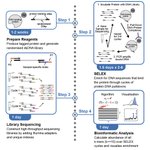
1/3 We are glad to share our detailed HT-SELEX @STARProtocols paper: star-protocols.cell.com/prot….
We hope this will facilitate the use of this powerful technique to study DNA binding specificity in vitro.
@kashyapchhatbar @_grace_alston @WTcell

2/3 @kashyapchhatbar developed a python package allowing the quantification of all possible k-mers from HT-SELEX data (github.com/kashyapchhatbar/e…). Our bioinformatic workflow allows unbiased characterisation of promiscuous DNA binding (broad specificity): eme-selex.readthedocs.io/en/….
3/3 Using HT-SELEX, we characterised promiscuous binding of SALL4 zinc-finger 4 (ZFC4) to AT-rich DNA @MolecularCell (doi.org/10.1016/j.molcel.202…). Recently, we characterised the DNA binding potential of Okihiro syndrome causing missense mutations in ZFC4: doi.org/10.1101/2022.06.14.4…