
University of Florida, College of Medicine, Associate Professor Neurology, PSP/Atypical Parkinson’s, HD, Fixel Institute for Neurological Diseases & CTRND
Gainesville, FL
Joined June 2009
- Tweets67
- Following76
- Followers55
- Likes124




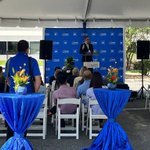
Join the @UFHealth @FixelInstitute team at Depot Park this Saturday for the @HDSA Team Hope walk in @Gainesville to support patients and families with Huntington Disease.

35
Please join us for our annual @UF @HDSA Center of Excellence HD Patient-Caregiver Education Day, presented online via Zoom, on Saturday, Nov 2nd at 10AM! @UFHealth @FixelInstitute


Nick McFarland retweeted

A giant of movement disorder medicine, Dr. Mahlon DeLong, died at the age of 86 years on May 17, 2024, of complications related to heart failure. DeLong combined neurological expertise with neuroscientific insight and made many high-impact scientific discoveries over the course of his long career. In his initial work, he completed groundbreaking studies at NIH and Johns Hopkins University, including the first in vivo electrophysiologic recordings from the basal ganglia of non-human primates, as well as studies in which he and his colleagues Peter Strick and Gary Alexander described the presence of functionally segregated pathways that involve the basal ganglia, thalamus, and cerebral cortex . Moreover, the concept and description of the “direct” and “indirect” striato-pallidal projections and their role in the pathophysiology of parkinsonism and dyskinesia was greatly elaborated and disseminated by DeLong's classic article in Trends in Neuroscience 1990. The insight that the representations of crucial domains of behavior occupy separate territories in the basal ganglia provided clear rationale for the renewed use of neurosurgical approaches to the treatment of movement disorders such as Parkinson's disease and dystonia, now specifically targeting the newly defined “motor” territories of the basal ganglia. A key study in this regard was the demonstration of the antiparkinsonian effects of lesioning of the primate subthalamic nucleus. Other studies, with colleagues Don Price, Joe Coyle and Peter Whitehouse from this time laid the groundwork for the use of acetylcholinesterase inhibitors in Alzheimer's disease patients and are widely cited as well.For the second half of his career, Dr. DeLong moved to Emory University, including a spectacularly successful period as Chairman of Neurology (1990–2003), with a more than 5-fold expansion of the faculty, significantly increased grant funding and a substantial expansion of his department's clinical operations. Guided by the insights gained from his previous animal studies, he continued to explore the use of functional neurosurgery for movement disorders (together with neurosurgeon Roy Bakay), by conducting precisely targeted pallidotomy procedures and, later, some of the first deep brain stimulation implantations in the US. During those years, he expanded, collaborated, and became engaged in numerous international activities, influencing and fostering several studies on the basal ganglia and movement disorders. A noticeable example was his commitment with the PD-subthalamotomy program in CIREN, La Habana (Cuba) that one of us (JO) led along with a highly motivated group of local colleagues. DeLong facilitated detailed neuroimaging studies at Emory of the initially treated Cuban patients with radiofrequency lesions. Subsequently, a joint team of Emory-Pamplona and Havana colleagues met in Havana on several occasions, despite the fact that visits in Cuba by US citizens required special permissions and intense paperwork. In addition to his work with Parkinson's disease, Dr. DeLong also championed dystonia research, serving as the Medical Director of the Dystonia Research Foundation for decades.Dr. DeLong received numerous awards for his contributions, including the Breakthrough Prize in Neuroscience (2014), the Lasker-DeBakey Clinical Medical Research Award (2014, shared with Alim Benabid) and the Taubman Prize for Excellence in Translational Medical Science (2015).Mahlon was a trusted and inspiring mentor and friend to his colleagues at Emory and beyond, and his warm and friendly manner, combined with obvious expertise, made him a revered face among patients and scientists. He was simply “there” for those who needed him. We, as well as many other pupils and collaborators, enjoyed his warm charisma and singular capacity to stimulate in-depth thinking, without needing to be the center of attention. A few brief anecdotes may illustrate this. Thus, at Johns Hopkins one of us (TW, with Hagai Bergmann, both postdoctoral fellows at the time) carried out experiments in MPTP-treated monkeys to test whether blocking the subthalamic nucleus could improve parkinsonism, as predicted by the model that Mahlon had worked on for years. When the results of this crucial experiment were finally in, his two postdoctoral fellows were simply relieved that the long preparation for the experiment had actually paid off, while Mahlon was obviously overjoyed by the result, realizing the larger implication of the discovery. In later years, Mahlon loved to be the electrophysiologist on duty in the operating room. He had usually well-founded thoughts concerning the best course of action in surgical cases, but, characteristically, could also be easily convinced to change his opinion, if confronted with evidence to the contrary. When recording neuronal activity to define the globus pallidus pars interna before performing pallidotomy, he could (very occasionally) mis-identify a unit, and when someone in the team would correct the error, Mahlon would simply exhibit a calm smile to say: “Only double-checking you are alert, guys” and carried on normally. He also loved Spanish guitar and flamenco. He played it in his youth and toured southern Spain with this primary purpose. Part of Mahlon's magic was that his interests were (and remained) broad, and that he was ready to accept new ideas and experiences—ranging from his never-ending love of exotic wrinkles of science, to the love of travel and the whole-hearted embrace of technical inventions such as the latest smartphone technology. His unique intellect and personality made him as well-rounded in daily interactions with friends and family as he was on the larger stage of international science Dr. DeLong's scientific insight, gentle guidance, and unwavering optimism will be sorely missed, and he will always be remembered as a true maestro. He is survived by his wife Mary, and many children and grandchildren.
movementdisorders.onlinelibr… #parkinson #dystonia @dmrf @APDAParkinsons @ParkinsonDotOrg @MichaelJFoxOrg

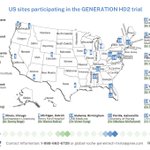
Interested in the Generation HD2 trial (@genentech) for Huntington disease? See information and sites enrolling. @FixelInstitute @UFHealth

Nick McFarland retweeted
Have you met the newly minted full professor Dr. Melissa Armstrong and Associate Professor Christopher Hess. These two stars impact so many lives. Congrats @UFNeuroRes @FixelInstitute @UFMDFellowship

Nick McFarland retweeted

It's World Parkinson's Day 🌎!
Someone new is diagnosed with Parkinson's disease in the U.S. 🇺🇸 every 6 minutes 🕗.
Visit Parkinson.org/Awareness to learn more about this complex disease.
#PDAwareness #ParkinsonsFoundation #UFHealth #FixelInstitute #BrainHealth

Nick McFarland retweeted

Today is #WorldParkinsonsDay.
Help raise awareness about the fastest-growing neurological disease by sharing and using the hashtag.

Nick McFarland retweeted

Therapy for Atypical Parkinsonisms (PT, OT, Speech) - Symposium 2018 (MSA, PSP, CBD, DLB)
youtube.com/watch?v=gBTZy1t0…

Nick McFarland retweeted
Why is Dementia with Lewy bodies (DLB) under-diagnosed in Black adults in the USA? Armstrong and Barnes take on this critical topic in a new review in the @journal_ad. What should be our agenda?
Key points:
- DLB is common and under-diagnosed across populations.
- The authors asked why are we miss this diagnosis so frequently in older Black adults?
- Could high rates of co-pathology like stroke in older Black adults 'obscure the clinical picture.'
- Could we be diagnosing AD instead of DLB?
- Are we missing the significance of hallucinations?
- Could REM sleep behavior disorder be under-diagnosed?
- What about 'clinician biases, cultural effects on self-report, and differences in the frequency of parkinsonism' as leading to missing the 'PD-like features?'
- The authors also point to socioeconomic status, education, structural racism and individual-level social exposures.
My take: Why do I love this article? It is because the authors 'put themselves out there,' and challenge us to think about the 'why.' DLB is underdiagnosed in this population. Why? The word 'agenda' in Latin means – things to be done or accomplished. Armstrong and Barnes have established 'marching orders' for the first few steps of the journey we will need to embark on in order to unlock the mystery. There is much to be done. content.iospress.com/article… @lewybodyny @LewyBody @ParkinsonDotOrg @FixelInstitute @LBDAssoc #Parkinsons #Alzheimer

Nick McFarland retweeted

Using MRI, Evangelisti et al. report that participants with early #Huntington’s and #Parkinson’s disease show opposite resting-state functional connectivity patterns in the subthalamic nucleus and sensorimotor cortex. shorturl.at/invKW

Nick McFarland retweeted
Do you know the 7 new 'best practices' for relaying a diagnosis of dementia? Did you know previous standards did not take input from the person with disease or from the caregiver/care-partner? This is a super important issue and Melissa Armstrong @FixelInstitute and colleagues performed an important 'freshly' published study.
Key points:
- It is common for folks to report not receiving a dementia diagnosis.
- There are standards and as the authors point out they are more than 10 years old.
- Guess what, the standards were developed without asking the person with disease or caregiver/care-partner.
- The authors used a multi-stakeholder working group: a person w/ disease, caregivers, Alzheimer's Association staff and clinicians from diverse backgrounds.
- Employed American Academy of Neurology process for recommendation development w/Delphi voting for consensus.
- 7 best practice statements achieved consensus.
- 1 Clinicians must show compassion and empathy when delivering a diagnosis of dementia (level A). - During dementia diagnosis disclosure, clinicians should - 2 ask regarding diagnosis preferences.
- 3 instill realistic hope.
- 4 provide practical strategies.
- 5 provide education and connections to high-quality resources.
- 6 connect caregivers to support resources.
- 7 provide written summaries of the diagnoses, plan, and relevant resources (each level B).
My take: It is about time someone addressed this topic and included both persons with disease and relevant stakeholders. The 7 best practices are simple and practical. In my experience many clinicians avoid this discussion rather than 'leaning into it.' If clinicians are concerned that cognition is slipping, measuring function over time and employing the use of neuropsychology can be very helpful. These discussions are as important to caregivers and care-partners as they are to family members. I love the author's suggestion that 'health system changes (e.g., for sufficient time), improved access to specialty dementia care, and clinician training for delivering difficult diagnoses' are all needed.
neurology.org/doi/10.1212/CP…

Nick McFarland retweeted

Ruth shares her story and why the PSPA Bauble Appeal is now an important tradition for her family. Read more here & support the Bauble Appeal: pspassociation.org.uk/christ…
#PSPASupport #BaubleAppeal #CharityChristmas ##PSPA #ChristmasAppeal #RememberingGraham

UF former fellows @UFMDFellowship, now next neurology leaders at the #PSG @ParkinsonDotOrg Future of Parkinson’s disease Conference. So proud!

Nick McFarland retweeted
Like 60% of our survey respondees, @RepWexton was initially misdiagnosed before receiving her PSP diagnosis.
The congresswoman is now aiming to raise awareness of the condition #PSPAware
theguardian.com/us-news/2023…

Nick McFarland retweeted
Movement disorders are neurologic conditions that can be especially difficult to diagnose, treat, and understand. Help spread awareness by sharing key facts. #movedisorder movedisorder.org/

Nick McFarland retweeted

Spent a great weekend in Phoenix at the 8th MDS PAS Resident school supported by @MichaelJFoxOrg @movedisorder Such a great experience to return as junior faculty after attending myself during residency. Great attendance and interest in joining a Movement fellowship.

Nick McFarland retweeted

Spreading the good word on What people living with #parkinsons want- #patientvoice #loneliness #qualityoflife #culturalcompetence @SoaniaMathur thank you for your voice - @movedisorder @MichaelJFoxOrg


Nick McFarland retweeted

🎷🎶 A serendipitous moment at the #PITTSBURGHJAZZFEST! Executive Director, @KristopheDiaz, connected with a community member proudly wearing our #CurePSP merch. These spontaneous moments remind us of the unity in our mission!
#BecauseHopeMatters
