

PI - Neuropsychiatric Genomics Laboratory @ IMH; Deputy Scientific Director PRECISE-SG100K National Precision Medicine Initiative
Singapore
Joined November 2016
- Tweets52
- Following510
- Followers229
- Likes72


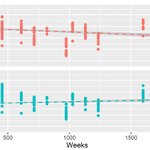
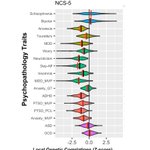
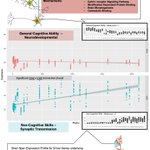
🧬 New preprint alert! Our latest manuscript on MedRxiv investigates the complex pleiotropic genetic landscape of schizophrenia, cognitive function and educational attainment uncovering 768 significant loci – 159 of which are novel. medrxiv.org/content/10.1101/… @ToddLencz

🔬 Our new results dissociate forebrain and hindbrain neurodevelopmental processes, and implicate translation initiation factors in schizophrenia pathophysiology for the first time.
📚 Our findings contribute to a deeper understanding of schizophrenia biology and pave the way for more targeted therapies and interventions. Stay tuned for updates on our cognitive genomics research! #Schizophrenia #Pleiotropy #MedRxiv #NIMH
Max Lam retweeted

We are looking forward to 2024 WCPG in Singapore (15th-19th Oct). In the words of our 2024 Program Chairs, "These are exciting times in psychiatric genetics."
Want to learn more? Check out the 2024 invitation to attend: ispg.net/wcpg-2024-invitatio…
#psychiatry #genetics

Max Lam retweeted

Deconstructing the genetic architecture of treatment-resistant schizop... sciencedirect.com/science/ar…
@maxzylam @KeaneLim

Max Lam retweeted

🤩 OUT TODAY @NatureGenet
📰 The Singapore National Precision Medicine Strategy
👩🏾🤝👨🏽 John C. Chambers, E. Shyong Tai, Patrick Tan and team
👇🏿🇸🇬🧬👇🏿
go.nature.com/3ZZb186
Max Lam retweeted

Pleased to announce the launch of:
polygenicembryo.org
The website of the Polygenic Embryo ELSI Research (PEER) Group
(1/5)
Max Lam retweeted

Our latest preprint: a novel cross-ancestry fine-mapping method with much improved power and calibration. A collaboration with @kaiyuan1990 @RyanLongchamps @AFPopgen @getian107 @ChiayenChen @YenFengLin @bmneale @dalygene @PGCgenetics among others! medrxiv.org/content/10.1101/…


Max Lam retweeted

Glad to share this manuscript doi.org/10.1038/s41380-022-0… which is finally out in @molpsychiatry. Previous studies identified immune gene dysregulations in the brains of patients with several major brain disorders. (1/7)
New manuscript @NatureComms! We leveraged data from 19 cognitive GWAS to disentangle biological mechanisms underlying psychopathology (17 psychiatric GWAS). Some updates from the previous tweetorial! (1/8)
The results might provide insights into the potential of nootropic agents targeting specific biological mechanisms to alleviate functional disability within psychopathology. (8/8)
A big thank you and shout out to @ToddLencz @ChiayenChen @getian107 @hailianghuang for their valuable insights and help on this effort!