

Group Leader, MRC Laboratory of Molecular Biology - Views & opinions are my own. on BlueSky: TripodiLab
Cambridge
Joined October 2011
- Tweets223
- Following345
- Followers568
- Likes333



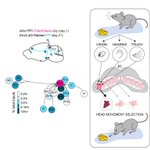


A new study from the Joesch Lab describes how the vLGN collicular circuit participates in stabilising visual information during action, with the vLGN acting as a corollary discharge hub so that images don’t blur when we move our eyes.
nature.com/articles/s41593-0…

MARBLE (MAnifold Representation Basis LEarning), a new method from the @trekkinglemon Lab to obtain interpretable and decodable latent representations from neural dynamics.
nature.com/articles/s41592-0…

Marco Tripodi retweeted

1) THE PATHS OF DEVELOPMENT ARE DIFFERENT IN THE PALLIUM OF AMNIOTES!
Mammals process sensory information in the neocortex (dorsal pallium) whereas sauropsids process it in the dorsal AND ventral parts of the pallium. These territories are different at molecular, not equivalents.

This week’s highlights in neuroscience [🧵5]
1. A tour de force from the @BaierLab to map molecular phenotypes to function in the optic tectum. Takeaway message: molecular codes matter but only when combined with developmental trajectories and topography
nature.com/articles/s41586-0…

5. @PhyloBrain on the evolutionary origin of mammalian neocortex. The neocortex is truly a mammalian invention with no clear evolutionary homologs. Higher-order integrative circuits appear to have evolved independently in different vertebrate taxa
science.org/doi/10.1126/scie…

Marco Tripodi retweeted

If you haven’t seen it yet, check out our paper on multimodal mismatch responses, which is now out in eLife. Thank you to the @eLife editorial team and reviewers for a pleasant and constructive revision process.
elifesciences.org/articles/9…

What an extraordinary achievement! Congratulations to everyone involved.

Big day for neuroscience & the end of the beginning for whole brain connectomics. Shout out to @sdorkenw and Philipp Schlegel, first authors of the connectome papers, @MurthyLab @SebastianSeung for establishing #flywire to make this possible and @dddavi for birthing this dataset.
I am delighted to see this published. Many years in the making and only possible thanks to the unwavering determination of @AGonzalezRueda. Thanks to all lab members and collaborators involved!

Our latest paper is out @Nature!!
🧵1/4
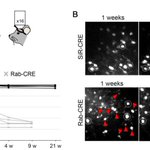
By exploiting the genetic identity of premotor neurons in the SC, Self-inactivating Rabies, in vivo ephys and computational modelling, we challenged the current view on sensorimotor alignment.
nature.com/articles/s41586-0…
@MRC_LMB @martripodi

Marco Tripodi retweeted

It has been an eventful year ... ! Excited that I joined the Faculty at @BirkbeckUoL where I look forward to establishing my own lab and continuing my work on OCD. 🧠
Check out our website vaghilab.org/ & get in touch if interested! 1/3
Two Postdoctoral opportunities in our group:
🧬 Molecular: Developing new methods to map and manipulate neural circuits. lnkd.in/e2NvABtu
🧠Neurophysiology: Investigating the relationship between motor and cognitive control. lnkd.in/eJn3_r4J
Pls RT.
Congratulations to @HassalLee and @ErnestoCiabatti for paving the way to a new field of #NetworkGenomics with their latest work on SiR2.0. A big thank you to everyone involved in supporting this journey. @MRC_LMB @ERC_Research

Linking connectomic and transcriptomic studies with novel SiR! #NetworkGenomics with @ErnestoCiabatti @martripodi @MRC_LMB & collaborators. Article @SpringerNature @Naturemethods: nature.com/articles/s41592-0…
News&views: nature.com/articles/s41592-0… @CambridgeMBPhD @LMB_PhD #neuroscience

Marco Tripodi retweeted

Do you like onion rings, doughnuts and other topological delights?
Then check out our new paper with @kao_calvin, @martripodi, and @GJEHennequin where we build Gaussian process latent variable models with non-Euclidean latent spaces!
arxiv.org/abs/2006.07429 (1/7)

Few months ago Matsuyama et al. released an early report on the issue of the genomic stability of Self Inactivating Rabies (SiR) from our Ciabatti et al 2017. This stimulated us to run new experiments to investigate the SiR stability and other points raised by Matsuyama et al.
3. When starting from non-mutated SiR, revertant mutations never emerge during the course of in vivo experiments.

For more details please see: biorxiv.org/content/10.1101/…
It has been a fruitful investigation that hopefully expanded our understanding of how these promising tools can be used by the community
