

Exploring genes, circuits, and behavior in zebrafish since 1998. Current focus on fish cognitive neuroscience and building a next-gen brain atlas.
Martinsried near Munich
Joined November 2022
- Tweets951
- Following372
- Followers558
- Likes1.7K





Baier Lab MPI for Biological Intelligence retweeted

two open faculty positions relevant to Biological Sciences at Georgia Tech, one in genomics, one in ecology:
tinyurl.com/GT-eco-coasts
tinyurl.com/GT-BioSci-Genomi…
Baier Lab MPI for Biological Intelligence retweeted

We've refreshed our website! With a bold new look, smarter search, and clearer navigation, it's now easier to find relevant grant opportunities, upcoming events, and in-depth information about our researchers.
Visit simonsfoundation.org to explore.
#science #math #funding
Baier Lab MPI for Biological Intelligence retweeted

Should you do a PhD? What would it give you? Here are some advantages to consider:
1. It’s a loophole in the universe where you’re encouraged to dedicate your time to something just because it’s interesting, even if it is totally niche and no one will ever make money out of it.
2. You’ll be surrounded by smart people.
3. It’s a gym for the brain - you’ll develop critical thinking and planning skills (extra important in the age of brain rot)
4. You might get to travel and see the world.
…
786. Some jobs require having a PhD.
Baier Lab MPI for Biological Intelligence retweeted

David Deutsch (@DavidDeutschOxf) and I discuss AGIs and subjectivity on the Joe Walker Podcast (@JosephNWalker):
David Deutsch:
I think it’s inevitable that AGIs will be capable of having internal subjectivity and qualia, because that’s all included in the letter G in the middle of the name of the technology.
Me:
Well, not necessarily, because the G could be general computational power, the ability to solve problems, and there could be no one at all who’s actually human.
David Deutsch:
But there ain’t nothing here but computation. It’s not like in Star Trek: Data lacks the emotion chip, and it has to be plugged in. But there’s nothing possibly in that chip apart from more circuitry like he’s already got.
Me:
But, of course, the episode that you’re referring to is one in which the question arose: Is it moral to reverse engineer Data by dismantling him, therefore stopping the computation? Is that disassembling a machine, or is it snuffing out a consciousness? Because there is an alternative view that subjectivity depends also on whatever biochemical substrate our particular computation runs on. And I think there’s no way of ever knowing.
David Deutsch:
I think we can answer that question before we ever do any experiments, even today, because there’s no difference in principle between a computer that runs partly by electricity and partly by chemicals and one that runs entirely on silicon chips. Because the latter can simulate the former with arbitrary accuracy.
Me:
Well, we don’t have to solve the problem this afternoon in our conversation, but, in fact, I think it is not solvable. But the simulation doesn’t necessarily mean that it has subjectivity. It could just mean it’s a simulation; that is, it’s going through all the motions. It might even do it better than we do, but, you know, there’s no one home. There’s no one actually being hurt.
David Deutsch:
Well, you can be a dualist. You can say that there is mind in addition to all the physical stuff. But if you want to be a physicalist, then there’s this thought experiment where you remove one neuron at a time and replace it with a silicon chip, and you wouldn’t notice.
Me:
Well, that’s the question. An external observer wouldn’t notice. How do we know that, from the point of view of the brain being replaced—every neuron by a chip—it’s like falling asleep? That when it’s done and every last neuron is replaced by a chip, you’re dead, subjectively, even though your body is still making noise?
David Deutsch:
That means that when your subjectivity is—there is something happening in addition to the computation. And that’s dualism.
Me:
I mean, again, I don’t have an opinion one way or another, which is exactly my point. I don’t think it’s a decidable problem. But it could be that that extra something is not ghostly substance. It could be that the stuff that the brain is made of is responsible for that extra ingredient of subjective experience, as opposed to intelligent behavior. I think we’re going to be having the same debate a hundred years from now.
David Deutsch:
Yeah, maybe one of the AGIs will be participating in the debate by then.
Baier Lab MPI for Biological Intelligence retweeted

Our work with José-Alain Sahel's team and @GenSightBio on optogenetic vision restoration is now published in @NEJM
The treatment was safe in all 10 participants, with visual improvements in several patients.
📄 doi.org/10.1056/NEJMoa260221…
#Blindness #Optogenetics #IOBBasel

Baier Lab MPI for Biological Intelligence retweeted

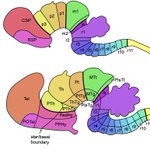
New preprint from the lab!
We built an atlas of functional ensembles across the zebrafish hindbrain, linking whole-hindbrain activity to behavior, structural organization, and molecular features.
A few highlights below 🧵
biorxiv.org/content/10.64898…
Baier Lab MPI for Biological Intelligence retweeted

Thanks to everyone sharing in this moment!
I’m so grateful to my trainees & collaborators…
dlab.stanford.edu/group-memb…
(pic: optogenetics conference chairs, Tuscany)
Reading for all those asking:
for technical details: dlab.stanford.edu
for everyone: deisseroth.org/projections

Baier Lab MPI for Biological Intelligence retweeted

Language is not fundamental to human consciousness. In terms of evolution, it arrived only recently on our timeline.
Consciousness evolved over millions of years through sensory awareness, emotion, and the embodied survival instincts of our tribal past; our capacity for empathic engagement and community. Syntactic language only emerged around 100,000 years ago.
This is exactly why Large Language Models (LLMs - so called AI) are the wrong pathway to true artificial consciousness.
They try to replicate the late-stage "output layer" of human intelligence without building the foundational, embodied awareness that actually generates it.
Statistical text prediction is a mirror of thought, not the spine, the guts, the nerves and the subconscious, empathic ability to connect with other living beings. LLMs can never feel, let alone think.
We have been sold a trick, not a pathway to superintelligence. LLMs are fraudulent. Their capabilities have already peaked and we are being sold lies about their future potential. Lies with the goal of companies reaching IPO and tricking investors out of hundreds of billion$.
Baier Lab MPI for Biological Intelligence retweeted

Published today in @Nature: A study shows that fish swimming in schools can avoid danger just by seeing their neighbors escape. The researchers imaged the brain activity of translucent glassfish swimming in a virtual reality environment. go.ucsd.edu/4AvZKyg

Baier Lab MPI for Biological Intelligence retweeted

What if any dataset, any size, any number of dimensions, opened in a browser tab from a link? 🔬🧪💻
Luxar is out today: write it in Python, share it as a link, explore it in any browser. Open source. 🧵 @biohub
Baier Lab MPI for Biological Intelligence retweeted

We have openings for two exciting postdoc positions, one in Graph Learning, the other in Bioinformatics, in my lab for #MachineLearning & #SystemsBiology at the @MPI_Biochem - Apply by September 30. @MLSB_Borgwardt:
mpg.de/26895302/postdoctoral…
mpg.de/26895349/postdoctoral…

Baier Lab MPI for Biological Intelligence retweeted

Dan Dennett said that when he pointed to weird neurological diseases that radically challenge our common sense introspective knowledge of consciousness, he was met with disbelief by fellow philosophers. This is an endemic problem in some armchair philosophers: they become convinced the secrets of life , meaning and the universe can just be intuited away.
Case in point, I present for your consideration Anton-Babinski Syndrome.
In this neurological disorder the visual cortex is destroyed but the eyes and optic pathways are largely intact. As you would expect, patients are blind and stumble on the furniture, can't describe their surroundings and are generaly incapable of visual tasks.
So far so good....except for a tiny detail:
Patients emphatically deny that they are blind! They categorically report they can see their surroundings and have normal visual experience! When asked why they stumble on furniture, hit walls while walking or similar, they confabulate explanations in order to explain away their behavior.
These people have no visual processing yet firmly believe they are seeing the world.
Now tell me again about the infallibility of introspection regarding subjective experience and qualia! Thump your fist at the table and tell me it is absolutely certain the blueness of blue is a real phenomenal quale that shows physicalism is hopeless!
ncbi.nlm.nih.gov/books/NBK53…
Baier Lab MPI for Biological Intelligence retweeted

We wrote a tutorial guide on voltage imaging, now out in Neuron: authors.elsevier.com/a/1nlgh…. Indicators, microscopes, and software have all advanced to the point that it's not so hard -- you can now directly watch the electrical activity of neurons in live animals or in culture.
Baier Lab MPI for Biological Intelligence retweeted
The accounts misusing clips from the Huberman Lab podcast to demonize cortisol (a hormone you want very elevated in first hour of your day and low in final hours of your night, BTW) are hilarious. Cortisol is neither “good” or “bad” just get the timing right per above by…
Baier Lab MPI for Biological Intelligence retweeted

Nature research paper: Connectome analysis of a cerebellum-like circuit for sensory prediction
go.nature.com/4yiv1D0


Baier Lab MPI for Biological Intelligence retweeted
Our new Max Planck School on #Biomedical #AI is now on X (@MPS_BMAI) and accepting applications for PhD positions from September 1, 2026 (start of the PhD a year later, in September 2027). More details tba #AI #MachineLearning #LifeSciences #MaxPlanckSchool

Baier Lab MPI for Biological Intelligence retweeted

Kevin Mitchell @WiringTheBrain talks to Timothy Behrens @behrenstimb about which neural systems the field has genuinely cracked.
thetransmitter.org/computati…

Baier Lab MPI for Biological Intelligence retweeted

Today's AI systems learn mostly by passively absorbing data, but the brain builds intelligence in the reverse order.
Grounded world models in biological organisms and future embodied AI
arxiv.org/abs/2607.13560
#neuroscience

Baier Lab MPI for Biological Intelligence retweeted

A short Research Briefing on our recent work:
“How the zebrafish brain weaves recent experiences into future decisions”
Grateful to the Nature team for helping tell the story clearly.
nature.com/articles/d41586-0…
