




Pinned Tweet
(ANALIZA) "Čuftov na urgenci ne bomo delili!" Zakaj toliko čakamo na urgenci, zakaj bolniki ležijo po hodnikih? vecer.com/v-soboto/analiza-c…
gregor prosen retweeted

Če se osredotočiva na zadrževanje kadra: ponuditi moraš konkurenčne pogoje zaposlitve napram drugim delovnim mestom.
gregor prosen retweeted

Na urgenci @UKCMaribor bo letos nas tim zapustilo 7 dipl. med. sester/tehnikov in dva spec. urgentne medicine.
Gre za tihi razpad sistema.
Ni znano, kako bomo enako kvaliteto zagotavljali ze julija letos, kaj sele kasneje.
Resnicno katastrofalne razmere.
gregor prosen retweeted

🫁 Crashing SCAPE? High-dose nitro works fast.
💉 Bolus hard (up to 2mg IV)
💨 Add BiPAP
🕒 Peak in 5 min
⚠️ Taper when SBP <140 or MAP <65
Infographic via @REBEL__EM 🔥
@marco_propersi @emswami @srrezaie @mramzydo
❤️ Like 🔁 Repost 🔔 Follow
#FOAMed


gregor prosen retweeted

Workshops on Day 2 and 3 of our ED Quality Professional Certification featured Dr Bryan Stenson teaching on pathways and Dr David Chiu teaching on change management @BIDMCEM @HMFPBoston


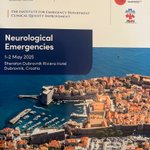
NEUROLOGICAL EMERGENCIES courses, Dubrovnik, 1-2may:
Awesome course. Truly helpful. Excellent faculty. Pls. return organizing more.
Sincerely thank you, @Emerg_Quality @JonathanEdlow #JoshuaGoldstein @EvieMarcolini

gregor prosen retweeted

As a family medicine physician, I completely agree with this. You are describing what should be a deeper and better connection between family medicine and emergency medicine. We are both doing similar things. One with more urgency and diagnostic tools at the ready, the other with slightly more time (lol), and relationship building continuity. Should be much more seamless integration between the outpatient and inpatient world between us two generalists.
gregor prosen retweeted

Respectfully, as a GP in the NHS: Emergency medicine are not the last generalists.
That would be us.
And we’ve *always* done big picture, complex, cradle to grave, holistic medicine, often for people who may never get as far as needing ED.
Don’t forget Family Doctors!
gregor prosen retweeted

This is why every specialist should view the "unnecessary" call from the ER in a different light.
We can't expect the ER physicians to have the same level of knowledge and expertise as we do in our specialty.
When I get a call from the ER, I go in and look at the ER first and see how many angry patients are in the waiting room and how many are boarding.
Then I go see what the nursing station looks like, if it is in shambles and there are no nurses there, all hell is breaking loose!
Smile at whoever called you and ask how you can help. Then, help, thank them for all they do, and leave.
ER physicians and staff are colleagues in a very difficult job, and we should treat them respectfully and kindly.
They always appreciate you teaching them about a subject if time permits.
I will add that I worked in a Navy ER as a GMO for 1 year and was berated by specialists constantly. Please don't do that!
gregor prosen retweeted

I'll add: a big contributor to burnout in our field is the constant negotiation, the rejected calls, the inability to arrange follow up, and so on. I don't mind seeing pts with issues, but I sure hate spending an hour on the phone only to have nothing to show for it!
gregor prosen retweeted
I can hear many Nay's, but he's got a point - definitely on the point of System / Pts needing us (EPs). For noons else is there left...

Forgive me.
Emergency medicine is at an inflection point.
The world changed. The systems cracked. The silos failed.
And the question now is: who’s going to step into the space between them?
We’ve been trained to stabilize and move on. But what if our greatest value now isn’t just what we do in the trauma bay—it’s our ability to connect the dots between specialties, systems, and patients who don’t fit cleanly into anyone else’s box?
We’re not just responders. We’re the last generalists in a hyper-specialized world. And that makes us essential—if we’re willing to evolve.
I was talking to residents today about vertigo. The classic EM riddle: central or peripheral? Dix-Hallpike or MRI? Neurology or not?
We’ve spent years trying to optimize this—algorithms, risk scores, red flags—but we’re still mostly guessing, and our outcomes haven’t meaningfully improved.
Why? Because the problem isn’t diagnostic precision—it’s systemic fragmentation.
These patients don’t need a 10-minute dispo. They need continuity. They need someone who sees the terrain, not just the chief complaint. And that someone could be us—if we stop pretending our job ends at disposition.
The pandemic shattered the illusion that medicine was a smooth machine. It exposed every crack: access, communication, follow-up, bias, burnout. But it also created a once-in-a-generation chance to redefine our field.
We are no longer just gatekeepers to admission or discharge. We are uniquely positioned to observe what doesn’t work—and propose what might.
Emergency physicians see the seams where systems don’t connect. We feel the weight of patients who don’t belong to anyone. That’s not a burden. It’s a responsibility. Maybe even a privilege.
I’ve heard the objections. Caught the arrows from those who would claim this to be “not our job”—I hear the same thing: a desire to stay inside a role that’s rapidly becoming obsolete.
But here’s the truth: the future of EM isn’t small. It’s not about “knowing your lane.” It’s about being the bridge. The synthesizer. The person who sees across domains and says, we can do better than this.
You’re not training to be just a proceduralist or an admission broker. You’re training to become the kind of doctor who makes the system itself more coherent.
Yes, this is harder. It’s uncomfortable to take ownership of things we weren’t trained to fix. It feels safer to defer, to refer, to say “not my job.”
But if we believe in the value of emergency medicine—not just as a specialty but as a mindset—then we have to be willing to let it grow. We have to pick up the cases no one else wants. We have to tolerate ambiguity. We have to lead.
You want to know what makes a great emergency physician in 2025?
Not just fast hands or encyclopedic knowledge.
It’s the willingness to carry complexity. To stay in the messy middle. To lead from the seams.


gregor prosen retweeted
Did you see my recent @GatewayRuralH lecture on Zombie Ideas in the ED? Please help try to kill the idea that non-urgent patients are the cause of hospital crowding and diverting them will solve the issue.
youtube.com/watch?v=-4hZgEDB…
gregor prosen retweeted

Fascinating and realistic take of the best of EM. It should be the domain of primary care in toto, but too many PCPs are traffic control these days-figure out which specialty for which symptom and refer.
gregor prosen retweeted

"We feel the weight of patients who don’t belong to anyone.
That’s not a burden. It’s a responsibility. Maybe even a privilege."
👆👆👆
I can hear many Nay's, but he's got a point - definitely on the point of System / Pts needing us (EPs). For noons else is there left...
Forgive me.
Emergency medicine is at an inflection point.
The world changed. The systems cracked. The silos failed.
And the question now is: who’s going to step into the space between them?
We’ve been trained to stabilize and move on. But what if our greatest value now isn’t just what we do in the trauma bay—it’s our ability to connect the dots between specialties, systems, and patients who don’t fit cleanly into anyone else’s box?
We’re not just responders. We’re the last generalists in a hyper-specialized world. And that makes us essential—if we’re willing to evolve.
I was talking to residents today about vertigo. The classic EM riddle: central or peripheral? Dix-Hallpike or MRI? Neurology or not?
We’ve spent years trying to optimize this—algorithms, risk scores, red flags—but we’re still mostly guessing, and our outcomes haven’t meaningfully improved.
Why? Because the problem isn’t diagnostic precision—it’s systemic fragmentation.
These patients don’t need a 10-minute dispo. They need continuity. They need someone who sees the terrain, not just the chief complaint. And that someone could be us—if we stop pretending our job ends at disposition.
The pandemic shattered the illusion that medicine was a smooth machine. It exposed every crack: access, communication, follow-up, bias, burnout. But it also created a once-in-a-generation chance to redefine our field.
We are no longer just gatekeepers to admission or discharge. We are uniquely positioned to observe what doesn’t work—and propose what might.
Emergency physicians see the seams where systems don’t connect. We feel the weight of patients who don’t belong to anyone. That’s not a burden. It’s a responsibility. Maybe even a privilege.
I’ve heard the objections. Caught the arrows from those who would claim this to be “not our job”—I hear the same thing: a desire to stay inside a role that’s rapidly becoming obsolete.
But here’s the truth: the future of EM isn’t small. It’s not about “knowing your lane.” It’s about being the bridge. The synthesizer. The person who sees across domains and says, we can do better than this.
You’re not training to be just a proceduralist or an admission broker. You’re training to become the kind of doctor who makes the system itself more coherent.
Yes, this is harder. It’s uncomfortable to take ownership of things we weren’t trained to fix. It feels safer to defer, to refer, to say “not my job.”
But if we believe in the value of emergency medicine—not just as a specialty but as a mindset—then we have to be willing to let it grow. We have to pick up the cases no one else wants. We have to tolerate ambiguity. We have to lead.
You want to know what makes a great emergency physician in 2025?
Not just fast hands or encyclopedic knowledge.
It’s the willingness to carry complexity. To stay in the messy middle. To lead from the seams.

Kiva is an easy way to make a real difference in someone's life. Will you join me in helping Judith in Nakuru to pursue their dream? kiva.org/invitedby/gregor368… #microloan #kivalove via @Kiva
