







barton.wasm retweeted

we are delighted to be launching the very special TUI for $NASH that you can run from CLI as
> nash
or simply experience live at nash.actor!
blogpost on building interfaces for post-web that run the same everywhere incoming, see below to ape in!

barton.wasm retweeted

“NOT A BUBBLE” Part II at the GENPUNK SLOP SHOW, hosted by @vivariumsf + @viemccoy
barton.wasm retweeted

Auf dem inkrementalistischen Weg zur #DigitalID war die Deklarierung der Steuer-ID als "Bürgernummer" zwecks 'registerübergreifendem Identitätsmanagement' ein wichtiger Schritt. Auch damals getarnt betrieben im Trubel der frühen C-Operation.
[aufgezeichnet von LG,I 2020-09-30]

barton.wasm retweeted
Examples of a "phase transition" that an observer whose timescale was sufficiently small wouldn't experience as a smooth, slow, unremarkable, gradual event? Is anything (besides quantum events & Planck time limits) truly sharp, and can't be zoomed into enough to seem smooth?


barton.wasm retweeted

Inkscape can export vector figures as PDF to be included in LaTeX documents & renders math mode natively once included. Crazy stuff castel.dev/post/lecture-note…


barton.wasm retweeted

To illustrate just how different neutron star and black hole metrics truly are, I simulated perfect fluid accretion onto a black hole vs. onto a neutron star of identical mass and spin.
Source code and simulation details in thread below. (1/4)


barton.wasm retweeted

Today, translating general Rust code to formal languages such as Rocq or Lean is practically working with "rocq-of-rust".
By general Rust code, we mean arbitrary safe Rust, or "safe" unsafe Rust (for now). This means that one can take a Rust program and translate it into a formal language, preserving the source code as is, along with all the optimizations, which are often critical in Rust projects.
As a result, you can formally verify any security properties and business rules, including for complex cryptographic libraries or programs with many external dependencies, for example.
One example is our ongoing verification project for Revm, a Rust implementation of the Ethereum virtual machine designed, among other things, to run on future zkVMs where security is critical.
How is the "rocq-of-rust" approach unique?
We do a 𝒅𝒆𝒆𝒑 𝒆𝒎𝒃𝒆𝒅𝒅𝒊𝒏𝒈 of the Rust language in Rocq (from THIR level). This means taking the syntax tree type from the Rust compiler and implementing it on the Rocq side (without extra information like line numbers), with semantic rules to evaluate each node.
As this translation is very "one-to-one", it can import a large amount of Rust code, like the "core" library or most programs we tried it on.
For formal verification, the simplest representation is 𝒔𝒉𝒂𝒍𝒍𝒐𝒘 𝒆𝒎𝒃𝒆𝒅𝒅𝒊𝒏𝒈. So here comes the second step: we provide a proof framework to show the equivalence between the deep embedding and a shallow embedding. This step heavily relies on automation and AI and is safe because formally verified.
As of today, the translation speed to shallow embedding is about "one file per day" (very rough estimate), which we think is acceptable compared to the time spent verifying each file to prove typical specifications.
As a bonus, we do not rely on the borrow checker, even if it helps to have structured Rust programs as inputs. So this means this approach should work as well for C or Go code.
We believe the use of a "deep-embedding + automation with AI to a shallow-embedding" is an interesting new combination for translating complex imperative code into formal languages, with both wide support for inputs and high-level outputs for complex verifications.
Note that this work is still in progress, and we welcome any remarks/fixes.
For Lean users, the last translation step from Rocq to Lean can be done through an extraction mechanism, given that the two languages are very similar on the computational part (straightforward, but to be implemented), or using "rocq-lean-import", which works much better than its humble README suggests, especially for computations.
We are happy to discuss with you if you have large Rust code that you want to secure with the largest possible scope.
Below is a link to the work on Revm 👇


barton.wasm retweeted

penrose claimed that "impossible figures" are based on 1-dimensional cohomology... but what about images that are both paradoxical and without loops? pinning two ends of an interval to opposite states leads to a *relative* 1-d cohomology class, which is nontrivial

barton.wasm retweeted
Slop generators like Ralph, Loom and Gastown treat developers as if they are free resources, replacing costly humans with swarms of agents churning out specs or cloned patterns.
My take is that the real disruption is not about free labor, but about the fact that changing your mind has become free.
Once the cost of change collapses, software development stops being craft and becomes pure brute force exploration.
That is why software engineering as we knew it, is effectively dead.
barton.wasm retweeted

Logic is a foundation for many things. But what are the foundations of logic itself?
Back in 2000, @stephen_wolfram got a computer to prove that all we need is ((a•b)•c)•(a•((a•c)•a))==c
But can we humans understand why?
writings.stephenwolfram.com/…
#WorldLogicDay

ALT Stephen Wolfram's essay titled "Who Can Understand the Proof? A Window on Formalized Mathematics."


barton.wasm retweeted

Is forking @kbot_kscalelabs a real option?
I'm checking with CNC houses how much would it cost to manufacture the @kscalelabs robot parts. This isn't stuff you can 3d print: the motors would rip through the plastic like butter.
The plan is to drive K-Bot using Hoper's electrical platform, compute and software.
Tell me this isn't a sci-fi movie we're living in

barton.wasm retweeted

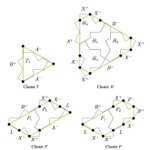
The aperiodic Tile(a, b) can be constructed as a 4D skew nonplanar polygon then projected to 2D. Changing the projection direction, we can get the whole continuum including hat, turtle, and the non-curvy spectre. For some directions, we get a self crossing polygon in 2D. 1/2
barton.wasm retweeted

Aperiodic tiles can't form a repeating pattern. But zoom in on two different tiling patterns, and you’ll find any given patch appears in both. This property of “local indistinguishability” is similar to the principle behind quantum error-correcting codes. trib.al/5nOME4g

