

Simulating eXtreme Spacetimes: Black holes, neutron stars, and beyond.
- Tweets116
- Following68
- Followers696
- Likes37

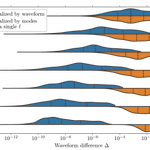




ALT Screenshot of the title/auth list/abstract: Length dependence of waveform mismatch: a caveat on waveform accuracy Keefe Mitman, Leo C. Stein, Michael Boyle, Nils Deppe, Lawrence E. Kidder, Harald P. Pfeiffer, Mark A. Scheel Abstract. The Simulating eXtreme Spacetimes Collaboration’s code SpEC can now routinely simulate binary black hole mergers undergoing ∼ 25 orbits, with the longest simulations undergoing nearly ∼ 180 orbits. While this sounds impressive, the mismatch between the highest resolutions for this long simulation is O(10^−1). Meanwhile, the mismatch between resolutions for the more typical simulations tends to be O(10^−4), despite the resolutions being similar to the long simulations’. In this note, we explain why mismatch alone gives an incomplete picture of code—and waveform—quality, especially in the context of providing waveform templates for LISA and 3G detectors, which require templates with O(10^3) − O(10^5) orbits. We argue that to ready the GW community for ...

ALT Fig 2 from the preprint, which shows mismatch (between resolutions) as a function of length of time interval over which the mismatch is computed. There are 4 curves, each going roughly like M ~ t^2. The four curves are in two groups: Two from simulations SXS:BBH:1412, and two from SXS:BBH:1132. Each simulation has two different truncation error comparisons: med vs. low and high vs. med. They both show convergence.


ALT The timeline to O4. From our third observing run, through commissioning, our engineering run, to observing NOW


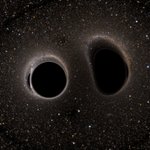
ALT Simulation of a binary black hole system in from of a field of stars


