SXS Project retweeted
And now you can read all about it in Caltech's press release! caltech.edu/about/news/catal…
🎉 Happy paper publication day! 🎉 Our third catalog of binary black hole simulations, now published in Classical and Quantum Gravity. And it's open access!
Scheel et al. 2025 Class. Quantum Grav. 42 195017
iopscience.iop.org/article/1…
Also on the @arxiv at arxiv.org/abs/2505.13378
🎉 Happy paper publication day! 🎉 Our third catalog of binary black hole simulations, now published in Classical and Quantum Gravity. And it's open access!
Scheel et al. 2025 Class. Quantum Grav. 42 195017
iopscience.iop.org/article/1…
Also on the @arxiv at arxiv.org/abs/2505.13378
We are excited to release a major update to our catalog of binary black hole simulations, available at arxiv.org/abs/2505.13378! Such simulations are key to LIGO/Virgo/KAGRA being able to extract science from their gravitational wave detections.
1/14
Just published in @PhysRevLett! Check out this article by SXS researchers Boyeneni, Wu and Most (@Caltech) on interpreting colliding black holes similar to the attraction of two electric charges
Gravitational field equations describing binary black holes can be recast in a form resembling coupled Maxwell’s equations for electrodynamics go.aps.org/4g0K9g6

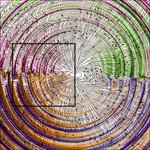
ALT Fig 1: Rapidly spinning Kerr black hole in a dynamically evolved moving puncture gauge. Shown in color are the gravitational energy density and toroidal magnetic field in the meridional plane. Streamlines indicate the static component of the gravitational electric field and magnetic fields. The black ellipse marks the black hole horizon; white dashed contours denote the ergosphere.
Cranking up the temperature! SXS researchers Hai-Yang Wang, Elias Most and Philip Hopkins (@Caltech) show how hot flows around supermassive black hole binaries with strong magnetic fields alter their feeding behavior. Full results at arxiv.org/abs/2508.16855
Earthquakes on neutron stars?! SXS researchers Louis Burnaz and Elias Most (@Caltech) and Ashley Bransgrove (@Princeton) simulate how these could be detected in signals from very active radio burst transients. Read their results at arxiv.org/abs/2508.18033
SXS Project retweeted
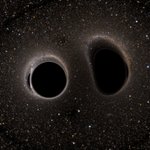
A spacetime waltz. Simulations consistent with our 86 most confident new detections, each showing the orbiting components and their emitted gravitational waves
youtube.com/watch?v=3B6WKSWD…
🎬I Markin/T Dietrich/H Pfeiffer/SXS Collaboration
#GWTC4 #O4IsHere
SXS Project retweeted
Take a look at the biggest black hole merger ever detected!😲🌌‼️
~10 billion light years from Earth the Laser Interferometer Gravitational-wave Observatory(#LIGO) detected gravitational waves from the merge of 2 massive black holes
Credit: SXS Project(black-holes.org)
Check out this article about star quakes and monster shocks — research done by SXS collaboration members Yoonsoo Kim and Elias Most, both at @Caltech
To better understand the extreme physics underlying such a grizzly demise, researchers at Caltech are using supercomputers to simulate black hole–neutron star collisions.
caltech.edu/about/news/star-…
SXS Project retweeted
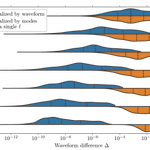
In particular, as highlighted through Fig. 9 of the paper, while our BBH simulations are generally accurate and long enough (to span the full frequency band) for the LIGO/Virgo/KAGRA detectors, this is not necessarily the case for future detectors. 2/n
We are excited to release a major update to our catalog of binary black hole simulations, available at arxiv.org/abs/2505.13378! Such simulations are key to LIGO/Virgo/KAGRA being able to extract science from their gravitational wave detections.
1/14
We make it publicly available so everyone has high-quality binary black hole simulation data at their fingertips for their research! Of course, we’re not done yet—
13/14
There’s a lot more work to do: higher mass ratios, higher eccentricity, and meeting the accuracy requirements of next-generation detectors. Stay tuned for the next version of our catalog! But for now, check out the latest catalog paper at arxiv.org/abs/2505.13378.
14/14