
Astrophysicist, formerly of @unibirmingham & @UoBIGWaves, currently lead gravitational wave group at @flatironCCA, Assoc. Prof @stonybrooku.
Stony Brook, NY
Joined July 2011
- Tweets6.5K
- Following2.5K
- Followers1.9K
- Likes17.3K


Pinned Tweet
At the prompting of @cplberry , a thread about LIGO's recent H0 measurement. It will be long (but hopefully informative). Gird yourselves!
Will M Farr retweeted

Ordinary, stable atoms can only exist in a Universe with 3 space dimensions
The argument is very straightforward:
Stability in atoms is a balance between kinetic energy and potential energy of the electrons
🧵 1/6

Will M Farr retweeted

Seeing as this was an absolute banger, I did it properly, with some help from Claude to speed up messing around with scraping the Nobel website:


Will M Farr retweeted

BREAKING NEWS
The Royal Swedish Academy of Sciences has decided to award the 2026 #NobelPrize in Physics to Francis Halzen “for decisive contributions to the IceCube Neutrino Observatory and the discovery of high-energy neutrinos of astrophysical origin.”

Will M Farr retweeted
Which subatomic particle has produced the most Nobel prizes:
Electron: 10 directly associated
Neutrino: 5
Quarks/gluons: 5ish
Neutron: 3ish?
Proton: 2ish, more if you fold in quarks/antiproton
Higgs: 1
W/Z, Pion: 2 each
Tau: 1, but shared with neutrino
Technically 0 for muons
Will M Farr retweeted

Come do a postdoc at our Center for Computational Astrophysics! We're #hiring for research positions through October 31st: apply.interfolio.com/193381
#science #astrophysics #FlatironCCA

ALT blue graphic that says We're Hiring, Flatiron Research Fellow
Will M Farr retweeted

News: we moved to New York! I’m excited to share that I am joining @FlatironInst Center for Computational Astrophysics as a research software engineer supporting MESA and broader software needs. Software is a pillar of sci. infrastructure and I am elated to continue to support it


Will M Farr retweeted

On the surface, my second year @the_IAS mirrored the first: four new papers (which I recap below), an amazing time overall, and a summer holiday hiking volcanoes.
In reality, the arrival of AI changed everything. The future seems both exciting and unpredictable! (1/5).

Will M Farr retweeted

A nonlinear effect plus measurement error in x becomes close to linear: A simulation study
statmodeling.stat.columbia.e…
Will M Farr retweeted

How do these people do it man, really promising work here
arxiv.org/abs/2609.25228

Will M Farr retweeted

The 14 Herculis planetary system shouldn't exist: 2 massive planets with elliptical, misaligned orbits? @FlatironInst's Tiger Lu thinks the system once had a 3rd planet which perturbed the orbits of the inner 2. That 3rd planet likely got ejected arxiv.org/abs/2605.30177

Will M Farr retweeted

A bit of history for the youngs.
The custom of distributing preprints started out in high-energy physics. In the old days, pre-publication papers (literally on paper) would be sent out to university libraries by postal mail, often even prior to submission to journals, certainly before acceptance. Because this was expensive, the practice was mostly limited to national labs and other large institutional groups. The labs even had distinct letterhead for their preprints, and an internal numbering system for indexing. The libraries would then put them in a display rack once a week, and to update yourself on the latest, you would go into the library and sit at a table and read them. (They could not be checked out!) This was how it was when I started as a grad student. It was an informal and collegial system for communicating the latest science that flew under the radar of the journal system.
In the early '90s, Paul Gisparg and Joanne Cohen (who is often left out of the story) set up a server to distribute preprints by email. You would receive a daily list of papers by email, and could request the TeX source via email commands, then compile it yourself locally. Being of a hacker-ish bent, I was one of the first in my department to embrace this wild new idea.
Note that this was before the release of the first widely used web browser, NCSA Mosaic. The Wold-Wide-Web at the time was one stub site at CERN that you could find on Gopher. When Mosaic came out and the xxx.lanl.gov server went live with its Jolly Roger logo amd you could download preprints directly in Postscript format and print them on your department's expensive laser printer, the world changed forever.
But it was never about papers already accepted for publication.


Will M Farr retweeted

🪐 Postdoctoral position open at CIERA! The Northwestern-UChicago Brinson Postdoctoral Fellowship in Astrophysics is now accepting applications, this fellowship is only recruited once every 3 years. Deadline Nov 1. Learn more: bit.ly/4xLzUo5

Will M Farr retweeted

Join us for a Presidential Lecture this Wednesday (9/9) with Saavik Ford: "When Supermassive Black Holes Get Hungry." Learn more and register: bit.ly/3UXlTFc
#science #astrophysics #blackholes

Will M Farr retweeted
Nine years ago today, the @FlatironInst celebrated its official inauguration. Since then, we've added centers in neuroscience and math, an initiative focused on computational catalysis, and worked to advance research through computational methods and software development.
Learn more about what the Flatiron Institute has accomplished: bit.ly/3UJxKXo
#math #science #computation

ALT Simons Foundation president David Spergel speaks at podium with Flatiron Institute logo
Will M Farr retweeted

Terence Tao wrote a clear, nontechnical explanation of the Kakeya Conjecture (for which Hong Wang won the Fields Medal in July), why it matters, how it was solved, and future directions, and posted it on the arXiv: arxiv.org/abs/2608.22209

Will M Farr retweeted

New paper! 🧵
1/ Some stars in the disks around supermassive black holes may be effectively immortal: they accrete fresh hydrogen as fast as they burn it. We asked: what happens when a black hole falls into one of them?
🤖 Made with AI

Will M Farr retweeted
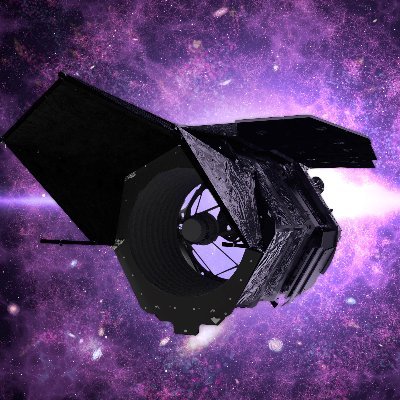
Success! Roman’s planned mid-course correction burn went as expected, ensuring that we are on track for our orbit around the second Lagrange point, a million miles from Earth.
go.nasa.gov/4A3zDi2

Will M Farr retweeted
Shades on and batteries charging! 😎 🔋
Roman’s Solar Array Sun Shield and Lower Instrument Sun Shade have successfully deployed, powering the observatory and shading its instruments!
go.nasa.gov/4gw2rqc