

The microcap index focused on quality+value+momentum at growth inflection points (MSMqi) supported by Cliff Notes & tools: https://xitter.cf/t.co/xH7cRPUNOQ
Joined November 2023
- Tweets1.2K
- Following94
- Followers4.9K
- Likes1.6K






MSmicrocaps retweeted

Plenty of boring stocks approaching 52 week highs in the @MSmicrocaps Index - as the mini correction in tech and AI dominates headlines.
🇺🇸 $SCIA $MG $AMNF $FACO $BUKS $KRT $RCEL
🇨🇦 $FTG.TO $OML.V $BRM.V
$MG merger arb is interesting. $SCIA is quietly inching higher.
@leevalueroach likes $BUKS
@bmb21 likes $AMNF
@Atrium_Research likes the 🇨🇦 lineup
@Diego_La_Torre_ likes $OML $BRM $BUKS
Make sure to follow all four of these very talented investors.

MSmicrocaps retweeted

Just added two more @InfoArbMonitor hot button news monitors to help expedite and curate research👇
•Smart Capital Allocators - like $FTG.TO $SODI $PXHI $ITRN
•Zombie Index (shit cos) - too many to list, but hopefully they’re not in your portfolio or heavily weighted 🤐

We just dropped a Beta feature at @InfoArbMonitor - Curated lists that we call monitors. Think of these as hot buttons to help you bypass the junk and focus on press releases based on themes, categories, topics… etc. We just added @Atrium_Research's coverage universe.

MSmicrocaps retweeted
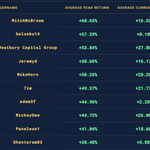
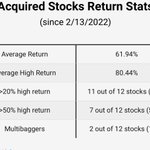
Four years in, and we’re starting to get some good KPI‘s on the MSMqi.
Remember, these are passive indexes to show that you can earn some nice returns by just being in the right curated universe. The challenge is trying to use active Mgmt. to improve returns or screw it up lol


MSmicrocaps retweeted
Rely less on FUD headlines like the Open AI revenue miss BS and more on facts.
Facts from $III 👉 Regarding spending on infrastructure services👇
“The AI infrastructure boom is still accelerating,” said Steve Hall, ISG’s chief AI officer and leader of the ISG Index. “The hyperscalers continue to post strong growth and are committing extraordinary levels of capital to new capacity. While supply is growing, this is definitely a demand-driven market. Providers are continuing to build because enterprise demand for compute, storage and AI capacity remains exceptionally strong. The implication is the infrastructure cycle still has room to run. We are not yet seeing a clear peak.”
“It was the highest quarterly growth rate for the combined market ever recorded by ISG, and the ninth consecutive quarter the market grew by double-digits versus the prior year.”
monitor.infoarb.io/news-feed…

MSmicrocaps retweeted
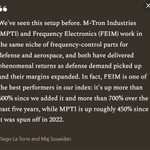
$FEIM (defense) was a great example of this. Not only was backlog growing, it was replacing sub 30% gross margin backlog with over 40% GM. You had all day to buy the stock between $8 & $15 in 2024. Now it’s pushing $100. $SIF (defense) might be approaching that type of set-up.

MSmicrocaps retweeted

$VCM.TO — Breakout Q4: record revenue up 36% to C$91M, EBITDA more than tripled to C$18.9M. Gross margin jumped from 26% to 45%. EPS swung from a C$0.55 loss to C$0.22 profit.
Guided FY2027 revenue growth of 30-35% with ~20% EBITDA margins. Trading at 7.1x FY+1 P/E. Mgmt says their newer software products are barely included in guidance and could be a bigger driver in 2028+.

MSmicrocaps retweeted
$NTWK - Some InfoArb Delta Sheet findings have implications for future recurring revenue.
NTWK provides software to the global asset finance & leasing industry and just reported a very strong quarter.
Historically, results have been inconsistent due to lumpy implementation and services revenue. But this also helps feed future recurring revenue. Still, the quarter is hard to trust at face value.
The opportunity: grow the recurring base enough to create a higher earnings floor, while layering services revenue on top. So far, recurring revenue has been relatively steady rather than a meaningful growth driver. Recurring revenue hints👇

MSmicrocaps retweeted

just pointing out that when this post dropped, $OCC was trading at about $12, now $18.37
MSmicrocaps retweeted
$TAYD (Shock Absorption & Damping Devices): Don't look at Q4 revenue, down 42% to $9M due to delayed order timing. Look at the backlog: record $52.8M, up 60% from the prior record of $33.1M. 92% is Aerospace & Defense.
Includes a single company-record $19M order. We're trying to determine if the ramp is tied to missile programs like THAAD, which is expected to see significant spending increases. Haven't confirmed yet.

MSmicrocaps retweeted

Started a new position today in $RFIL.
Good thread below from @InfoArbMonitor.
The pullback is very overdone, and I feel great getting into the stock under $8.

1/19
$RFIL already gave us one huge multibagger run. With a P/E of 10x, has a pullback given investors a 2nd shot?
RFIL was ~$5 in June 2025 & ~$22 by June 2026.
After the AI pullback + Q3 selloff, it round-tripped. Yet the business arguably looks BETTER today. Here is why🧵
MSmicrocaps retweeted
1/19
$RFIL already gave us one huge multibagger run. With a P/E of 10x, has a pullback given investors a 2nd shot?
RFIL was ~$5 in June 2025 & ~$22 by June 2026.
After the AI pullback + Q3 selloff, it round-tripped. Yet the business arguably looks BETTER today. Here is why🧵
MSmicrocaps retweeted

The Greatest Advantage of Being an Individual Investor
A lot has been written about the advantages individual investors have over professionals, especially the ability to invest in small companies. That is real. But I think the biggest opportunity is something else.
You don’t have to conform to anybody else’s expectations.
You don't have a tracking error budget or have to worry about the style box. You don't have to explain quarterly, monthly or even daily performance attribution. There aren't clients asking why you are underweight in a large sector, a consultant wondering why you don't own the latest hot stock or enough of it, or a committee questioning every trade.
While this sounds obvious, it is enormously powerful.
Professional investors are surrounded by people with different goals, incentives, and relationships with money. Even when nobody directly tells them what to do, what is expected of them is clear. A fund is expected to have specific characteristics and not stray too far from its benchmark.
One year of underperformance is understood, two years gets you on a watch list, and three years gets you fired. Even if you are doing the right things.
Over time, these pressures quietly shape behavior.
You start buying things because other investors own them. You worry about looking out of step. You focus on what the market is rewarding now. You feel pressure to remain fully invested. You spend a lot of time explaining why you are different.
The individual investor doesn't have to play this game. You can build your process around your unique perspective and experiences, whether that’s spotting inflection points, finding undervalued assets, or identifying great businesses in obscure corners of the market.
Whatever your advantage is, nobody has to approve it.
This freedom also extends to how you spend your time.
A professional investor has to do things that have nothing to do with finding great investments. Meetings, conferences, investor calls, benchmark analysis, portfolio reviews, attribution reports, and countless other obligations can consume time without improving performance.
You can spend your morning on a hike or reading an annual report from a $50 million company that nobody on Wall Street has reason to care about. You can do your research at the coffee shop, at your own pace. You can follow a company simply because you find it interesting.
There is no requirement that your process look professional.
It just needs to work for you.
This is one reason I think individual investors should be careful about trying to imitate professional investors. There is a natural tendency to assume that the people managing billions of dollars must have a better process.
They do have more connections and resources.
But they also have constraints that you don't have.
A manager will need to explain why a stock is down 30%. There will be pressure to capitulate and sell at the wrong time. If appropriate, you can just shrug.
You don't have to beat the S&P 500 every quarter. You don't have to outperform another manager. You don't have to gather assets. You don't have to make your portfolio look good in a presentation.
You can focus on the only thing that ultimately matters: making good decisions with your capital.
You don't have to chase what is popular or justify a decision to someone else.
In a world where most investors are constantly being pulled toward consensus, simply having the freedom to think independently is an enormous advantage.
Years ago, I heard a story about a man, let’s call him Greg, who had done very well in the market and retired in Boca Raton. A friend invited him to an investment lunch where someone was pitching a fund. Greg said he had done much better himself and expected to keep doing so.
The fund manager tried to shut him down by asking what his Sharpe ratio was. Greg replied, “I don’t know and I don’t care. I made enough to retire in Boca.” To him, that was the only measure that mattered, and there is a ton of wisdom in that.
MSmicrocaps retweeted

“During periods of rapid growth, capital expenditures rise faster than Revs. This weakens near-term cash flow. The returns appear years later, after the new capacity is operating + generating Revenue. Investors who focus only on current cash flow see the worst part of the cycle.”

From 1973 to 1986, Walmart reported negative free cash flow for 14 consecutive years. Its stock returned 33% annually over that period, three times the return of the S&P 500.
@mjmauboussin’s framework for understanding free cash flow. 10 lessons for investors:
1. A company’s value is the present value of its future free cash flow. Free cash flow is profit after taxes minus investments in growth, primarily capital expenditures. An investor’s job is to find the company that will ultimately generate the most FCF. But that FCF will not always be positive along the way.
2. Negative FCF is not always bad. If a company invests at a return above its cost of capital, it creates value. People love posting charts showing negative FCF at the hyperscalers. What matters is the return those investments will generate over the following years.
3. The Walmart lesson. From 1973 to 1986, Walmart had negative FCF for 14 consecutive years because it invested aggressively in expansion. Its return on invested capital averaged about 18%, well above its cost of capital. The stock returned 33% annually, three times the return of the S&P 500. Negative FCF was a sign of growth, not weakness.
4. Focus on investment returns, not the minus sign. The key question is whether revenue and profit are keeping pace with capital expenditures. If profit grows faster than investment, value is being created. If it falls behind, cash is being destroyed.
5. Watch return on incremental invested capital (ROIIC). It measures the return generated by each new dollar invested. If ROIIC is above the company’s current average return on capital, its overall return should rise. If it is lower, the average should fall. Hyperscalers’ combined ROIIC is currently near its peak at more than 35%, compared with a cost of capital of about 8%.
6. Subtract stock-based compensation. Paying employees with shares is effectively a combination of issuing stock and paying wages. If SBC is properly deducted from operating cash flow, the reported cash flow of large technology companies falls by 10% to 20%. Many investors ignore this and overstate the true figure.
7. A mature company can return to growth. A sharp increase in capital expenditures can move a business back to an earlier stage of its life cycle. Alphabet, Meta, and Oracle moved from “maturity” to “growth” after accelerating data center construction. This is not deterioration. It is a new investment phase.
8. The current decline in hyperscaler cash flow is expected to be temporary. Combined FCF for Amazon, Alphabet, Microsoft, Meta, and Oracle falls from $170 billion in early 2024 to negative $265 billion in 2027. Consensus then expects it to recover to ~$505 billion by 2030. Returns on capital remain above the cost of capital throughout this period. Microsoft is the only hyperscaler expected to maintain positive FCF across the entire forecast horizon.
9. Returns arrive with a delay, so patience matters. Amazon CEO Andy Jassy explained it directly. During periods of rapid growth, capital expenditures rise faster than revenue. This weakens near-term cash flow. The returns appear a few years later, after the new capacity is operating and generating revenue. Investors who focus only on current cash flow see the worst part of the cycle.
10. Consensus forecasts are not facts. The further out the forecast, the less reliable it becomes. Watch how estimates change. Are revenue and profit expectations rising as quickly as capital expenditure forecasts? The differences can be enormous. The 2027 EBIT forecast for Micron was raised by $192 billion, while Nvidia’s was raised by $231 billion. Their capital expenditure forecasts increased much less. That is a sign that investors expect those investments to generate strong returns.
$MSFT $META $AMZN $ORCL $SPCX $NVDA $MU

MSmicrocaps retweeted
Was a good week for $MTW (cranes), up 10% this week. @mascarosergi recently pitched the stock in his written Q&A style Skull Sessions. Their increasing emphasis on service revenue is interesting, something a lot of construction type companies have been doing over the past few years. It’s the “magic formula” for construction companies, which can result in a huge expansion of historical valuation ratios. You’ve seen that in stocks like $STRL and $BDT.TO. The cool thing about this kind of set up is that a lot of investors won’t believe there will be a valuation re-rate in a cyclical industry, until it’s actually happened… then they’ll say it’s overvalued🤷
Watching closely. Thx Sergi..
My Q&A with @mascarosergi is finally ready.
“For now, I’ll be calling these chats: Investor Notebook… Over the last few weeks, I’ve been doing a good deal of communicating with Sergi. So many of his X posts talk about stocks I own, like $OCC & $SCIA.”
open.substack.com/pub/skullc…

MSmicrocaps retweeted
2/2
Spotlight Stock #17: A Boring Industrial Microcap, 25%+ Growth at a Sub-10x P/E👇
mscliffnotes.substack.com/p/…
MSmicrocaps retweeted
During my chat with $RFIL’s CEO at the @MSmicrocaps conference, he mentioned that the telecom DAC opportunity is very under-penetrated. Stock is a gift down here if you have more than a five second time horizon.
MSmicrocaps retweeted
My Q&A with @mascarosergi is finally ready.
“For now, I’ll be calling these chats: Investor Notebook… Over the last few weeks, I’ve been doing a good deal of communicating with Sergi. So many of his X posts talk about stocks I own, like $OCC & $SCIA.”
open.substack.com/pub/skullc…
Next written Q&A Skull Session will be with @mascarosergi . Another passionate stock picker who loves the craft. Not sure if you are aware, but Sergi was slinging stocks as a teenager. Will be posted this weekend at the Skull Sessions Subtack and @GeoInvesting Weekly Wrap-Up.
MSmicrocaps retweeted
1/9
$PPIH held its FIRST-EVER earnings call. Our Q2 Delta Sheet is ready: The call revealed more info (vs. PR) about where Mgmt. wants to take the company.
$900M+ pipeline. Bigger projects. Data centers. Recurring revenue. Geographic expansion.
Let’s InfoArb this thing. 🧵
MSmicrocaps retweeted
$PPIH is building something special :)
$PPIH Q2 InfoArb tidbits: grow leak detection and recurring revenue:
“We are also expanding our business development efforts to grow our leak detection market share. We are working to formalize relationships with select equipment manufacturers to embed our leak detection sensing technology into their product offerings.”
“In this security and cooling, we are developing multi-year service agreements that pair the systems we install with ongoing monitoring and support, turning a one-time product sale into a recurring service-based revenue stream over the life of the asset.”
Source: InfoArb.io
