

Every opportunity starts with the right connection. One network. Infinite possibilities. Connect. Collaborate. Build.
Joined July 2026
- Tweets64
- Following45
- Followers6
- Likes41

JoinOrigin retweeted

Y Combinator will invest $500K in your startup.
And the deadline most people miss is 18 days away.
YC Winter 2027:
• $500K total investment
• $125K for a fixed 7%
• $375K on an uncapped SAFE that converts at your next round's terms
• $12M+ in credits from OpenAI, Anthropic, AWS and more
• 3 months in San Francisco, January to March 2027
What most people don't know:
• You can apply from anywhere in the world
• Solo founders get in
• You don't need revenue or even a launched product
• YC helps you set up a US company if you don't have one
The fine print:
• It's equity not a grant
• It's in person in San Francisco
• Thousands apply and only a few hundred get in
On-time deadline: Nov 2, 8pm PT.
Late applications are still reviewed but on-time ones get priority.
Bookmark it and send it to a founder friend.
Link below. 👇
ycombinator.com/apply

JoinOrigin retweeted

I spent 48 hours in SF hanging out with billionaires, data labs and AI founders and execs running $1B to $100B companies.
My observations:
1. Sooo MANY stories of data brokers making like $2M a WEEK selling company data to labs. I can't tell if it's the beginning or a bubble, and I kept wondering which niches are left. Digging into it actively.
2. At dinner, someone asked the table, "If a new model drops next month, does your company get better or worse?" HALF the table went quiet! I think that's the best question to ask about any AI startup right now.
3. The bar people talk about now is hitting $1B in revenue in 12 months (I guess that's the new unicorn?). What I didn't hear much about is retention. AI revenue can come in fast and leave fast, and I think we're going to see a lot of stories of AI companies with huge revenue and terrible retention.
4. It's pretty clear we're living through the reinvention of the computer. The model is the CPU, the harness is the operating system, and skills and plugins are the apps. Thinking about it that way makes it easier to see where the whitespace is.
5. We're maybe 12 months from an agent that can watch you work for a week and then do your job without any instructions. The screen recording plus agent memory plus local model combination makes this possible right now.
6. Agent harnesses feel like the new GPT wrappers, in a good way, especially vertical ones. The best teams I talked to treat the model as swappable. One founder walked me through routing different models to different jobs: one for taste and visuals, a cheaper one for the everyday stuff, another for text.
They use prompts they can move across models over fine-tuning, and A/B test the output on what users actually do with it: do they edit it, export it, share it? A vertical harness is basically four things: the connectors for that industry's data, evals written by people who know the work, rules for what the agent can and can't touch, and a clean screen for a human to review. The model is maybe 20% of it.
7. There's a lot of reverse engineering going on/cloning going on more than I've ever seen. People are decompiling software and rebuilding it with agents, and someone showed a suite of like 10 apps that are worth $5B+ each all that he cloned open source. Me and everyone are still thinking through what it means when software gets this easy to copy.
8. My guess is the value moves to data. If the software can be rebuilt quickly, what's worth paying for in a legacy SaaS company is the years of customer data and workflows inside it. Some SaaS companies are secretly data companies.
Gets me thinking about how do you truly value data for this saas companies? Like if we were buying these dying saas companies at 2x ARR before (as example), maybe there is a better metric. Idk, just thinking out loud here.
9. It feels like a good chunk of legacy software won't make it to the agentic era, especially anything built around people clicking through a lot of screens.
10. Every company I talked to wants to pipe its internal data into one place and expose it to agents through MCP. Then they look at the data and realize it's a mess: five versions of the same customer, old Slack channels, PDFs nobody can search. Cleaning that up feels like a big consulting opportunity!
11. A lot of founders are building the basic building blocks for agents: APIs, data layers and tools. Some of the companies I saw barely have a UI because the main user is an agent. I really believe the startups that build primitives to this agentic era will do extremely well. Building blocks is the best way to think about it.
12. Labs can get plenty of training data, but it's harder to get real examples of agents failing inside companies. Whoever has those logs has something valuable.
13. Someone running a big consumer company told me the next fight is over memory. The model that remembers the most about you wins, and the smartest model matters less than people think.
14. Physical AI came up a lot. Astra I think was the first model that got people into AI can actually do CAD, and I think a lot of people are thinking what does vibe manufacturing really look like. The line I keep thinking about came from a robotics founder: the hardest problems in AI are deployment problems now, not research problems. Their robots work on their own, call a human when they get stuck, and every one of those calls becomes training data.
15. Cybersecurity companies are having a moment and are actually cool companies to build now, especially the ones that clean up after a breach. Every agent with access to your systems is a new door into your company, and a lot of those doors were left open.
16. Some startups are worth more dead than alive now. A shutdown company with 5 years of Slack, email and code can get paid for licensing all of it. I wouldn't be surprised if founders start factoring that into when they shut down.
17. People are starting to talk about monetizing the agent web. It feels really early, but when the most popular user of the internet is an agent, what startups should you be building?
18. I think agent insurance is coming. Once an agent makes an expensive mistake, insurers will want audits before they cover anyone.
19. Several people said the hire they want most is someone with taste who can write evals. The models are getting good at generating ideas, so the hard part is judging which ones are good.
20. New trend I observed: startup raises VC, uses venture dollars to become a creator, startup fails, founder falls back on being a full-time creator and incubates other products bootstrapped.
21. Getting SIGNIFICANT distribution is HARD right now. Founders are sponsoring buses, buying billboards like crazy and throwing parties with famous DJs to get noticed. Kinda feels dotcom era in that sense.
Attention is what's scarce! The growth guy going viral sharing his UGC strategy from Wispr Flow is a good example. It's the sauce everyone wants, and I truly believe there are probably only 50 people on the planet who know how to scale these types of businesses efficiently in this era.
Always good to get that dose of SF. I felt sooo lucky to have such an incredible trip during such an incredible time in building businesses. Surreal in so many ways.
Happy to be home and locked in.
Until next time!


JoinOrigin retweeted

The killer feature of PWAs is not that they update automatically or that they’re truly cross-platform.
The absolute killer feature of PWAs is that they can be freely distributed on the internet without any dependencies on app stores.
No risk that one party can kill your distribution and end your business. That’s truly a killer feature.
JoinOrigin retweeted
Guess what?
Not only are app stores walled gardens where your business exists at the mercy of Apple and Google, but they're also their breeding ground where their next idea is handed to them on a platter.
By you...

Apple just silently killed 9 paid apps with one free update.
iOS 27 dropped September 22.
Most people saw a new design and moved on.
A developer who tracks App Store data broke down the feature list and told me:
“Apple just made $372/year in subscriptions completely pointless. The features are already on your phone. Nobody will find them.”
Here’s every feature — and the app it replaces 🧵
JoinOrigin retweeted

je viens d'être la cible du phishing le + sophistiqué de l'histoire informatique
- je reçois par email une prétendue alerte qui m'indique que j'aurais généré un accès tiers à mon compte Google pour un utilisateur @gmail que je ne connais pas
- l'email de l'émetteur no-reply@accounts•google•com a tout d'un mail officiel @Google et Gmail ne mentionne pas la moindre alerte de suspicion
- je clique sur le lien, car le site de phishing hébergé sur le domaine google•com semble 100% legit, il fait même semblant de faire des vérifs de sécurité avec un CAPTCHA
- même mon password manager me propose de remplir l'email/pwd car j'ai un vrai compte sur sites•google•com (c'est Google qui offre l'hébergement de sites web)
- si je remplis les champs email/pwd, le hacker les récupère instantanément pour se loguer et récupérer tous mes accès Google/YouTube
cette attaque va faire mal, j'ai report à Google
comment j'ai compris que c'était du phishing ?
1 : le bouton d'action des emails Google est sensé être le gros bouton bleu, pas un lien juste au dessus
2 : en allant voir dans les détails le sender [mailed-by] est fwd•privateemail•com et non *bounces•google•com


JoinOrigin retweeted
Claiming that PWAs are not secure because they're not installed from an app store is a false argument.
Native apps need an app store because they download and run executable code (although this does not guarantee the app is safe).
Everything a web app needs to function like an app is already stored in the browser's sandboxed environment before it's "installed" (which is basically just adding an icon to the Home Screen).
If a web app is safe to visit in a browser, it's safe to add it to your Home Screen.
JoinOrigin retweeted

This app does $100k/month and every screen of its onboarding breaks a different Apple rule.
I went through the Prayer Lock onboarding and I get why one article called it a masterclass.
It asked me to rate the app TWICE before I’d done anything.
The paywall says FREE in giant letters with “no payment now”. The $39.99/yr you’re actually signing up for is the smallest text on the screen.
I declined and got an exit offer: $0.76/week, the real charge is nowhere on that screen.
And there’s a discount countdown sitting in my dynamic island and on my lock screen as I write this 😭
Every one of these converts, that's exactly the problem. The devs following the rules are the ones losing.


JoinOrigin retweeted

prayer lock app was just removed from the app store
i don’t know @maubaron or @ErnestoSOFTWARE personally but:
they have been nothing but helpful to the app founder community in open-sourcing their entire journey
but as always in life, dweebs like this come along & feel the need to shit on other, more successful founders solely for views - cause if he was so concerned with their onboarding practices, he could’ve just messaged them
(and if you check @lukecarry_ response, the original poster engaged in questionable tactics himself)
this is now the n’th time where this so called “community”, including @willbakerships or @david_attisaas, targets founders and has their apps taken down
all this will do is make more people not openly share their apps, which in turn will invite more scammers and course seller types using fake screenshots and even worse tactics than the ones critiqued below
anyone trying to screw over genuinely helpful dudes like mau, ernesto, etc., just know that you’re the lowest of low lives & deserve every lack of success that’s not coming your way

This app does $100k/month and every screen of its onboarding breaks a different Apple rule.
I went through the Prayer Lock onboarding and I get why one article called it a masterclass.
It asked me to rate the app TWICE before I’d done anything.
The paywall says FREE in giant letters with “no payment now”. The $39.99/yr you’re actually signing up for is the smallest text on the screen.
I declined and got an exit offer: $0.76/week, the real charge is nowhere on that screen.
And there’s a discount countdown sitting in my dynamic island and on my lock screen as I write this 😭
Every one of these converts, that's exactly the problem. The devs following the rules are the ones losing.
JoinOrigin retweeted

imagine having a $100k/mo mobile app and you wake up and it’s gone
you get a message saying “you’ve been permanently suspended for ____, you have 30 days to respond”
you respond, but after doing some research online, you realise it can take over a month for apple to respond
you also see that “while your apps are suspended, your customers will automatically churn when they reach their renewal date”
you put the pieces together and realise that even if you get the apps back after a month, they won’t be worth anything anyway, because most of your customers are on weekly plans, and will be automatically churned
all this because of a tweet, and an overly predatory nature of apple to make an example out of its public devs
this is why i have left mobile apps and have no intention on coming back - a business that can vanish over night is not a real business
sorry this happened to you @maubaron @ErnestoSOFTWARE - i hope you get it back soon

prayer lock app was just removed from the app store
i don’t know @maubaron or @ErnestoSOFTWARE personally but:
they have been nothing but helpful to the app founder community in open-sourcing their entire journey
but as always in life, dweebs like this come along & feel the need to shit on other, more successful founders solely for views - cause if he was so concerned with their onboarding practices, he could’ve just messaged them
(and if you check @lukecarry_ response, the original poster engaged in questionable tactics himself)
this is now the n’th time where this so called “community”, including @willbakerships or @david_attisaas, targets founders and has their apps taken down
all this will do is make more people not openly share their apps, which in turn will invite more scammers and course seller types using fake screenshots and even worse tactics than the ones critiqued below
anyone trying to screw over genuinely helpful dudes like mau, ernesto, etc., just know that you’re the lowest of low lives & deserve every lack of success that’s not coming your way
JoinOrigin retweeted

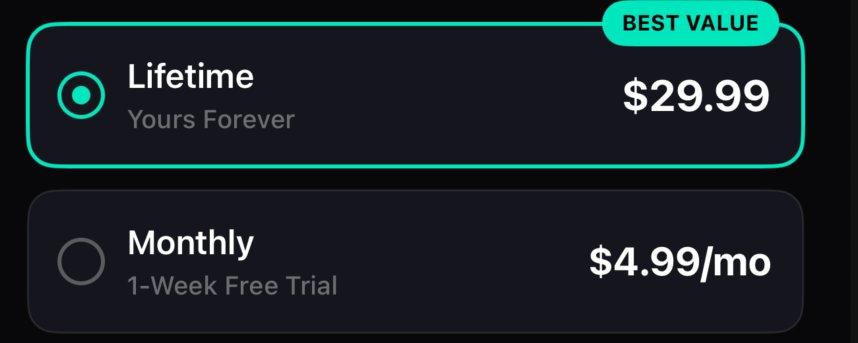
Apple banned me on May 14, 2026.
I was doing $500K+ ARR.
At the time, I thought it was the worst thing that could happen to my business.
I had to start over. New platform. New funnel. New marketing strategy.
147 days later:
$102K MRR. $1.2M+ ARR.
Solo founder. Fully bootstrapped.
All on Stripe.
Turns out getting banned was the best thing that ever happened to my business.
Oh, and Stripe's ~2.9% fee beats Apple's 30%.
Thanks, Apple.
Ask me anything in the replies. I'll answer your questions.
P.S. I'm looking to sell the business. I genuinely believe it can reach $1M/month, but I'm ready for my next chapter.
DMs are open for serious buyers.




JoinOrigin retweeted

Introducing Tapkit
Tapkit is a Mac app that lets your agents use your iPhone. Tell it to do anything and it can use your phone to do it.
We've been iterating on Tapkit over the last few months with our earliest users and finally feel like it's ready for general use. Today it is easy to use, supports any agent, and can even use multiple iPhones at the same time.
There are so many great things that we can do with this new primitive, but I didn't want to wait any longer to share it with you.
Try it now: tapkit.ai
JoinOrigin retweeted

the people that got cal.com to #1 in chatgpt made a video explaining how to win AEO
heres everything they shared:
>AI search isnt a black box. the models rely on consensus from the open internet and u can literally view the sources chatgpt uses to form its answers
>"#1" doesnt mean winning one query. it means consistently showing up in the top 3 across dozens of different prompts
>they wrote 47+ comparison blog posts like "cal vs calendly" and "cal vs savvycal" targeting ppl who are ready to buy, not ppl who are just browsing
>they stopped writing generic informational content that AI already answers on its own. every page became product-led and problem-solving
>1 in 3 cal.com sales meetings now comes from AI visibility. they track revenue changes not rankings
>youtube has a massive correlation with AI search visibility. video content is harder to fake than text and AI models trust it more. youtube is the new reddit for AEO
>they deleted thousands of thin and underperforming pages from their site. less content, better content, more traffic. sounds backwards but it works
>they use a concept called parasite SEO -> leveraging high authority platforms like youtube and linkedin to rank content faster than they could on their own domain
>mass producing thousands of AI generated articles backfires. it creates keyword cannibalization, triggers penalties, and signals low value to search engines
>AI search is winner take all. if ur not in the top 3 recommendations u basically dont exist to the user. theres no page 2
>if ur starting from zero with no budget: skip the fancy CMS. make one high quality video comparing ur product vs a competitor and make sure ur technical SEO foundation is solid. u can start with $100
this is the most transparent breakdown ive seen from a team that actually did it. not theory. results.

JoinOrigin retweeted

🚨 JAVASCRIPT JUST GOT A NATIVE COMPILER.
Vercel Labs just built scriptc to turn TypeScript and JavaScript into native executables.
No Node runtime required in the final binary.
→ Compile JS/TS → native executable
→ Emit C, LLVM IR, assembly, objects
→ Build WebAssembly modules
→ Use supported Node APIs
→ Bundle npm packages with --dynamic
→ Check exactly what can compile statically
→ Works across macOS, Linux, Windows + WASI
The crazy part?
scriptc build hello.ts -o hello
./hello
You write JavaScript.
You get a native binary.
And it’s not just a demo — the project has its own native runtime and compiler pipeline.
Vercel Labs calls it experimental, so this is still early-stage tech.
🔗 github.com/vercel-labs/scrip…
#Vercel #JavaScript #TypeScript #Compiler #WebAssembly #NodeJS #DeveloperTools #OpenSource #Programming


JoinOrigin retweeted

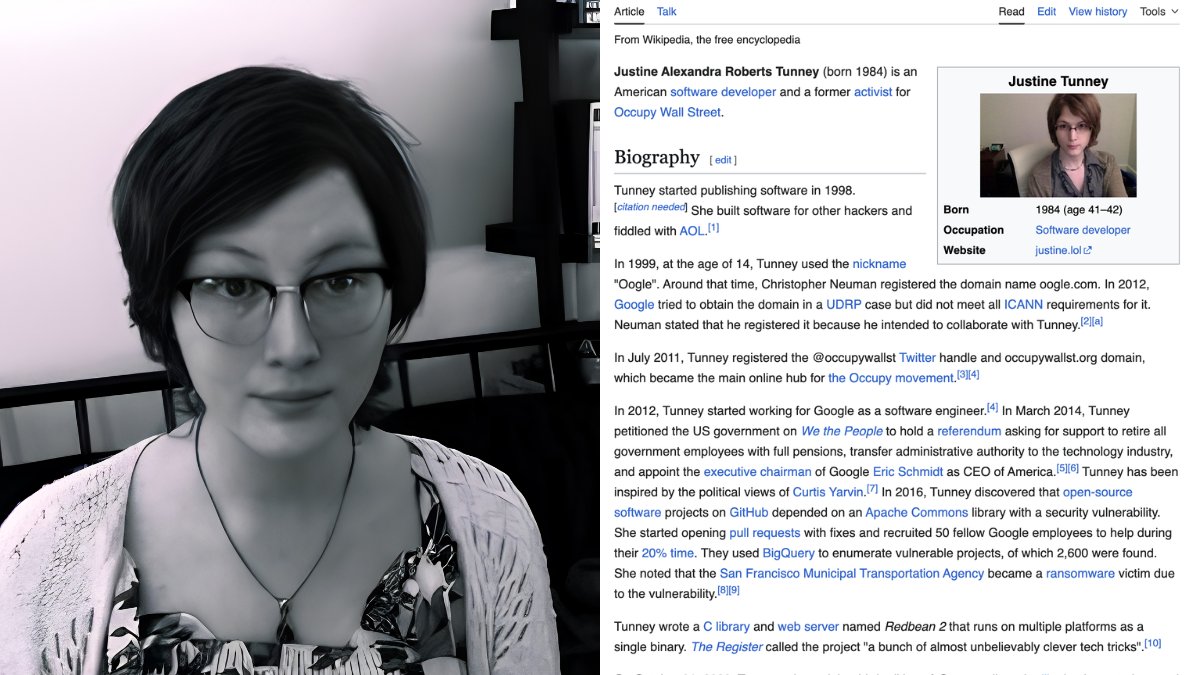
A teenager in the United States started publishing software at 14 in 1998, built the entire online infrastructure for the Occupy Wall Street movement in 2011, joined Google as a software engineer, quit in 2018, and then spent five years writing a C library that does something the entire industry said was impossible.
Then she combined it with llama.cpp and shipped the easiest way on the planet to run a large language model on any computer.
Her name is Justine Tunney.
Here is the story, because almost nobody outside the low level systems world knows what one engineer has built.
Justine was born in 1984. She started writing and publishing software at 14, back when distribution meant uploading binaries to BBS systems and chat networks. She picked up the handle jart, which she still uses on GitHub today. She did the work most teenagers her age were not doing. She read the systems programming literature. She studied compilers. She fell in love with C.
In July 2011 she registered the @occupywallst Twitter handle and the occupywallst dot org domain. Within weeks the protest movement that began in Zuccotti Park in New York had become a global phenomenon, and her infrastructure was the digital backbone of the entire thing. She handled the social media, the website, the donations, the coordination. She built the platform that pushed the movement to reach millions.
After Occupy she joined Google as a software engineer. She worked on TensorBoard, the visualization tool for TensorFlow, and on site reliability for Google infrastructure. She stayed for years. Then in 2018 she left Google Brain to work on a personal project.
The project was called Cosmopolitan Libc.
Cosmopolitan does something most C programmers would tell you is mathematically impossible. It lets you compile a C program once and have the resulting binary run natively on Linux, Windows, macOS, FreeBSD, OpenBSD, and NetBSD with no modification. One file. Six operating systems. No virtual machines. No interpreters. No recompilation. The technique she invented is called Actually Portable Executable.
The implications are wild. Cosmopolitan binaries violate every assumption about how operating systems load programs. They are at once a Windows PE file, a Linux ELF binary, a macOS Mach-O binary, and a shell script. The same bytes run on every platform.
For five years she worked on it mostly alone. She funded the development partly through Mozilla's MIECO program, which sponsored her work on Cosmopolitan 3.0, released on October 31, 2023.
A month later she shipped llamafile.
llamafile is what happens when you combine Cosmopolitan with llama.cpp. You take any LLM weights file in the standard GGUF format, you wrap it in Justine's binary, and you get a single file that runs on six operating systems without installation. No Python. No CUDA setup. No dependency hell. Just one file that you double click and it works.
Mozilla launched it as an official project of their innovation group on November 29, 2023. It went viral immediately. The repository, hosted at github .com/mozilla-ai/llamafile, now has 24,600 stars. The license is Apache 2.0.
Justine kept shipping. She added GPU support to Cosmopolitan, a task systems engineers thought would require rewriting the whole thing. She added dlopen support, another thing nobody else had figured out. She wrote whisperfile, a single file version of OpenAI's Whisper speech-to-text model based on the same architecture.
Her GitHub profile lists projects most engineers would consider impossible. sectorlisp, a Lisp interpreter that fits in a boot sector. blink, the tiniest x86-64-linux emulator on Earth. bestline, a teletypewriter command session library. redbean, a complete web server inside a single zip file.
A teenager who shipped software in 1998 grew up to write the C library that the entire local AI movement now runs on top of.
She did most of it alone, and most people scrolling AI Twitter cannot name her.

JoinOrigin retweeted

Stop building the same boring SaaS UI.
Steal some taste from these instead:
builtbydesigners.com - Products actually built by designers
kage.design - Real interfaces broken down by page + component
rareui.com - Unusual animated React components
interior.dev - Beautiful interactions and motion
glass.samasante.com - Glass effects done properly
vibeui.online - Components for vibe-coded apps
uiable.com - 600+ open-source React components
Save it. You’ll need one of these eventually.

JoinOrigin retweeted
Exactly! That’s why I built Kage.design
