

Graphics @ Huawei
France - he/him
Joined January 2025
- Tweets2.1K
- Following1.1K
- Followers1.9K
- Likes10.7K





Amélie Heinrich retweeted

À Paris, lors des manifestations du 17 octobre, une jeune femme partage son échange avec un CRS qui se déroulait plutôt bien, avant de montrer le comportement de deux autres CRS, dont un homme, qui s’est montré agressif physiquement envers elle. 😳


Amélie Heinrich retweeted

society does not value art enough. we should be using modern tech to empower artists to build shit that wae never possible before.
i want to leave my house and think "woah im the future".

Amélie Heinrich retweeted
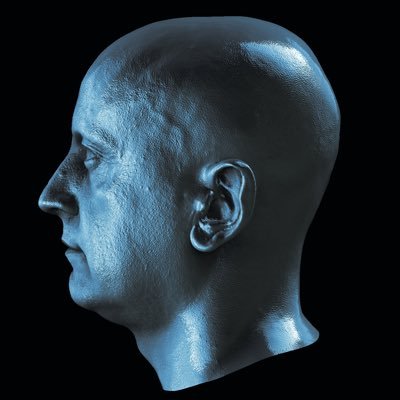
MicroSDF: Microfacet-Driven Hybrid Neural SDFs for Mixed-Reflectance Surface Reconstruction
Lejia Ye, Yuhua Xu, Yulan Guo, Lian Xu, Xiaohu Zhang
arxiv.org/abs/2610.19681
Abstract:
Accurate 3D reconstruction in real-world environments remains a significant challenge due to the coexistence of reflective and non-reflective surfaces, which pose distinct modeling demands. Existing methods often treat these surface types separately, limiting their generalizability and physical plausibility. To bridge this gap, we propose MicroSDF, a novel neural implicit framework that facilitates geometry and reflectance modeling through microfacet theory. Our approach incorporates three core innovations: (i) a microfacet-guided geometry model that extracts multi-scale surface normals (macroscopic and microfacet) from a signed distance field (SDF), regularized by a proposed microfacet normal consistency loss to enforce physically plausible surface orientations; (ii) an enhanced dual-branch color model, where the specular branch leverages the microfacet normals to model high-frequency reflectance, and the vanilla branch, unlike prior works, uses reflection direction (instead of viewing direction) to better model diffuse and low-frequency specular components; and (iii) a detection-guided color blending strategy that adaptively fuses the color outputs based on reflection priors, providing more physically intuitive blending than implicitly learned blending weights. Combined with a tailored multi-stage optimization scheme, the proposed MicroSDF achieves robust and high-fidelity reconstruction across reflective and non-reflective surfaces. Extensive experiments on DTU, Shiny Blender, Ref-NeRF, and DeepVoxels datasets demonstrate state-of-the-art performance, establishing a new direction for physically grounded neural reconstruction.


Amélie Heinrich retweeted

As a computer graphics person, M3 goes in S tier. It was the first Apple Silicon chip to gain dynamic caching and hardware ray tracing, and Apple’s implementations of both of those features is really good.


Amélie Heinrich retweeted

Graphics Programming weekly - Issue 456 - September 20th, 2026 jendrikillner.com/post/graph…

Amélie Heinrich retweeted

I reverse engineered and reimplemented DLSS 5's neural rendering in Vulkan, from the architecture down to the last rounding.
same input, same output as Nvidia's DLSS5, 7.8ms per 1080P on RTX 4070 super
code and docs : github.com/maanHimself/OpenD…


Amélie Heinrich retweeted

Every indie game is a quirky gimmick and every AAA game is focus, M
The ps2 era where 7 autistic guys could come together to create a game with clear artistic vision and simple but polished mechanics is long dead and buried

I made a game where your teeth are your health bar.
It’s called Tooth for Tooth.
Coming to Steam September 30.
Wishlist:
store.steampowered.com/app/5…
Amélie Heinrich retweeted

📢XBOX Tokyo Game Show 2026 Broadcast Update
Bill Skarsgård is confirmed as the lead role in PHYSINT. New poster also revealed featuring Bill Skarsgård and Charlee Fraser.
#KojimaProductions #PHYSINT #XBOX


Amélie Heinrich retweeted

Pitää muistaa, että tekoälyn uhka on ollut Darion markkinointistrategia alusta asti. Hän sanoi aikoinaan: ”ChatGPT 2.0 on liian vaarallinen julkaistavaksi” ja sai sillä paljon ilmaista medianäkyvyyttä. Ja näkyvyydellä saadaan lisää sijoittajia. OpenAI ja Anthropic ovat vahvasti tappiollisia firmoja ja ovat täysin riippuvaisia sijoittajien rahoituksesta. Myös Yhdysvalloissa Anthropic yrittää lobata hallitusta kieltämään avoimen lähdekoodin tekoälymallit, koska ilmaisen vaihtoehdon kehitys on heille eksistentiaalinen riski. Avointa lähdekoodia kun ei voi yhtä helposti kontrolloida. Ihmiset toistavat Darion puheita ilman lähdekritiikkiä.

Ylen haastattelema professori rauhoitteli eilen, että puheet tekoälyn aiheuttamasta ihmiskunnan tuhosta ovat liioiteltuja.
Samaan aikaan maailman edistyneimpiä tekoälymalleja rakentavien yhtiöiden johtajat ovat itse valmiita painamaan jarrua – ja tekoälyä tehneet ihmiset irtisanoutuvat vapaaehtoisesti huippulafkojen lukratiivisista huippupaikoista riskien ja turvallisuushuolien takia.
OpenAI:n Sam Altman ja Anthropicin Dario Amodei ovat nyt molemmat valmiita hidastamaan edistyneimpien mallien kehitystä.
Absurdia tässä AI-keskustelussa on se, että ihmiset, jotka eivät itse rakenna maailman tehokkaimpia tekoälymalleja, ovat usein varmimpia siitä, ettei tässä ole mitään eksistentiaalista riskiä.
Samaan aikaan niitä oikeasti rakentavat varoittavat, että kehitys voi olla ihmiskunnalle hyvin vaarallista ja vauhtia pitää hidastaa.
Jos OpenAI:n ja Anthropicin johdossa sanotaan, että kaasua ei kannata painaa pohjaan ennen kuin tiedämme varmasti, miten jarrut toimivat, en ehkä itse huutaisi ensimmäisenä takapenkiltä, että ajakaa lujempaa.


