

@CSEIndia's Research Programme on Climate Change and Green Economy championing study of the most pressing climate policy issues relevant for the Global South
New Delhi
Joined April 2021
- Tweets2.6K
- Following182
- Followers793
- Likes704



Pinned Tweet
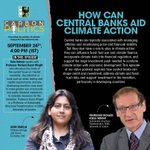
🎙️Carbon Politics Episode 16 is out now!
In this episode @SehrRaheja speaks to Prof. Richard Kozul-Wright from @SOAS on how central banks can aid climate action.
Tune in to the episode here: tinyurl.com/vc79pkds
For more details ⏬

CSE Climate Change and Green Economy retweeted

CSE in Bangkok | World Bank-IMF Annual Meetings and UNFCCC Climate Finance Talks
@SehrRaheja from @CSE_Climate will be in Bangkok, Thailand, from October 11-16, 2026, as CSE participates in the @UNFCCC Climate Finance Talks and the World Bank-IMF Annual Meetings.
Sehr will also present CSE’s new paper, The Borrowing Floor, which examines the cost-of-capital crisis keeping climate finance expensive in the Global South: cseindia.org/the-borrowing-f…
CSE will be co-hosting side events and strategy workshops with partner organisations, and providing updates and analyses of the themes under discussion.
Explore the detailed calendar of engagements to learn more. Follow CSE for updates from Bangkok.

CSE Climate Change and Green Economy retweeted
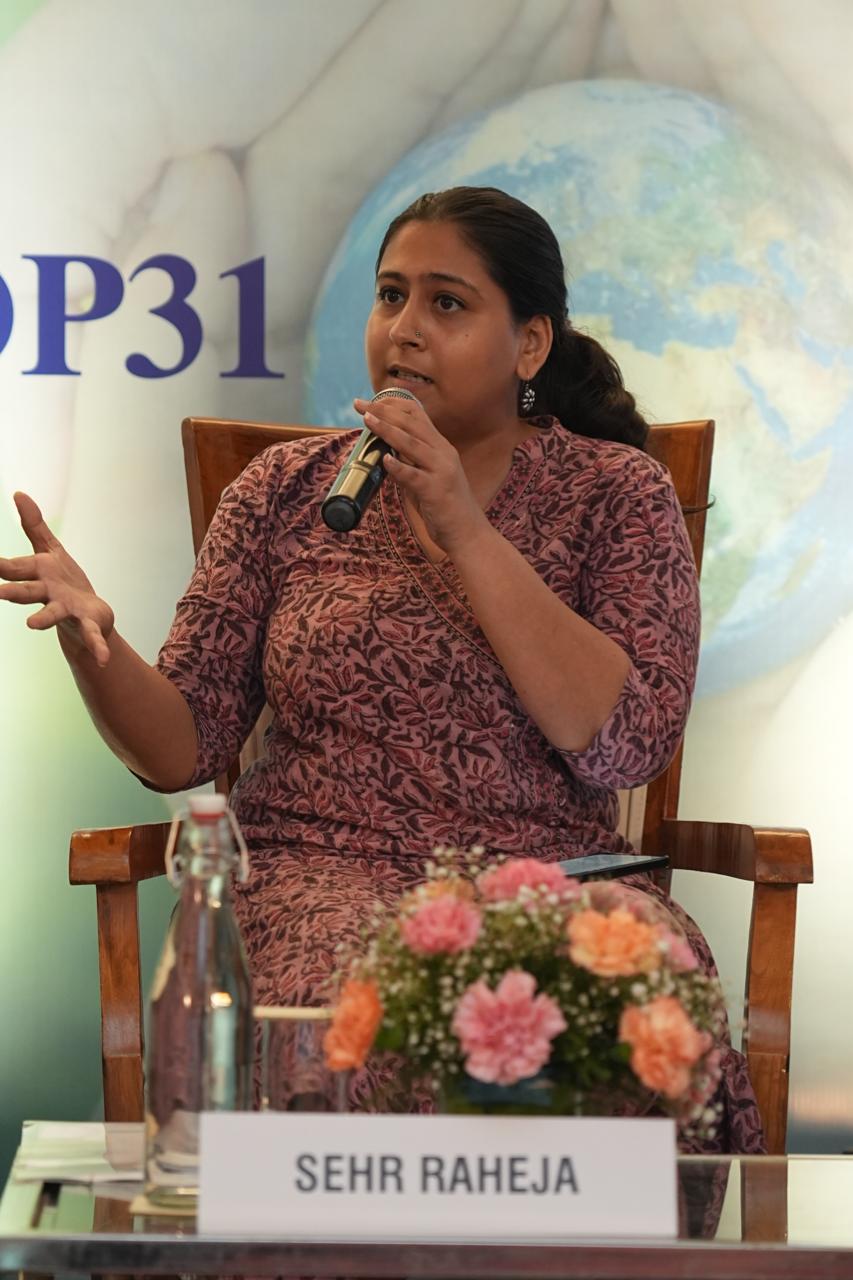
Last week, @SehrRaheja, Deputy Programme Manager, @CSE_Climate spoke at the @UNEP India - RIS Dialogue on Connecting Nature and Climate: Dialogue on CBD COP17 and UNFCCC COP31.
Sehr highlighted the need to learn from the experience of climate finance, improve access to finance and better align financial flows with climate and biodiversity goals. She also emphasised the importance of strengthening South-South cooperation.

CSE Climate Change and Green Economy retweeted

𝐔𝐍𝐄𝐏 𝐈𝐧𝐝𝐢𝐚-𝐑𝐈𝐒 𝐃𝐢𝐚𝐥𝐨𝐠𝐮𝐞 | 𝐂𝐨𝐧𝐧𝐞𝐜𝐭𝐢𝐧𝐠 𝐍𝐚𝐭𝐮𝐫𝐞 𝐚𝐧𝐝 𝐂𝐥𝐢𝐦𝐚𝐭𝐞: 𝐃𝐢𝐚𝐥𝐨𝐠𝐮𝐞 𝐨𝐧 𝐂𝐁𝐃 𝐂𝐎𝐏𝟏𝟕 𝐚𝐧𝐝 𝐔𝐍𝐅𝐂𝐂𝐂 𝐂𝐎𝐏𝟑𝟏
The panel discussion was moderated by Dr. Divya Datt, Deputy Head, UNEP India, she emphasized that the focus must now move beyond recognising the need for convergence to operationalising it through planning, finance, implementation and delivery; without creating additional reporting burdens for countries. She also emphasised the importance of adaptation and ecosystem resilience in translating climate and biodiversity ambition into concrete action on the ground.
🔹Mr. R.R. Rashmi, Distinguished Fellow, @teriin, emphasised the need for a national-level framework for action and adequate financial resources to translate global commitments on climate change and biodiversity into tangible outcomes. He also drew attention to the role of adaptation in integrating climate and biodiversity objectives.
🔹Mr. Aashish Chandorkar (@c_aashish), Former Counsellor, Permanent Mission of India to the WTO, Geneva, highlighted the growing prominence of trade-related climate measures, sustainability standards, and non-tariff measures, and their implications for developing countries’ market access and export competitiveness. He also noted the concerns of developing countries regarding unilateral measures adopted by developed countries that may restrict exports, even when such measures are not specifically targeted at them.
🔹Ms. Sehr Raheja (@SehrRaheja), Deputy Programme Manager, Climate Change and Green Economy, @CSEINDIA, emphasised the need to learn from the experience of climate finance, improve access to finance, and explore ways to better align financial flows with climate and biodiversity objectives. She highlighted the importance of South-South cooperation.
🔹Dr. Balakrishna Pisupati, Head, UNEP India, highlighted that “decisions are global, but responsibility is national,” emphasising that the countries need to build their negotiation capacity and align their positions across environmental agendas before entering increasingly complex multilateral negotiations.
🔹Dr Ipsita Kumar, Consultant, RIS, highlighted the importance of interoperability of existing monitoring and data systems, technology transfer and capacity building, and institutional convergence. She also underlined the potential for greater synergies across the three Rio Conventions.
@UNEP | @UNinIndia | @byadavbjp |@AfyanVahagn | @armindemb | @MEAIndia | @FinMinIndia | @moefcc | @EnvironmentPib | @SKSharma_World | @AmitK_PhD | @glswathi15 | @DakshinNews | @AIC_aseanindia | @cmec_ris | @fitm14 | @fisd19
#TripleCOP #RioConventions #ClimateGovernance #EnvironmentalGovernance #SustainableDevelopment #UNEP #RIS


📢Join us tomorrow at 4.00 PM IST for the launch of our new paper!
🔗For details and registration: shorturl.at/HxJ4K
📜To download the paper: shorturl.at/gREGL

📢In this week's Climate Weekly newsletter:
⚡️New UN electrification target brings disproportionate hurdles for the Global South
🎙️New Carbon Politics episode on central banks and climate action
👓Read: shorturl.at/QY8PS
🔗Subscribe: shorturl.at/x2FrU

CSE Climate Change and Green Economy retweeted
Join us for the launch of CSE's new paper, “The Borrowing Floor”: us02web.zoom.us/webinar/regi…
Developing countries pay nearly twice as much as advanced economies to finance the same clean energy projects. CSE’s new paper highlights that this high cost of capital is less a reflection of real project risk than a structural feature of how the global financial system prices risk, often penalising the Global South.
The paper examines the factors influencing the cost of capital, particularly for clean energy technologies, and global factors like sovereign credit ratings, dollar dominance and global banking regulations. Together, these factors pose a higher ‘borrowing floor’ for developing countries.
Join us for the virtual launch, followed by a panel discussion.
The panel includes @Bhumika820, @rishirbhandary, @aygoswami and @SehrRaheja .
Read the paper ahead of the discussion: cseindia.org/the-borrowing-f…
Authors: Sehr Raheja | @rudrathavinashi | @upamanyudas05 | Satakshi Gupta | Avantika Goswami

CSE Climate Change and Green Economy retweeted
How can Central Banks Aid Climate Action? Carbon Politics Episode 16 is OUT!
In this episode, @SehrRaheja speaks with Richard Kozul-Wright, noted economist and professor at Centre for Sustainable Structural Transformation, @SOAS University of London.
The episode explores how Central Banks can shape credit and investment, address climate and fossil fuel risks, and support investment in the transition, particularly in developing countries.
Watch now: youtu.be/r_6flacWso8?si=TTAB…
Check out the previous episodes here: cseindia.org/page/csepodcast

In this week's Climate Change Weekly 👇
⚠️@sunitanar cautions us about the role of climate change but also human hubris in the recent Nepal disaster
📢CSE reacts to the BRICS summit's New Delhi Declaration
👓Read: shorturl.at/GcK1n
🔗Subscribe: shorturl.at/rQBD6

CSE Climate Change and Green Economy retweeted

WATCH| BRICS has wrapped up its 18th summit in New Delhi. But beyond the handshakes and headlines, what did the grouping actually agree on?
📌From pushing back against carbon border measures and expanding local-currency trade to climate finance, critical minerals, energy transitions and a stronger Global South voice, @SehrRaheja, Deputy Programme Manager, @CSE_Climate, presents five main key takeaways from the New Delhi Declaration.
📌In summary, concludes Raheja, the BRICS 2026 Summit was not about one big breakthrough. It was about a broader push to reshape who sets the rules on trade, finance, technology and the green transition. Because this is exactly what will shape how quickly countries can switch from fossil-based to low carbon infrastructure and futures.
Watch the full video here: youtube.com/watch?v=DPhNeJTe…

CSE Climate Change and Green Economy retweeted
BRICS has just wrapped up its 18th summit in New Delhi. But beyond the handshakes and headlines, what did the grouping actually agree on? Here are five things to know from the New Delhi Declaration: youtu.be/DPhNeJTe6BQ?si=-ZZJ…

📢New Climate Change Weekly is out -
⚡️Distributed solar helps farmers in the Indian state of Odisha tackle energy poverty
🎙️The new podcast episode asks - can the Global South Build the Clean Tech it Needs?
🔍Read tinyurl.com/3hxn6amp
🔗Subscribe tinyurl.com/56kdzf3b

💡New Climate Change Weekly newsletter is out 👇
🌡️@UNEP 1.5C overshoot report highlights & reactions
🎙️CSE podcast episode on clean tech manufacturing
💻CSE certificate course on AI, data & fact-checking
🧾Read: tinyurl.com/39zwer9e
🔗Subscribe: tinyurl.com/53uhkbke

📢New Climate Change Weekly newsletter:
➡️Devastating Nepal floods
➡️India's need for a community-centric transition
➡️New Carbon Politics podcast episode
👓Read: tinyurl.com/2s3bv4sr
🔗Subscribe: tinyurl.com/53uhkbke

🚨 Announcing Episode 15 of Carbon Politics!
📅 Drops on June 28
Catch CSE's @aygoswami and @TrishantDev discussing their report on clean technology manufacturing and what it will take for the Global South to build competitive domestic industries.
For more details ⬇️

In the latest episode of Carbon Politics, CSE's @upamanyudas05 speaks to @IRENA's Dr. Binu Parthan and Dr. Toyo Kawabata about how the proposed '35% by 2035' global electrification target can account for diverse national contexts.
Watch the full episode: youtu.be/jjPzj-2nRf4
Carbon Politics Ep 14 is out now!
In this episode, CSE's @upamanyudas05 speaks to @IRENA's Dr. Binu Parthan and Dr. Toyo Kawabata about the proposed target of achieving 35% electrification globally by 2035 to stay below 1.5°C.
Watch the full episode: youtu.be/jjPzj-2nRf4

Carbon Politics Ep 14 episode drops tomorrow!
In this episode, CSE's @upamanyudas05 speaks to @ashbin and Dr. Toyo Kawabata from IRENA about the proposed global electrification target to achieve 35% electrification by 2035.
For more details, see the poster below 👇

This week CSE and @AFPHAfrica co-hosted a webinar to discuss our new brief on an equitable trade-climate agenda.
The discussion featured rich inputs from @ambFaizelIsmail, @yinshaoloong, @anabella_tu, Charles Wanguhu, Shimukunku Manchishi, @TrishantDev & @aygoswami.
A thread 👇


➡️ Proposals also included a “historically adjusted” CBAM that accounts for two centuries of embedded Global North emissions, and calls for reciprocal scrutiny of Global North environmental standards.
Watch the full discussion: youtube.com/live/GBnh60o9z18…
Read our brief 'An Equitable Trade-Climate Agenda' here: cseindia.org/an-equitable-tr…
