

Plant molecular biologist 🥼 at @IPS2ParisSaclay 🇫🇷, interested in quantitative growth control and non-coding RNAs 🌱🧫🧬🖥️🔬 @BleinThomas@fediscience.org
- Tweets2.3K
- Following225
- Followers383
- Likes258






ALT To fully understand gene regulation, it is necessary to have a thorough understanding of both the transcriptome and the enzymatic and RNA-binding activities that shape it. While many RNA-Seq-based tools have been developed to analyze the transcriptome, most of them only consider the abundance of sequencing reads along annotated patterns (such as genes). These annotations are typically incomplete, leading to errors in differential expression analyses. To address this question the OGE and GNET team from IPS2, with the support Phenoscope, the POPS platform and the LaMME, published in NAR Genomics and Bioinformatics DiffSegR, an R package that enables the discovery of transcriptome-wide expression differences between two biological conditions using RNA-Seq data. DiffSegR does not require prior annotations and uses a multiple changepoints detection algorithm to identify the boundaries of differentially expressed regions based on the per-base log2 fold change. In a few minutes of computation


ALT Journée des omiques végétales 25 et 25 juin 2024


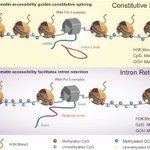
ALT Epigenecs delves into the intricate changes and regulaons of biological traits without altering DNA sequences. It is pivotal to various aspects related to plant development and responses to the environment. Consequently, knowledge of the plant epigenec regulaon network, encompassing both upstream signals and downstream targets, is imperave for crop improvements, thereby ensuring food security amidst shiing climates. With this objecve in mind, the Plant Physiology Editorial Team has curated this Focus Issue on plant epigenecs, containing a compilaon of research arcles alongside mely reviews. The topics cover diverse types of plant epigenec modificaons, including DNA methylaon; histone modificaons; noncoding RNAs; and chroman accessibility, primarily focusing on their role in regulang crop agronomic traits.

ALT Schematic figure conceptualizing the roles of long non-coding RNAs (lncRNAs) in stress responses in plants. A. LncRNAs are key players allowing plants to cope with stress. B. Stress memory. Stress triggers plant defenses that are essential for survival. Repeated stress exposure and recovery actions develop stress memory (priming) to overcome repeated exposure to stress and improve plant survival, in a process where lncRNAs may play an important role. C. Conservation of lncRNAs in plant stress adaptation. LncRNAs exhibit differences in expression between natural accessions in response to stress, leading to their adaptation to different environments. Specific lncRNAs mediate stress response in Ecotype A (left) leading to plant stress tolerance, while they are absent or silenced in Ecotype B (right), leading to plant stress sensitivity.


ALT phenotypes of several snap33mutants


