

Senior Research Specialist (IR) @INRAE_France Gene Expression #genomics #transcription #chromatin #bioinformatics #rstats @pgpmartin.fr on bluesky Tweets my own
Bordeaux, France
Joined August 2015
- Tweets2.7K
- Following2K
- Followers736
- Likes4.7K


Pinned Tweet
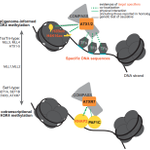
Happy to share our latest article on Arabidopsis BORDER proteins @CurrentBiology authors.elsevier.com/c/1dx4a…
These negative transcription elongation factors appear to repress the expression of genes through different mechanisms.
Pascal Martin retweeted

Preprint on "Improving spliced alignment by modeling splice sites with deep learning". It describes minisplice for modeling splice signals. Minimap2 and miniprot now optionally use the predicted scores to improve spliced alignment.
arxiv.org/abs/2506.12986

Pascal Martin retweeted
minibwa v0.5+0.6:
* fixed an issue in PE mapQ (inherited from bwa-mem)
* more conservative PE mapQ (learned from dragmap)
* HG002 var calling: FP down but FN up
* memory-mapped index loading
* user-defined insert size distribution
* APIs working for BS-seq
github.com/lh3/minibwa/relea…

Pascal Martin retweeted

scplotter provides a set of functions to visualize single-cell sequencing data in an easy and efficient way
github.com/pwwang/scplotter/…

Pascal Martin retweeted

Visualize genomic data with ease using gggenomes, an R package that extends ggplot2 to handle and display genomic information intuitively. Whether you’re comparing genomes, analyzing features, or showcasing synteny, gggenomes provides the tools you need to turn complex genomic data into clear, informative visualizations.
Why use gggenomes?
✔️ Genomic-focused visualizations: Specifically designed for handling genomic data, including features, alignments, and comparative analysis.
✔️ Versatile and modular: Create detailed and layered plots for diverse genomic scenarios with flexibility for customization.
✔️ Built on ggplot2: Leverages ggplot2’s familiar framework, making it easy for users to adapt and enhance their visualizations.
The example visualization shown here is taken directly from the gggenomes GitHub repository, demonstrating how it transforms genomic data into compelling plots: github.com/thackl/gggenomes
Curious to learn more about creating data visualizations in R and using tools like ggplot2 and its extensions? Check out my online course, "Data Visualization in R Using ggplot2 & Friends!"
Further details: statisticsglobe.com/online-c…
#tidyverse #statisticsclass #RStats #database #datavis #R #ggplot2 #Python #VisualAnalytics

Pascal Martin retweeted
Heatmap in ggplot2
yunuuuu.github.io/ggalign/in…
I always use complexheatmap, but this seems to be a good alternative if you want to stay within the ggplot

Pascal Martin retweeted

Today in @ScienceMagazine, we report a new DNA editing technology to seamlessly write massive changes into the right place in the human genome.
The reason gene editing hasn't transformed human health is that current gene editing technologies like CRISPR are very limited.
The problem with CRISPR is that it cuts up your DNA, and then hopes that unreliable cellular DNA repair will make the wanted edit. @geochurch famously called it genome vandalism. More precise versions of CRISPR only edit less than 100 bases - often only a single base. Therefore, it's not suited to make large changes safely.
However, most diseases are not the result of mutations in one location. Instead, their causes are spread all across the 3 billion base pairs in the genome.
We found bridge RNAs in bacterial “jumping genes” that allow us to make safe and arbitrary changes (insert, cut out, or flip) to every nucleotide within (up to) a 1 million bp sequence in your DNA.
In the paper, we show that we can correct the disease-causing DNA repeats that cause Friedreich's ataxia (which is a rare neurological disease). The same approach could be applied to Huntington’s and other repeat expansion disorders.
At @arcinstitute, we're working towards a full Turing machine for biology. Evo, our DNA foundation model, helps us design the optimal healthy DNA sequences. And Bridge recombination gives us the ability to seamlessly write these changes into the right place in the genome.
This work was a wonderful collaboration with my @arcinstitute cofounder @SKonermann and led by the indefatigable @ntperry13, alongside our amazing bridge editing team: @BartieLiam @dhruvakatrekar @Gabogonzalez515 @mgdurrant @james_jw_pai @AlisonFanton Juliana Martins Masa Hiraizumi @chiaroscurale @hnisimasu


What if we could universally recombine, insert, delete, or invert any two pieces of DNA?
In back-to-back @Nature papers, we report the discovery of bridge RNAs and 3 atomic structures of the first natural RNA-guided recombinase - a new mechanism for programmable genome design
Pascal Martin retweeted

Happy to share our new computational pipeline to predict the protein functional consequences of alternative RNA processing events: biorxiv.org/content/10.1101/…

Pascal Martin retweeted

This a really exciting leap forward for genomic sequence to activity gene regulation models. It is a genuine improvement over pretty much all SOTA models spanning a wide range of regulatory, transcriptional and post-transcriptional processes. 1/

Happy to introduce AlphaGenome, @GoogleDeepMind's new AI model for genomics.
AlphaGenome offers a comprehensive view of the human non-coding genome by predicting the impact of DNA variations. It will deepen our understanding of disease biology and open new avenues of research.
Pascal Martin retweeted

Excited to introduce LiftOn – an open-source tool for accurate liftover of genome annotations (GFF) across assemblies. 🚀
👉 Code &community: github.com/Kuanhao-Chao/Lift…
It’s been incredibly rewarding building this for the genomics community. Thank you to all collaborators/friends!


Genome annotation is falling behind how fast genomes can be assembled—but Johns Hopkins researchers @KuanHaoChao, @StevenSalzberg1, @elapertea, @alaina_shumate, @celinehohzm, & @alan_mayonnaise (+ @JakobHeinz9) have created a tool that can change that: cs.jhu.edu/news/solving-the-…

Pascal Martin retweeted
Love this work from @KexinHuang5 + colleagues. An AI co-pilot in my view is a very useful, practical framing of using agents to enhance the efficiency of biomedical science.
Also appreciate @KexinHuang5 's grounded presentation of his work.
This was clearly an immense effort

📢 Introducing Biomni - the first general-purpose biomedical AI agent.
Biomni is built on the first unified environment for biomedical agent with 150 tools, 59 databases, and 106 software packages and a generalist agent design with retrieval, planning, and code as action.
This enables Biomni to perform a wide range of research tasks - from literature review, hypothesis generation, protocol design, data analysis, clinical reasoning, and much more - across subfields like genomics, microbiome, physiology, and beyond.
Some key results:
🔬 Designed a molecular cloning experiment validated in wet lab, matching the performance of a >5-year expert in a blinded test
📊 Completed a wearable bioinformatics analysis across 458 messy files in 35 min vs. 3 weeks by a human
🧠 Uncovered novel transcription factor hypotheses driving skeletal lineage regulation
We built a web platform where biomedical scientists can immediately delegate their tasks to the agent today, completely free!
🧪 Try it now: biomni.stanford.edu
📄 Paper: biomni.stanford.edu/paper.pd…
💻 Code: github.com/snap-stanford/bio… (will be fully open-sourced very soon!)
💬Join the community: tinyurl.com/biomni-slack
Biomni is an open-source initiative: we invite the community to build on it and advance biomedical research at scale.
With amazing collaborators @StanfordAILab @StanfordMed @StanfordCancer @genentech @arcinstitute @UCSF @UW @PrincetonAInews
@serena2z @hcwww_ @YuanhaoQ @mintaylu @yusufroohani @RyanLi0802 @LinQiu0128 Gavin Junze Di Shruti Jennefer Xin Zhou @MWheelerMD Jon Bernstein @MengdiWang10 @PengHeAtlas @SnyderShot @lecong Aviv Regev @jure
Pascal Martin retweeted

Sequencing the gaps: dark genomic regions persist in CHM13 despite long-read advances biorxiv.org/content/10.1101/… #biorxiv_bioinfo
Pascal Martin retweeted
Bioinformatics folks: check out our @biorxivpreprint on a new, very efficient and accurate system for automated genome annotation, EviAnn, led by @AlekseyZimin5 biorxiv.org/content/10.1101/…

Pascal Martin retweeted

Interested in chromatin and transcription in plants? 🌱🧬 looking for a lab to do a postdoc? 🤓our lab invites applicants for the MSCA postdoc fellowships 2025 call!! Interested, please PM!! Check conditions and eligibility here:
marie-sklodowska-curie-actio…
Pascal Martin retweeted
Minimap2-2.29 released with the support of short RNA-seq read alignment. More explanation and results here: lh3.github.io/2025/04/18/sho…
Pascal Martin retweeted

Making intrabodies from antibodies just got easier! Learn how we made 𝟭𝟵 intrabodies to bind and light up peptides and histone modifications in live cells. And thanks to Academia, all sequences are freely available. (video credit: Yuko Sato @YukoSatoT2) biorxiv.org/content/10.1101/…
Pascal Martin retweeted

Why is it that gene promoters are so good at avoiding DNA methylation? Work from Ming Wang, Yan He et al., shows that H3K4me3, enriched at promoters, acts as an anti-DNA methylation mark by recruiting DNA demethylase enzymes! Nice work guys! rdcu.be/d9rPo
Pascal Martin retweeted

Fun #epgienetics review for Sunday!
Histone PTMs and DNA-templated processes (e.g. transcription) are deeply linked, but the mechanisms driving their cross-talk remain unclear.
López-Hernández et al. cover the latest research on this key question - Enjoy!
cell.com/molecular-cell/abst…
Pascal Martin retweeted

Bioinformatics Methods for Transcriptomics -- looks like a great course coursera.org/learn/bioinform…

Pascal Martin retweeted

New year, new assemblies!
I'm excited to announce Autocycler, my new tool for consensus assembly of long-read bacterial genomes!
It's the successor to Trycycler, designed to be faster and less reliant on user intervention.
Check it out: github.com/rrwick/Autocycler…
(1/5)

Pascal Martin retweeted

📢 Appel à propositions pour les mini #symposiums pour @JOBIM2025
➡️ deadline : 17/01/2025 18h
➡️ objectif : réunir des scientifiques autour de thématiques spécialisées en #bioinformatique
➡️ durée : 3 heures
➡️ autofinancement (enveloppe de soutien possible via la #SFBI)
