






$RKLB @RocketLab @NASA @ucbssl
BLUE AND GOLD HEAD TO MARS. SPACE SYSTEMS CASH.
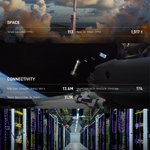
Rocket Lab built the twin spacecraft for NASA and UC Berkeley. Names: Blue and Gold. Next month they swing close past Earth. Each fires its main engine in one long burn. Earth's gravity boosts the burn. Then they head for Mars.
Rocket Lab says this move has never been done successfully before. The ops team is rehearsing the burn now. Launch was Nov 13, 2025. Mars arrival is set for September 2027. Science starts after that.
Neutron's first flight sits in 2027. That delay owns the stock story. This is the other story: Rocket Lab already builds deep-space spacecraft and sells the parts that fly on them. Cash today is not only Electron pads.
Watch the November Earth pass and burn. That is the next real test.
Patience and Conviction.
$RKLB @RocketLab @NASA @ucbssl @RKLBMan @FranciscoSpace5 @AceCrouton @MrsIglesiasRKLB @jinseongeo83473 @SpaceSector001 @HypaWaveNZ @itschrisray @topsecretstocks @pbdes @DutchSpace @KenKirtland17 @TheVan151 @nz482648 @Peter_J_Beck

$NOK $NVDA @nokia @nvidia @TMobile
FIRST AI-RAN CALL ON A LIVE PHONE NETWORK
Nokia, NVIDIA and T-Mobile said today they made the world’s first AI-RAN phone call on a live commercial network. The site is in Bellevue, Washington. It used Nokia radios, Nokia software on NVIDIA servers, T-Mobile’s live 5G network, and a normal phone.
Big AI training still needs power, chips and data centers. This news is different. GPU computers are now sitting inside the cell network, so a tower can run radio work and AI on the same box. At GTC Berlin, Jensen said this kind of computing is moving into the phone network itself.
This is early. It was one call at one live site. Older tests stayed in labs. Nokia hopes the tech can use spectrum about 2x better later — that is a goal, not a result today. Watch if more phone carriers put this into real traffic next.
Patience and Conviction.
$NOK $NVDA @nokia @nvidia @TMobile
@chetansharma @monicapaolini @lindahardesty @disruptivedean @christpatsi @JuhaVaris @Dan_Schwartz @Little_K_Story @SKundojjala @HyperTechInvest @MelvinInvests @rk8215 @jinseongeo83473 @InvestmentGuru_

$SPCX @SpaceX @elonmusk
SI PASSED CONNECTIVITY. STARSHIP STARTED PRINTING CASH.
SpaceX delivered $14.6B of revenue in Q3, up 161% year over year. Net income was $4.4B. Adjusted EBITDA was $8.8B. The mix is the real story.
Super Intelligence brought in $7.56B. Connectivity brought in $5.25B. SI is already the larger top line. Cash is shifting toward compute and intelligence, not only dishes. Nameplate compute sat at about 1.7 GW at quarter end. On the webcast, Elon said he is fairly confident of an incremental 10 GW in 2027 on top of roughly 2.5–3 GW by year-end, with power and cooling as the real constraint rather than chips alone.
Starlink Connectivity is still the cash engine. Segment operating income was about $2.4B, up 99% year over year. Consumer subscribers hit 13.6M with ARPU around $69. That recurring stack funds Starship cadence and the SI buildout. Elon told investors cellular veterans look at the old chessboard and miss that SpaceX is building new pieces. He wants a deeper Starlink strategy walkthrough for that reason.
Space segment revenue was about $1.8B. The first revenue-generating Starship mission delivered 26 Starlink V3 satellites, roughly 10× the downlink of a Falcon Starlink launch. Starship is not only R&D theater. It started printing launch and sat revenue this quarter.
On the call, Elon said Flight 15 is expected next month and will attempt to catch both the booster and the ship — the first full recovery of an orbital launch vehicle if it works. He called success more likely than not, and laid a cadence path of weekly Starship in the first half of next year and twice weekly later, with Louisiana as the next scale base. Post-print he added that $1T in SpaceX revenue in 2028 is no longer impossible. Treat that as direction of travel from this run-rate, V3 bandwidth, and the SI gigawatt path — not a guaranteed forecast.
What to watch next: Starlink ARPU and subscriber growth, how fast SI utilization fills the nameplate gigawatts, and whether Flight 15 catches both stages. Florida and Louisiana cadence matter after that. Own the stack: launch, then sats, then services, plus the AI compute that rides on the same balance sheet.
Patience and Conviction.
$SPCX @SpaceX @elonmusk
@joehansen @MentoviaX @Amy787 @aaronburnett @MaxQ @Truthful_ast @KenKirtland17 @spcxGOD @HeavyMetalShip @BoosterTribe @jinseongeo83473 @MikeSeeley @MarsSurfHab @SpaceSector001 @FranciscoSpace5

$SPCX @elonmusk @SpaceX @spacexai
On the call I listed Elon’s Q3 points. Same list here:
1. Flight 14 orbit + Starlink V3 — turning point for launch, internet, AI compute
2. Flight 15 next month — catch booster + ship; first full recovery if it works; more likely than not
3. Louisiana base — maybe 20+ towers later for huge mass to orbit
4. Starship cadence — ~weekly 1H 2027, then ~twice a week
5. Airplane-like reuse — land and fly again with little repair
6. Half-loaded Flight 14 ≈ 10 Falcon Starlink launches in bandwidth
7. ~3 years: ~100× Starlink bandwidth; ~100k sats, each much stronger
8. Starlink money tracks bandwidth; also phone-direct + ground where allowed
9. 3–5 years: AI agents may need ~1000× more bandwidth
10. AI limit is power / cooling / buildings, not chips alone
11. Mass-to-orbit team now building ground AI compute fast
12. Memphis heavy; ~200k GB300/month; next year mostly Vera Rubin
13. Fairly confident +10 GW compute in 2027 on ~2.5–3 GW YE → ~13 total; aim +20 GW power/cooling; small chance >20 GW compute
14. Biggest training cluster end Q2 — ~440k Vera Rubin for Grok
15. Grokbot fastest growth he’s seen; usage rises; enterprise in weeks; may use most SI compute
16. ARR end-2027: $100B–$1T
17. Terafab: test chip ~May/Jun 2027; volume hope Q3’28; long goal terawatt chips/year
18. Rocket casting → turbine blades/vanes — power 12–18 months faster
19. Factory modular inference boxes with power/cooling, ship out widely
20. Tesla–SpaceX merger: special committees; he thinks yes, not certain; Tesla needs 50% of all shares; no terms yet
21. Starlink path to several hundred billion $/year — wants a longer strategy talk
22. ~50/50 own vs rent compute; short contracts; $/watt rising; hard to rent elsewhere
23. Feel V3 speed after a few hundred sats — maybe mid next year
24. Louisiana first launch hope ~2 years (2028); at scale 2029 highly confident

$TSLA $SPCX @Tesla @SpaceX @elonmusk
ELON: WITHOUT AI AND ROBOTS AMERICA GOES BANKRUPT
Elon told Walter Isaacson on The Builders that cutting government spending will not fix America’s debt.
His words: "There's no way we were gonna solve the deficit from within the government. The only way we're going to solve the national debt is with AI and robots. We're not gonna solve it by trying to save our way there."
The US owes a huge amount of money. Every year it pays a lot just in interest. If the country does not grow faster, that bill keeps getting heavier. Cutting spending sounds nice. Elon says it will not happen — leaders will not cut enough, for long enough.
So the other way is to grow. AI and robots help people and factories make more things with the same time and the same staff.
When the country makes more, businesses and workers earn more. When they earn more, they pay more tax without raising rates. More tax money coming in makes the debt easier to carry.
Robots do not write a check to the Treasury tomorrow. They raise how much America can produce. That is the bet.
$TSLA is Optimus — the robot side.
$SPCX is Starlink cash paying for the AI and compute side.
Patience and Conviction.
$TSLA $SPCX @Tesla @SpaceX @elonmusk
@InvestmentGuru_ @MelvinInvests @ShanuMathew93 @joehansen @MentoviaX @Amy787 @aaronburnett @TESLAcharts @HyperChangeTV @ti_morse @HeavyMetalShip @BoosterTribe @jinseongeo83473 @FranciscoSpace5 @InvestmentGuru_

$CEG $VST @ConstellationEG @VistraCorp
MICROSOFT WALKED AWAY WHEN THE UK GRID SAID 2030s
Microsoft dropped out as the main tenant on Nscale’s planned data center in Loughton, Essex. Grid officials said power may not show up until the 2030s. The site was meant to hold about 23,000 Nvidia GPUs. Nscale says it still works with Microsoft and is looking for other power and other UK sites.
I am not pitching a UK stock. I am watching the same power problem we already see in the US. When the grid line takes a decade, big AI buyers do not wait. They buy watts that can turn on now — plant uprates and firm nuclear names.
$CEG and $VST are the clearest public names in that lane for me.
@ShanuMathew93 @stokdog @Yellowbull11 @UnoMasReactor @whatisnuclear @MadiHilly @jessebday @quakes99 @energybants @Dr_A_Stein @isabelleboemeke @capnek123 @AceCrouton @jinseongeo83473

$PL $NVDA $SPCX @planet @nvidia @SpaceX
PELICAN-12 MOVES TO TUESDAY. THE EDGE ANGLE STAYS.
Bad recovery weather killed Monday’s Bandwagon-5 attempt. SpaceX now points at Tuesday, Oct 20, around 6:30 a.m. ET from Florida. Pelican-12 rides that Falcon when it goes.
I am not here for another countdown graphic. I care what this satellite does once it is up.
Planet wants five Pelicans in the sky this year. This one left the factory less than three months after Pelican-11. That pace looks like a production line, not a specialty build.
The camera gets sharper — Gen 2 aims near 30 centimeters, versus about 50 on Gen 1.
Planet put an NVIDIA Jetson on board for edge compute, the same path they already tested with near real-time object detection on Pelican-4. A steerable antenna is along for the ride too, so they can push sat-to-sat.
@AIStockSavvy @PrimeTrading_ @gbstocks @pbdes @aravindEO @SpaceInvestor_ @DutchSpace @jinseongeo83473 @Kaizen_Investor @InvestmentGuru_ @AceCrouton @FranciscoSpace5

$SPCX @SpaceX @elonmusk
SPACEX IS THE KING ON MASS TO ORBIT
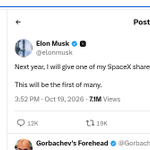
Elon replied today under a launch-share thread: "SpaceX is an anomaly in the matrix."
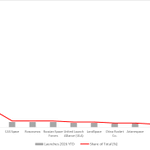
The charts show why. On year-to-date launches, SpaceX already sits alone at the top.
On mass to orbit, everyone else is a rounding error. Western heavy launch is a one-company market in practice.
That is the investor point. Space runs on a simple logic, those are launch, then satellites, then services.
Mass to orbit is the scarce input for Starlink and everything else that needs a ride. When one firm owns most of that pipe, it sets the price of getting mass upstairs.
I am not making a geopolitics case. The numbers alone are enough. Falcon built the lead. Starship is the next step on the same scarce input.
Not investment advice.
@joehansen @Truthful_ast @spcxGOD @TrackingTheSB @yatharthmann @BoosterTribe @MaxQ @aaronburnett @aravindEO @jrxcket @lewisknaggs42 @MikeSeeley @jinseongeo83473 @AceCrouton @MarsSurfHab @SpaceSector001 @FranciscoSpace5 @TheVan151 @nz482648


$NOK @nokia
TESTING THE OCTOBER 15 LOW AND ROUND 9. ALL MAJOR MOVING AVERAGES SIT OVERHEAD.
Nokia closed October 16 at 9.14. The nearest support is the October 15 low at 9.04, about 1.1% under the close, and it sits on round 9. Price trades under the daily 10-day average near 10.02, under the 20-day and 50-day near 10.2, and under the 200-day near 10.19. The weekly 10-day average near 10.35 is overhead too.
I call this a test of that nearest floor. If 9 fails, the higher-timeframe shelf is the July 29 swing at 8.37. Under that come round 8.00, then the March 31 low at 7.79, then the early-2026 base near 6.50.
The short-term picture is soft. The map stays simple: hold 9.04 and 9.00, or step down to the July shelf.
@BenBajarin @SKundojjala @HyperTechInvest @jpinsights @growthrapidly @Brownmoose @Dehix_Trades @JuhaVaris @RachelDashCS @robindchnt @outliercapx @disruptivedean @jinseongeo83473

$RKLB @RocketLab
THE OCTOBER 15 LOW IS BREAKING. THE 2026 WEEKLY UPTREND IS GONE.
Rocket Lab closed October 16 at 50.84. The nearest floor is the October 15 panic low at 49.69, about 2.3% below that close, and price is breaking through it.
Every major daily moving average sits well above the stock — the 10-day near 65, the 20-day near 68, the 50-day near 69, and the 200-day near 81. The weekly 10-, 20-, and 40-day averages are also overhead. The 2026 advance structure is broken.
If 49.7 fails, the next supports are older levels. Round 48 was tested in December 2025. Then come 45.21 from September 2025, then 42.39, then 37.57.
The old 58 to 65 zone flipped this week and now acts as resistance on any bounce.
This chart is breaking the nearest support. It no longer rests on the 2026 weekly uptrend.
The working map from here is the older 2025 shelves.
Feeling sad and let it be.
@ValueInIdeas @itschrisray @SpaceInvestor_ @FranciscoSpace5 @MrsIglesiasRKLB @HypaWaveNZ @pbdes @KenKirtland17 @AndurilObserver @AceCrouton @thehustlebrosyt @real_sunny_long @Peter_J_Beck @jinseongeo83473 @TheVan151 @nz482648 @MarsSurfHab @SpaceSector001

$RKLB @RocketLab @mynaric @northropgrumman
ROCKET LAB OPTICAL LINKS ARE ALREADY FLYING WHILE NEUTRON WAITS
Neutron delay owns the stock story right now. Rocket Lab’s Munich laser unit is a different cash story.
Today Rocket Lab said the Munich team is still shipping optical terminals and scaling production. Those Mynaric CONDOR terminals are already on Northrop Grumman satellites for the Space Development Agency Transport Layer. That is satellite-to-satellite laser links for a low Earth orbit mesh.
The same CONDOR Mk3 line also goes into Rocket Lab’s own Space Development Agency primes — about $1.3 billion and thirty-six satellites. Launch timing can slip. Optical systems revenue does not have to wait for Neutron flight one.
Patience and Conviction.
@thehustlebrosyt @ValueInIdeas @SpaceInvestor_ @AndurilObserver @pbdes @jinseongeo83473 @FranciscoSpace5 @AceCrouton @InvestmentGuru_ @ARKInvest @TheVan151 @nz482648 @Peter_J_Beck

$RKLB $SPCX
ELON ON CARBON FIBER ROCKETS — WHAT HE HIT, HOW HE HANDLED IT
Educational post. Not a hit on carbon fiber. Not a cheerlead either. Just the difficulty.
Quick setup
【1】 Electron already uses carbon composite — and it works.
【2】 Electron is expendable: one flight, done.
【3】 Neutron Stage 1 is different: much larger, pressurized, and meant to reuse often.
【4】 Rocket Lab chose that path.
【5】 Below: what Elon hit at Starship scale, how he fixed it, and what Neutron’s carbon structure has already shown this year.
Re-entry heat — how hot can carbon take?
【1】 On the way back through the air, the outside of a rocket gets very hot.
【2】 Carbon fiber itself does not melt like metal.
【3】 The weak link is the resin that glues the fibers together.
【4】 Elon, 2019 Popular Mechanics:
(a) Carbon or aluminum: about 300°F (about 150°C) for steady use
(b) Around 400°F (about 200°C): already pushing it; resin softens; structure loses strength
(c) Stainless steel: about 1500–1600°F (about 820–870°C)
【5】 Why that matters:
(a) Heat-shield size often depends on how hot the bond between tiles and the airframe can get
(b) ~300°F limit → thicker, heavier tiles
(c) ~1500°F limit → less shield; cool side may need almost none
(d) Heavy reuse also means inspect, strip, and re-apply thermal protection after each landing — that costs time and money
【6】 How Elon handled it:
(a) Switch primary structure to stainless steel
(b) Airframe can live at much higher temperatures
(c) He also talked about a double-wall steel sandwich with cooling on the hot side
(d) Starship later used ceramic tiles, but the idea stayed: hotter airframe = less heat-shield mass and less reuse work
【7】 Note: Neutron Stage 1 booster return is milder than Starship orbital entry. Do not treat them as the same. The resin heat limit still sets how much thermal protection a carbon Stage 1 needs for many flights.
Cryogenic LOX in the Stage 1 tank — cold, brittle, leak
【1】 LOX sits around −183°C (about −297°F).
【2】 A reusable Stage 1 tank must take that cold again and again, not once.
【3】 Can carbon take that?
(a) The fibers are fine in the cold
(b) The hard parts are the resin and the joints
【4】 Under many cold cycles, composites can get microcracks in the resin. That raises two risks:
(a) The wall can lose stiffness and strength over time
(b) Propellant can find leak paths into or through the wall (permeation)
【5】 Metal joints also expand and shrink at different rates than carbon, which adds stress every cycle.
【6】 Many ordinary steels go brittle when cold and can shatter. That is why Elon cared about toughness, not only strength.
【7】 How Elon handled it:
(a) High chrome-nickel stainless
(b) In the cold it gains about 50% strength and stays tough
(c) One material for cold tanks going up and heat coming back
Scale, build rate, and thermal cycling
【1】 The same part swings between deep cold and re-entry heat.
【2】 Carbon is laid layer by layer and then cured.
【3】 Small or one-shot parts are fine.
【4】 Huge pressurized parts are slow and scrap-heavy.
【5】 Elon’s 2019 numbers:
(a) Carbon about $135/kg
(b) About 35% scrap → near $200/kg effective
(c) 60–120 layers; progress was slow
【6】 How he handled it:
(a) At Starship scale, switch to steel at about $3/kg
(b) Fast to weld, easy to change
(c) Last year: SpaceX no longer uses early 301; it runs its own alloys
【7】 He still uses carbon where it fits. On Sep 4, 2026 he told Heart Aerospace to use bonded carbon fiber face sheets in a wing — aircraft, not a rocket tank.
What Neutron’s carbon structure has already shown this year
【1】 January 2026:
(a) Neutron Stage 1 tank failed a hydrostatic (water pressure) test
(b) The carbon structure did not hold the required pressure
(c) That test was water only — it burst under water pressure alone
(d) No hot-cold thermal cycling had been attempted yet
(e) Reusability (surviving repeated heat-and-cryo cycles) has not been tested at all yet
(f) Rocket Lab tied that unit to a third-party hand-layup
(g) Then pushed harder into its own AFP process and thicker dome sections
【2】 October 2026:
(a) After AFP and out-of-autoclave cure, a forward propellant dome showed voids
(b) Voids = air pockets between carbon layers (often called bubbles in plain language)
(c) Official word is voids
(d) They showed up in the thicker sections added after January
(e) Beck: does not mean the dome would fail in flight, but they will not move on without margin
(f) First flight moved to 2027 while they rebuild the forward dome
(g) An aft dome on the new process passed as their best so far
【3】 Why voids matter for a cold reusable tank:
(a) Air pockets hurt structure on their own
(b) They also raise a fair worry that cold propellant could find paths into the laminate over many cold cycles
(c) That leak class of problem is what large composite cryotanks have long had to prove out
(d) A concern to solve, not a final verdict
【4】 If the goal is high-cadence reuse, it gets harder at rate:
(a) Large pressurized tanks
(b) Booster re-entry heat within the resin limit above
(c) Heat-shield strip and re-apply between flights
(d) Repeated LOX cycles with matrix damage and leak margin
(e) Full hot-cold cycling flight after flight
【5】 Electron never had to prove that, because it is expendable.
Hard or easier — neutral
Genuinely hard:
【1】 Proof pressure on a large carbon Stage 1 tank (January already failed on water pressure alone, before any heat-cryo reuse cycling)
【2】 Void-free out-of-autoclave cure of thick large domes at production rate
【3】 High-cadence reuse of a large cryogenic carbon tank (cold cycles, microcrack / leak risk)
【4】 Heavy heat-shield strip-and-replace every flight once re-entry heat hits the resin limit
More tractable:
【1】 One-shot carbon (Electron)
【2】 Booster heat vs Starship orbital heat (do not equate them)
【3】 One AFP/cure fix after a known void mode (aft dome progress is real, not the whole reusable program)
On 2027:
【1】 Still needed: new forward dome, ultrasonic clear, full Stage 1 build, hydro test, cryo test — then a tighter date
【2】 Even if the new dome / Stage 1 structure is out by Q1 2027, that does not mean loading cryogenic propellant is proven
【3】 Structure complete ≠ propellant-in clear — cold fuel/LOX in the tank is a later, harder gate
【4】 A 2027 debut is possible
【5】 It is not automatic, and it is not easy
【6】 Manufacturing and reuse here are both in the hard bucket
His own words on X (last year)
【1】 Jul 25, 2026 ~13:38 HKT — “If you’re interested in learning why I switched Starship from carbon fiber to stainless steel”
xitter.cf/elonmusk/status/208089…
【2】 Aug 24, 2026 ~04:05 HKT — “This is why I switched Starship to stainless steel. We have since created our own new alloys and no longer use 301.”
xitter.cf/elonmusk/status/209161…
【3】 Sep 4, 2026 ~04:39 HKT — Heart Aerospace: bonded carbon fiber face sheets
xitter.cf/elonmusk/status/209561…
Bottom line
【1】 Elon hit three linked limits: resin heat on re-entry (~300°F steady vs steel ~1500–1600°F), cryogenic toughness and leak risk in a Stage 1 LOX
tank, and slow expensive large carbon builds
【2】 His answer: stainless plus his own alloys
【3】 Rocket Lab is answering the same physics with large carbon on a reusable Neutron Stage 1
【4】 Electron proves carbon works when expendable
【5】 This year’s water-only hydro burst and dome voids show how hard the large pressurized path is — and reuse cycling has not been proven yet
【6】 That is not a reason to call carbon bad
【7】 That is not a reason to treat 2027 as locked
【8】 Open question: can this structure hold high-frequency reusable flight?
【9】 Two paths. Same physics.


In addition to making it autonomous, I’d recommend deleting all control surfaces in favor of gimbaling the motors and replace the horizontal stabilizer with a small wing (like the Piaggio). This will significantly improve range.
The battery also needs to double as structure for the wing (if you’re not doing it already). You can use the battery cells like honeycomb to transfer shear between bonded carbon fiber face sheets.
$NVDA @nvidia
TSMC SAYS LEADING EDGE DEMAND IS STILL EXTREMELY ROBUST
TSMC’s third quarter came in at $46.72 billion, up 41 percent from last year. Chips at 7-nanometer and finer were 79 percent of wafer sales. They guided fourth quarter to $52.3–$54.3 billion, and said full-year 2026 growth should be about 44 percent in U.S. dollars. Leading-edge demand, they said, is still extremely robust.
That is NVIDIA’s foundry talking. If the wafer maker still says demand is stronger than supply, the AI chip cycle is not rolling over — it is still tight.

$SPCX $NVDA @SpaceX @nvidia @elonmusk
STAR MIND IS ORBITAL COMPUTE BUILT BY SPACEX AND NVIDIA
Elon said overnight that SpaceX and Nvidia are building Star Mind together. He thinks it is far better than most people expect, and volume production starts next year. Nvidia answered right away: The feeling is mutual.
Here is how I read it. SpaceX can get heavy hardware to orbit. Nvidia can run the AI work. Together they are trying to put compute where power and cooling in space may beat another giant ground campus. Next year as a volume date is the real tell — that is a product clock, not a slide.
Patience and Conviction.
@MaxQ @HeavyMetalShip @BoosterTribe @KenKirtland17 @MentoviaX @joehansen @Amy787 @MelvinInvests @MikeSeeley @spcxGOD @thehustlebrosyt @hayburner49 @jinseongeo83473 @FranciscoSpace5 @SpaceSector001

$SPX
S&P 500 GLUED TO THE FIFTY DAY. CLOSE UNDER 7,700 FLIPS THE READ.
The S&P 500 closed October 14 at 7,718.94, down 1.11%. The October 6 high was 7,844.52. So the index is only a little under the top, but the short-term picture has changed.
The S&P 500 fell under the 10-day and the 20-day and is now resting on the 50-day near 7,707. The 200-day is still far below. That long average is not what decides this move. Selling on rising volume is.
Daily RSI is in the middle. Daily MACD is still barely up but getting weaker. On the weekly chart, the S&P 500 is stuck on the 10-week line, and weekly MACD has already turned down. Momentum is fading even while the bigger uptrend is still in place.
SPY has printed about seven to eight down days on higher volume in five weeks. That is enough distribution to call this under pressure, not a clean confirmed uptrend.
Above us: 7,750, then the 20-day and 10-day near 7,733 and 7,769, then 7,780–7,800, then the all-time high zone at 7,819–7,845.
Below us: 7,707 / 7,700, then 7,617, then 7,600 and the weekly 20-week, then 7,508, then 7,400.
A daily close under about 7,700 turns this from under pressure into a market-correction bias. To heal, the S&P 500 needs volume to push back through 7,733, then 7,750, then the 7,780–7,800 band.
If a real mid-term adjustment starts, it looks like this: first a close under 7,707, then a walk down through 7,617, the weekly 20-week near 7,597, and 7,508. That path is only about 2% to 4% under the October high. It is normal mid-term digestion for the S&P 500, not a crash toward the 200-day near 7,263. It usually takes weeks, with lower highs, while weekly momentum stays soft.
The healthy version holds 7,500–7,600 on a weekly close and builds again under the old highs.
The ugly version closes a week under 7,508 and opens the July swing near 7,314.
Charts: year-to-date daily and one-year weekly.
@thehustlebrosyt @AndurilObserver @Couch_Investor @MarkHubbard33 @heeraniparkash @RossGivens_ @KGInvests_ @stockcram @MelvinInvests @ValueInIdeas @jinseongeo83473 @AceCrouton @InvestmentGuru_


But it is no way to go if not carbon. Archimedes engines cant afford to push more +10 tones if change to stainless. Need whole rocket design if change to stainless and that must be a total diaster.
$RKLB
THREE-YEAR WEEKLY BROKE. $59 IS GONE AFTER HOURS.
Last weekly close $59.18. Neutron delay smashed after-hours through $59. From the May peak near $143 this is already down about 59%. The multi-year advance from the 2024 lows is no longer the working trend.
Price is under the 10-week, 20-week, and 40-week (~$66 / ~$75 / ~$80). Stacked wrong. Falling. That is a weekly downtrend.
Next shelf: about $50. Lose that on a weekly close and the mid-$40s open. Bounce resistance: $66, then $75. Trend only returns on a weekly reclaim of the 10-week, then the 20-week.
Weekly RSI ~44. MACD below zero and still falling. Sell pressure not done.
Support the company. Respect the chart.
@thehustlebrosyt @AndurilObserver @Couch_Investor @MarkHubbard33 @heeraniparkash @RossGivens_ @KGInvests_ @stockcram @MelvinInvests @RocketLab @RKLBMan @jinseongeo83473 @FranciscoSpace5 @MrsIglesiasRKLB @TheVan151 @nz482648 @InvestmentGuru_

$SPCX @SpaceX @elonmusk
STARSHIELD IS THE GOVERNMENT'S. STARLINK IS SPACEX'S.
Ukraine’s military Starshield package hit an unannounced speed limit on anything moving about 100 miles per hour. Missions were disrupted overnight.
Elon’s reply draws a clean ownership line. Starshield systems are owned and controlled by the U.S. government. Limits on speed or usage are decided by the U.S. military and ultimately the president. Starlink is a commercial service owned and controlled by SpaceX, limited to civilian or defensive use.
Cadence permission is not the only permission that matters. Product policy and government control do too. Keep Starshield and civilian Starlink in separate sentences.
@MaxQ @HeavyMetalShip @BoosterTribe @KenKirtland17 @MentoviaX @joehansen @Amy787 @ti_morse @BolsaZone @MelvinInvests @MikeSeeley @hayburner49 @jinseongeo83473 @InvestmentGuru_ @SpaceSector001

$LHX @L3HarrisTech
ARMY IS BUYING ROCKET MOTORS BY THE RECORD LOAD
When a warfighter program needs more missiles, the money shows up as factory orders, not speeches.
L3Harris just won a $250 million Lockheed Martin follow-on for GMLRS solid rocket motors — the highest quantity in the program’s history.
The same day, the Army put about $55 million of NOVA night-vision goggles into full-rate production.
Buyers are ordering motors and goggles at volume. That is the thesis.
@MelvinInvests @InvestmentGuru_ @nextbigfuture @MentoviaX @HyperChangeTV @DataTrekMB @joehansen @Amy787 @BolsaZone @SpaceCapital @KenKirtland17 @MaxQ @jinseongeo83473 @FranciscoSpace5 @SpaceSector001
