











メノム retweeted

ついにWalrus Memoryが公開されました👀✨
AIエージェントに「セッションを超えて残る記憶」を持たせられるように🚀
🔸メモリは暗号化してWalrusに保存
🔸Sui上のMoveコントラクトで暗号学的に検証可能
🔸SDKとOpenClawプラグインも用意されてる
エージェントに毎回同じこと説明し直さなくていい状態を、Sui×Walrusで作れるようになってきた。
AIエージェント周りを触ってる人は一回見ておく価値ありそう💧
元ポスト👇

Building an AI agent? Give it memory that survives the session.
If you're tired of re-explaining context or losing memory between runs, here's how to get started with Walrus Memory:
Core SDK: mysten-incubation/memwal stores encrypted memory on Walrus, with independently verifiable data integrity.
github.com/MystenLabs/MemWal…
OpenClaw plugin: mysten-incubation/oc-memwal adds automatic memory capture and recall to OpenClaw agents, keeping memory available across sessions.
github.com/MystenLabs/MemWal…
AI-friendly docs: SKILL.md provides integration instructions, while llms.txt gives AI tools a structured documentation reference.
github.com/MystenLabs/MemWal…
Persistent memory across sessions, tools, and workflows. Under your control.
Quickstart + source code: github.com/MystenLabs/MemWal

メノム retweeted

Kaspaは今「高速な送金ネットワーク」から「大量の所有権を効率よく管理できる基盤」へ進化しようとしている
Michael Suttonが紹介した、SMTとUTXOを組み合わせた名前サービスの設計が興味深い
例えば、Kaspa上で名前を登録すると、その所有権を個別のUTXOとして管理できる
重要なのはその後の所有権移転
従来のように共通の登録台帳を毎回更新する必要がなく、個別のUTXOを移転するだけで済む
つまり
・登録時は、名前の重複を防ぐため台帳を更新
・譲渡時は、個別のUTXOで所有権を移転
・異なる名前の取引を並列処理しやすくなる
これは名前サービスに限らず、NFTなどのデジタル所有権管理にも応用が期待できる設計だ
Kaspaは速さだけでなく、その速さを活かせるアプリ基盤へと進化を続ける
#Kaspa #KAS #SMT #UTXO
🤖 Made with AI


(with grok and sol)
---
An interesting design tension in state-carrying covenants that require lineage is how you manage a scarce global resource without forcing every update through a single UTXO.
A compressed design keeps the allocation map behind one Merkle root inside a single covenant UTXO. The covenant checks every transition against the rules. For a name service that means a sparse Merkle tree over the keyspace: registering a name proves the slot is empty, updates the root, and creates a separate ownership UTXO for that point.
U(R₀) → U(R₁) + Point(k)
Later transfers of the name can spend the ownership UTXO without touching the root, so they don’t contend with new registrations. Everything that changes the allocation map itself still has to spend the same root-carrying UTXO. Unrelated names serialize on it.
The other way is to partition the space. A split hands each range to its own covenant UTXO from the same lineage. The split has to preserve the global invariants: ranges don’t overlap, budgets still sum correctly, and it validates the contracts that receive the pieces. After that, each range can evolve independently for operations that stay inside it. Splits, merges, and transfers between partitions still need coordinated checks across the UTXOs involved. Otherwise the range UTXOs are independent, so updates in different ranges can proceed concurrently in the DAG.
Lineage is what keeps the pieces part of the same instance. Covenant IDs make this cheap: consensus already tracks which UTXOs belong to a given covenant, so a script only has to validate the local transition. The live range UTXOs (plus the ownership UTXOs for allocated points) are just the current leaves of that lineage. There’s no separate tree object stored on-chain.
@supertypo_kas’s dotk is a pure-partitioning version of this for names. It keeps the invariant that every key is either inside exactly one gap or is exactly one deed. Claiming a name consumes the gap that contains it and emits the remaining gap(s) plus a deed:
Gap((a,b]) → Gap((a,k)) + Deed(k) + Gap((k,b])
Releasing a name consumes the deed and adjacent gaps and merges them back together. The gaps and deeds have different rules, but every point stays accounted for exactly once.
The cost of the partitioned approach shows up in storage mass. KIP-9 makes creating many small-value outputs expensive, so each new range UTXO needs enough KAS locked in it to keep the mass reasonable. That’s intentional. Growing the live frontier means someone has to put capital behind the extra state. Designs that let users opt in, fund additional range UTXOs while the capacity is useful, and later reclaim the KAS by merging ranges again turn that cost into a controllable design choice. The expand-and-contract frontiers in the kcc20 reference code follow the same principle.
A practical middle ground is to start with a chosen number of range UTXOs and put a Merkle root inside each one. Lineage partitions the keyspace; each partition compresses its own allocation state. While that partition count stays fixed, the L1 footprint for the trackers stays constant, registrations in different ranges still don’t contend, and you avoid creating a new range UTXO for every name. You choose how finely to slice the space, how much KAS to lock behind the frontier, and how much residual contention you accept inside each partition.
Hashing helps distribute keys across ranges, but it doesn’t eliminate hot spots. If most operations land in one range you’re back to serializing on that root. At that point the app can allow further on-demand splits of a hot range, again costing locked KAS that users can later reclaim by merging, or just accept the serialization for that slice
メノム retweeted

今のサイバーセキュリティーをめぐる状況を正しく説明しためちゃくちゃいい記事であるとともに、処方箋がないという絶望も表現できている。読んどくと会社で困らないです。
lac.co.jp/lacwatch/alert/202…


メノム retweeted

今後の世界的トレンドは、まずは、
「ごまかしきれないインフレと、必死に操作される長期金利」
がしばらく続き、
「刷りすぎた法定通貨の弊害をごまかしきれない世界」
に入っていくと思う。
そうすると、やはり、「総発行量一定」が保証され、政府と関係なく値段がつく資産に注目が集まる。


メノム retweeted

今すぐできるiPhoneのセキュリティ強化
・「盗難デバイスの保護」を常にON
・重要アプリにFace IDロック
・ロック画面の通知プレビューを非表示
・ロック中のコントロールセンターをOFF
・有線アクセサリを「常に確認」に設定
・「探す」を必ずON
・iCloudの「高度なデータ保護」をON
・SIM PINを設定
・Apple Accountに物理セキュリティキーを設定


メノム retweeted

ガチでホンマにコレ。なぜ「ストリートビュー」ではダメで、「ポケGO」でなければならなかったのか。Google Mapsのストリートビューをはじめとする従来の地図データ収集は、主に「車道」からカメラ搭載車で撮影されたものでした。しかし、これには致命的な限界がある。
公園の広場、入り組んだ裏路地、店舗の階段、建物の中など、車が入っていけない場所のデータは取得できません。自律走行ロボットや配送ドローン、ARグラスが日常で機能するためには、車載カメラの高さではなく、「人間の目線の高さ」「角度のブレ」「四季や時間帯による光の変化」を含んだリアルな3Dデータ(メッシュデータ)が必要です。
Nianticはこの課題を、「ARスキャンするとアイテムやリワードがもらえる」というゲーミフィケーションで見事に解決しました。通常であれば莫大な人件費と撮影コストがかかる「歩行者目線でのセンチメートル単位の3D空間マッピング」を、世界中のプレイヤーが自発的かつ楽しそうに、しかも無償で提供し続ける仕組みを創り上げたのです。
メノム retweeted

ポケモンGOでポケストップをクルクル回し、ARで周囲をスキャンしていた僕たち。実は「自律走行ロボットやドローンを訓練するための巨大空間AIデータ」をタダ働きで集めさせられていたという話、何回見てもディストピア感ある。
世界中のプレイヤーが撮影した300億枚超の写真と位置情報。「楽しく遊ばせてデータを集める(ゲーミフィケーション)」ビジネスの最高傑作であり、最恐の事例。
無料アプリの代償は、僕たちの「日常風景のデータ」だったのかもしれない。
メノム retweeted

21:30発表
・9月米国 生産者物価指数(前月比)1.3%(予想 0.6%・前回 0.4%)
・9月米国 生産者物価指数(前年比)6.3%(予想 5.4%・前回 5.4%)
メノム retweeted
21:30発表
・米新規失業保険申請件数(10/10までの週)19.9万件(予想 20.0万件・前回 19.7万件)
・米失業保険継続受給者数(10/3までの週)171.0万人(予想 170.9万人・前回 171.6万人)
ええ…セキュリティソフトやパスワード管理アプリを扱ってるのに😱

【NHKニュース速報】
年賀状ソフトなど手がけるソースネクスト 顧客情報2251万件が漏えいの可能性(19:22)
#nhk_news news.web.nhk/newsweb

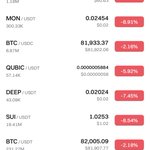
この下落相場の中で $WAL が強い📈⬆️
データの所有権や取引の真贋性をweb3で担保する技術が、生成AIによるフェイクやハッキングが蔓延するにつれ評価され始めたみたいですね🎊
技術の特異性と優位性はローンチ時から明確で、チャートが底を這ってた時も期待して持ち続けてたから嬉しい🙌


$WAL
SUI系コインがBTCのリバにつれて値を戻す中、いまいち上値が重いセイウチたん🦭
多分WEB3版のMicrosoft 365 やgoogle office的なストレージサービスと、ゲーム向けのクラウドを想定してて技術も優れてるのに、先取りしすぎて実需が追いついてない❓😯
将来性はあるのでのんびり待機ですね😴
メノム retweeted

あ~
ここに来たか。
たぶんこれがテック下げの理由。
コアウィーブ。
エヌビディアが出資している会社。
社債利回りが15%を超える。
2032年償還だから償還まで6年。
仮に今、資金調達をするとしても、市場はこの水準の金利を要求するわけで、15%でカネ借りてビジネスを成り立たせるのはかなり厳しい。
ちょっと前にチャットGPT君に作ってもらった添付の脆弱性の図の上の方にダメージが来ている感。
AIクラウドのコアウィーブに信用不安、社債・株急落-成長神話に試練 bloomberg.com/jp/news/articl…


メノム retweeted
Walrusの仕組みと将来性がとてもわかりやすく解説されてます🗒️
Web3の普及につれて、Google等の既存クラウドに取って代わるくらいのポテンシャルがありそう✨
資金調達の額を見るに $WAL は機関やクジラに多数注目されてそうで投資のタイミングが難しいですが、持っておく価値はありそうですね。


メノム retweeted
Google Cloud がAIエージェントのトランザクション証明のために $SUI と $WAL を採用。
今後の機関採用に必須となるであろうエビデンスレイヤーとして、企業の取引証明のニーズに応えます。

In collaboration with @googlecloud we’re announcing Verifiable Agent Arbiter (VAA), an evidence layer enabling enterprises to prove their AI agents acted as authorised, using @SuiNetwork and @WalrusProtocol to anchor that proof 👇


