
PostDoc @Max_Planck_CHM (w/@iyadrahwan) | PhD w/ @effersonCharles @mmuthukrishna | Prv. @googleAI , @FehrAdvice #behavior #culture #organizations #AI
Lausanne, Switzerland
Joined October 2017
- Tweets954
- Following852
- Followers778
- Likes2K




Pinned Tweet
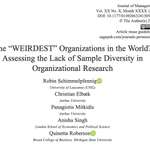
Have you ever wondered why findings in organizational research are not always applicable to practical contexts & grand challenges our times? 🧐
Maybe it is the of data we sample?!
New paper out in JOM Yearly Review!
@CElbaek
Panagiotis Mitkidis
@anisha0singh
Quinetta Roberson

Robin Schimmelpfennig retweeted

我々はよく「昔の方がちゃんとしてた」なんて言いますが、仮にタイムマシンで過去の社会を目にすればそんなことはないとすぐ気づくでしょう。残念ながらタイムマシンはまだ存在しませんが、似た体験をAIで再現できないかというアイデアから「タイムマシン実験」という手法を提案する研究を行いました。

New preprint out!

Introducing: Time Machine Experiments 🚀 ⏳
in which participants 'travel' to the past, and interact with a mind from the year 1930 (simulated by an AI with knowledge cut-off).
Preprint: arxiv.org/pdf/2609.15468
This is an example of what we recently called "Science Fiction Science" (Sci-Fi-Sci)
Led by our @Max_Planck_CHM member @hiromu1996 @schimmelrob and Ezequiel Lopez-Lopez, together with @LevinBrinkmann Alejandro H. Artiles and Jean-Francois Bonnefon @azimshariff

Robin Schimmelpfennig retweeted

Thrilled to have the fourth iteration of Cross Cultural Considerations in NLP (C3NLP) at #ACL2026
Stop by tomorrow if you're around. We have some exciting keynotes and panels lined up in the afternoon, and a great set of papers in the poster session in the morning.

📚 Please also stay tuned to hear from our incredible authors on the latest in cross cultural NLP research as they discuss:
🔹 Whose Culture? Representing Values, Norms, and Lived Knowledge in AI
🔹 Building and Benchmarking Culturally-Aware Systems
#C3NLP2026
Excited that @aidaa will present our paper at @SPSPnews meeting tomorrow in Chicago!
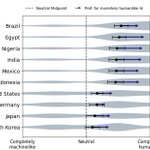
We studied 3,500 people across 10 countries on preferences, perceptions, and the impact of AI anthropomorphism!
Thanks to my brilliant coauthors @blahtino @aidaaand @vinodkpg. @GoogleResearch

Finally, engagement ≠ Trust: While humanlike AI design boosts engagement, it doesn't always boost trust. The same chatbot features that built trust in somecountries (e.g., Brazil) actually reduced it in others (e.g., Japan).

Robin Schimmelpfennig retweeted

shoutout to our FANTASTIC team:
@schimmelrob (who led this with incredible passion during his internship), @blahtino , @vinodkpg
Grateful to work with such a brilliant team on the future of AI and society!
💁♂️New paper on AI anthropomorphism and it’s effects on human psyche & behavior. For details, see Aida’s thread 👇
Joint work with a great Tram of co-authors and mentors @aidaa @vinodkpg and @blahtino, which we conducted during my research internship at @GoogleResearch.

Robin Schimmelpfennig retweeted

This study took us years and years, and it's finally out! 🥳 Here's years of our life in 60 seconds. 🚨 bpspsychub.onlinelibrary.wil… @BPSOfficial @AlexEngPsych @liuqing_wei @Tongrongtian

Robin Schimmelpfennig retweeted
Here’s why this data fascinates me. Young people in China are still learning cultural legacies rooted in ancient farming! That’s despite the fact Chinese society is moving away from farming.

Robin Schimmelpfennig retweeted

This new QJE paper finds: excessive mobile app use among the youth is contagious and costly. Roommates’ app use boosts your own. Heavy app users get lower Grade Point Averages, earn less, sleep less, skip more class. Extending gaming limits to college students could raise wages.



Robin Schimmelpfennig retweeted

New PNAS paper (Great work Ivan Kroupin): The cultural construction of executive function. By comparing cognitive development in diverse communities, with & without schools, we find different cognitive developmental trajectories. @mmuthukrishna pnas.org/doi/abs/10.1073/pna…

Robin Schimmelpfennig retweeted

OpenAI has launched Operator, an agent that can perform tasks in your browser. I asked it to complete a Qualtrics survey I created. The results are very promising for Operator but *very* concerning for survey researchers

Robin Schimmelpfennig retweeted

Today we introduce an AI co-scientist system, designed to go beyond deep research tools to aid scientists in generating novel hypotheses & research strategies. Learn more, including how to join the Trusted Tester Program, at goo.gle/417wJrA
Robin Schimmelpfennig retweeted
Psychologists often draw their 'theories' from their intuitions, schooled by their personal experiences. In this new manuscript, led by @MohammadAtari90, we argue that this reliance has led to a field built around WEIRD Questions.

Robin Schimmelpfennig retweeted
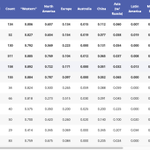
The work featured in this blog was dismantled limb from limb in two peer-reviewed pieces @mmuthukrishna @schimmelrob @StevenHeine4

Differences between WEIRD people (those who live in Western Educated Industrialized Rich Democracies) and the rest of the world have been exaggerated, by @cremieuxrecueil cremieux.xyz/p/weird-doesnt-…

Robin Schimmelpfennig retweeted

The cover of randomness: validating implicit methods for the study of sensitive topics @Journal_EHS @EffersonCharles and Sonja Vogt | Evolutionary Human Sciences | Cambridge Core - bit.ly/42VRzNw