

Political consultant and blogger in Poland following defence, security, and energy issues in Central Europe
Warsaw
Joined February 2009
- Tweets16.1K
- Following2.2K
- Followers3.1K
- Likes4.2K





Marek Matraszek retweeted

Ukrainian attacks on Russian data centers may be even more painful for Russia than attacks on its oil refineries.
Here is why.
Russia has been waging two wars against Ukraine. The first is a physical war, fought with missiles, drones, tanks, and soldiers. The second is an information war, fought through propaganda, disinformation, and millions of social media posts designed to manipulate public opinion.
Attacking Russian oil refineries undermines Russia’s ability to finance and sustain its physical war. But attacking Russian data centers undermines its ability to wage the information war.
And we are already seeing very interesting developments.
Following Ukrainian strikes on Yandex data centers, reports indicate that internet traffic originating from Yandex’s network has collapsed. According to reporting based on Cloudflare data, bot traffic from that network fell to just 0.4% of its recent peak.
Meanwhile, online activity supporting Germany’s far-right AfD party has dropped dramatically. The anti-Ukrainian hateful rhetoric from Poland has decreased. Russian-linked MAGA accounts and other pro-Russian networks on social media are bleeding.
The implications are enormous.
For years, Russia has invested heavily in influencing elections, dividing Western societies, and spreading propaganda that undermines support for Ukraine.
And now Ukraine may have found a way to disrupt that machinery.
Think about the implications for elections in Europe and the United States. Political movements that have benefited from Russian disinformation could suddenly find themselves without part of the online infrastructure that helped amplify their propaganda.
And there is another important dimension. Yandex is not just a search engine. It is a major part of Russia’s digital economy, supporting cloud services, artificial intelligence, navigation, businesses, and everyday online activity.
So these attacks hurt Russia on multiple fronts.
They disrupt its economy. They threaten its technological development. And they weaken its propaganda machine.
That is why I believe these attacks may ultimately prove even more effective than strikes on Russian oil refineries.
Oil refineries help Russia finance its war.
Data centers help Russia wage its information war.
And Ukraine is now targeting both.

Marek Matraszek retweeted

NATO SACEUR Generał Grynkewich outlines the NATO theory of victory at the @WarsawForum. “Block, blunt, and break” an enemy attack. 1/3

Marek Matraszek retweeted

🚨🇵🇱 Polish authorities are investigating a possible assassination attempt targeting Prime Minister Donald Tusk and Defence Minister Władysław Kosiniak-Kamysz.
A meeting involving the ABW, police and State Protection Service (SOP) was scheduled for 11:00 at the ABW’s Anti-Terrorist Centre.

W związku z informacją, która wpłynęła do @PolskaPolicja i dotyczy możliwego zamachu na premiera @donaldtusk oraz wicepremiera, ministra obrony narodowej @KosiniakKamysz, minister koordynator służb specjalnych @TomaszSiemoniak oraz minister spraw wewnętrznych i administracji @MKierwinski polecili podjęcie działań w tej sprawie‼️
▶️ Dzisiaj o godz. 11.00 w CAT @ABW_GOV_PL odbędzie się spotkanie funkcjonariuszy #ABW oraz przedstawicieli służb podległych MSWiA: @PolskaPolicja i @SOP_GOV_PL.
Marek Matraszek retweeted

“When Bach composed the St Matthew Passion, the music emerged from a particular human consciousness, formed by faith, suffering, intellect, memory, craftsmanship and experience.
A machine experiences none of those things.” 🎯

Pope Leo XIV has just made one of the most interesting distinctions I have heard in the debate about artificial intelligence: a machine may be able to generate an image, but that does not mean it has made art in the human sense. Speaking to artists and cultural figures at the Vatican today, Leo argued that there is an “ontological difference, prior even to the aesthetic, between art and what a machine can generate through statistical calculation based on millions of images created by others.” The use of the word ontological is important here I think.
The Pope is not arguing that AI-generated images must necessarily be ugly, crude or obviously artificial. Quite the opposite problem is rapidly emerging. They can be extraordinarily beautiful. AI can produce an image in seconds which might once have required days of human labour, just as it can produce music, prose and increasingly convincing film. Pope Leo's point is that technical quality does not settle the question because something fundamentally different has taken place.
When Caravaggio painted The Calling of St Matthew, a human being had looked at darkness and light, sin and grace, bodies and faces, and attempted to communicate something he had perceived about reality.
When Bach composed the St Matthew Passion, the music emerged from a particular human consciousness, formed by faith, suffering, intellect, memory, craftsmanship and experience.
A machine experiences none of those things.
It can recognise patterns within an enormous inheritance of human creativity and generate something new from them with astonishing sophistication, but it has never stood before a sunset, buried somebody it loved, experienced shame, fallen in love, prayed, doubted, forgiven an enemy or wondered what happens when we die...and this leads into what I think was the most penetrating part of Leo's address. He warned that in the technological age “the great danger is no longer just censorship, but homogenisation; not merely imposed silence, but the noise that makes listening impossible.” That is very deep and well worth considering carefully.
We have a tendency to imagine the cultural danger of technology as somebody preventing us from speaking. The Pope identifies another possibility: that we become surrounded by such an enormous quantity of instantly generated content, tailored to what algorithms already know we like, that genuinely original human voices become increasingly difficult to hear. The problem would not be silence but saturation, it would be a culture filled with images, words and music which are technically accomplished, immediately consumable and endlessly reproducible, but increasingly detached from the mysterious encounter between one human consciousness and another.
This does not mean that we must become frightened of AI. Leo himself has repeatedly rejected that simplistic conclusion, writing in Magnifica Humanitas that technology is not inherently antagonistic to humanity and can serve genuine human flourishing. Perhaps it does require us to recover a distinction we are in danger of losing. Generating something and creating something may not ultimately mean the same thing & as machines become better at the first, we may finally be forced to think much more seriously about what is uniquely human about the second. vaticannews.va/en/pope/news/…

Marek Matraszek retweeted

My name is Jakub, I am Polish. I was already living in Poland back when the Russians were here, and I know what that means. They were the ones who stabbed us in the back on September 17, 1939; they were the ones who murdered 22,000 Polish officers and exiled hundreds of thousands of Poles to Siberia. After World War II, they imposed regimes of terror, imprisonment, and executions on us and other countries in the so-called Eastern Bloc. We regained our freedom in 1989, after nearly 45 years of de facto Russian occupation. Now those same Russians are bombing Ukrainian cities, razing them to the ground; they are murdering, raping, they are kidnapping children, and their drones are striking hospitals and civilian buildings. So don’t give me any nonsense about engaging in diplomacy with Russia. They don’t respect rules, they don’t respect true diplomacy, the only thing they understand and respect is force. And let me remind you that in 1991, Ukraine gave up its nuclear weapons in exchange for security guarantees provided by, yes, Russia, the U.S., and the U.K. We’ve been seeing for many years now what has become of those guarantees. So, before you start spouting nonsense again, educate yourself, learn something about what Russia is really like, and what happens when you place any trust in their assurances and words.


Marek Matraszek retweeted

Your 72-hour „Special Military Operation” in Ukraine has lasted for more than four years now. You’ve lost 300,000 people, 12,000 tanks, 35 ships, 440 aircraft, 350 helicopters. Your economy is in shambles. Our GDP per capita is almost double yours. Poland is a member of NATO and the EU, you are a pariah state. We are a democracy, you are a genocidal regime.
You attempted to subjugate Poland in 1920. Then in 1939, in cahoots with Nazi Germany.
Poland survived, the Soviet Union didn’t.
Keep trying, comrades.


Marek Matraszek retweeted

Wir müssen uns endlich wehren
Deutschland wird angegriffen. Eine Sprengstoffdrohne verursacht am Flughafen Leipzig/Halle fast eine Katastrophe. Spionagedrohnen kreisen über Bundeswehrkasernen. Kabel werden durchtrennt. Häfen gestört. Verwaltungen gehackt. Debatten gezielt vergiftet. Ein Gegner führt seit vielen Jahren hybriden Krieg gegen uns, geduldig, präzise und kalkuliert. Das Ziel ist nicht der große, plötzliche Schlag. Das Ziel ist die langsame Schwächung unseres Staates.
Wir haben zu lange so getan, als ließen sich hybride Angriffe wie technische Störungen behandeln. Als vereinzelte Vorfälle. Als Probleme für Fachabteilungen. Doch für unseren Gegner sind sie systematische Teile eines großen Konflikts. Der russische Generalstabschef Waleri Gerassimow schrieb schon vor 13 Jahren vom Krieg ohne Kriegserklärung, von Eskalation ohne offene Eskalation, von der Zerstörung staatlicher Stabilität durch politische, wirtschaftliche, informative und verdeckte Mittel, unterstützt durch begrenzte militärische Gewalt. Unser Gegner denkt in Wirkung. Unsere Verwaltungsrepublik denkt dagegen in Zuständigkeiten. Das macht uns sehr verwundbar. Letztlich schauen wir noch immer nur hinterher nach, was passiert ist, finden alles schlimm und verstricken uns dann in Selbstgespräche. Statt zu handeln, diskutieren wir. Statt zu agieren, wägen wir endlos ab. Der Gegner nutzt das aus.
Doch wir können die Logik klassischer Verteidigung und Abschreckung in die hybriden Sphäre übertragen. Abschreckung kann restriktiv wirken. Wir können Häufigkeit und Schwere der Angriffe gegen uns deutlich senken, indem wir auf der anderen Seite endlich Kosten dafür verursachen.
Denn seien wir ehrlich: die viel beschworene „Resilienz“ allein reicht nicht aus. Wir können nicht jedes Kabel schützen, nicht jeden Server perfekt abschirmen, nicht jeden Hafen, jede Bahnstrecke oder jede Stromleitung rund um die Uhr lückenlos überwachen. Wenn wir Sicherheit haben wollen, müssen wir auch den Gegner empfindlich treffen können. Das heißt nicht, dass wir Drohne gegen Drohne setzen sollten oder Hack gegen Hack. Doch wir können dort ansetzen, wo der Gegner es nicht erwartet und wo er verwundbar ist. Wenn eine Sprengstoffdrohne einen Flughafen angreift oder ein deutsches Krankenhaus gehackt wird, darf die Antwort nicht höflicher Protest sein. Als Antwort können wir Finanzströme stoppen und einfrieren, Tarnfirmen blockieren, wir können die Operationsfähigkeit des Gegners gezielt schwächen.
Abschreckung darf dabei bewusst politisch wirken: Das „Russische Haus“ schließen. Visa stornieren. Russische Schiffe nicht in EU-Häfen lassen. Die russische Schattenflotte nicht militärisch angreifen, sondern aus Umweltgründen stilllegen oder gar einmal stoisch und langwierig die Arbeitsverträge und Steuersituation der gesamten Crew prüfen, bis der Betrieb stockt. Das alles wäre nicht‑spiegelnde Abschreckung. Wir können damit Russland treffen, ohne zu eskalieren. Und vor allem können wir damit zeigen, dass wir handlungsfähig sind. Das zwingt den Gegner, seine Kosten neu zu kalkulieren.
Die kommende neue Gesetzgebung für deutsche Nachrichtendienste schafft dafür richtige Grundlagen. Das erlaubt hoffentlich schnellere Aufklärung, bessere Zuordnung und wirksame Reaktion. Wir brauchen dringend Tempo in einen Bereich, in dem auch Geschwindigkeit über Sicherheit entscheidet. Befugnisse allein schaffen zwar noch keine Abschreckung, doch sie können sie überhaupt erst einmal ermöglichen.
Politisch und gesellschaftlich brauchen wir jetzt Klarheit darüber, dass es von jeher zu guter militärischer Verteidigung gehört, den Krieg auf die andere Seite zu tragen und den Angreifer gezielt in die Bredouille zu bringen. Wir müssen unsere Gegner zwingen, auch mal auf unsere Schritte zu reagieren und nicht immer nur umgekehrt. Wer den Gegner in die Klemme bringt, gewinnt bekanntlich Zeit, Raum und Initiative.
Entscheidend dafür sind auch Finanzermittlungen. Geld ist eine Achillesferse autoritärer Akteure. Wer hybride Angriffe führt, braucht Ressourcen, Schattenbanken, Zwischenhändler. Deutschland muss diese Netzwerke aufbrechen - mit forensischer Präzision und mit internationaler Kooperation.
Ebenso entscheidend ist Informationshoheit. Der Gegner operiert bequem im Nebel. Wir müssen diesen Nebel lichten. Faktenblätter reichen dafür längst nicht aus. Wir sind im Informationskrieg viel zu langsam, viel zu brav und viel zu defensiv. Wir müssen Debatten offensiv prägen mit Ressourcen, mit Kreativität und in hoher Geschwindigkeit. Wir dürfen die sozialen Netze nicht weiter anderen überlassen und später lautstark darüber herumjammern, was dort passiert. Bitte keine peinliche Aktentasche mehr auf TikTok und bitte weniger kindische Inhaltsleere der abgestandenen, standardisierten Kommunikation der Politikblase. Können wir emotional und kämpferisch mit Klarheit und Orientierung? Der kritischen Sicherheitslage angemessen? Wer die Informationslage gestaltet, gestaltet öffentliche Widerstandskraft. Wer sie anderen überlässt, verliert.
Endlich rasch handeln und neue Fakten schaffen, statt sich nur endlos zu besprechen – das gilt sicher für sehr viele Bereiche in Deutschland. Sicherheit entsteht jedenfalls nicht im Konferenzraum. Sicherheit entsteht, wenn Sensornetzwerke gegen Kleindrohnen schnell und konsequent verbaut werden. Sicherheit entsteht, wenn Leitungen durch autonome Systeme überwacht werden und wenn Häfen, Netze und Verkehrswege mit modernster Technik ausgestattet werden. Und Sicherheit entsteht vor allem dann, wenn wir uns auch einmal etwas trauen. Wenn wir für die andere Seite nicht ausrechenbar sind. Wenn wir agieren.
Im Kreml muss ankommen, dass wir uns nicht alles gefallen lassen. Dass jeder Angriff einen Preis hat. Dass Deutschland nicht länger zusieht, wie seine Infrastruktur angegriffen, sein staatliches System unterminiert, seine Behörden gestört, und seine Debatten manipuliert werden. Das muss man nicht hysterisch und nicht martialisch machen, das geht auch ruhig und klug. Doch hybride Verteidigung und Abschreckung sind Voraussetzungen dafür, dass unser Land im Angesicht hoher Bedrohungen handlungsfähig bleibt.
Freiheit verlangt, dass wir bereit sind, sie zu verteidigen. Das gilt gerade besonders für den Graubereich zwischen Krieg und Frieden. Churchill sagte einst: „Man kann mit einem Tiger nicht vernünftig reden, wenn der Kopf in seinem Maul ist.“ So ist die Lage. Wir versuchen noch immer, einen Gegner zu besänftigen, der unsere Zurückhaltung als Einladung versteht. Wir müssen uns endlich wehren.
*
Nico Lange ist Gründer und Direktor des Instituts für Risikoanalyse und Internationale Sicherheit (IRIS).

Marek Matraszek retweeted

Putin famously claimed that the collapse of the Soviet Union was the greatest geopolitical catastrophe of the 20th century. He could not be more wrong.
The fall of the USSR was actually the greatest geopolitical miracle of modern history, freeing tens of millions of people from a brutal, blood-soaked empire.
The Soviet Union was a human disaster, a totalitarian crime against humanity, and a system that put war and imperialism ahead of feeding its own people.
For decades, the world was forced to endure the myth of the USSR as a superpower dedicated to human progress. In reality, it was nothing more than an advanced, totalitarian iteration of the Russian Empire.
It was an illegitimate project built on lies, paranoia, and catastrophic human suffering. It was a war-hungry, paranoid mistake of a country that sacrificed tens of millions of lives across its republics.
The Soviet ideology was fundamentally flawed because it placed a rigid, totalizing dogma above human dignity and basic freedom. It substituted human enterprise with central planning, creating an unsustainable economy that could build nuclear missiles but failed to put bread on the tables of its citizens.
From a historical perspective, the USSR was an aggressive, imperialistic state. It helped unleash the horrors of World War II by signing a pact with Nazi Germany in 1939, agreeing to carve up Eastern Europe. The alliance only ended because Hitler turned on Stalin in 1941.
Throughout its existence, Moscow treated member republics as colonies, extracting their wealth and enforcing cultural dominance while silencing any form of dissent through the Gulag system and police state surveillance.
When the Soviet Union finally imploded, tens of millions of colonized people were freed from Moscow's grip. Look at the Baltic states today. Estonia, Latvia, and Lithuania transformed into flourishing European democracies with living standards that far exceed anything Russia has ever produced. They stand as living proof that Russian control was the single greatest obstacle to human flourishing in the region.
Modern Russia's brutal attempt to eradicate Ukraine is proof that Moscow never accepted the death of its empire. Driven by corrupt, paranoid leadership, Russia is committing genocide because it has no ideology or attractive model left to sell. It can only sell imperialism and death.
Defeating this imperial machine in Ukraine is a global imperative. If the Russian empire is not shattered in Ukraine, it will remain a permanent threat to peace and force us to confront it elsewhere later

Marek Matraszek retweeted
It is long past time for media outlets and serious analysts to stop platforming John Mearsheimer.
Few public intellectuals have been as systematically and repeatedly wrong about Russia and Ukraine as him.
Mearsheimer is the ultimate example of an academic who built a theory, made a career out of it, and now distorts reality to protect his brand. His "Offensive Realism" claims that great powers act out of fear in an anarchic world. But notice how Mearsheimer selectively applies this: Russia is always allowed to feel threatened and react violently, while Russia’s neighbors are forbidden from feeling threatened by Russian imperialism or seeking alliances to defend themselves. By stripping sovereign nations of their agency, he turns a geopolitical theory into an apology for Russian aggression.
His concrete predictions on the war in Ukraine have been catastrophically incorrect at every step. He insisted a full-scale Russian invasion was impossible. When Moscow marched on Kyiv, failed, and suffered massive casualties, Mearsheimer lied to his audience, claiming Russia never actually tried to take the capital. Every year of this war, he repeats the exact same line: that Ukraine’s defeat is imminent and inevitable.
Instead of admitting his mistakes, Mearsheimer has sunk into the pro-Russian media swamp, appearing on fringe podcasts to echo Kremlin talking points.
It is mind-boggling that high-profile journalists still give him airtime. We need to stop taking commentary from experts whose theories fail every real-world test

Marek Matraszek retweeted
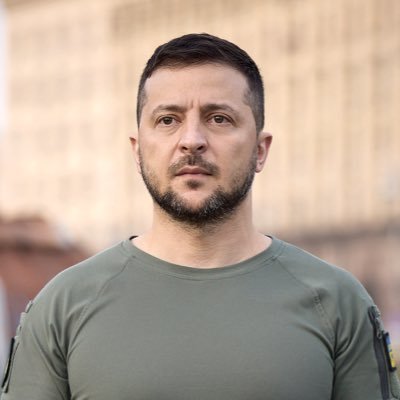
I held a meeting on our policy toward Poland. The priorities are clear: all of us in Europe need good-neighborly, equal, and mutually beneficial relations built on respect. Poland provided significant support to Ukraine after the start of Russia's full-scale invasion, and we are grateful to Poland. Defending Ukraine's independence directly means strengthening Poland's independence, and the security challenges Europe faces today can only be addressed through cooperation – particularly cooperation among the free nations of our region. I thank the meeting participants for their initiative and proposals.
We agreed on several key steps. First, there will be decisions on the diplomatic track. Second, all archives of the Security Service of Ukraine and the Foreign Intelligence Service of Ukraine concerning the tragic events in Volyn during the 20th century will be opened. Third, there will be decisions to grant a substantial number of permits for search and exhumation work, and together with the Polish side, we must ensure greater capacity to carry out this work. Fourth, we discussed possible formats for expanding dialogue between the societies of Ukraine and Poland. Fifth, I agreed with Oleksandr Alfyorov, Head of the Ukrainian Institute of National Remembrance, to expand the Institute's capabilities. Oleksandr will prepare and present comprehensive proposals, and I ask the relevant government officials and the competent committee of the Verkhovna Rada of Ukraine to consider increasing financial and other support for the Ukrainian Institute of National Remembrance. Appropriate capabilities are essential to properly represent Ukraine's interests. Thank you to everyone working for our state and our people!


Marek Matraszek retweeted

This quote from the great Ronald Reagan speaks for itself. He went on to defeat the Soviet Union.
“We cannot buy our security, our freedom from the threat of the bomb by committing an immorality so great as saying to a billion human beings now in slavery behind the Iron Curtain, 'Give up your dreams of freedom because to save our own skins, we are willing to make a deal with your slave-masters.'”
Marek Matraszek retweeted
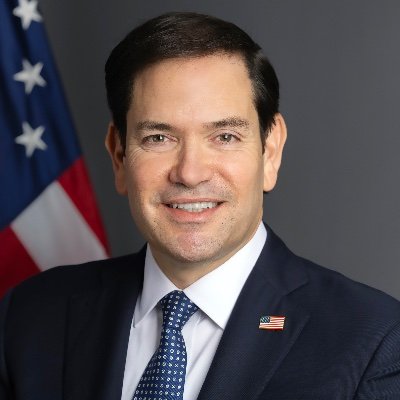
In my meeting with @SecGenNATO I underscored that the Alliance must unambiguously commit at the upcoming Ankara Summit to rapidly scale defense production, expand our transatlantic defense industrial base, and turn spending commitments into real warfighting capabilities. A stronger Europe means a stronger NATO.

ALT Secretary Marco Rubio meets with NATO Secretary General Mark Rutte in Helsingborg, Sweden, May 22, 2026. (Official State Department photo by Freddie Everett)

ALT Secretary Marco Rubio meets with NATO Secretary General Mark Rutte in Helsingborg, Sweden, May 22, 2026. (Official State Department photo by Freddie Everett)
Marek Matraszek retweeted
Good fix by Trump & those who worked to reverse the initial bad call. Good for NATO security. Even better if stationing/rotation of US forces in Europe are based on solid plans, worked out with NATO & SACEUR, not politics.

US President Donald Trump said he would send an additional 5,000 troops to Poland, reversing course on a plan to suspend an Army deployment to the allied country bloomberg.com/news/articles/…

Marek Matraszek retweeted
𝗗𝗼𝗻𝗮𝗹𝗱 𝗝. 𝗧𝗿𝘂𝗺𝗽 𝗧𝗿𝘂𝘁𝗵 𝗦𝗼𝗰𝗶𝗮𝗹 𝟱.𝟮𝟭.𝟮𝟲 𝟬𝟰:𝟮𝟲 𝗣𝗠 𝗘𝗦𝗧
Based on the successful Election of the now President of Poland, Karol Nawrocki, who I was proud to Endorse, and our relationship with him, I am pleased to announce that the United States will be sending an additional 5,000 Troops to Poland. Thank you for your attention to this matter! President DONALD J. TRUMP
Marek Matraszek retweeted

Ho ricevuto questa mattina a Palazzo Chigi il Primo Ministro eletto dell’Ungheria, @magyarpeterMP, per un primo e proficuo confronto in vista del suo prossimo insediamento.
Uno scambio di vedute sui principali dossier bilaterali e sulle sfide che l’Europa è chiamata ad affrontare: dal rafforzamento della competitività del nostro sistema, alla gestione dei flussi migratori, fino ai principali scenari di crisi a livello internazionale.
La solidità delle relazioni tra Italia e Ungheria è forte e consolidata e intendiamo continuare a rafforzarla ulteriormente.
An astonishing plethora of past and present Presidents of Central European countries at the Three Seas Initiative forum in Dubrovnik. Solidarity in deepening regional connectivity in infrastructure, energy and digital to deliver robust resilience in face of Russia challenge

Marek Matraszek retweeted

Time to face reality: the Hungarian electorate ousted the ruling power. The electoral system Fidesz introduced gave its opponent a two-thirds majority. Orbán established a one-man rule, tailored the campaign to himself, he is responsible for the defeat, he has to resign.
x/1
Marek Matraszek retweeted

I’m not asking you, I’m telling you.
Take a moment and listen to this 81 second response from Victor Glover after being asked if he had any thoughts leading up to Easter.
I don’t quite think it can be overstated how perfect this crew is for the job.

