

First and foremost a nerd and a Trekker, Luca Mauri is employed as an IT Manager. A Space Exploration enthusiast, avid reader and hobbyist photographer. INTJ
Italy
Joined June 2008
- Tweets9.5K
- Following2.6K
- Followers320
- Likes1.1K





Luca Mauri retweeted

Operazione "Merkury" in Libia: dietro c'è molto molto di più.
Partiamo dalla notizia bomba: gli ucraini avrebbero stabilito una presenza fissa in alcune strutture nella Libia occidentale.
Lo rivela Radio France Internationale (RFI), dalle testimonianze di due fonti libiche ben informate che hanno parlato a condizione di anonimato, e hanno descritto oltre 200 ufficiali e specialisti ucraini che operano con l'approvazione del Governo di Unità Nazionale con sede a Tripoli.
Il personale sarebbe dislocato in tre siti: l'Accademia dell'Aeronautica Militare di Misurata, dove erano presenti anche elementi dell'intelligence turca, italiana, del Comando Africa degli Stati Uniti e britannica; un'area costiera vicino a Zawiya, attrezzata per operazioni con droni aerei e navali, in prossimità del complesso petrolifero e del gas di Mellitah; e il quartier generale della 111ª Brigata sulla strada per l'aeroporto di Tripoli, utilizzato per riunioni di coordinamento con rappresentanti libici, tra cui un sottosegretario del Ministero della Difesa.
In seguito anche Associated Press, CNN e altri media hanno confermato le stesse tre località e gli stessi termini fondamentali dell'accordo riportato.
La "moneta di scambio" per tutto questo sarebbero le armi e il know-how ucraino, che al momento non hanno eguali al mondo.
Tutto risale a dicembre 2025, quando l'addetto militare ucraino ad Algeri, in cambio dell'accesso alle basi in Libia, avrebbe fornito addestramento ai libici, in particolare nell'utilizzo di droni, con accordi a lungo termine sul trasferimento di armi ucraine e investimenti nel settore petrolifero libico.
Da quanto è trapelato, anche l'attacco del marzo 2026 contro la nave metaniera russa Arctic Metagaz sarebbe stato fatto nello stesso modo.
Ma come ha fatto l'Ucraina ad accreditarsi in questo modo in Libia?
La Libia politicamente è divisa in due:
- L'amministrazione orientale, con base a Bengasi e guidata da forze legate a Khalifa Haftar, ha sviluppato relazioni più strette con la Russia, incluso l'utilizzo di porti e basi aeree per il supporto logistico alle operazioni più a sud in Africa.
- Il governo di Tripoli invece, riconosciuto dalle Nazioni Unite, esercita la propria autorità in Occidente e mantiene da tempo legami militari e politici con la Turchia. Ed è proprio qui qui si è inserita l'intelligence ucraina, che ha chiesto la possibilità di avere personale fisso nelle basi.
Ovviamente Le autorità di Tripoli continuano a negare qualsiasi accordo formale per operazioni esterne, pur riconoscendo l'esistenza di più ampi quadri di cooperazione militare. Infatti non è ancora chiaro se i veicoli di superficie senza equipaggio (USV) siano stati varati dalla Libia occidentale o da una nave madre, né come siano stati trasportati nella regione. Sono arrivati via mare attraverso il Bosforo/Stretto turco, oppure sono stati trasbordati via terra (o via aerea) fino a un porto del Mediterraneo per il carico? È certamente possibile che siano stati costruiti al di fuori dell'Ucraina, ma, stando alle ricerche, sembra alquanto improbabile.
Una cosa è certa: L'operazione militare speciale russa, che doveva durare solo tre giorni, ormai è completamente fuori controllo per i russi, e il teatro di guerra si sta allargando ben oltre i confini nazionali. Ed è assurdo e incredibile come la piccola Ucraina, che doveva soccombere in tre giorni, è riuscita ad aprire altri due fronti bellici.


Luca Mauri retweeted

Four years ago, humans moved an asteroid for the first time. Tonight, you get to see what we did to it.
@ESA_Hera's first close-up images of Dimorphos go live from 19:45 CET, on ESA WebTV and our YouTube channel.
Luca Mauri retweeted

Interesting..To every child's active "Trump Account", By donating appreciated shares directly rather than selling them for cash, Elon avoids paying billions in federal capital gains taxes while claiming substantial charitable deductions. Families are legally barred from selling the donated SpaceX shares until the earlier of five years from the gift or the end of the calendar year the child turns 17, families cannot sell or swap the stock for a safer index fund during the lock-up window.
Simple yet incredibly useful and realistic

Companies keep asking me how to make their business AI-native.
Stop planning an "AI transformation." No company transforms in a quarter.
You get there by changing how the work gets done, one workflow at a time, until it compounds.
Here is the blueprint that actually works:
1. Name a real sponsor first.
Pick one person with the authority to approve work, clear blockers, and stop a pilot that isn't delivering. If you operate in a regulated industry, name the full sign-off list (CFO, CTO, CISO) on day one.
2. Pull use cases from operators, not a consulting deck.
The people running the business already know where the work breaks, they are just stuck in the day-to-day whirlwind. Give them a simple filter: start where the customer feels it (onboarding, support, turnaround time), then look at internal efficiency.
3. Pick one workflow with one baseline.
Choose a single process with one owner and one number the business already measures. Sign off on current handling time and first-pass quality before anyone writes a prompt. "It feels faster" is not a return.
4. Map the workflow and build the evals before touching a model.
Write down what triggers it, what finishes it, and every exception. Have your best people pull real past cases and define what a right answer looks like. That golden set becomes your test suite.
5. Rely on the model as little as possible.
Put every fixed rule in plain code. Let the model handle only the judgment calls.
6. Ship a narrow slice in four to six weeks, with a stop rule.
Build on real data with every tool call traceable. If it isn't useful by week six, stop before spending the next tranche.
7. Keep a human at the gate.
The agent prepares, a person approves. Anything touching money, compliance, or customers waits for a human until the system proves itself against your baseline.
8. Get it off the laptop and harden it like real software.
Move it into a hosted environment you control, with permissions, audit logs, spending limits, a kill switch, and a named owner for releases and incidents.
9. Measure real outcomes, not hours saved.
Track throughput, quality, cost per case, and actual adoption against the baseline. Hours saved only create capacity. Financial return shows up when you avoid or remove a real cost.
10. Transfer ownership before you move on.
If a vendor keeps the knowledge, you bought a dependency. Hand the workflow over only when your team can run it, test it, and extend it themselves.
Finish workflow one properly before you start workflows two through five.
The companies that skip straight to a 20-use-case roadmap end up with a six-figure deck, a pile of pilots living on people's laptops, and nothing in production.
3
Luca Mauri retweeted

Ma scusate, quando la NATO «abbaiava alle porte di Mosca», secondo alcuni Putin era legittimato a invadere l’Ucraina e a condurre una guerra ibrida contro l’Europa.
Ora che è la Russia ad «abbaiare» nel Mediterraneo, alle porte di casa nostra, seguendo la stessa logica non dovrebbe essere l’Europa a rivendicare il diritto di difendersi?
E invece ci scandalizziamo persino se due navi russe vengono affondate. Non dall’Europa, ma dall’Ucraina, il Paese che la Russia ha invaso.
Quindi, quando abbaia la NATO, la Russia ha diritto di reagire. Quando abbaia la Russia, l’Europa ha il dovere di subire. Anzi, ci indigniamo persino quando qualcun altro cerca di contrastarla.
E poi sarebbe l’Europa il covo dei guerrafondai?
Curioso come il diritto alla difesa cambi a seconda di chi abbaia e di chi dovrebbe mordere.


Luca Mauri retweeted

A Swedish fighter jet under NATO command was cleared to shoot down a Russian cruise missile over Poland. It held fire only because bad weather blocked the pilot’s view.
Russia has now breached Polish airspace TWICE in just 4 days:
- Nov. 20: Three Russian Kh-101 cruise missiles cross into Poland. NATO scrambles jets.
- Nov. 24: A Russian drone slips in overnight. Poland gets the OK to shoot it down but holds fire after it turned back east.
Poland’s envoy briefed the White House National Security Council and renewed Warsaw’s call for a permanent U.S. troops presence in the country.
Read how close a NATO fighter jet came to shooting down a Russian missile over Poland as Warsaw pushes for permanent U.S. troops: foxnews.com/world/nato-jet-c…

Luca Mauri retweeted

Si parla sempre più spesso di data center “flessibili”. In poche parole, quello che si fa è spostare una parte dei carichi di AI, usando le batterie e riducendo il prelievo nelle ore più difficili per la rete.
Dal mio punto di vista è una possibilità interessante, ma non racconta tutta la storia.
Un nuovo paper che ho letto questa mattina simula un data center AI con 1 GW di potenza IT collegato a un singolo nodo. Nel caso analizzato, la flessibilità riduce il picco di prezzo. Però la tensione minima al punto di connessione resta a 0,957 pu: sopra il limite di 0,95, ma vicina.
Invece con il supporto di potenza reattiva dell’inverter della batteria, il minimo sale a 0,982 pu.
C’è poi un altro dettaglio da non trascurare: una batteria più grande non aiuta sempre. Se si carica mentre riparte il training rinviato, può aumentare la congestione in quelle ore.
La conclusione, per me, è concreta: prima di contare sulla flessibilità di un data center bisogna verificare se la linea regge anche nelle ore di ricarica, quanto margine di tensione c’è al punto di connessione e quali apparecchiature servono per sostenerla.
Non basta solo dichiarare quanti MW si possono spostare. Bisogna capire cosa succede quando tornano sulla rete.
Ne parlerò presto su WATT & WAFER.

Luca Mauri retweeted

Intelligenza Naturale.

Anthropic mathematician Levent Alpöge made history not once but 8 times in about 4 months. I was very curious to know his life journey, so I used @autumn_ai_inc to find out. Here's what came up:
> spawns on Long Island, New York, in 1992
> turkish-american kid, plays high school soccer
> wins the team's "Tough as Nails" award
> also writes code for graphics cards for fun
> 2010: Intel Science Talent Search finalist with a project analysing MRI scans of blood vessels
> gets an asteroid named after him: 25898 Alpöge (yes, really)
> goes to Harvard, can't decide between CS and maths
> takes Math 55, Harvard's famously brutal maths class
> "could do math and switched!"
> later becomes a course assistant for that same class
> teaches maths to 8 to 10 year olds on the side
> runs a marathon, because why not
> graduates with a 4.0 GPA, summa cum laude, plus a master's in physics
> wins Harvard's prizes for the highest GPA and the best senior thesis
> friend wins the Churchill Scholarship, so he applies the next year and wins it too
> off to Cambridge
> PhD at Princeton under Fields Medallist Manjul Bhargava
> Junior Fellow at Harvard
> 2022: he and his co-author both catch covid
> they keep working anyway and break new ground on sums of two cubes
> 2025: helps prove there's no general algorithm for solving polynomial equations in the integers of any number field
> peak academic career
> then GPT-4 drops
> "back to cs!"
> leaves academia, joins Anthropic
> galaxy-brain.jpg
> and then 2026 happens
> Jul: disproves the 87-year-old Jacobian conjecture with Claude
> during the World Cup final
> Aug: finds the size-668 Hadamard matrix, stuck for about 20 years, plus every other missing size under 2000
> Aug: disproves the 1924 Carathéodory conjecture about curvature on smooth surfaces
> Aug: an anonymous account drops record elliptic curves, rank 30 then 31
> the record had taken 18 years to move from 28 to 29
> it was him (and cryptographer Ava Howell)
> Aug: answers Hopf's 1947 question about the six-dimensional sphere
> Sep: Lean-verified fluid blowup proofs with NYU's Tristan Buckmaster
> then OpenAI drama over who got there first
> Nov 20: announces he believes he and Claude have proved the 167-year-old Riemann Hypothesis
> late Sunday night before, he messages Dario asking if he can announce
> it lands the day after Anthropic's IPO, and he calls the timing "horrible"
> 17 million lines of Lean
> Lean community: "full confidence" it's correct
> same day: claims Navier–Stokes blowup with no outside force, not yet peer reviewed
> his words: "This problem has been the sacred object in mathematics for me since my childhood"
> he's 34
> he’s aura
>you can hate on me for this opinion, but he’s the greatest mathematician alive. because he knows how to get things done.
some people are just gifted.
Whether you think you can, or you think you can't, you're right.
-Henry Ford.

Luca Mauri retweeted
BepiColombo used electric propulsion to closely match mercury's orbit before falling into its gravity well, It didn't need much delta-V for the initial capture, so even short fire of the chemical thrusters captures it.
However, if the capture is too weak the orbit may not be stable due to tidal effects of the sun. So we really want to drop that orbit down closer to the planet.

Luca Mauri retweeted

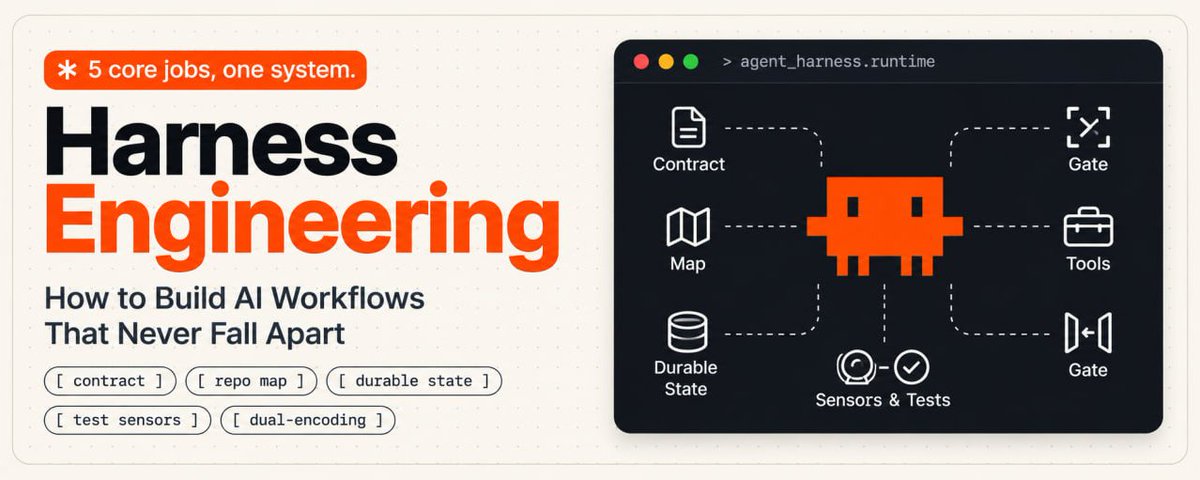
Boris Cherny, Head of Claude Code at Anthropic, just shared an official tip before Fable 5.5 ships
The setup: split your workload across Opus 5.5, Sonnet 5.5, and Haiku 5.5, and let them talk directly across your open terminals
Zero context pollution between windows: independent sessions ping each other via plain-text IPC over local sockets without burning a single token on conversation history
You just launch Claude Code like this:
claude --model sonnet --settings '{"crossSessionInbound":"accept"}'
here's the split:
→ Opus 5.5 architects session permissions: audits ListAgents discovery, enforces inbound message policies, and signs off on multi-terminal diffs
→ Sonnet 5.5 executes code fixes: builds endpoints, updates schemas, and patches dependent code whenever a peer session reports a breaking change
→ Haiku 5.5 relays inter-session messages: processes SendMessage pings across terminals at 340 tok/s with zero history bloat and sub-millisecond local socket latency
→ you stop burning Opus context on manual copy-pasting between terminals and keep your sessions lean
Opus only steps in at three moments:
→ setting up cross-session topology and inbound security rules before launch
→ evaluating contract diffs when a peer message signals an API schema update
→ signing off on synchronized multi-session PRs before merging to main
Opus architects · Haiku relays · Sonnet executes
JEV engineering is the same move one layer down: the forks that need no thinker (which peer, which tool, forward or drop) go to JEV in milliseconds, and the big models only see the ones that split
the full tree
> Opus 5.5 architects session permissions and audits cross-session topology
> Haiku 5.5 relays SendMessage pings between terminals at 340 tok/s
> Sonnet 5.5 patches code across workspaces when a peer signals a change
> Sessions discover each other automatically via ListAgents and /peers
> Messages travel as isolated plain text over local IPC sockets with 0 context dump
> JEV routes micro-forks in milliseconds
paste the tree and this prompt into Claude Code ↓
"Rebuild my Claude Code setup around this tree:
1. Configure cross-session discovery using /peers and set crossSessionInbound to accept
2. Delegate all peer-to-peer message routing and notification triage to Haiku 5.5 at 340 tok/s
3. Spawn Sonnet 5.5 to execute code edits and synchronize types whenever a peer session reports an update
4. Restrict all cross-session payload traffic to lightweight plain text via SendMessage with zero history transfer
5. Reserve Opus 5.5 for inter-session capability authorization and final sign-off before committing
Show me every change as a diff first. No edits until I say go"
↳ code.claude.com/docs/en/cros…
bookmark this, your terminals now talk to each other

Luca Mauri retweeted

Prima di tutto, chiedo scusa a chi ci segue: oggi sarò molto meno diplomatico del solito. Anzi, probabilmente per niente diplomatico. Ma certe cose fanno davvero perdere la pazienza.
Guardate questo post. Robert F. Kennedy Jr., oggi Segretario alla Salute degli Stati Uniti, ci spiega che il vaccino MPR è il modo più efficace per prevenire il morbillo. Che bisogna vaccinare i bambini. Che bisogna proteggere le famiglie.
MA DAVVERO?
Dopo anni trascorsi ad alimentare sospetti, diffondere disinformazione e seminare sfiducia nei confronti dei vaccini, oggi ci viene a fare la lezioncina sull'importanza della vaccinazione?
È come se un piromane si presentasse sul luogo dell'incendio con un secchio d'acqua, si mettesse davanti alle telecamere e pretendesse pure gli applausi perché sta aiutando a spegnerlo.
E attenzione: non stiamo parlando di una disputa accademica, di un'opinione su cui possiamo tranquillamente essere d'accordo o meno. Stiamo parlando di salute pubblica. Di bambini. Di famiglie. Di malattie prevenibili. Di conseguenze che non si cancellano con un comunicato stampa.
Gli Stati Uniti hanno perso lo status di Paese in cui il morbillo era stato eliminato. E ora Kennedy ci ricorda che vaccinarsi è importante.
Peccato che la scienza lo dicesse anche ieri. Lo diceva quando seminare dubbi sui vaccini portava consenso. Lo diceva quando bisognava convincere i genitori a proteggere i propri figli. Lo diceva mentre la fiducia nella sanità pubblica veniva sistematicamente erosa.
E prima che arrivi qualcuno a dire che questa è una questione politica, mettiamola in chiaro: se davanti alla morte di un bambino riuscite a vedere prima il colore politico di chi denuncia il problema, siete dei coglioni.
Un bambino che muore per una malattia prevenibile non è democratico, repubblicano, di destra o di sinistra. È un bambino che non c'è più.
La salute dei bambini non è una bandiera elettorale. La scienza non è un accessorio ideologico da indossare quando fa comodo. E la prevenzione non dovrebbe avere un partito.
La cosa più indecente non è che Kennedy oggi consigli il vaccino. È che possa farlo senza affrontare il peso delle battaglie che ha combattuto ieri.
Perché la disinformazione non è un gioco di comunicazione. Non è una provocazione social. Non è una bandierina ideologica.
E soprattutto, non è gratis.
Il conto non lo pagano quelli che pubblicano i post. Lo pagano le persone in carne e ossa. E qualche volta, purtroppo, il prezzo è una vita.

Luca Mauri retweeted

Nel 2022, l'umanità ha modificato l'orbita di un asteroide. ↪️🪨
Mercoledì, potremo finalmente vedere quali sono state le conseguenze del nostro intervento.
Dopo anni di lavoro sulla missione, questo è il momento che stavo aspettando. Un cratere o un Dimorphos rimodellato? - Ian Carnelli @deepbluedot , Responsabile della missione @ESA_Hera dell’ESA.

In 2022, humanity changed an asteroid’s orbit.
On Wednesday, we finally get to see what we did to it.
After years working on @ESA_Hera, this is the moment I’ve been waiting for. A crater, or a reshaped Dimorphos?
25 Nov · 19:45 CET
watch.esa.int/
hera.esa.int
Luca Mauri retweeted
Oltre il 99%.
È quanta potenza può perdere il segnale elettrico in uno switch AI a 200 Gb/s per corsia, nel tragitto dal chip al pannello frontale, prima ancora di diventare luce.
Con la co-packaged optics, secondo NVIDIA, la perdita scende intorno al 60%👇


Luca Mauri retweeted

A lot of people are worried about P = NP.
Here’s the simple version.
P is the set of problems a computer can solve quickly. Sorting a list, finding the shortest route on a map, multiplying numbers.
NP is the set of problems where, if someone hands you an answer, you can check it quickly. A filled-in Sudoku is easy to verify, but solving a hard one from scratch can take forever.
If you can check an answer fast, can you also find it fast? P = NP says yes. Almost everyone believes the answer is no, but nobody has proved it either way. It’s a $1M Millennium Prize problem.
Riemann is solved, but it doesn’t change your day. P = NP would change everything very fast.
Almost all modern security rests on the assumption that some problems are brutally hard to solve but easy to check. Factoring huge numbers is the classic one.
If P = NP, that wall could fall. HTTPS, online banking, passwords, digital signatures, crypto wallets, all of it would be at risk.
The same power that breaks encryption would solve the hardest optimization problems we have.
Protein folding and drug discovery would speed up massively. Logistics, flight schedules and supply chains would become near perfect.
Training AI models could get far cheaper. Even finding mathematical proofs could be automated.
It depends on how it’s proved. If the proof is not constructive, or the algorithm runs in something like n^100 time, it's useless in practice. The scary version is a fast, practical algorithm.
Most researchers bet on P ≠ NP, and that is the reason your bank account is safe today.
But if someone ever proves P = NP with a practical algorithm, the world gets rewritten overnight.
Best case, we cure diseases and solve problems we thought were impossible.
Worst case, every lock on the internet opens at once.
Something to worry about indeed.

Luca Mauri retweeted

Già più di 7000 persone hanno firmato una petizione (che ovviamente ha solo potere e significato simbolico) per riportare gli argomenti scientifici nei binari della scienza.
La politica sta manipolando la realtà per propaganda. Non possiamo permetterlo.
Per chi volesse firmare, ecco dove:
c.org/NWFzK7Nfn7

Luca Mauri retweeted

A Kyiv nel 2014 ci fu veramente un colpo di stato finanziato dall'Occidente? Quella in Donbas fu, come sostiene Mosca, una guerra civile? La strage di Odessa fu un pogrom dell'estrema destra contro dei supporter filorussi? Chi tradì gli accordi di Minsk?
Negli anni le opposte propagande hanno dato a queste domande risposte diversissime, ma quante e quali di queste reggono alla prova dei documenti?
Oggi, 21 novembre, nello stesso giorno in cui, 13 anni fa, con un post su Facebook che invitava giovani e adulti a scendere in piazza con tè caldo e coperte, inziava una protesta che avrebbe cambiato il corso della storia dell'Ucraina e dell'Europa, ho scelto di presentare "Maidan", un'indagine nella quale affronto le "cause profonde" della guerra, viste, però, per la prima volta non attraverso i racconti delle rispettive propagande, bensì alla luce di rapporti ufficiali, sentenze, documenti, dichiarazioni pubbliche, investigazioni.
Ne è uscito un racconto supportato da una miriade di fonti aperte e per lo più indipendenti, che parte da una scena forte, in un cimitero russo, ad agosto 2014, dove dei giornalisti vengono aggrediti da uomini incappucciati per impedire loro di documentare la morte di soldati caduti in Ucraina in una guerra che alla quale ufficialmente il loro paese non stava partecipando. Le pagine che seguono servono a documentare come si sia arrivati fin lì e a capire cosa accadde dopo, partendo dalla guerra in Cecenia e da quella in Georgia, passando attraverso la poco conosciuta vicenda del terrapieno di Tuzla, fondamentale per comprendere come le ambizioni di Putin sulla Crimea fossero rilevabili già nel 2003. Fino agli accordi di Minsk, esaminati sulla base del loro contenuto, della loro applicabilità, ma anche della reale volontà mostrata dalle parti in conflitto di metterne in pratica le indicazioni.
È un racconto non sempre comodo anche per l'Ucraina, ma necessario per conoscere le vere radici di questa guerra, capire la reale posta in gioco e comprendere se esistano o meno margini per una pace duratura.
In fondo è presente una corposissima sezione documentale, con le fonti dalle quali ho attinto, perché chiunque possa verificare e valutare ogni singola affermazione.
Per chi vuole, il link è nel primo commento!


Luca Mauri retweeted

youtube.com/live/XuQFKu135Og
La dimostrazione dell’ipotesi di Riemann e il futuro della fisica
1000 oggi (live)

Luca Mauri retweeted

Quello di questo Professore é un errore comune; la statistica non é una materia semplice.
500 casi sono pochi e prevedono infatti un errore statistico di +\- 4.34% quindi più i partiti sono "piccoli" più cadendo dentro l'errore la stima é fragile.
Conta molto tuttavia la metodologia. I sondaggi CAWI ad es, anche se prevedono campioni maggiori(errore intorno al 3.x% circa per 800 interviste), non sono così attendibili(sono questionari esclusivamente online) poichè non rappresentano , efficacemente, la popolazione italiana.
ORA! ad es. in questi sondaggi viene sovradimensionata(vi é anche la componente inviti e volontari che sono sovente orientati ma non voglio complicare) ed é un bias.
Tra Piepoli e Youtrend(esempio di CAWI) preferisco il primo perchè usa una metodologia diversificata anche se con campione ridotto.

Luca Mauri retweeted

We've heard back from Bepi - the spacecraft is now in contact with the ground and the teams at ESOC are busy assessing the telemetry. Flight Dynamics already has confirmed it achieved orbital capture around Mercury!
Early next week we'll share the next update with the upcoming steps.
Luca Mauri retweeted
C'è tutto.
1) Mesi fa diceva che delle guerre di oggi non sappiamo nulla: satelliti, droni, CCTV, smartphones, cyber, metadata. Mai nella storia abbiamo potuto studiare così tanto e così a fondo i conflitti. Non per Barbero. L'esperto.
2) Oggi parla con estrema confidenza di negoziazioni diplomatiche: coperte, di cui sappiamo solo alcuni componenti e che le parti in causa hanno interesse a manipolare. "Ma è storico." Se studia così il presente, pensa il passato.
3) Ovviamente di queste negoziazioni sappiamo qualcosa. La Russia, quella che ammazza gli oppositori politici e il giorno prima della guerra dicva che mai avrebbe attaccato, dice che Boris Johnson le ha fatte fallire. Il Regno Unito, che da più di due decenni avverte sulla natura del regime russo, dice il contrario. Barbero, lo storico, è bravo perché sa selezionare le fonti. Pensa non fosse bravo.
4) Tutto questo in un'aula universitaria occupata. Barbero avalla l'uso della forza per negare il diritto al lavoro ai suoi colleghi, titolati ad insegnare, per avere così la possibilità di diffondere disinformazione. Se domani gruppi neonazi vanno nelle scuole ad imporre con la forza le loro "teorie" potranno dire: facciamo come Barbero.
5) In tutto ciò, una giornalista è stata allontanata con la forza e insultata mentre provava ad entrare nell'aula dove Barbero doveva fare la disinformalezione. Donna, giornalista, insultata, lavoro, diritti. Tutto quello che c'è scritto nella Costituzione italiana calpestato. Con l'avallo di Barbero. Forse ora capiamo meglio come mai sia così sensibile alle posizioni russe.
