


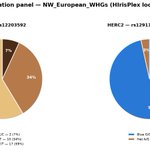


1) Ancient DNA comes often with bad coverage. You can fill the gaps statistically using GLIMPSE fairly standard practice. The obvious worry however is does that quietly drag the ancient genome toward the moderns you borrowed from in Admixtools? So I tested it. 🧵

ALT PCA of Imputed Genomes side by side with regular capture data.
6) Caveats: West Eurasian ancestry is close to the best case there is for a 1000G panel. These are 1–2× genomes. And it's three individuals from one site, so really one test repeated three times. Nothing here generalises to 0.3×, or to ancestries the panel covers thinly.
Lezagacy retweeted

Another drop (PRJEB105378), another demonstration of what I spoke about earlier. The samples neatly fall along an Italic-Etruscan IA to Imperial Anatolian cline. I agree with Tabin that local Italic IA admixture increased after the Imperial period, into the Early Medieval era.


16 new genomes from Abruzzo show the pattern seen in other parts of Italy:
Relatively high amounts of Near Eastern related ancestry in the Imperial period with a shift towards Northern Europe in the Early Medieval period thats maintained through today
cell.com/iscience/fulltext/S…


Lezagacy retweeted
The shift is pretty blatant, by the Roman era Magna Graecian profiles are pulled hard toward a Cypriot/West Anatolian pole. Marathon, Tenea (n=4) and Isola Sacra (n=4) all show it, with varying amounts of Republic IA ancestry forming the core of Imperial Roman profiles.


Lezagacy retweeted
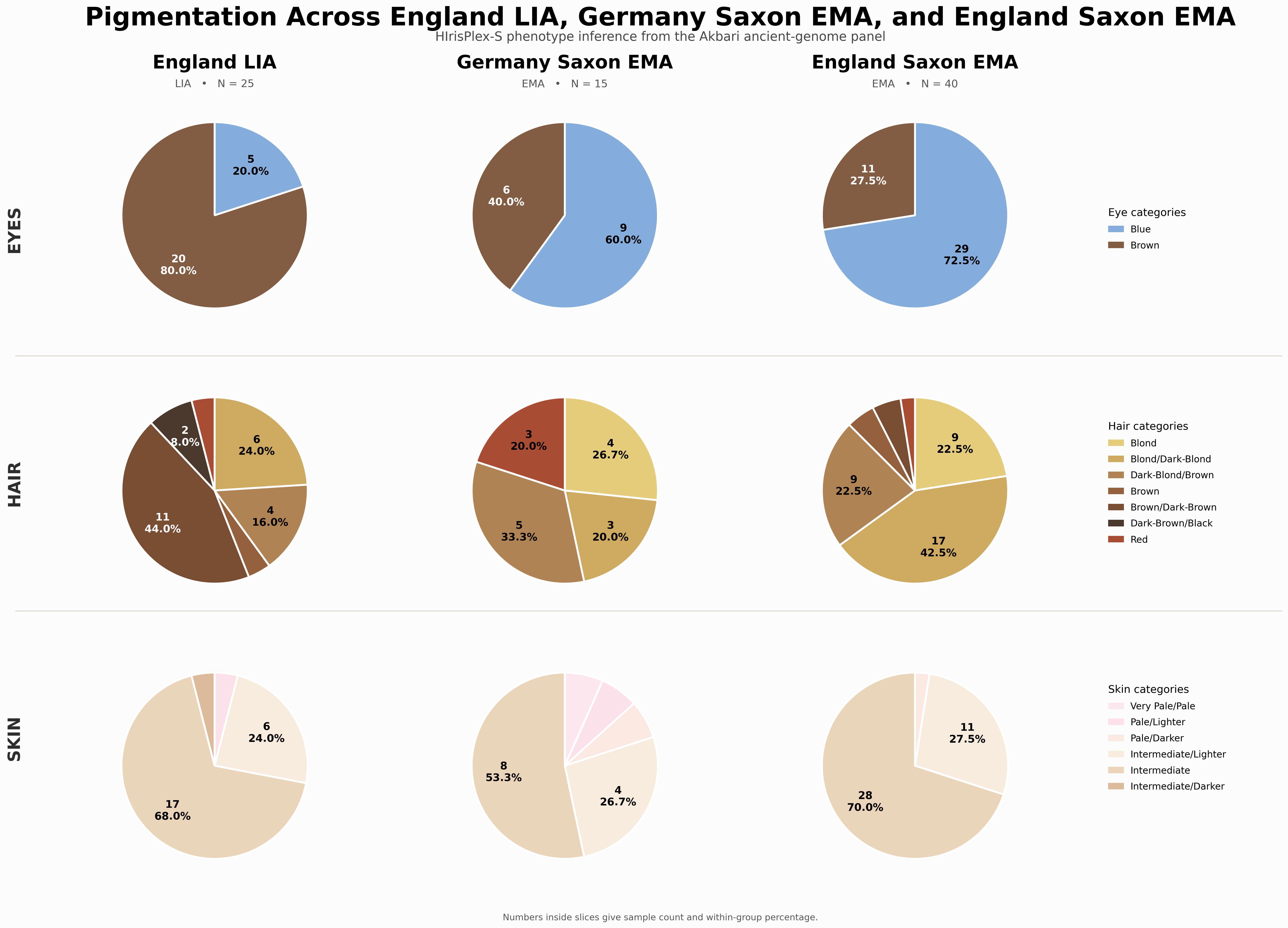
Skin, eye and hair color in 80 England LIA, Germany Saxon EMA and England Saxon EMA genomes, inferred with HIrisPlex-S. Pastebin with sample IDs, population labels, phenotype calls, probabilities, and full classifications:
pastebin.com/22eJRFNE


Lezagacy retweeted
Skin, eye and hair color in 63 Illyrian, Thracian and Mycenaean BA/IA genomes, inferred with HIrisPlex-S. Pastebin with sample IDs, cultural labels, phenotype calls, probabilities, and full classifications:
pastebin.com/DYnjFrSd

Lezagacy retweeted

Very excited to present a preprint of the first chapter of my thesis, which focuses the end of the LGM (Ice age / Last Glacial maximum) in Europe, and specifically the post-LGM Balkans.
