
Associate Professor, School of Transdisciplinary Innovation & Department of Chemistry, Seoul National University
Seoul, Republic of Korea
Joined April 2009
- Tweets2K
- Following185
- Followers339
- Likes3.8K



Very interesting multi-BODIPY macro-cyclic molecule. I have dreamed about similar structures but never dare to jump in. :-) Thank you for such a elegant work. @WerzLab

A tour de force of more than 5 years - 11 authors, 4 PIs, 3 German excellence universities, but finally out in @angew_chem - our paper on oligo-BODIPYs up to cyclic dodecamers (synthesis, spectroscopy and theory) @WerzLab @UniFreiburg @FreiburgChem @BannwarthTC @RWTH @TU_Dortmund


Jun-Seok Lee retweeted

“Codex, please design some small molecules to fight malaria.”
In this tool calling demo, Codex with GPT-6 Astra used LDDM to generate candidate molecules which might bind Plasmodium falciparum's dihydroorotate dehydrogenase, an enzyme the malaria parasite needs to make pyrimidines. Disrupting this enzyme can stop the parasite from replicating.
Codex used LDDM in two ways:
1) de novo molecule generation
2) extending a fixed fragment of the existing dehydrogenase inhibitor, DSM265
DSM265 was reported by Coteron et al in 2011. This demo uses its experimentally determined binding pocket in PDB 4RX0. The attached vid shows the LDDM generation steps.
The LDDM generated candidates had no exact matches in Astra's PubChem and ChEMBL searches, and the de novo molecule had no >85% similar hits.
Codex used retrosynthesis tools (AiZynthFinder, Syntheseus, and SynPlanner) to search for routes to make these, but no complete routes were found during the demo.
Codex used RDKit and PoseBusters to check geometry and protein/cofactor clashes (no severe clashes). Codex also used AutoDock Vina to score fit in the pocket and these computational candidates scored similarly to DSM265.

Large Drug Discovery Model is out! I am exited to introduce our new generative SBDD framework. We experimentally validated LDDM across 5 targets and successfully designed novel, validated hits with structural accuracy confirmed by X-ray.
Preprint: biorxiv.org/content/10.64898…
🧵 1/7
Jun-Seok Lee retweeted

2026 Mooju·Ssen Distinguished Scholars Symposium
Join us at SNU on Sept. 23, featuring 2021 Nobel Laureate David MacMillan, Tehshik P. Yoon, W.-J. Xiao, M. Inoue, W. J. Song, S. Y. Hong, H. G. Lee, and K. T. Kim!

Ai for proteomics !

Can AI take proteomics to a virtual cell? Our new perspective maps the path — from better peptide/protein ID to spatial & perturbation proteomics to AI Virtual Cells — and calls for an AI-friendly data ecosystem to get there. @guomics and Zhang lab.
nature.com/articles/s41592-0…

Jun-Seok Lee retweeted

Drug candidates that form covalent bonds with their targets were historically avoided because of toxicity concerns. However, covalent drugs with controlled reactivity are now recognized as promising agents that combine manageable safety with substantial advantages, including enhanced potency, prolonged target residence times, and access to challenging targets.
This shift is reflected in recent covalent drug approvals, particularly those targeting protein-phosphorylating enzymes (kinases) and cancer drivers such as the oncogenic protein KRAS. A central feature of these drugs is a “warhead” reacting with an amino acid residue in the target protein to form a covalent bond. Yet the repertoire of drug-like, chemically accessible reactive moieties remains limited.
In a new Science study, researchers report streamlined access to an underexplored warhead type with well-tempered reactivity that can be appended to complex scaffolds late in synthesis, enabling practical use in drug discovery.
Learn more in a new #SciencePerspective: scim.ag/4gZKvqa

Jun-Seok Lee retweeted

That's a wrap on #EESMetabolicEco! 🙌
A huge thank you to all of our amazing participants, speakers, and organisers for an inspiring 4 days of discussions on the metabolic interactions that shape ecosystems across every scale. From exchanging ideas to building new collaborations, your contributions made this meeting a fantastic forum for sharing ideas across disciplines.
Scientific organisers:
Kathrin Fenner, Eawag, Swiss Federal Institute of Aquatic Science and Technology, Switzerland
Dianne Newman, California Institute of Technology, USA
Mohammad R. Seyedsayamdost, Princeton University, USA
Michael Zimmermann, EMBL Heidelberg, Germany
Conference organiser:
Inna Bösselmann, EMBL Heidelberg, Germany


Jun-Seok Lee retweeted
It's the first day of #EESMetabolicEco and we're excited to dive into the world of metabolic interactions!


Jun-Seok Lee retweeted

Online now! Aptamer targeting HMGB1 attenuates inflammatory disease via domain-specific antagonism dlvr.it/TTdsLn #chembiol
Excited to share our latest work
We introduce a reversible photo-crosslinking strategy that enables spatiotemporal control of protein conjugation while overcoming the irreversible limitation of conventional photocrosslinkers.
pubs.acs.org/doi/10.1021/jac…
#JACS

Hope this platform will expand the toolbox for chemical biology, and target validation.
#ChemicalBiology #Photochemistry #ProteinLabeling
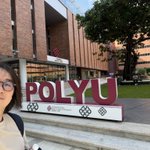
Chemical & Biomedical Imaging (CBMI-II) conference just started at the Hong Kong polytechnic university. Beautiful campus at the center of HK, full of inspiring speakers! – at Wan Chai District, Hong Kong


Jun-Seok Lee retweeted
Congratulations to Prof. Seokmin Shin in our department on being appointed as the new President of the Korea Research Institute of Chemical Technology (KRICT)! Wishing him great success and inspiring leadership for the advancement of chemistry and science in Korea.

Jun-Seok Lee retweeted

They synthesized 12 RIBOTACs, but most of them did not reduce expression level of the target RNA. One reduced it but the potency is more dependent on concentration than chemical structure. RIBOTAC showed a new type of morphological change.
pubs.acs.org/doi/10.1021/jac…

Jun-Seok Lee retweeted
A new platform screens for and enables the design of peptide biosensors of dysregulated proteolytic activity in tumors for tumor detection and therapeutic development
nature.com/articles/s41589-0…

Must check out paper about “flash” chemiexcitation. Structural effect on kinetic control of chemiluminescent emission!!!

Just published in @ChemicalScience
EWG-substituted adamantyl 1,2-dioxetanes with faster chemiexcitation while preserving stability.
⚡ Flash-type chemiluminescence
🔬Up to 190× higher signal-to-noise in bacterial assays
pubs.rsc.org/en/Content/Arti…

Former graduates were visited SNU lab for celebrating teachers day. It was great weather & I really enjoyed the times with old friends. I hope this small community members help each others to make strong bond for their life long relationship.
Thank you all!!!!

Beautiful display work from Gray group.

Charged molecular glue discovery enabled by targeted degron display
nature.com/articles/s41589-0…

Jun-Seok Lee retweeted

We report the synthesis of 3-desoxycollinoketone B and its ability to reduce Alzheimer-associated misfolded proteins @NatureComms . The study was made possible by a collaboration among synthetic chemists, chemical biologists, and computational chemists!
nature.com/articles/s41467-0…

Jun-Seok Lee retweeted

A new chemical labelling tool lets researchers watch the inflammatory receptor P2X7 reorganise and cluster on immune cells at the nanoscale, revealing how inflammatory signals reshape receptor behaviour in real time.
elifesciences.org/articles/1…

ALT Affinity-guided labeling strategy for P2X7.