





Evan Walden retweeted

Today we’re announcing the General Availability of Agent SSO, and we’re including it in our core SSO offering.
SSO transformed how people move across applications, making access seamless for users and centralizing identity and control for IT. AI agents need the same thing.
Today, connecting agents is a mess of static API keys, fragmented integrations, and endless user consent prompts. But Agent SSO changes that. Powered by the open Cross App Access (XAA) standard, it enables agents to be registered as first-class identities. For IT, it means centralized visibility and least-privilege policy. For users, it means their AI agents can seamlessly connect across enterprise apps without interrupting their flow.


Evan Walden retweeted

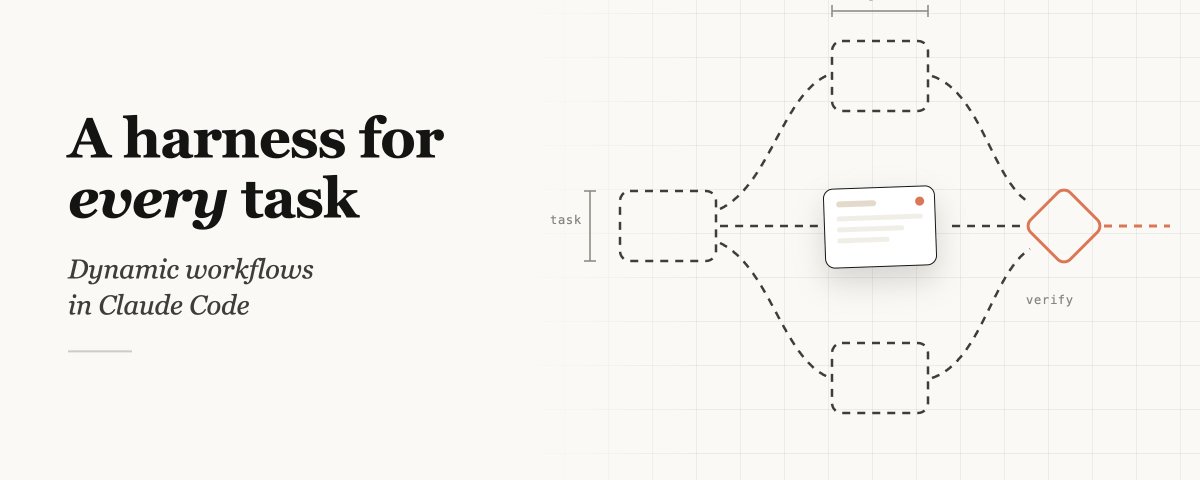
Workflows are the biggest upgrade to Claude Code’s capabilities since skills and subagents.
I dove deep into it with @sidbid to figure out best practices, examples and more. I’m particularly excited about the non-technical tasks it enables for Claude Code.

Evan Walden retweeted

To get good animations from an AI you need to get good at telling it what you want:
- "stagger this list of items"
- "make this animation direction-aware"
- "spacial consistency", "crossfade", "layout animation",
I made a motion vocabulary for this:
animations.dev/vocabulary
Evan Walden retweeted

Introducing Roughdraft!
A new open source project designed to make collaboration with agents better.
The idea is to bring commenting and suggested changes to markdown (e.g. plan docs) in a nice interface.
Free, local, etc.
👉 roughdraft.md 👈
Evan Walden retweeted

Team shipped a Codex Security plugin with 5 AppSec workflows:
> Security Scan
Scans PRs, commits, branches, patches, folders, or full repos. Runs the full pipeline end-to-end
> Threat Model
Maps the repo: assets, trust boundaries, attacker inputs, invariants, and failure modes
> Finding Discovery
Finds plausible vulns: authz bypass, SSRF, path traversal, injection, cross-tenant leaks, sandbox escapes, dangerous sinks, etc
> Validation
Separates signal from noise. Uses PoCs, tests, debugger traces, ASan/valgrind, realistic repros, or static tracing
> Attack Path Analysis
Turns findings into attacker stories: reachability, counterevidence, impact, severity, and whether it should actually be reported
It’s a packaged security review for your projects:
threat model → discovery → validation → attack path → report
Try it out today!!




Evan Walden retweeted

Step inside Project Genie: our experimental research prototype that lets you create, edit, and explore virtual worlds. 🌎
Evan Walden retweeted

A workflow I'm enjoying for managing coding agents on a kanban board:
When an agent needs your input, it turns the task red to alert you that it's blocked!
And then you can respond right there on the card to unblock it 😎

Evan Walden retweeted

A US teacher sharing her classroom experience.
One of the comments underneath says:
"47 years teaching. Just retired this year. The difference between then and now is like night and day. The kids have zero attention span!"
Evan Walden retweeted

Viruses can take up to ~12 hours to incubate, so regularly washing them out makes sense.
And it works. In an RCT of 387 adults gargling water 3 times a day:
-36 percent fewer infections
-Milder symptoms when infection occurred

Evan Walden retweeted

What happens if high quality AI models become free, ubiquitous, and inexpensive to run on even low-spec hardware?
(1) First, you can rebuild every productivity app AI-first. That starts with Microsoft Word, Google Sheets, and Apple Keynote. But it extends to wholly new kinds of productivity apps.
(2) Second, every “smart” device becomes truly smart. Your fridge can double as your nutritionist. Your alarm clock is your sleep therapist. And so on. Just like your car is already your driver.
(3) Third, moats move to the app layer. As others have remarked, the GPT wrappers may end up more defensible than the GPT model itself.
(4) Fourth, physicality becomes relatively more valuable. The hardware, the secure real estate, the in-person community — these are all things digital AI can’t deliver.
(5) Fifth, high human IQ actually becomes increasingly valuable. Because AI is really amplified intelligence rather than truly agentic intelligence, since it requires the creative prompt to get started.
(6) Sixth, prompt engineering is here to stay, because prompting is programming — just in a higher-level language.
(7) Seventh, the most common form of AI doomerism is proven false, because we are getting decentralized ubiquitous AI rather than centralized monotheistic AI. More like a garden of smart things than a vengeful Old Testament God that’ll turn you into paperclips.
(8) Eighth, the combination of cuts to US “industrialized” academic research at the same time AI models accelerate discovery will mean a return to individual gentleman scientists and the advance of desci (decentralized science).
(9) Ninth, the complement to probabilistic AI is deterministic crypto. For captchas, for identity, for money, for all these things — crypto is the digital scarcity that AI can’t fake.
(10) Tenth, the main cost of software development may reduce to reducing the costs of the physical environment. That is: to providing society-as-a-service, to simply giving engineers time to type and experiment in peace. This was already so, but may become even more so.
Several of these points have been made by others, but I think that collectively they help define the second mover era.

AI will move into a window (later this year) that I would call "second mover's advantage." That is, the first obvious moves that could be big are played out given the technology/funding cycle. The rest of us get to watch how it worked out, take stock of the pace, understand how users use it, and better consider where it will be vs where it was--without baggage.
Much of mobile and web had second movers that became dominant.

Evan Walden retweeted

The risk of politician coins comes from the fact that they are such a perfect bribery vehicle. If a politician issues a coin, you do not even need to send *them* any coins to give them money. Instead, you just buy and hold the coin, and this increases the value of their holdings passively.
Furthermore, there is deniability: holding the coin is, in terms of financial effect, a linear combination of donating to the issuer and gambling. Hence you can have the intention of doing the former but when challenged claim that you are doing the latter.
You can even hold the coin privately, and show that you are holding it to whoever you need to show; you do not need any zero knowledge proofs, you just send a test transaction.
This is all risky to democracy, for reasons very similar to what I wrote in vitalik.eth.limo/general/202… , vitalik.eth.limo/general/202… and elsewhere. TLDR: the economic arguments for why markets are so great for "regular" goods and services do not extend to "markets for political influence".
I recommend politicians do not go down this path.

Evan Walden retweeted

Introducing Perplexity Assistant.
Assistant uses reasoning, search, and apps to help with daily tasks ranging from simple questions to multi-app actions. You can book dinner, find a forgotten song, call a ride, draft emails, set reminders, and more.
Available on Play Store.

Evan Walden retweeted

Wondering how to actually use AI in your day to day?
Our team @a16z asked some of AI's biggest names to nominate their favorite products of 2024 - this is a great starting point 👀
Here are their picks! ⬇️
For general AI assistants:
- Perplexity (@perplexity_ai) - AI search engine
- Anthropic (@anthropicAI) - general assistant, Claude
- ChatGPT (@chatgptapp) - for Advanced Voice Mode!
For help getting work done:
- Granola (@granola) - AI notetaker
- Wispr Flow (@WisprAI) - voice dictation
- Gamma (@gammaapp) - AI decks, docs, websites
- Adobe (@Adobe) - Acrobat AI PDF summarizer
- Cubby (@CubbyApp) - collaborative workspace
- Every Inc. (@every)- Spiral writing assistant + Cora email product
- Lindy (@getlindy) - AI agents to automate workflows
To build an audience:
- Delphi (@withdelphi) - AI clones
- HeyGen (@HeyGen_Official) - studio quality avatars
- Argil (@argildotai) - social media avatars
- Overlap (@JoinOverlap) - video editor
- Persona - agent builder for creators
- OpusClip (@OpusClip) - video editor
- Captions (@getcaptionsapp) - avatar generator + video editor
To build a product:
- Cursor (@cursor_ai) - AI code editor
- Replit (@Replit)- automated web developer
- Anychat - multi-model developer platform
- Codeium (@codeiumdev) - Windsurf agentic IDE
To get creative:
- ElevenLabs (@elevenlabs) - text to speech
- Playground (@playgroundAI) - graphics generator
- Suno (@sunomusic), Udio (@udiomusic) - music generators
- Midjourney (@midjourney), Ideogram (@ideogram_ai) - image generators
- Runway (@runwayml), Kling (@Kling_ai), Viggle (@ViggleAI) - video generators
- Krea (@krea_ai) - creative canvas
- Photoroom (@photoroom_app) - image editor
To learn or grow:
- Rosebud (@joinrosebud) - AI journal
- Good Inside (@GoodInside) - parenting app
- Ada Health (@adahealth) - health management
- Ash - AI counselor
- NotebookLM (@notebooklm) - learn anything w/ AI
- Particle (@particle_news) - personalized news
To have fun:
- Remix AI (@getremixai)- AI social platform
- Meta Imagine (@AIatMeta) - AI-first social tools
- Grok (@grok) - chatbot from xAI
- Curio (@CurioBeta) - AI toys

Evan Walden retweeted

Today we're excited to introduce Devin, the first AI software engineer.
Devin is the new state-of-the-art on the SWE-Bench coding benchmark, has successfully passed practical engineering interviews from leading AI companies, and has even completed real jobs on Upwork.
Devin is an autonomous agent that solves engineering tasks through the use of its own shell, code editor, and web browser.
When evaluated on the SWE-Bench benchmark, which asks an AI to resolve GitHub issues found in real-world open-source projects, Devin correctly resolves 13.86% of the issues unassisted, far exceeding the previous state-of-the-art model performance of 1.96% unassisted and 4.80% assisted.
Check out what Devin can do in the thread below.