

The Environmental Markets Lab (emLab): where economic ideas become environmental solutions. Find us on Blue Sky: https://xitter.cf/t.co/zlU430wZXp
University of California Santa Barbara
Joined December 2017
- Tweets1.1K
- Following970
- Followers1.2K
- Likes865


emLab UC Santa Barbara retweeted

As #COP30 calls for stronger global action on emissions, what happens at sea can’t be ignored.
Industrial vessels emitted 1.3B tons of CO₂ in 2023, ~3% of global fossil fuel emissions. Transparency at sea is key to climate accountability.
@ClimateTRACE @emLabUCSB
Read more: 🔗 bit.ly/49ew9Ou

emLab UC Santa Barbara retweeted

Why do some say marine protected areas are just “paper parks”? And are industrial fishers actually staying out of these no-fishing zones?
New in @ScienceMagazine: We used AI + satellite radar to find out. doi.org/10.1126/science.adt9…
#ScienceResearch #OceanTransparency #Fisheries

ALT Underwater image of a sea lion hunting salema fish in the Galapagos Marine Reserve.
emLab UC Santa Barbara retweeted

Marine protected areas can protect fish and maintain healthy ecosystems. As demonstrated by two related papers in this issue, however, such areas are only effective against illegal fishing when established limitations are enforced.
Learn more this week in Science: scim.ag/40yP9Ci

ALT The Galapagos Islands, where a sea lion hunts salema fish
emLab UC Santa Barbara retweeted

Using artificial intelligence methods applied to satellite data, #UWMadison researchers have found that the world’s most strongly protected marine protected areas had little-to-no industrial fishing activity.
news.wisc.edu/satellites-sho…


emLab UC Santa Barbara retweeted
As part of our ongoing work to shine a light on all industrial activity at sea, we have—for the first time ever—mapped and estimated the emissions of all industrial vessels operating in the ocean.
See what we uncovered with our @emLabUCSB and @ClimateTRACE partners. [bit.ly/41TQ0NT]

emLab UC Santa Barbara retweeted

The Environmental Markets Lab (@emLabUCSB) is hiring a pre-doc to support project within emLab’s Climate & Energy program, working in particular with Prof. Kyle Meng (@kyle_c_meng).
Learn more at: bit.ly/43n6AXf

emLab UC Santa Barbara retweeted

I look forward to help organize and participate in this IZA workshop. Email or DM if you have any questions. Submission deadline: 3/1/25

📢#cfp @iza_bonn Workshop: "Climate and Environmental Economics: Applied and Behavioral Perspectives" | May 14-16 in Bonn 🇪🇺
w/ @RDMetcalfe @ColumbiaSIPA
Tamma Carleton @UCBerkeley
Ottmar Edenhofer @PIK_Climate
@KiraVinke @dgapev
Apply 👉conference.iza.org/IZA_Clima… #econtwitter

emLab UC Santa Barbara retweeted

🎓It is my great pleasure to share that I’ve successfully defended my PhD entitled “Modeling the biodiversity crisis: the roles of space and strategic behavior in bioeconomic modeling” under the supervision of @LMouysset and Chris Costello (@emLabUCSB)
A short thread 🧶
emLab UC Santa Barbara retweeted

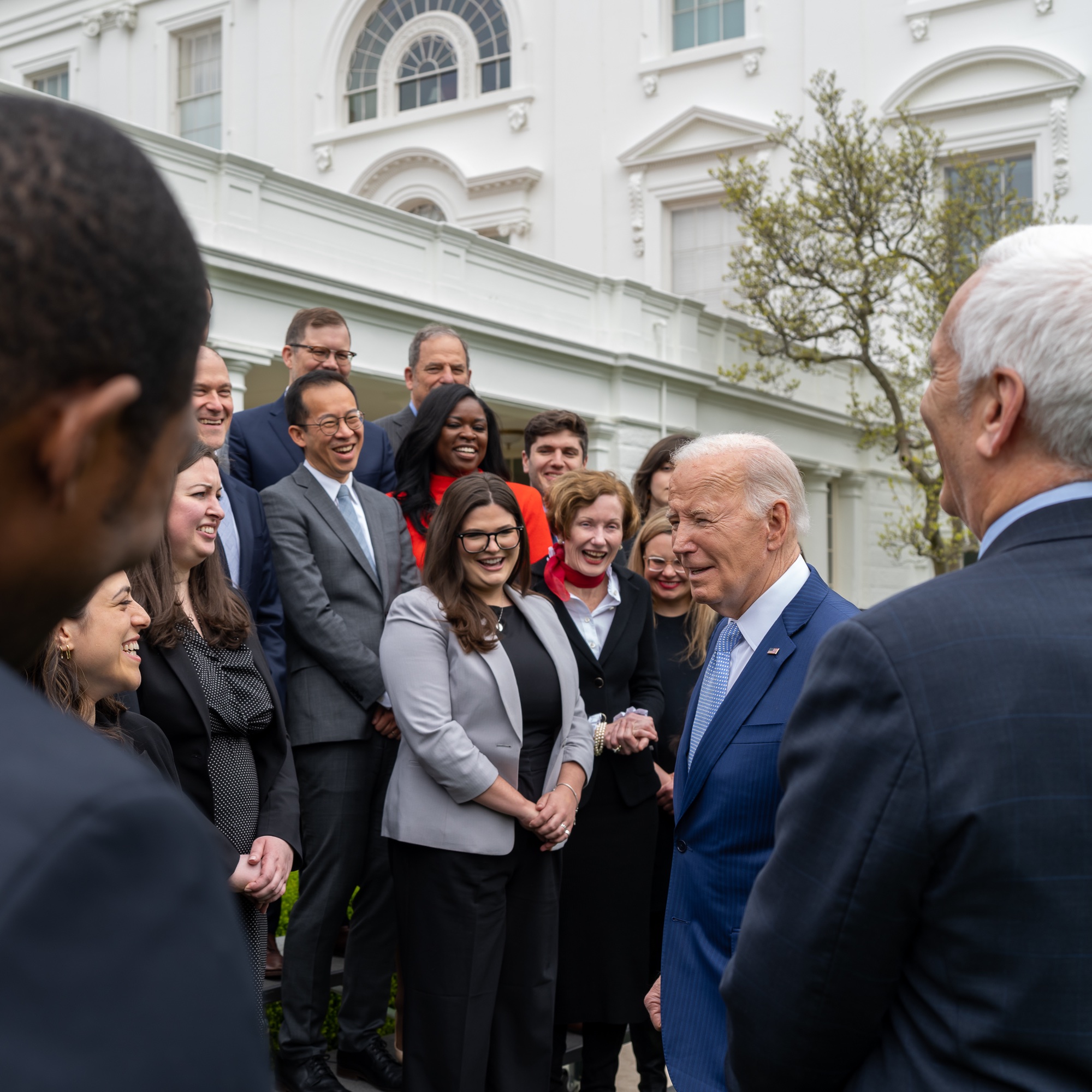
Today is my last day as Senior Climate Economist @WhiteHouseCEA. It has been the privilege of my career to serve my country with such dedicated & talented USG colleagues on all things climate, energy, & environment. Now back to @BrenUCSB @EconomicsUcsb @emLabUCSB @ucsantabarbara!

emLab UC Santa Barbara retweeted

Very excited to be spending this semester at @emLabUCSB & @BrenUCSB! Looking forward to meeting great people, presenting my work on air pollution and productivity... and seeing if the ocean air boosts mine!

emLab UC Santa Barbara retweeted

We're hiring! Come work with us on exciting new projects on agriculture and climate
We are looking for someone to support our fieldwork in Pakistan
@econ_ra

🌍Research Opportunity!
@pbaylis, @guglielmozap, and I are hiring a Full-Time Field Research Assistant in Pakistan for 3 months to support field projects related to climate change and agriculture. If intereseted, please apply. 🌱

emLab UC Santa Barbara retweeted

In 2022, the world committed @CBD_COP15 to protecting 30% of global ecosystems by 2030. Now, a team of researchers @emLabUCSB have completed a study on how a conservation market can help realize this ambitious 30x30 goal. Read their blog for IGCC here: bit.ly/3YqaKfQ
emLab UC Santa Barbara retweeted
Just a few days left to submit your paper for the 21st Occasional Workshop in Env & Resource Economics at UCSB. Deadline on 8/1

🗣️ Call for paper submissions! If you are interested in presenting at the Occasional Workshop, please submit your environmental and resource economics focused paper by August 1st. Papers will be selected by mid-August. Submission instructions: occasionalworkshop.weebly.co…

emLab UC Santa Barbara retweeted

🌾📁 Explore the SPIA-EmLab Agricultural Interventions Database, a repository of existing interventions designed to increase agricultural productivity.
Discover existing studies and data here:
bit.ly/4aIBL0T
@emLabUCSB @CGIAR @IAES_CGIAR @isdc_cgiar
emLab UC Santa Barbara retweeted
🌎 Earth is facing a biodiversity crisis fueled by human activity.
👥 Harnessing #GlobalFishingWatch data, our research partners @emLabUCSB unearth key findings in a study assessing how the global fishing effort responds to #MPAs.
🌐 Read about it here: bit.ly/3LvEO1Z

ALT Fishing boats at sea. Credit: emLab, UC Santa Barbara.
emLab UC Santa Barbara retweeted

🌊🐟 Expanding marine protected areas reduces fishing globally, not just in reserves. A surprising finding by researchers at @emLabUCSB challenges assumptions about ocean conservation. #MarineScience ow.ly/awSM50SBH6L

emLab UC Santa Barbara retweeted

Using six years of @GlobalFishWatch data, our research partners at @emlab studied how fishing responds to large MPAs. They found that establishing new MPAs could decrease fishing outside MPAs as well as inside. @PNASNews pnas.org/doi/10.1073/pnas.24…

emLab UC Santa Barbara retweeted
Three #UCSB researchers offer a market-based approach to achieve the @UN's planet conservation targets in the ocean. Their system allows countries to trade conservation credits, which could reduce costs and incentivize nations to meet their goals. 🐠
news.ucsb.edu/2024/021515/co…

emLab UC Santa Barbara retweeted
Nations have been tasked with conserving 30% of land and sea by the year 2030—but only modest progress has been made.
A new #SciencePolicyForum proposes an alternative approach within the existing framework: a market that trades marine conservation. scim.ag/7mG
