

Economist working at the intersection of ocean science, policy & data | Asst. Prof @UWMadison | Formerly @NOAAFisheries | I study who uses the sea—and how
- Tweets991
- Following259
- Followers766
- Likes1K
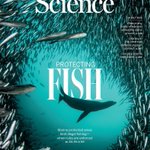




ALT Underwater image of a sea lion hunting salema fish in the Galapagos Marine Reserve.



ALT The natural logarithm transformation is an important tool in statistical analysis. The standard approach to interpreting a linear change of p in ln(X) is as a (1 + p) proportional change in X. This is an approximation that is only valid for small values of p. In this paper I suggest the use of base-(1 + p) logarithms (linearly rescaling ln(X) by 1/ ln(1 + p)), where p is chosen ahead of time. Then, a one-unit change in log1+p (X) is exactly equivalent to a (1 + p) proportional change in X. This method avoids an approximation being applied outside its useful range, offers an easier way of reporting exact interpretations, improves approximation quality when approximations are used, produces a logarithm more similar to other regression variables by making the change of interest a one-log-unit change, and reduces error from the use of log(1 + X) in cases where X can be 0.


