

Chief Intelligence & Insights Officer at Iron Light. Opinions are mine alone. Turning data into movement.
Chicago, IL
Joined October 2019
- Tweets7.9K
- Following921
- Followers500
- Likes20.9K






P. Sergio Serrato retweeted

this California wealth tax thing is just incredible.
so in October 2025, a California healthcare union proposed a "one time" 5% tax on any billionaire's wealth. the ballot measure will be voted on next month. In early December 2025, California announced that it would be a retroactive tax if passed, applying to anyone with CA residency as of Jan 1, 2026. The objective is to pay for Medi-Cal, California's incredibly dysfunctional healthcare system. (which also functions as a glorified welfare apparatus, but that's a discussion for another time).
polls reveal that the CA electorate is split around 50/50 on the tax, but prediction markets only give Prop 40 a ~23% chance of passing (there are competing measures on the ballet that would nullify it).
there are 200 billionaires in CA, worth collectively somewhere between $2.3 and $2.6 trillion. 5% of that is around $100b, accounting for a small amount of attrition. proponents of the tax forecasted a significant windfall, assuming only a 10% departure rate.
supporters thought they were being clever with the retroactive concept. no billionares would leave CA in the few short months between the tax being proposed and the residency cutoff date, without the tax even having passed yet, right?
well as it turns out, they did.
a new paper [1] from two academics at Stanford called "The Net Present Value of the California Billionaire Tax Act", argues that not only did more billionaires leave due to the proposed tax than its proponents expected, but that the value of the tax, if it does pass, is actually negative.
proponents of the tax only assumed 10% avoidance, that is, only 10% of the taxable base of targeted billionaires would leave CA within the very short Oct-Dec 2025 window. Jaros and Rauh, the Stanford academics, find that a lower bound of 28.6% of the taxable base managed to leave.
just based on known departures, those departures total $577b in net worth, or $28.8b in potential tax lost. this of course does not capture everyone (many left without announcing their departure), so the authors normalize to departure rates estimated from other wealth tax events, and apply other discounts for litigation, arriving arrive at a figure of only $28-$36b in forecasted tax revenues.
but this isn't all! all of the income taxes paid by the departed billionaires are also forsaken. the authors estimate that CA billionaires pay $3.3- 5.8b in annual income taxes. they assume a midpoint of $2b lost in annual collections from departed billionaires. the net present value of that lost income stream is -$68.9 billion.
so when you add it all up you get:
+ $30b one-time tax windfall (estimated)
- $69b in present value of lost future income taxes
= - 38.9b overall net present value of the tax
of course, this analysis is highly estimate driven. the authors simulate the parameters 100k times and find a negative NPV of the implemented tax 85 percent of the time.
and if the tax doesn't pass, which it's not looking like it will, California still ended up losing at least $577b in departed net worth, and they have permanently poisoned the well with entrepreneurs who will now worry about future wealth taxes.
[1]: nber.org/system/files/workin…


P. Sergio Serrato retweeted

Great breakdown of the lies in the More Perfect Union video.
It dawned on me this morning. A socialist watches this and is appalled that housing quality depends on how much money a building owner can earn on a unit. The same person will argue a barista should make $30 an hour.
Today's socialists don't see money as a tool to improve people's lives. They see it as a way to reward the people they deem worthy and punish the ones they don't.
The irony is that capitalism pays for their entire agenda. And they say they want to eliminate it.
None of it makes sense.

P. Sergio Serrato retweeted

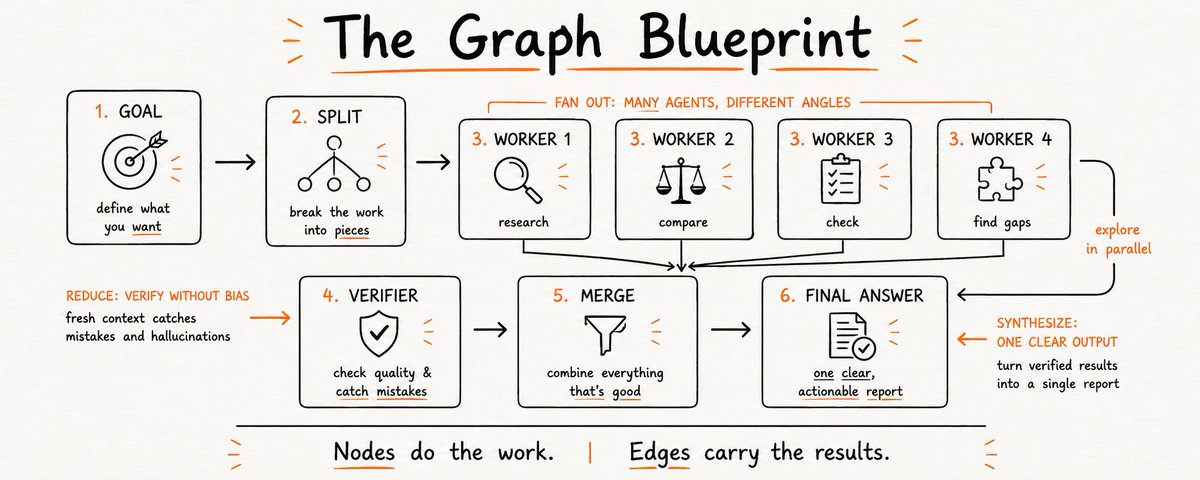
The main compounding asset in AI are Traces and Telemetry.
Effective as of today @AnthropicAI just adopted a brand-new privacy policy so they can capture agentic sessions, functioning as an automated engine for trace collection.
The trace allows an engineer (or model) locate the steps where an agentic trajectory went off the rails.
The @PalantirTech new whitepaper published today on AI sovereignty focuses on ZDR and doesnt include aggregated telemetry.
Tesla’s strategic moat is completely sustained by billions of miles of video and driver intervention telemetry logs beamed back from live fleets. (@elonmusk)
Model weights are rapidly depreciating assets relative to learning loops based on evals, traces and telemetry. Traces are the new documentation. Evals are the new OKRs. (@OpenAI)
Everything about AI agents from system design, model improvement, auditing, feedback, learning is rooted in actual logged traces, agent trajectories, and system telemetry.
Value is captured by those that either (a) generate and leverage massive high-quality trajectories at scale or (b) empower customers to do so privately and effectively within their own environments. Both paths are active.
This shift in value from tokens to traces is happening now and this next phase will center on the production, ownership and control of traces and evaluation infrastructure around it.




P. Sergio Serrato retweeted

Hi, I'm Felix. I'm an eng lead working on Claude. I love watching people take flight and do things they never thought possible.
We often describe that as "being more ambitious" when using AI, which is tricky advice to follow. I wrote a tutorial:
felixrieseberg.com/how-to-be…

P. Sergio Serrato retweeted

liz warren: we’re gonna stop the mayonnaise company from buying a hot sauce company
elon musk:
P. Sergio Serrato retweeted

In 2016, on Tuesday, looking at data rolling in, I told the then-global head of rates at JPM that Trump would win.
It was not, shall we say, a consensus call at the time.
So I want to talk a little bit about what I'm seeing right now, since the timeline is going crazy.
On a trading desk, it matters more to be right than to be popular, and it matters more to be right than to predict what you want to happen.
I have the curse of being a mathematician by training. So I still have the muscles, even if I don't use them as much.
Right now I would say this:
1 - Anyone who thinks they know anything with high confidence you should immediately discount in this election cycle.
2 - The error bars on races, especially the swing races in the Senate, are likely so large that polling may not be particularly predictive.
3 - There are conflicting cross factors that really are making a mess out of some of the traditional polling which is causing this.
Namely, what I'm seeing is a few things that gives me major heartburn.
First, non-response rates to polls are now so high I think it's impossible to know if we have a representative sample of any subgroup. We can 100% get the aggregate weighting correct to voter turnout, but when you model your R sample at 10% crossover votes and get 4%, or your I sample at mildly D leaning at +2% but instead get +10%, it means all your re-weighting was an exercise in false specificity.
Second, we have major conflicts in the data. People are claiming they did not vote for Trump in 2024 when we are pretty sure they did, and we are getting R samples in some swing states where if the sample is correct about the sides voting in 2024, Harris would be president (she's not, if you've been in a coma). At the same time, we have young people looking maybe way more like they did in 2022 than 2026, and we know we are missing a large chunk of that sample because they never fucking answer the phone, so the net result is... ... ...? Yeah, nobody knows.
Third, mutually combative forces. Anti-incumbency is a thing in mid-term elections, it's also a thing in American politics where "fuck the guy in charge I hate it here" seems to be stronger than partisanship in an increasing number of cases. This means that helps Dems in red states but hurts Dems in blue states? The reverse would be true for Republicans. These kinds of forces produce compression.
Fourth, social media and Twitter are not the real world, but the distortionary forces here are influencing the polling landscape, where I would imagine the most media-connected people are also the ones taking polls, which leads to the invisible sample also being the ones in a different discourse bubble than the ones on here.
The punch line is simple: take any error bar and triple it. Quadruple if you're in Maine or something. We don't know anything, and any confident prediction about Dems taking the Senate or Republicans holding the House are almost certainly wrong. Not in their specific outcome, but rather, in good process. All pigs are fish therefore 2+2 = 4 type thinking.
Right now, depending on how you want to torture the data, you can see any outcome from R/R to D/D and any middle state. We've had large polling misses meaning we should be favoring Dems (NJ governor, anyone?), Rs being underweighted in the past meaning we should favor them (IA, anyone?), and just internal polling that was way off (El-Sayed way up in the primary, anyone?).
Anyone giving you a confident hot take here, in short, is full of it. Even the early voting is not uniform, and while the information content there is not always high, there is usually not zero, and if you're looking at data from GA vs. OH, you aren't getting the exact same vibes, much less some other places.
In short: national politics is getting weirder, polling is getting harder, the parties are fragmenting internally, and nobody knows shit yet.
Good news, though: they'll all claim they were right after the fact. What you should do is track both predictions and process to see who is really worth listening to over time.


P. Sergio Serrato retweeted

Americans are more likely to view the Democratic Party than the Republican Party favorably (43% vs. 35%, respectively). The Democratic Party's rating has increased six percentage points since last year, while the Republican Party's has declined by five points.
Full story: on.gallup.com/3U0odex

P. Sergio Serrato retweeted

Nearly 4 in 10 Americans are part of an online community, and young adults are more likely to be in one than older adults.
These communities can be deeply valuable parts of some people’s lives, offering the chance to connect with others for information, advice or for fun.
#PewKnightInitiative #OnlineCommunity #YoungAdults #DigitalConnections

ALT Chart comparing share of Americans who identify as part of an online community by age group.
P. Sergio Serrato retweeted
About six-in-ten Americans say there is too much economic inequality in the U.S.
#EconomicInequality

ALT Chart of all adults showing Democrats are nearly twice as likely as Republicans to say there is too much economic inequality


Polling is hard. It is in someways like flying, which is qualitatively and qualitatively worse than it was 26 years ago. AI slop isn't making it any better. We're in for a "national conversation" on "the polls" after the miderm - read more here:
plaintextproduct.substack.co…


P. Sergio Serrato retweeted

I made a computer vision tool for evaluating deadlift form!
I've shared a few deadlift demos in the past. This new demo includes some new models, accessed through the @vlmrun Gateway:
- SAM 3.1 to segment the barbell weight plate
- ViTPose+ Large to measure the hip hinge angle, which serves as a backup for segmenting the reps. The pose data can definitely be used more later.
- Gemma 4 26B through the Gateway's TypeSafe-compatible API to output the probability of the back being rounded or not. The predictions line up well with how I intentionally performed each rep.
Of course, there are many caveats to what is good form, as it depends on the individual. All said, this has the pieces in place to quickly make adjustments to fit the individual better.
In short, a tool like this gives people data to assess their form and improve over time.
Let me know what you think!
The code is open-source on GitHub: github.com/jeremyipark/visio…

P. Sergio Serrato retweeted
It’s clear that everything about this midterm is downstream from cost of living / gas prices and the fact that DC wants to talk about AI & data centers is a huge tell that neither party really wants to talk about the #1 issue because they don’t have any answers to it.


