

Associate Professor at Sabancı University
Istanbul, Turkey
Joined January 2016
- Tweets988
- Following722
- Followers2.3K
- Likes2.1K



Pinned Tweet
1/n
UV radiation disrupts genome integrity, but how does the 3D genome facilitate DNA damage response (DDR)? Our latest study with @vogulcankaya reveals how UV-induced genome reorganization enables efficient repair. 🌟🔬
🔗 nature.com/articles/s41467-0…

Ogün Adebali retweeted

Students sometimes ask me if it still makes sense, in this accelerating age, to pursue a PhD in AI.
Perhaps counterintuitively, I think it's a great time to do so.
I wrote up some thoughts on this here: web.mit.edu/phillipi/www/wri…
We're hiring at the Adebali Lab (@sabanciu)!
Postdoc (3 years): phylogenetics, sequence analysis, profile-HMM, ML for biological data, Python/R
PhD student: bioinformatics background, programming basics, curiosity about evolution & protein function
linkedin.com/posts/adebali_b…

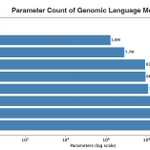
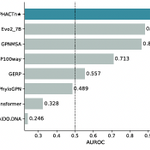
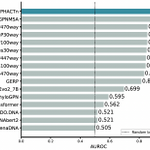
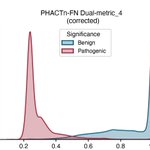
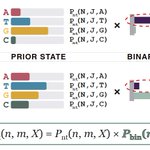
I am extremely happy to introduce PHACTn, a variant effect predictor for the entire genome with just 4 parameters, no training, no context information (unlike language models), no GPU - and it outperforms massive language models on non-coding variants.
doi.org/10.64898/2026.09.08.…
Evo2 needs A100/H100 GPUs. GPN-MSA: 86M parameters.
PHACTn: standard CPUs, no training, no GPU.
~27 CPU-hours for 100 × 10kb windows at 50 parallel jobs.
PHACTn provides phylogeny-aware variant scoring for the entire genome.

We're excited to introduce the GPCR Evolution Database - an open-access resource for evolutionary analysis of GPCRs 🎉
👉 gpcrevolution.org
📄 doi.org/10.64898/2026.09.08.…
🧵

3/ Beyond single receptors, we offer 3 comparison tools:
* Differential conservation — compare 2 paralogs to find shared vs. lineage-specific residues
* Multi-receptor comparison — scale up to entire subfamilies
* Combine orthologs — merge ortholog alignments for custom MSAs
4/ All data & code are open: github.com/CompGenomeLab/GPC…
By @berkayselcuk & me (@sabanciuniv) — supported by @EMBO_YIP Installation Grant.
#GPCR #EvolutionaryBiology #Bioinformatics #DrugDiscovery #OpenScience

New paper!
How do hundreds of GPCRs maintain the same activation mechanism while evolving to recognize completely different signaling partners?
We developed an evolutionary framework that separates residues responsible for shared GPCR functions from those driving specialization

Evolution has already explored an enormous sequence space.
By combining conservation within orthologs and divergence across paralogs, we can identify where proteins preserve function—and where evolution creates innovation.
Paper:
doi.org/10.1111/bph.70538
