

Associate Professor at Sabancı University
Istanbul, Turkey
Joined January 2016
- Tweets988
- Following722
- Followers2.3K
- Likes2.1K



Ogün Adebali retweeted

Students sometimes ask me if it still makes sense, in this accelerating age, to pursue a PhD in AI.
Perhaps counterintuitively, I think it's a great time to do so.
I wrote up some thoughts on this here: web.mit.edu/phillipi/www/wri…
Ogün Adebali retweeted

Have you already read this review?
Conserved 3D genome reorganization during DNA repair
@compGenomics @uzh_vetsuisse @fenssabanci @vogulcankaya hubs.la/Q03WR1jY0

Ogün Adebali retweeted

Brendo: an open resource for uniquely transcribed genes in brain endothelial cells biorxiv.org/content/10.1101/… #biorxiv_bioinfo

Ogün Adebali retweeted

Many thanks to @CommsBio and the editors for recognizing and featuring my science journey. Looking forward to further enriching this story with exciting discoveries together with my amazing team and collaborators. nature.com/articles/s42003-0…
Ogün Adebali retweeted

BREAKING NEWS
The Royal Swedish Academy of Sciences has decided to award the 2024 #NobelPrize in Chemistry with one half to David Baker “for computational protein design” and the other half jointly to Demis Hassabis and John M. Jumper “for protein structure prediction.”

Ogün Adebali retweeted
BREAKING NEWS
The 2024 #NobelPrize in Physiology or Medicine has been awarded to Victor Ambros and Gary Ruvkun for the discovery of microRNA and its role in post-transcriptional gene regulation.

Ogün Adebali retweeted

Researchers @schulte_lab @karolinskainst, @compGenomics and colleagues determine the structure of inactive FZD7 and refine the FZD activation mechanisms. identifying a water pocket and an allosteric cholesterol binding site
nature.com/articles/s41467-0…

Ogün Adebali retweeted

12/ Read more in our preprint and feel free to comment and provide feedback! biorxiv.org/content/10.1101/…. .

Ogün Adebali retweeted
10/ We carefully analyzed the success and fail cases. (Left), change is observed in a species close to the human.

Ogün Adebali retweeted
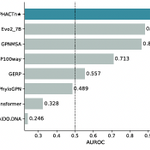
9/ We also compared against the recent methods AlphaMissense, EVE, CPT-1 method.

Ogün Adebali retweeted
8/ We also compared the methods on different subsets of the data. For example, one subset included test cases where the proteins were never seen in the training data. Another one is the subset of variants where tools disagree. PHACTboost shines in hard cases.
Ogün Adebali retweeted
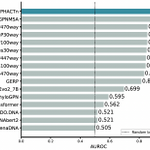
7/ The plot shows the difference of the compared method to PHACTboost. Pure/mixed experiments are inspired from the great Grimm et al. paper 's (@dg_grimm, @cazencott , @kmborgwardt )(onlinelibrary.wiley.com/doi/… ) .

Ogün Adebali retweeted
6/ To avoid, this we constructed a careful train / test splits based on the time of addition of the variant into the databases (that is also not so trivial. Some variants are added then removed and readded to Clinvar. Nurdan was the perfect detective.)
Ogün Adebali retweeted
5/ We rigorously compared PHACTboost against 40 tools. (Not easy!) Especially for cases when the train/test folds are not provided. Easy to fall into ML pitfalls, circularity, test data leakage issues.
Ogün Adebali retweeted
4/ Now, in PHACTboost, alongside PHACT scores, we include features from MSAs, the phylogenic trees, and ancestral reconstructions and fed them into gradient boosted decision trees.
Ogün Adebali retweeted
3/ We previously developed - PHACT – a scoring algorithm we developed. PHACT walks phylogenetic trees, assessing pathogenicity based on ancestral reconstructed probabilities, distance to humans, and more. PHACT paper is academic.oup.com/mbe/article…

Ogün Adebali retweeted
2/ Consider the two cases: same frequency of change (H to E), but one shows multiple occurrences in different ancestors (left), the other in a single ancestor (right).

Ogün Adebali retweeted
1/ MSAs may fall short in providing enough information for assessing missense mutation pathogenicity. Evolutionary history matters.
Ogün Adebali retweeted
I'll provide a not-so-short tweetorial l on this work.

I am extremely happy to share PHACTboost. Collaborative study led by our lab and @TastanOznur. Phylogenetics rocks!