

🚴☕️ Startup spotter | Always powered by tea & endless optimism.
Cambridge
Joined May 2021
- Tweets1.2K
- Following70
- Followers5
- Likes3K
EL Carter retweeted

The more open-weight tech reports I read, the more I realize that after one year, most people still underestimate this work. “97% effective training time over three months on thousands of GPUs.”
You can never train a large-scale model, whether it's an LLM or a robotics foundation model or whatever, without great infra with strong fault tolerance and recovery capabilities.
Tbh, experienced people only need to look at the model size to know the level of the infra behind the model
arxiv.org/abs/2509.16293

EL Carter retweeted

agent code sat on bare metal long enough
Perplexity open-sourced SPACE Oct 15. Millions of sandbox runs daily per Perplexity.
10 open-source GitHub repos that jail your agent's code:
96,151 stars, Oct 18. 9 Apache-2.0. All pushed since Oct 14.
JAIL THE PROCESS
01. sandbox-runtime ★5,577: github.com/anthropic-experim… → OS-level process limits
02. bubblewrap ★9,104: github.com/containers/bubble… → unprivileged namespace sandbox
03. gvisor ★19,702: github.com/google/gvisor → user-space kernel isolation
BOOT A DISPOSABLE VM
04. firecracker ★37,461: github.com/firecracker-micro… → lightweight KVM microVMs
05. kata-containers ★8,960: github.com/kata-containers/k… → VM-isolated container runtime
06. libkrun ★2,794: github.com/containers/libkru… → embeddable in-process VM
07. smolvm ★6,759: github.com/smol-machines/smo… → branchable microVMs, sub-second (README)
SERVE SANDBOXES TO AGENTS
08. SPACE ★1,470: github.com/perplexityai/SPAC… → Firecracker sandbox HTTP API
09. infra ★1,739: github.com/e2b-dev/infra → E2B self-hosted runtime
10. boxlite ★2,585: github.com/boxlite-ai/boxlit… → five-language micro-VM SDK
the stack:
code → jail → kernel → microVM → API → fork → resume
egress and credentials need their own layer
not the model. the jail under it ⭣


EL Carter retweeted

I’ve often wanted to pair a smart orchestrator / architect model with a super fast worker model. Diffusion LLM could fill the worker role

EL Carter retweeted

26 days to Breakpoint London 2026.
Make sure you've got your accommodation and flights all sorted, and tomorrow I'll tell you how to get your entire trip covered for less than £300.
Check out this article as a teaser in the meantime for how to save by booking with @NOMADZxyz 👇


EL Carter retweeted

Nvidia has now invested $10bn in European startups.
Here is every company they have invested in in past week:
UK 🇬🇧
@boltz_bio
@RiverLane_io
@PrimaMente
@hivergeai
Foresight
Germany 🇩🇪
@MireloAI
@AgileRobots
@aveliosmed
@reflexaerospace
France 🇫🇷🇫
@doctolib
@gopigment
@gs_ai_
@entalpic_ai

BREAKING: Nvidia has now announced 4 investments into German startups 🇩🇪:
@MireloAI - develops AI models that generate sound effects, speech and music for video, helping creators and production teams produce high-quality audio that perfectly matches their visuals on screen.
@AgileRobots - which builds AI-powered robots, from robotic arms to its Agile ONE humanoid, for manufacturing, logistics and healthcare.
@aveliosmed - develops an AI-native hospital information system that serves as the core system of record for clinical and administrative workflows, integrating AI directly into hospital operations to free up doctors and nurses to deliver better patient care.
@reflexaerospace - designs and builds high-performance satellites ready for launch in about 12 months instead of years.
The company has already invested in n8n, Neura Robotics and Black Forest Labs.

EL Carter retweeted

Humanoids are starting to look more like delivery workers.
In warehouses and on delivery routes, hands alone aren't enough. People brace bulky packages against their torso or slide them along an arm to keep them stable and free a hand for the next task.
Amazon researchers, with UC San Diego and the University of Michigan, developed Whole-Body Dexterity (WBD) to teach robots this skill. They generate grasping strategies in simulation, train them with reinforcement learning, then deploy a distilled policy on a real Unitree G1.
With coarse teleoperation guidance, the robot can tuck a box under one arm, carry it from shelf to table, and place it.
Across 50 real-robot trials, WBD achieved 90% success, versus 18% for direct retargeting and 4% for a generalist whole-body controller.
As humanoids take on warehouse and delivery work, they'll need to carry packages the way people do, using their arms and torso, not just their hands.
EL Carter retweeted

Exciting release from @ElorianAI! Visual Reasoning will be a game changer for robotics!

EL Carter retweeted

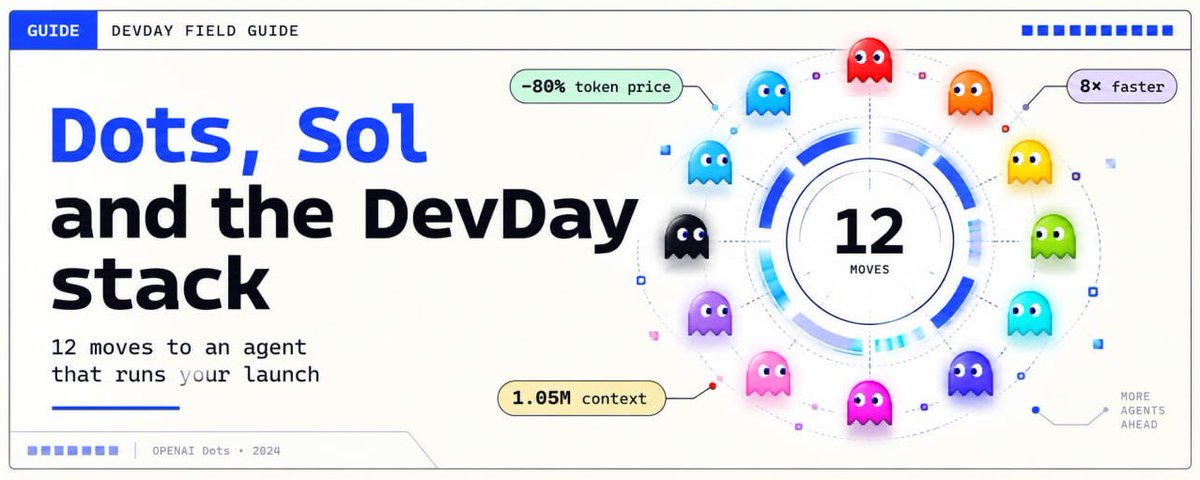
Memori hits 87% on LoCoMo at 721 tokens per query, 2.8% of full context, per README
Graphiti v0.31.1 tagged Oct 15. Temporal fact graphs with validity windows.
9 open-source GitHub repos for agent memory that survives sessions and keeps the prompt short:
212,966 stars. Pushed within 31 days. 6 Apache-2.0, 3 MIT. Oct 18.
EXTRACT WHAT MATTERS
01. mem0 ★67,374: github.com/mem0ai/mem0 -> extracts facts, recalls per user
02. langmem ★1,708: github.com/langchain-ai/lang… -> agent learns from past chats
03. MemMachine ★3,073: github.com/MemMachine/MemMac… -> one store, any agent
04. memU ★14,554: github.com/NevaMind-AI/memU -> shared memory across agents
05. Memori ★17,151: github.com/MemoriLabs/Memori -> chats into structured state
LINK IT IN A GRAPH
06. graphiti ★31,950: github.com/getzep/graphiti -> facts with validity windows
07. agent-memory ★585: github.com/neo4j-labs/agent-… -> memory graph on Neo4j
RETRIEVE A SLICE
08. LightRAG ★40,200: github.com/HKUDS/LightRAG -> graph retrieval, no heavy index
09. graphrag ★36,371: github.com/microsoft/graphra… -> graph summaries for retrieval
turn → facts → graph → slice → call
pip install mem0ai
not more tokens. better recall ↓

EL Carter retweeted

🦩 Introducing Gen4P: Video Generators are 4D Perceivers.
We turn a pretrained video generator into a feed-forward 4D perceiver—recovering geometry and motion from monocular videos in a single forward.
Project page: gen4p.github.io/
Key highlights:
🎯 Single-pass encoding—no iterative denoising
🎯 On-demand spatial and continuous-time queries
🎯 A frozen depth LoRA as a plug-in geometry prior
From thin flamingo legs to complex motion: explore our interactive 4D reconstructions!
A work led by Yitong Xia and @CodyJzr (@Oxford_VGG)
EL Carter retweeted

5 robot datasets you can download for free, from 60K to over 1M robot demos:
- Open X-Embodiment by @GoogleDeepMind
data from 22 different robots and 21 institutions in one standard format, covering 527 skills
github.com/google-deepmind/o… · 2.1K stars
- AgiBot World by @AgiBotOfficial and @OpenDriveLab
over 1M trajectories across 217 tasks. policies pretrained on it beat ones trained on Open X-Embodiment by 30% on average
github.com/OpenDriveLab/AgiB… · 3.2K stars
- DROID by @KarlPertsch and team
76K demos and 350 hours of robot data, recorded in 564 scenes by 50 people on 3 continents over 12 months
github.com/droid-dataset/dro…
- BridgeData V2 by @HomerWalke and @svlevine's lab
60,096 trajectories across 24 environments, all collected on a low-cost robot arm anyone can buy
github.com/rail-berkeley/bri…
- LeRobot datasets by @LeRobotHF
the easiest place to begin. the community has already uploaded over 1,700 datasets recorded on the $122 SO-101 arm
github.com/huggingface/lerob… · 28.3K stars
Physical Intelligence calls data collection "the fuel that drives our mission", and humanoid companies now pay $25–36 an hour to people who record it.
the jobs are in the article below





EL Carter retweeted

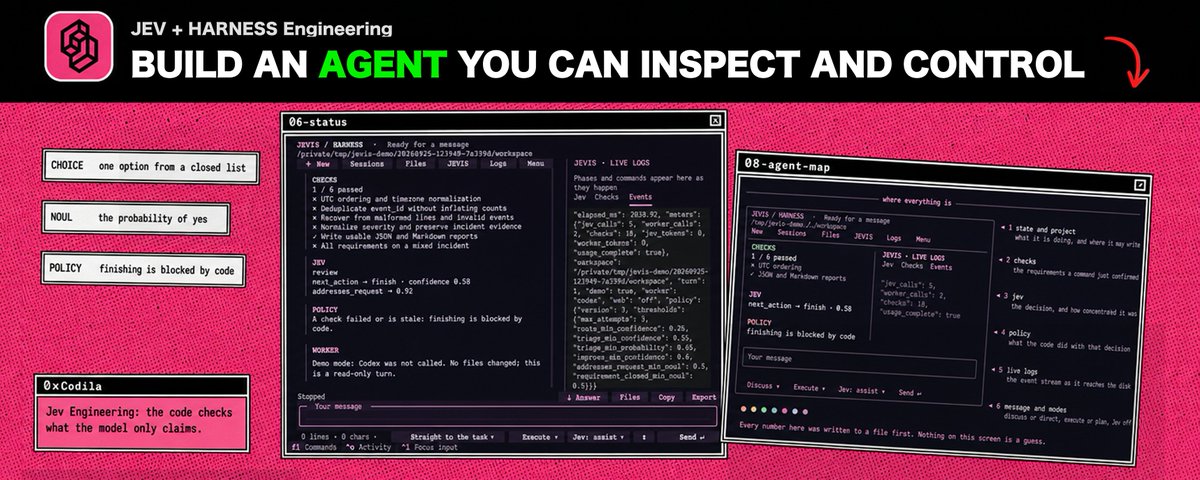
It is becoming f*cking dangerous: you can now reverse-engineer any repo with one command - a YC-backed tool with 127k stars maps the whole codebase, and your agent walks the map instead of reading files
1. Clone the project you want to understand
2. Install graphify: uv tool install graphifyy
3. Run graphify install (it detects Claude Code, Cursor, Codex or Gemini CLI)
4. Open the project and type /graphify .
5. Open graph.html: the architecture map nobody ever documented
6. Read GRAPH_REPORT.md: what everything flows through and the connections you didn't know were there
7. Ask: graphify path "A" "B" traces how two things connect, graphify explain shows everything one of them touches
Code is mapped locally with no LLM, and every link says whether it was read or inferred
Turn your agent into a reverse engineer that knows the whole project before it touches a single file
Find the repo in the reply below

EL Carter retweeted

How do we train foundation models to recognize the limits of their capabilities and to act on them? This is surprisingly difficult to achieve, but we think we’ve found a good solution.
Naively, one could use RL with a reward function where
R(success) > R(fallback) > R(mistake)
An example of a fallback could be as simple as the model saying “I don’t know”.
Turns out, naively training models in this way is too unstable, and often results in collapse (e.g. models always falling back).
We investigate this issue in depth, and trace it back to optimization dynamics. To be precise, the fallback solution acts as a powerful “attractor” in the optimization landscape, as it is very easy for the model to fallback and get some reward rather than attempting to solve the task in full.
To the rescue, we introduce a powerful log barrier formulation (inspired by our prior work MaxRL and successor TailRL) to neutralize the attractor and maintain good coverage over positive solutions as well as the fallback action.
Empirically, this can reduce mistakes 10x times while maintaining similar task performance.
Personally, what excites me most is seeing the model actively reasoning about its own uncertainty before committing to an answer. Chain-of-thoughts that explicitly mention “I tried to solve this problem in a few ways, but unfortunately ran into contradictions. I recognize I might need more advanced tools or knowledge that I cannot currently recall, therefore I must say I don’t know” make us confident we’ve found a pretty good method.
🤖 Made with AI


EL Carter retweeted

Robota-Embed is a real step-change for robotic in-context learning.
It’s the first model to fuse vision, language, and *action* into a single embedding—so a robot can instantly retrieve the most relevant future demo from millions of past clips, matching not just the task but the exact motor moves it needs next.
On their new Robota-Embed-Bench, it more than doubles retrieval accuracy over Gemini Embedding 2 (47% vs 25% clip-level R@1), and ablations show that removing action hurts performance more than removing vision.
Plugged into real robot policies, these embeddings boost task success rates: in DROID-Sim, from 47% to 56.3%; on the toughest LIBERO subset, from 86.4% to 92.8%. In continual learning, a frozen GPT-6 Astra policy with Robota-Embed triples success (24%→68%) while cutting LLM token use by 44%.
Action-aware retrieval isn’t just a detail—it’s the key to scaling up robot memory, cross-embodiment transfer, and efficient policy evolution.
Get the full analysis here: yesnoerror.com/abs/2610.1949…
// alpha identified
// $YNE
EL Carter retweeted

S4VY is an incredible advancement in the field of real-time 4D joint segmentation and depth prediction! We’ll be releasing the code and checkpoints soon, so stay tuned for more updates.

EL Carter retweeted
hot take: for physical AI the benchmark is a simulation, not a leaderboard.
you don't want 84 points on a bench. you want the line to still run when a machine breaks at 3am.
Opus 5.5 designed a autonomous electric motor factory using #threejs!
Laser-cut steel to a spin test on every motor, the whole line live in your browser.
EL Carter retweeted

Finally, we’re publicly introducing our World Reconstruction Model, built for Physical AI and for any application where hallucinations aren’t acceptable.
The same reconstruction engine covers:
• Real2Sim2Real, evals and benchmarks for robotics
• Free-viewpoint replays in near real time for sports broadcasting
• Real performances in full detail for VFX and film
• A self-service reconstruction suite for 4DGS
Ground-truth detail and sub-millimeter geometric accuracy carry across all of them.
Explore more at gracia.ai
EL Carter retweeted

one-way sim-to-real transfer is dead. the defensible architecture is a closed real-to-sim-to-real loop where real-world deployment failures are reconstructed in 3D simulation within hours to generate targeted synthetic variations. training solely on physical teleop hits a capital wall, but feeding physical edge cases back into digital twin simulations creates an exponential data flywheel.
EL Carter retweeted

XPENG's cars run at 12% gross margin. Its co-president expects humanoid hardware above 50%.
They just raised $900M at $6.3B for a robotics unit with no meaningful revenue. The bet is that robots are a better hardware business than cars. On @roboticsstack.
Full episode 👇
EL Carter retweeted

I’m joining the jury of @SPRIND Next Frontier Robotics Challenge! 🇪🇺
The goal is to initiate the BREAKTHROUGHS behind a modular, frontier-capability robotics ecosystem out of Europe.
Europe’s real strength in robotics is components. Actuators, drives, sensors, control, precision manufacturing.
We also have an enormous number of industrial customers. Deployments + own hardware + customer base is a very strong baseline.
Where Europe has struggled is the vertically integrated platform play, which is where a great deal of US and Chinese capital has gone.
A modular thesis says build the interoperable layers Europe is genuinely good at, to a frontier standard, instead of racing to own the whole stack.
Having visited a lot of sites across this industry, that’s consistently where I see European teams outperforming their funding.
The jury is not yet fully out, but we already revealed some awesome people from the space:
@andreasklinger (PROTOTYPE), Alin Albu-Schaeffer (German Aerospace Center (DLR)), @CKrnzler (ex CPTO Aleph Alpha)
Applications close 22 October.
If you’re building here in Europe, that’s one week.
🔗 Find out more here: sprind.org/en/actions/challe…
~~
♻️ Join the weekly robotics newsletter, and never miss any news → ziegler.substack.com
