

Immersive Generative Spatial Intelligence Tech
San Francisco
Joined June 2010
- Tweets830
- Following1.4K
- Followers718
- Likes3.1K


Caity Croft retweeted

It's the flip side of Moore's law. The faster technology changes, the more demands for change it puts on the rest of society. In the 90's (I'm dating myself) technology was exciting because it invited change rather than forced it. Today, it's a tsunami that we don't have tools for.

Caity Croft retweeted

A friend of mine just moved to San Francisco and was completely lost in our vocab.
So I built this for her and everyone like her: sfisms.org
The field guide to SF vernacular.
Got an ism? Pitch it and an agent adds it after expert review by our panel :)

Caity Croft retweeted

Japanese researchers created a system that simulates an entire city by generating up to 1 million virtual residents who behave like humans using LLMs.
And it predicted real-world with terrifying accuracy.
They created an urban simulator called "CitySim" that populates a digital twin of Tokyo with up to 1 million autonomous AI agents.
Each resident is powered by an LLM, complete with:
• Personal memories
• Long-term goals
• Human-like desires (hunger, fatigue, social connection)
• Spatial awareness and navigation
Most urban simulations rely on rigid, hand-crafted rules, if A happens, B follows.
CitySim is different. It’s "value-driven." The agents have agency. They generate their own schedules based on their personal habits, situational needs, and changing environments.
When researchers ran the simulation in Tokyo, the output was chillingly accurate.
Weekday commuting patterns, weekend leisure activities, and shopping habits matched Japanese government statistical data with near-perfect precision.
It even successfully predicted crowd distributions in Shibuya and identified which stores would actually become popular, months before the real-world data caught up.
The implications for urban planning are massive.
We can now safely and cost-effectively test disaster preparedness, commercial site planning, and public infrastructure upgrades without moving a single physical person.
But it’s not just about planning.
The researchers are already looking at implementing high-level human drives, like "self-actualization," into these agents to see how they evolve.
The paper went up on arXiv in June 2025 and almost nobody outside computational social science has read it.

Caity Croft retweeted

Palantir sells governments a war room that costs millions a year.
So, a guy named Elie just rebuilt it, put it on GitHub, and gave it away.
It's called World Monitor.
Open it and you get a live 3D globe with 500+ news feeds pouring in across 15 categories, all summarized by AI as they land.
> Military movements.
> Economic shocks.
> Natural disasters.
> Cyber incidents.
> Flight paths.
> Shipping lanes.
+ 56 different map layers you can stack on top of each other.
It scores 31 countries on a stress index and updates the number as things happen.
It watches 29 stock exchanges, commodities, and crypto in one panel.
It runs local AI through Ollama, so you can use the whole thing without a single API key.
Native desktop app for Windows, macOS, and Linux. 25 languages. Works out of the box after one clone.
Caity Croft retweeted

Last year I had the idea to scan San Francisco's famous Grace Cathedral in very high quality, both inside and out, and build an interactive experience that anyone can use. I'm excited to finally be able to share it with all of you!


Caity Croft retweeted

There's a physicist at Stanford named Safi Bahcall who modeled this exact principle and the math is wild.
He calls it "phase transitions in human networks." When you're stationary, your probability of a lucky event is limited to your existing surface area: the people you already know, the places you already go, the ideas you've already been exposed to. Your opportunity window is fixed.
When you move, your collision rate with new nodes in a network increases nonlinearly. Double your movement (new conversations, new cities, new projects) and your probability of a serendipitous encounter doesn't double. It roughly quadruples. Because each new node connects you to their entire network, not just to them.
Richard Wiseman ran a 10-year study at the University of Hertfordshire tracking self-described "lucky" and "unlucky" people. The single biggest differentiator wasn't IQ, education, or family money. Lucky people scored significantly higher on one trait: openness to experience. They talked to strangers more, varied their routines more, and said yes to invitations at nearly twice the rate.
The "unlucky" group followed the same routes, ate at the same restaurants, and talked to the same 5 people. Their networks were closed loops. No new inputs, no new collisions.
Luck isn't random. Luck is surface area. And surface area is a function of movement.
The lobster emoji is doing more work than most people realize. Lobsters grow by shedding their shell when it gets too tight. The growth requires a period of total vulnerability. No protection, no armor, soft body exposed to the ocean.
That's the cost of movement nobody posts about. You have to be uncomfortable first. The new shell only hardens after you've already moved.


Caity Croft retweeted
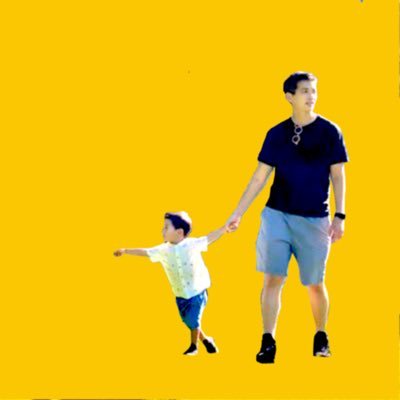
the vast advances in lithium-ion batteries has now given us…an underwater jet pack that can go 3 meters/second with 40-minute battery life and total 3km range


Caity Croft retweeted

✨🌐🔜
Help us get the word out by sharing the 1st tweet of this thread 🫡
xitter.cf/oncyber/status/1648431…

Caity Croft retweeted

A lot of you messaged me finding the maps challenge difficult. I made a thread for you.
I'll place prompts in ALT descriptions (it's if you press at the bottom left corner of each image) where the prompt is too long.
Share your maps
Maps thread 🧵👇
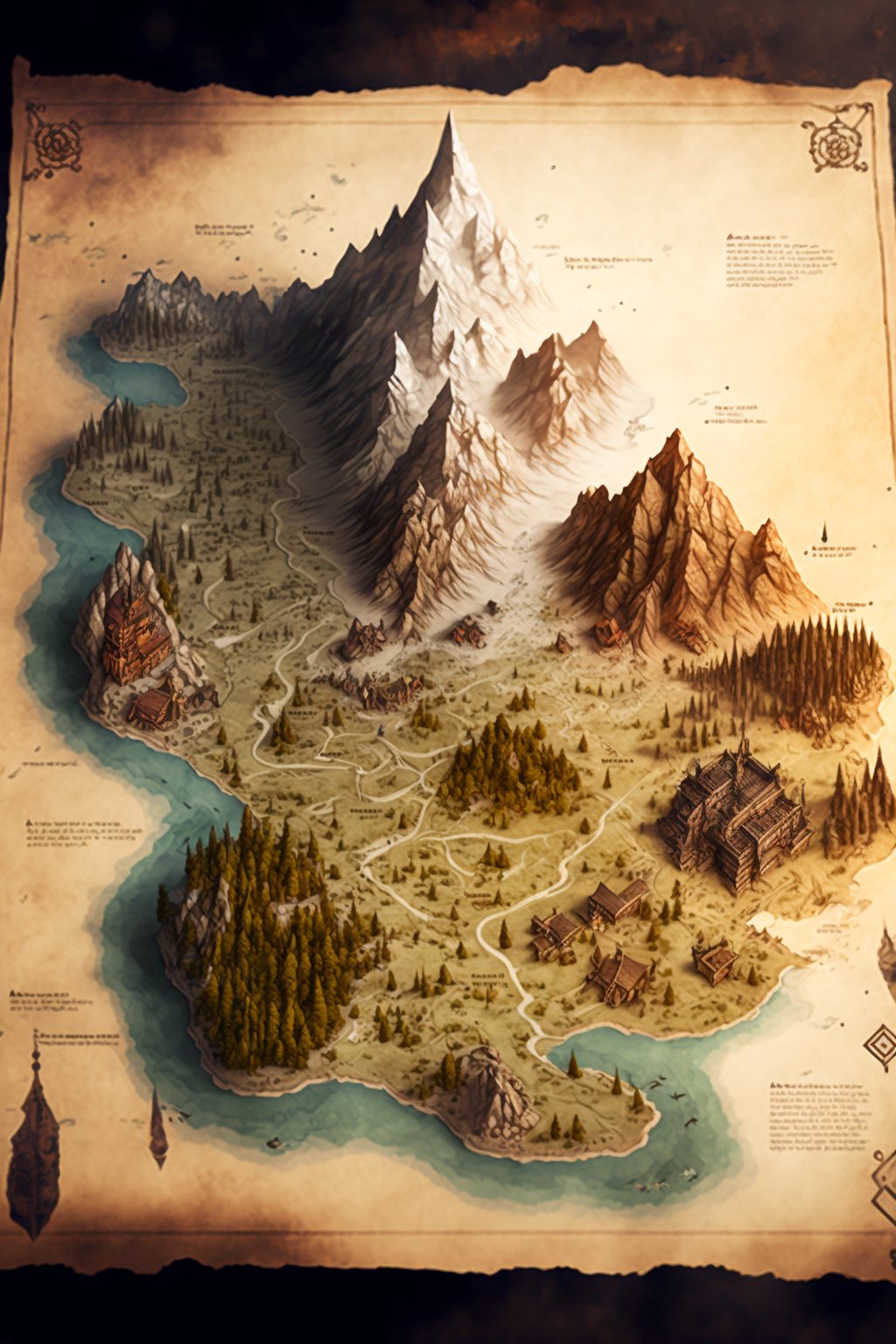
ALT ancient cartography,coffee stained, dungeons and dragons, map with mountains and forests and ruins, full view,character design, realistic,high detail, cgi, fantasy --ar 2:3
Caity Croft retweeted

The biggest story in tech over the last two weeks.
Autonomous AI agents, summed up in 60 seconds.


Caity Croft retweeted

OpenAI's GPT AI model has been harnessed by Web3 platform @oncyber to transform typed ideas into real-time customizations in its online 3D worlds.
Founder @rayan_oncyber detailed the powerful tool, which starts rolling out Monday, for @decryptmedia: decrypt.co/123906/openai-gpt…
Caity Croft retweeted

Here's a compilation of my Midjourney threads so far, including tutorials on how I use my Additive Prompting framework to generate characters/models, design sets, & more.
Taking today off Twitter to work on animations & visuals for my YouTube series (link in bio)
🧵Thread
