To Get Updates on Bangladesh Policies and Politics, follow us on X ( Twitter) #BDpolitics #BangladeshNews #BangladeshUpdates #Bangladesh 🇧🇩

Dhaka
Joined January 2024
How Pakistan Actively Works Against Bangladesh’s Interests Two Bangladeshis were executed in Saudi Arabia on October 14. Reports circulating online allege that a Pakistani national recorded them and alerted Saudi authorities. If that allegation is true, serious questions must be asked. Why should Bangladesh ignore conduct that could put its citizens at risk simply because Pakistan speaks the language of friendship? Bangladesh deserves answers, not diplomatic theatrics. #Bangladesh #Pakistan #JusticeForBangladeshis
2
3
136
Execution of Bangladeshi Couple in #SaudiArabia: Humaiun Kobir Follows Shama Obaed in Blaming the Victims. "People go to Allah's house with pious intentions. It is not right to engage in such activities there." This is what Bangladesh's State Minister for Foreign Affairs, Humaiun Kobir, said regarding the execution of two Bangladeshi nationals by the Kingdom of Saudi Arabia (#KSA) over allegations of an "immoral act" inside a mosque in Mecca. Watch: facebook.com/share/v/1CNCLPi… The remarks are deeply troubling. Rather than focusing on the circumstances surrounding the detention, prosecution, sentencing and execution of two Bangladeshi citizens, the junior foreign minister appears more concerned with passing moral judgment on the deceased. This amounts to victim-blaming at a time when critical questions about the case remain unanswered, including whether the two individuals received a fair trial, had access to legal representation, and were afforded appropriate consular assistance. Contradictory Messages from the BNP Government. On the one hand, senior #BNP government representatives have publicly stated that Bangladesh is seeking an explanation from KSA, particularly over the apparent failure to notify Bangladeshi diplomatic authorities before the executions. On the other hand, the same government's top diplomats are making statements that appear to presume the guilt of the executed individuals, even before receiving the relevant judicial documents or establishing the facts. Previously, another State Minister for Foreign Affairs, Shama Obaed Islam, advised Bangladeshi expatriates to respect the laws of their host countries and suggested that the executions should "serve as a lesson". Remarkably, she made those comments while acknowledging that Bangladesh had not yet received detailed official information from KSA regarding the case. The message conveyed by both ministers is deeply problematic: instead of demanding accountability and transparency over the execution of their own citizens, they appear to be shifting responsibility onto the deceased. According to media reports, the Bangladesh Consulate General in Jeddah was not notified before the executions. These circumstances warrant scrutiny, not premature moral condemnation. The #Bangladesh Govt should therefore seek the complete court judgment, arrest reports, witness statements and other evidence to independently assess the claims. There is also the fundamental question of proportionality: whether imposing the death penalty for the alleged conduct can be justified under int'l human rights standards. The most disturbing aspect of the two ministers' statements is the apparent willingness to accept the KSA authorities' account before Bangladesh has independently established what happened. Diplomatic relations with Saudi Arabia are undeniably important. Millions of Bangladeshis live and work in the kingdom, and the bilateral relationship carries enormous economic and strategic significance. However, maintaining cordial relations with #Riyadh must not come at the expense of seeking accountability when Bangladeshi citizens are executed under circumstances that remain, at the very least, insufficiently explained. ... @KSAMOFA @KSAmofaEN
1
3
163
The president of Ward No. 41 Jubo League was harrased by a mob while he was praying at the Puja mandap in Shankhari Bazar and handed over to the police. This is a typical act by BNP leaders. During he tenure of Sheikh Hasina and Awami League, BNP leaders not only celebrated religious festivals but also became members of Puja organizing committees. But after August 2024, by the grace of the sly and Machiavellian businessman Nobel Laureate Yunus and his successor, the dark prince of kleptocracy, Tarique Rahman, communal harmony is disappearing, while allegations of systematic political persecution of minorities and opposition groups emerge beneath the surface. Ordinary Hindu devotees are facing insecurity on the one hand, while artificial controversies and political theatrics are allegedly being orchestrated on the other to disrupt their sacred religious celebrations. #DurgaPuja #AwamiLeague #HumanRights
10
10
261
State Minister Ishraque’s Vigilante-Style Anti-Drug Raid Raises Serious Questions About the Rule of Law in #Bangladesh. It was a scene straight out of an action movie: State Minister Ishraque Hossain chasing suspected drug users and low-level drug dealers through the streets of #Dhaka, accompanied by an armed entourage, while brandishing a small firearm himself. But this was no conventional anti-drug operation conducted by law enforcement agencies. Instead, it appeared to be a vigilante-style raid led by a serving government minister, accompanied by a group of armed associates. Videos and images of yesterday’s (17 October) incident in Dhaka’s #Gandaria neighbourhood have since gone viral, raising serious questions about the minister’s conduct and the apparent disregard for established law enforcement procedures. The most obvious question is: Why is a government minister personally conducting armed raids, a responsibility that belongs to duly authorised law enforcement agencies? Ishraque Hossain is the local Member of Parliament and State Minister for Liberation War Affairs. Neither his parliamentary position nor his ministerial portfolio gives him the authority to personally conduct armed anti-drug operations. Even more remarkably, Ishraque himself uploaded videos of the operation to his verified Facebook page at approximately 5:15 pm yesterday, apparently presenting the episode as an achievement. News: thedailystar.net/news/bangla… The footage has prompted widespread questions on social media about the open display of firearms, the legality of the operation, the apparent involvement of private armed associates, and the minister's willingness to take law enforcement into his own hands. The larger issue is not whether drug-related crimes should be tackled. They absolutely should. The question is whether a government minister can bypass established legal procedures and assume the powers of the police simply because he holds public office. Such conduct raises fundamental concerns about the rule of law, the limits of executive authority, and the accountability of public officials. Ministers are expected to uphold the law and strengthen the institutions responsible for enforcing it, not substitute themselves and their personal entourages for those institutions. At a time when public concerns about rising crime and the effectiveness of law enforcement are already mounting, this extraordinary episode raises an even more troubling question: If a serving minister resorts to vigilante-style policing, what does that say about the state of law enforcement and the rule of law in Bangladesh under Prime Minister #TariqueRahman's government? …
3
1
7
135
Let us begin with a case. In Chattogram, a BNP leader filed a case alleging disrespect to the national flag. The allegations were so absurd that even the BNP expelled the leader from the party. In other words, the very party that is now in power had, at one point, acknowledged through its own action that the case was unjustified. Yet Sannyasi Chinmoy Das has remained behind bars for nearly two years in connection with that very case. The person who initiated the case has been disowned by his own party, but the accused remains imprisoned. Do those in power have an answer to this glaring contradiction? While Chinmoy was delivering a speech at Laldighi Maidan, a group of young men hoisted a saffron flag on a separate stand above the Bangladeshi national flag at New Market Square, nearly one kilometre away. One person delivered the speech; others raised the flag. Yet it was the former who ended up in prison. If this is the logic being applied, the speaker at any public gathering could be held responsible for any incident occurring anywhere in the surrounding area. During a clash among lawyers near the court premises, lawyer Alif was killed. Chinmoy was also shown as arrested in connection with that murder case. Yet when Alif was killed, Chinmoy was sitting inside a police prison van, already detained in police custody. How could someone whom the state itself had confined be responsible for orchestrating another person's murder in full view of the state? No explanation has been forthcoming to this day. What better definition of a travesty of justice could there be? Chinmoy's mother has died. While she was alive, she had only one wish: to see her son's face one last time. The state denied her that wish. Even accused murderers are sometimes permitted to attend the final rites of their loved ones. Here, however, a mother's final plea was rejected. Before the eyes of the entire country, a religious minority was humiliated in broad daylight, and no one appeared to feel the consequences. Now let us turn to the statistics that the government used to demonstrate how well Hindus were doing in Bangladesh. Last year, the country had 33,000 Durga Puja mandaps—2,000 more than the previous year. On paper, that figure looks impressive in an official government statement. But during the same year, groups of Muslim clerics reportedly went from one mandap to another, tearing off the beards of the demon Mahishasura depicted in the idols, allegedly claiming that the beards insulted the image of Islam. In a country where religious insult can supposedly be found in the facial hair of a demon sculpted from clay, measuring security by counting Puja mandaps is absurd. The greatest irony is that Jahangir, the then Home Affairs Adviser, described such arrangements as a “conspiracy” and threatened to arrest the organisers themselves. Those who had already been subjected to attacks were the very people who received the threats. And this was not an isolated incident. Deepu Chandra Das. Matua community families in Abhaynagar, Jashore. Hriday Ravidas of Kishoreganj. Families in Gangachara, Rangpur. The dismissal of 94 out of 99 Hindu trainees from SI training over an alleged failure to eat breakfast. The demolition of a Durga temple on railway land in Khilkhet in a manner described as deeply disrespectful. These are not merely a list of unrelated mishaps. The circumstances of each incident differ, but the religious identity of those affected remains the same. To dismiss the fact that 94 out of 99 people belonged to the same religious community as mere coincidence would be an insult to statistics themselves. The question now is: what are those in power doing? The case filed by the BNP originated with a leader whom the party itself expelled, yet the accused in that case remains behind bars. Jamaat-e-Islami shares in parliamentary power, but finding its voice on the question of minority rights requires a microscope. One party makes promises, another shares in the exercise of power, and in between, a sannyasi spends year after year in prison. When the government holds power, how long should it take to bring an end to a case that is being questioned on such fundamental grounds? Both parties owe the public an answer to this simple question. Then why do Hindus in Bangladesh remain silent? The reason is not an inability to speak; it is a calculation of risk. Most want the situation to change. But speaking out carries the fear of being singled out, and at the furthest end of that fear lies the possibility of losing one's life. There is also a sense of inferiority born of being a numerical minority—a feeling that forces people to diminish themselves in their own country, day after day. And then comes the most difficult question: who will stand behind them? If someone dies or is arrested while protesting today, will anyone stand by their side tomorrow? Chinmoy's case itself offers a troubling answer. The man who took to the streets to speak up for his community has found that even the protests demanding justice for him remain weak. No struggle by a minority has ever succeeded without the support of a larger force, and Bangladesh's Hindus do not have such a force standing behind them. On one side, the beard of a demon depicted in a religious idol is torn off. On the other, a man sits in prison, unable to see his mother's face one last time. Between these two scenes stands a country where the phrase “A Bangladesh for All” is no longer a slogan of unity. It has become a cruel joke.⁩ #Bangladesh #SaveBangladeshiHindus
14
20
411
No citizen should have to celebrate their most sacred festival under fear and intimidation. The BNP government must move beyond promises and ensure year-round protection, impartial investigations, and justice for every victim. #Bangladesh #DurgaPuja
3
7
238
Beef Cooked in Front of a Temple: Religious Provocation at Jagannath University? A Chhatra Shibir-organised gathering reportedly took place directly in front of Jagannath University’s central temple, where beef was cooked, triggering concerns over religious sensitivities and communal harmony. A university campus should be a place of learning, tolerance and mutual respect, not a battleground for religious provocation. If religious freedom matters, it must be respected for every faith. Where is the accountability?⁩ #DurgaPuja #ReligiousHatred
12
3
27
779
Family of Shamim, Lynched by an #Islamist Mob Over Alleged #Blasphemy in Satkhira, Alleges Involvement of Local #Jamaat, Reports @bbcbangla. Wahiduzzaman Shamim was killed following repeated attacks by an Islamist mob on the night of 13 October in Debhata, #Satkhira, over allegations that he had insulted #Islam. While the incident was initially portrayed as a spontaneous outburst of anger by religious fundamentalists, Shamim's family has alleged that local leaders and supporters of #JamaatEIslami played a central role in what they describe as a "planned attack." Speaking to BBC Bangla, Shamim's brother, Tausif Rahman Shagor, alleged that the initial attack on Shamim, which took place at the family's home, was instigated by local Jamaat leaders and workers who circulated an allegedly fake audio recording to incite the mob. Law Enforcement's Response Raises Serious Questions Shamim, who reportedly had a longstanding history of psychological difficulties, was subjected to three separate attacks before his death. Following the initial assault at his home, he was attacked again by a mob at a local doctor's chamber. Police subsequently rescued him in an injured condition and transported him to the Upazila Health Complex, where he was attacked for a third and final time. The circumstances surrounding these repeated attacks raise serious questions about the failure of law enforcement authorities to protect Shamim, particularly after the police had already intervened and taken him into their care. How was a man who had already survived two mob attacks allowed to be assaulted a third time, this time at a healthcare facility, after being rescued by the police? Shamim's family has therefore, understandably questioned why the authorities failed to prevent the subsequent attacks, despite clear and repeated threats to his life. Further undermining confidence in the police response is the reported failure to register a criminal case as of the night of 15 October, despite allegations that several of the attackers were locally known and identifiable. The allegations of organised political involvement, the repeated failure to protect a vulnerable individual, and the apparent delay in initiating criminal proceedings demand an immediate, impartial, and transparent investigation. No accusation of blasphemy can justify mob violence, much less murder. The state's obligation to protect life does not disappear when an individual is accused of offending religious sentiments. BBC Bangla Report: bbc.com/bengali/articles/cq3… ... @FOREF_EU @nadinemaenza @NazilaGhanea @OHCHRAsia @hrw @amnestysasia @ESandersFCDO @USCIRF @StateIRF @Chellaney @CJBdingo25 @omctorg @BonaveroIHR @Kennedy_HRC @humanrightsasia @MinoritiesSouth
6
9
314
The #Bangladesh #Puja Udjapan Parishad (BPUP) has reported 34 incidents of idol vandalism, attacks on temples, and related violence ahead of #DurgaPuja, raising serious concerns about the safety and security of Bangladesh’s #Hindu #minority community. The incidents were reported across several districts, including #Sylhet, Rajbari, Panchagarh, Netrokona, and Tangail. The BPUP also documented attacks, vandalism, and looting targeting Hindu homes, businesses, and places of worship in Sunamganj. Despite the 34 reported incidents, arrests have been made in connection with only 11, raising further questions about the effectiveness of law enforcement responses and accountability for #violence against religious #minorities. News: thedailystar.net/news/crime-… Separately, another prominent minority rights organisation, the Bangladesh Hindu Buddhist Christian Unity Council (BHBCUC), documented 141 incidents of religiously motivated violence against minority communities between July and September 2026. News: aninews.in/news/world/asia/b… Taken together, these findings paint a deeply troubling picture of the continuing vulnerability of religious minorities in Bangladesh. They also raise urgent questions about the #BNP Government's ability and willingness to ensure their safety, prevent communal violence, and bring perpetrators to justice. ... @FOREF_EU @nadinemaenza @NazilaGhanea @OHCHRAsia @hrw @amnestysasia @ESandersFCDO @USCIRF @StateIRF @Chellaney @CJBdingo25
1
34
3
47
631
34 ATTACKS BEFORE DURGA PUJA! ____ Why Is Fear Casting a Shadow Over Bangladesh's Communal Harmony? 34 Locations Reported Attacks and Idol Vandalism Source: Bangladesh Puja Udjapan Parishad and Mahanagar Sarbojanin Puja Committee WHERE IS THE SECURITY? - Protect Durga Puja venues and religious idols - Ensure impartial investigations and justice - Safeguard the rights and security of religious minorities QUESTIONS FOR THE BNP GOVERNMENT: What measures have been taken to prevent these attacks? Are the perpetrators being brought to justice? Five Days of Security Are Not Enough. People Deserve 365 Days of Protection. DEMAND SECURITY. UPHOLD HARMONY. ENSURE ACCOUNTABILITY. #SaveBangladeshiHindus #Bangladesh
8
69
12
115
15,429
Radical Islamist fury rages across Bangladesh: Inside hospital Islamists mob tortured mentally challenged youth to death over ridiculous blasphemy charges Independent report reveals, a 38 year Waziduzzaman Shamim has become yet another victim who fell prey to the Islamist rage. With pre announcement his killers beaten him to death in several of phases over fictitious blasphemy changes. And appeased the mob instead of standing for a citizen’s right to life. First the unruly fanatic Islamist mob held him captive and beaten him ruthlessly in Southern Bangladesh village on Tuesday. Then again after cops shifted him to hospital the Islamist savages stormed into the hospital, grabbed him from bed and kept beating him to ensure his death. Months before Dipu Das, another youth, was beaten and burnt to death over blasphemy charges. Over last two years, Independent minority rights bodies documented an unprecedented rise in persecution of minority youths outrageous blasphemy cases. For those western countries and UN officials who packaged the rise of Islamist extremists including Jamaat e Islami as democratic forces in Bangladesh and advocated for so called reform, these brutal killings blew ourt their outright hypocrisy, a damning indictment to Jamaat’s brazen advocacy for Islamist rule with total impunity from law enforcement, earlier spearheaded by Yunus regime. #Bangladesh #BangladeshCrisis
🤖 Made with AI
3
15
4
26
2,737
How anti Indian tirade weaponised to suppress dissenters in Bangladesh At the top of their voices the attackers chanted slogans calling me an Indian stooge without any proof to justify this violence. That mob kept pelting stones and brick chips at my residence and publicly threatened with further attacks”, GM Qader, chairperson of opposition Jatiya Party after violent mob vandalised him residence in broad daylight. The impunity of orchestrating such ruthless and barbaric aggression on opposition leader and the impunity to impose ridiculous and arbitrary tagging of dissenters as Indian agent further proved that ongoing anti Indian tirades are a mere tool to persecute opponents. tbsnews.net/bangla/banglades… #Bangladesh #MobViolence
11
20
459
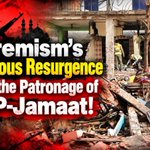
Extremism is back—and Bangladesh cannot afford to ignore the danger. The resurgence of extremist forces threatens the country’s hard-won progress, religious pluralism, democratic values, and national security. The growing concerns over BNP-Jamaat’s alleged patronage of extremist elements demand serious scrutiny. Bangladesh must not allow extremism to gain political legitimacy at the expense of peace, tolerance, and the rule of law. The stakes extend far beyond partisan politics: they concern the future of the nation. 👉bdperspectives.com/3320/ #BangladeshCrisis #ReligiousExtremism
15
19
379
Jamaat’s Cultural War: Targeting Rabindranath Tagore and Bangladesh’s National Identity — As Jamaat e Islami ameer embarked on a visit to Turkey, its foot soldiers in Bangladesh further stepped up ongoing cultural genocide to erase Bangladesh’s cultural icons who are recognised by the world as symbol of tolerance and peace. In addition, the polymath, Rabindranath’a lyrics was adopted as the national anthem in 1971 during the Bangladesh Liberation War (officially declared on January 13, 1972). supporters of Jamaat, doubled down on erasing the legacy of patriotism using the facade of anti Indian sentiment. As part of the plan, self styled handful of so called revolutionaries painted black ink on Rabindranath’s painting only to be faced with resistance. For five decades his written anthem inspired millions of Bangladeshis instilling a sense of patriotism but abhorred by war criminals from Jamaat e Islami that committed genocide in 1971 with pak army. But after the regime change in 2024, son of notorious war criminal Abdullahil Azmi publicly called for changing the national anthem, drawing flak from millions of liberals. Weeks earlier, these pro Islamists also sought to glorify Muhammad Ali Jinnah by installing his photo but later removed in face of public outburst. #Bangladesh
60
289
25
1,011
165,765
Is anti-India hysteria in Bangladesh a political smokescreen? Spy planes to espionage charges, unsubstantiated claims raise serious questions. Is the rhetoric designed to divert attention from Islamist extremism and political failures?
1
12
1
18
800
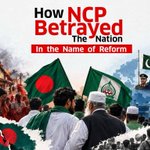
The NCP promised reform, a new political culture and a better Bangladesh. Instead, it has increasingly become part of the politics of exclusion, division and opportunism. When “reform” becomes a cover for political revenge and silencing opponents, it is no longer reform—it is betrayal. 👉bdperspectives.com/3313/how-… #BangladeshCrisis #IslamicMillitants
1
16
28
683
A Radical Power Grab in Bangladesh Could Put the Entire Region at Risk A late-September intelligence report alleges that a Jamaat-e-Islami network, backed by Pakistan and Turkey, is preparing to crush its political opponents and violently overthrow Bangladesh’s elected government in November — all to install a radical “revolutionary” regime with Muhammad Yunus as the face. Targeted killings. Weapons smuggling. Militia training. Pressure on Hindus. If this succeeds, Bangladesh will not become more democratic. It will become more radical, more unstable, and more dangerous. And India will wake up to a second hostile front on its eastern border. That means greater security risks, greater threat of cross-border radicalisation, and greater danger for ordinary people living in India’s border states. This is not “internal affairs.” This is a regional security bomb. How long will the world keep looking away? #Bangladesh #Radicalism
5
11
519
Religious Minorities Must Never Become Hostages In A Geopolitical Struggle. According to Subir Bhaumik’s report, attacks and extortion targeting Hindus in Bangladesh could be used to pressure India over its political and diplomatic positions. This allegation demands urgent, independent investigation. If minorities are being targeted as part of a political strategy, the consequences could be devastating - not only for the victims, but also for Bangladesh’s social cohesion and its relations with neighbouring countries. No community should live in fear because of its religion. No political objective can justify communal persecution. Bangladesh must protect every citizen, and allegations of organised attacks must be investigated transparently. The international community must not look away. #Bangladesh #ReligiousMinority
2
11
1
21
471
Is A New Extremist Sanctuary Forming In South Asia? A recent report by Subir Bhaumik raises serious concerns about Bangladesh’s future. It alleges that a Jamaat-e-Islami-led network is planning to weaken political opposition and seize power, with backing from Pakistan, Turkey, and other foreign actors. The alleged plan involves two phases: “Operation Domon” to suppress opposition, followed by “Operation Dokhol” to overthrow the government and establish a “revolutionary government” tied to the July Charter. If these allegations are true, the consequences could be devastating, not just for Bangladesh, but for the entire region. A radicalised, unstable Bangladesh could create new security threats for India, fuel extremism, and put countless lives at risk. The world must take these warning signs seriously. South Asia cannot afford another crisis driven by political violence and extremism. #Bangladesh #Conspiracy #Extremism
2
6
12
570
What happens when an elected government is targeted for removal by a radical network with foreign backing? Subir Bhaumik’s recent report alleges that a Jamaat-e-Islami-led network, with backing from Pakistan, Turkey, and elements of the so-called “US Deep State,” is pursuing a two-phase strategy in Bangladesh: first, crush the Awami League through “Operation Domon”; then, topple the BNP government through “Operation Dokhol” and install a “revolutionary government” tied to the July Charter. The allegations of targeted killings, weapons procurement, militia training, and attacks on Hindus are deeply disturbing. They demand urgent, independent investigation. #Bangladesh #Conspiracy
1
8
13
457