






Nutgraph – Social Data Lab retweeted

Ten years.
More than a thousand documented land and natural-resource contestations.
Thousands of field notes, maps, laws, satellite images and data points.
And hundreds of stories of communities sustaining shared landscapes and livelihoods.
We’re putting them all in one place.
Lay of the Land
Evidence from a Decade of Change
8–11 December 2026 | India Habitat Centre, New Delhi
A four-day gathering marking 10 years of @LandConflicts, the flagship project of @_NutGraph . An interactive exhibition, the launch of eight new research reports, data and stories from the ground, and two days of conversations on how India’s landscapes have changed and where they are headed next.
At the centre of the conversation: India’s renewable-energy transition and the land questions it is creating, forest rights, commons, coasts, the footprint of data centres, gender, climate resilience and the future of development decisions.
Exhibition
GROUND TRUTH
8-11 December
An immersive journey through land, data, people and changing landscapes.
Dialogue
LAND, DATA AND DEVELOPMENT FUTURES
9-10 December
Day 1: Land and its Legacies
Commons, forests, customs and institutions.
Day 2: Land in Transition
Renewable energy, data centres, coasts and offshore wind.
A decade of looking closely at the ground.
Four days to look at the decade ahead.
Save the date.
8–11 December 2026. Delhi.
More soon.

He also underlined the need to decode social and ecological costs of conflict to translate not only to a just transition, but more effective planning and investment.
We are grateful to @CSTEP_India for creating a thoughtful space for participatory modelling, and to all fellow participants for a rich and necessary conversation.
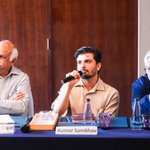
Sambhav shared perspectives from our work on land and resource conflicts, highlighting how several datasets inadequately represent the human element behind land-use.
The discussion looked at the land constraints behind India’s renewable energy expansion. It brought together experts working on land, ecology, governance, conflicts, and community rights to test how models can better reflect realities.
Our Founder & CEO, @Kum_Sambhav was part of an important roundtable hosted by @CSTEP_India in Bengaluru on SAFARI-DHARTI, one of India’s first integrated and participatory Land-Water-Energy-Food Systems models.


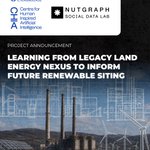
We’re excited to announce our new partnership. With the University of Cambridge’s Centre for Human-Inspired AI, we’re building a first-of-it’s-kind AI-augmented geospatial evidence base–helping India’s energy transition learn from past land-use challenges
nutgraph.in/post/learning-fr…

By learning from legacy energy systems, using multimodal AI, the project aims to help renewable energy expansion avoid repeating past land-governance blind spots while strengthening long-term energy security and investment confidence.
India is in the midst of one of the world’s most ambitious renewable energy expansions. As of March 2026, it had installed approximately 283.46 GW of renewable capacity, including 150.26 GW of solar and 56.09 GW of wind.
nutgraph.in/post/assessing-t…

It will also document how developers currently approach siting and risk mitigation, and evaluate whether tools like SiteRight could help identify high-risk locations earlier in the planning process and avoid conflicts.