

Land Conflict Watch is an independent network of researchers studying land conflicts, climate change and natural resource governance in India.
New Delhi, India
Joined December 2016
- Tweets3.8K
- Following146
- Followers10.3K
- Likes729








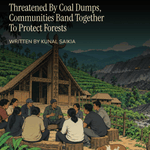

And perhaps success lies not always in a definitive victory, but in the perseverance of communities that continue to assert their agency and protect the ecosystems they depend on, even when loss and uncertainty loom large.
Rather than defining the commons solely through ownership or geography, the project understands what peculiarities and relationships build their landscapes.
These stories complicate the familiar distinctions between conservation and destruction, victory and defeat, and communities as either protectors or antagonists.
The piece explores how the initiative challenged their own preconceived notions about what successful stories of custodianship looks, imploring them to unravel the contours of success altogether.
100 Stories of Commons is a public archive documenting how communities across India protect, nurture and negotiate their relationships with shared landscapes.
Vasudha Varadarajan and @mohitmrao from Land Conflict Watch wrote ‘A Hundred Ways Communities Nurture the Commons’ for the Ecological Restoration Alliance.
In their piece, they reflect on the making of 100 Stories of Commons, read now: era-india.org/stories/a-hund…

Land Conflict Watch retweeted

Ten years.
More than a thousand documented land and natural-resource contestations.
Thousands of field notes, maps, laws, satellite images and data points.
And hundreds of stories of communities sustaining shared landscapes and livelihoods.
We’re putting them all in one place.
Lay of the Land
Evidence from a Decade of Change
8–11 December 2026 | India Habitat Centre, New Delhi
A four-day gathering marking 10 years of @LandConflicts, the flagship project of @_NutGraph . An interactive exhibition, the launch of eight new research reports, data and stories from the ground, and two days of conversations on how India’s landscapes have changed and where they are headed next.
At the centre of the conversation: India’s renewable-energy transition and the land questions it is creating, forest rights, commons, coasts, the footprint of data centres, gender, climate resilience and the future of development decisions.
Exhibition
GROUND TRUTH
8-11 December
An immersive journey through land, data, people and changing landscapes.
Dialogue
LAND, DATA AND DEVELOPMENT FUTURES
9-10 December
Day 1: Land and its Legacies
Commons, forests, customs and institutions.
Day 2: Land in Transition
Renewable energy, data centres, coasts and offshore wind.
A decade of looking closely at the ground.
Four days to look at the decade ahead.
Save the date.
8–11 December 2026. Delhi.
More soon.

Ten years.
More than 1,000 documented land and natural-resource conflicts. Thousands of field notes, maps, laws, satellite images and data points. Hundreds of stories of communities sustaining shared landscapes and livelihoods.
We’re bringing them together.

Two events. One question: how are India's landscapes changing?
Exhibition | GROUND TRUTH
8–11 Dec
An immersive journey through land, data, people & changing landscapes.
Dialogue | LAND, DATA & DEVELOPMENT FUTURES
9–10 Dec
Day 1: Land & its Legacies
Day 2: Land in Transition
Once, forest officials seized their tendu leaves. Today, 34 villages earn ₹4.58 crore a year from the trade.
In Gondia, Maharashtra, forest-dwelling communities have spent over a decade fighting to reclaim control over the forest produce they collect.
Read the 🧵

The federation has also created systems to make the trade accountable. Green cards record each family’s daily collection, while village-level registers track the totals. Gram Sabhas participate in deciding auction terms, selecting buyers and determining payments.
Read the whole story by @sukriti_vats for 100 Stories of Commons!
landconflictwatch.org/common…
