

Bio Statistics
Philadelphia, PA
Joined October 2017
- Tweets258
- Following217
- Followers262
- Likes1.3K


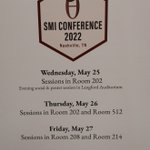

Terrible stuff happening in downtown Nashville

WATCH: “There were ICE raids at the bars in downtown Nashville.”
Singer Monte Mader says ICE agents were raiding bars on Broadway unlawfully — going after cooks, NOT criminals — and offers a plausible theory for why they wear masks.
Full: instagram.com/reel/DJgZk_WO2…
Simon Vandekar retweeted

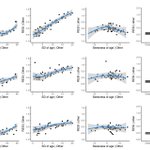
Nature research paper: Study design features increase replicability in brain-wide association studies go.nature.com/4iaWEq5
Simon Vandekar retweeted

Thrilled to have worked with @meharpist and the amazing editorial team at @Nature on our paper! Honored to share our research!

How can we increase the replicability of brain-wide association studies in a rigorous way? A @Nature paper by @kaidikangkk @jakob_seidlitz @rai_bethlehem @sattertt @VandyAtVandy et al identifies the relevant study design features that contribute nature.com/articles/s41586-0…

Simon Vandekar retweeted

New research alert 📣 Excited to share our latest study on the association between patient portal engagement and weight loss after #BariatricSurgery. jmir.org/2024/1/e56573. @ohpenlab @vumcdbmi @VUMCSurgery 1/3

It was such a pleasure to be a part of this work!
And for those interested in the original @nature paper, it's here: nature.com/articles/s41586-0…
Great job @RubyJXiong on this paper introducing GammaGateR, a semiautomated approach for marker gating in mIF data doi.org/10.1093/bioinformati…. With @KenLauLab @etmckinley @K_Harsim @cody_heiser et al. Tutorial is available online statimagcoll.github.io/Gamma….

Simon Vandekar retweeted

Kristin Poole O’Grady, PhD (@ogrady_kp), assistant professor of @VUMCradiology, has received research support totaling more than $2.4 million for her investigations of progressive #multiplesclerosis (MS) using advanced imaging.
spr.ly/6018eiZ36

Simon Vandekar retweeted
🎤 It's my greatest honor to have such a fantastic lineup of speakers:
Dr. Joshua Lukemire (@JoshuaLukemire)
Dr. Mikail Rubinov
Dr. Bennett Landman (@MASI_Lab)
Don't miss our talks if you are interested. See you there!! #ICSAnashville
@ICSA_Statistics
@vandy_biostat

🚀 Excited to organize this #ICSA2024 Invited Session #55 on neuroscience research. The topic will be "Reliable and Rigorous Inference for Brain Structure and Networks"! Join us on Tuesday, June 18th, 3:00-4:30PM. @VandyAtVandy @vandy_biostat

Simon Vandekar retweeted

One of the most common questions I get when talking about why you need to include the outcome in your imputation model is whether this is “double dipping” or “data leakage” — if this is you, what would convince you that this is not a concern?

Curious why statisticians recommend including the outcome in your imputation models? Check out our new paper in Statistical Methods in Medical Research! @SarahLotspeich, @StatStaci5, and I show with some simple mathematical derivations why this is really a requirement!

Simon Vandekar retweeted

🌟Our paper linking the "exposome" with personalized functional brain network organization and cognition is now out in Developmental Cognitive Neuroscience! 🌟
sciencedirect.com/science/ar…
findings summarized in the thread below 👇

New preprint! Our brains don’t develop in a vacuum, but enmeshed in a complex web of experiences+environments. How can we characterize the interconnected and co-occurring features of a child’s environment to better understand cognitive neurodevelopment? biorxiv.org/content/10.1101/… /1

Simon Vandekar retweeted

Using models generated from the Human Connectome Project Lifespan datasets, Dr. Anna Huang & @VandyAtVandy @WoodwardLab @StephanHeckers and @kaidikangkk explore thalamic abnormalities implicated in schizophrenia & other neurodevelopmental disorders
nature.com/articles/s41386-0…
Simon Vandekar retweeted

Check out our latest collaboration with @Penn_SIVE and @VandyAtVandy improving statistical methods for widefield optical imaging, published in Journal of Neuroscience Methods. authors.elsevier.com/a/1iaBb…
Simon Vandekar retweeted

Presenting µBrain: a 3D atlas of @AllenInstitute histological slices of the developing brain, and tools for aligning gene expression/brain imaging! A beautiful labor of love led by @garedaba
@DevelopingHCP @StuartJOldham @Aaron_A_B @emrobSci & others!
biorxiv.org/content/10.1101/…

Simon Vandekar retweeted

We have a new preprint. In short: separate FDR for positive/negative effects avoids direction errors with 2-tailed tests. More power with adaptive BKY (vs BH). But visualization software needs asymmetric thresholds. w/@afni_pt, @ten_photos & Chris Rorden arxiv.org/pdf/2401.03554.pdf
Simon Vandekar retweeted

Mark your calendars for "Challenges in Neuroimaging Data Analysis” at @IMSI_Institute August 26-30, 2024 in Chicago. A fantastic line up of statisticians and neuroimaging experts will make for a stimulating week: imsi.institute/activities/ch…
Simon Vandekar retweeted
Come to Neuroimaging Statistics at @OHBM, June 20-21! The Keith Worsley lecture will be given by Michael I. Miller, keynote lecture by Paul M. Thompson, and many other talks from the interface of statistics and neuroimaging. Registration free but required sites.google.com/view/neuroi…

Simon Vandekar retweeted

Excited to announce the Notice of Award for my K23, "Network-Targeted Neuromodulation for Nicotine Dependence in Schizophrenia" It truly takes a village, and I have the very best, with a mentorship team of @StephanHeckers @roscoebradyjr @cately00 @hilary_tindle @EdenEvins

Simon Vandekar retweeted

Excited to share our latest work in @CellCellPress on a spatial multi-omic atlas of human colorectal precancer-to-cancer transitions #CancerResearch. Huge congrats to @cody_heiser, Lau Lab grad student, for leading the charge as the first author! (1/8)
cell.com/cell/fulltext/S0092…

Simon Vandekar retweeted

Please RT! We are recruiting for two positions! Both are for recent grads, with a start date of Spring/Summer 2024. Great for people who want to do brain science, work in a fun envi, and prep for grad school (psych, neuro, etc). Info here: pennlinc.io/JoinUs
Simon Vandekar retweeted

“Importantly, false positives were most common for small training datasets and large external datasets.”
Starting to think more about power and machine learning in neuroimaging in this excellent work led by @RosenblattMatt !

Interested in external validation in neuroimaging?
Check out our new preprint “Power and reproducibility in the external validation of brain-phenotype predictions” ⬇️
biorxiv.org/content/10.1101/…