

Helping kids build knowledge and understanding for spelling and reading. #Orthography #Phonology #Morphology #Etymology #StructuredWordInquiry #Dyslexia
Escondido, CA
Joined November 2016
- Tweets8.7K
- Following883
- Followers1.4K
- Likes23K




Pinned Tweet
“If we are going to teach children how their writing system works, we need to teach them the interrelation of morphology, phonology, and etymology."

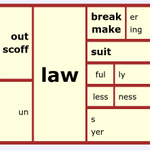
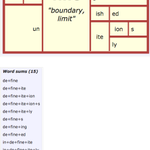
These lucky learners are studying the English writing system, investigating “tricky” words to discover their relatives, elements, and units.
mbsteven.edublogs.org/2023/0…
Isn’t their work amazing? Check out the tools they use to deepen their understanding of the writing system, identify and correct errors in their current thinking, and create explanatory knowledge for reading and spelling.


“Understanding a word’s structure and then spelling the word by announcing its morphemes is a more reliable strategy for spelling than sounding it out or judging the word on its looks.” @MaryBethSteve18 mbsteven.edublogs.org/2023/0…
Morphological analysis tools such as word sums and matrices provide a useful structure for helping kids to think about word pronunciations and meanings shanahanonliteracy.com/blog/…


Children can use word sums and matrices to study English words in the permanent context of their morphological families. xitter.cf/GinaCookeLEX/status/13…


“The fact that the grapheme <t> in act and action maps onto different pronunciations is not evidence of a poor spelling system; rather, it is evidence that English spelling encodes morphology in a consistent manner.” cpb-eu-w2.wpmucdn.com/blogs.…
Children can use word sums and matrices to study English words in the permanent context of their morphological families. xitter.cf/GinaCookeLEX/status/13…
Note: I meant to include a link to the source for the above <act> family matrix. It's Dr. @GinaCookeLEX's work, not mine. xitter.cf/GinaCookeLEX/status/13…

These tools and activities require children to spell and read words while analyzing and considering their phonology and morphology together.
“Every time we study a word in its family, we learn more about the system.” - Dr. Gina Cooke shamelessspelling.com/time-t…

Stephanie Ruston retweeted

Written text is almost always ambiguous & readers have to resolve that ambiguity quickly in a process called "disambiguation.' What they rely on most of all to do that is background knowledge. Which is why it's so central to reading comprehension.
teachlikeachampion.org/blog/…
The idea that English has "over 200 graphemes" belongs to the old phonetic code theory of English orthography.
With the newer morphophonemic theory, we need only 83 graphemes to explain English spellings.
linguisteducatorexchange.com…


Beyond that, it’s not that English has almost double the number of phonemes, it has over 200 graphemes. The unpredictable relationship between sounds & spelling make learn to decode in English much more complex than any other alphabetic code elemedu.upatras.gr/english/i…

“Science-based reading research has worked with a phonological emphasis for more than 50 years, but in the English writing system, morphology, etymology, and phonology share the role of organizing the language.” linguisteducatorexchange.com…
Conventions for “spelling-out orthography”
wordworkskingston.com/WordWo…
FREE tools and practices that help children focus on structures that are smaller than the word.