

I’m trying to figure out why things work. Ads director in Socialsharks, Digital strategy & Performance marketing
Joined April 2018
- Tweets326
- Following543
- Followers61
- Likes32.6K








Daniel Silha retweeted

I spent 48 hours in SF hanging out with billionaires, data labs and AI founders and execs running $1B to $100B companies.
My observations:
1. Sooo MANY stories of data brokers making like $2M a WEEK selling company data to labs. I can't tell if it's the beginning or a bubble, and I kept wondering which niches are left. Digging into it actively.
2. At dinner, someone asked the table, "If a new model drops next month, does your company get better or worse?" HALF the table went quiet! I think that's the best question to ask about any AI startup right now.
3. The bar people talk about now is hitting $1B in revenue in 12 months (I guess that's the new unicorn?). What I didn't hear much about is retention. AI revenue can come in fast and leave fast, and I think we're going to see a lot of stories of AI companies with huge revenue and terrible retention.
4. It's pretty clear we're living through the reinvention of the computer. The model is the CPU, the harness is the operating system, and skills and plugins are the apps. Thinking about it that way makes it easier to see where the whitespace is.
5. We're maybe 12 months from an agent that can watch you work for a week and then do your job without any instructions. The screen recording plus agent memory plus local model combination makes this possible right now.
6. Agent harnesses feel like the new GPT wrappers, in a good way, especially vertical ones. The best teams I talked to treat the model as swappable. One founder walked me through routing different models to different jobs: one for taste and visuals, a cheaper one for the everyday stuff, another for text.
They use prompts they can move across models over fine-tuning, and A/B test the output on what users actually do with it: do they edit it, export it, share it? A vertical harness is basically four things: the connectors for that industry's data, evals written by people who know the work, rules for what the agent can and can't touch, and a clean screen for a human to review. The model is maybe 20% of it.
7. There's a lot of reverse engineering going on/cloning going on more than I've ever seen. People are decompiling software and rebuilding it with agents, and someone showed a suite of like 10 apps that are worth $5B+ each all that he cloned open source. Me and everyone are still thinking through what it means when software gets this easy to copy.
8. My guess is the value moves to data. If the software can be rebuilt quickly, what's worth paying for in a legacy SaaS company is the years of customer data and workflows inside it. Some SaaS companies are secretly data companies.
Gets me thinking about how do you truly value data for this saas companies? Like if we were buying these dying saas companies at 2x ARR before (as example), maybe there is a better metric. Idk, just thinking out loud here.
9. It feels like a good chunk of legacy software won't make it to the agentic era, especially anything built around people clicking through a lot of screens.
10. Every company I talked to wants to pipe its internal data into one place and expose it to agents through MCP. Then they look at the data and realize it's a mess: five versions of the same customer, old Slack channels, PDFs nobody can search. Cleaning that up feels like a big consulting opportunity!
11. A lot of founders are building the basic building blocks for agents: APIs, data layers and tools. Some of the companies I saw barely have a UI because the main user is an agent. I really believe the startups that build primitives to this agentic era will do extremely well. Building blocks is the best way to think about it.
12. Labs can get plenty of training data, but it's harder to get real examples of agents failing inside companies. Whoever has those logs has something valuable.
13. Someone running a big consumer company told me the next fight is over memory. The model that remembers the most about you wins, and the smartest model matters less than people think.
14. Physical AI came up a lot. Astra I think was the first model that got people into AI can actually do CAD, and I think a lot of people are thinking what does vibe manufacturing really look like. The line I keep thinking about came from a robotics founder: the hardest problems in AI are deployment problems now, not research problems. Their robots work on their own, call a human when they get stuck, and every one of those calls becomes training data.
15. Cybersecurity companies are having a moment and are actually cool companies to build now, especially the ones that clean up after a breach. Every agent with access to your systems is a new door into your company, and a lot of those doors were left open.
16. Some startups are worth more dead than alive now. A shutdown company with 5 years of Slack, email and code can get paid for licensing all of it. I wouldn't be surprised if founders start factoring that into when they shut down.
17. People are starting to talk about monetizing the agent web. It feels really early, but when the most popular user of the internet is an agent, what startups should you be building?
18. I think agent insurance is coming. Once an agent makes an expensive mistake, insurers will want audits before they cover anyone.
19. Several people said the hire they want most is someone with taste who can write evals. The models are getting good at generating ideas, so the hard part is judging which ones are good.
20. New trend I observed: startup raises VC, uses venture dollars to become a creator, startup fails, founder falls back on being a full-time creator and incubates other products bootstrapped.
21. Getting SIGNIFICANT distribution is HARD right now. Founders are sponsoring buses, buying billboards like crazy and throwing parties with famous DJs to get noticed. Kinda feels dotcom era in that sense.
Attention is what's scarce! The growth guy going viral sharing his UGC strategy from Wispr Flow is a good example. It's the sauce everyone wants, and I truly believe there are probably only 50 people on the planet who know how to scale these types of businesses efficiently in this era.
Always good to get that dose of SF. I felt sooo lucky to have such an incredible trip during such an incredible time in building businesses. Surreal in so many ways.
Happy to be home and locked in.
Until next time!


Daniel Silha retweeted

Dusting off this tweet from April because this gap in shared understanding of LLM capability is *widening*. It's now less "two groups of people speaking past each other" and more a sharp funnel.
- Napkin math somewhere around 6B people (~75% of the population) have barely come in contact with LLMs at all.
- Around 1-2B (~20%) are casual and infrequent users of free-tier ChatGPT-like products. This group sees derpy chatbots and treats them a bit like a better Google search, a writing aid, or etc. Maybe an agent tries to book you a flight. I have non-tech friends who (reasonably, imo) say they have not much use for it at all. Even many professionals outside of math&code are in this tier. For example, execs and many other functions spend a lot of their time talking to other people, so while they understand what is happening intellectually, it is still second-hand and a bit abstract.
- Now we get to professional use of frontier-grade LLMs in math&code. Somewhere around 20M people (0.2%) see first-hand that large, complex projects that used to take them weeks/months can now be completed by agents with a prompt. Building apps, copying apps, translating apps, decompiling apps from binaries... This has all happened very quickly and recently - less than 1 year ago, I was writing code manually by hand, typing memorized computer code commands into a code editor character by character, occasionally pressing Tab to autocomplete a little chunk of code.
- And finally we get to the ~5,000 people (~0.00006%) with access to frontier-grade systems internally. The external world has seen the preview. It looks like swarms of thousands of agents collaborating over weeks on software mega projects: minting zero days, running cyber attacks and defenses at machine speeds, discovering new science, advancing the frontier of mathematics. Things that would have taken top professionals in the industry years of work. Meanwhile, human review and comprehension are starting to fall behind. For example, people are still involved in the "archeology" of the OpenAI-HF incident from many months ago. Mathematicians may be poring over the 722 manuscripts on frontier mathematics for a while.
The funnel is driven by a combination of factors:
1. The impact scales with ambition, problem size, and horizon. A question with a paragraph answer barely stresses the system. You need a reservoir of big, difficult problems that you really care about. This aspect drives the consumer / professional dimension of the funnel.
2. The jaggedness of the system (which I have written about a lot separately). Capability peaks in domains that are digital, verifiable and economically valuable. This is because LLM capability emerges from reinforcement learning on verifiable rewards on a curated environment mixture driven by revenue potential. This aspect primarily drives the area (e.g. math&code) dimension of the funnel.
3. Access. Free-tier, paid-tier, internal.
So this is the weirdness of the moment. The general public has mostly not interacted with these systems. When they have, it looks like a derpy chatbot. The majority of professionals still see only a modest uplift. And a small sliver of professionals are experiencing the vertigo of the curve going vertical. And it is all happening at the same time.

Judging by my tl there is a growing gap in understanding of AI capability.
The first issue I think is around recency and tier of use. I think a lot of people tried the free tier of ChatGPT somewhere last year and allowed it to inform their views on AI a little too much. This is a group of reactions laughing at various quirks of the models, hallucinations, etc. Yes I also saw the viral videos of OpenAI's Advanced Voice mode fumbling simple queries like "should I drive or walk to the carwash". The thing is that these free and old/deprecated models don't reflect the capability in the latest round of state of the art agentic models of this year, especially OpenAI Codex and Claude Code.
But that brings me to the second issue. Even if people paid $200/month to use the state of the art models, a lot of the capabilities are relatively "peaky" in highly technical areas. Typical queries around search, writing, advice, etc. are *not* the domain that has made the most noticeable and dramatic strides in capability. Partly, this is due to the technical details of reinforcement learning and its use of verifiable rewards. But partly, it's also because these use cases are not sufficiently prioritized by the companies in their hillclimbing because they don't lead to as much $$$ value. The goldmines are elsewhere, and the focus comes along.
So that brings me to the second group of people, who *both* 1) pay for and use the state of the art frontier agentic models (OpenAI Codex / Claude Code) and 2) do so professionally in technical domains like programming, math and research. This group of people is subject to the highest amount of "AI Psychosis" because the recent improvements in these domains as of this year have been nothing short of staggering. When you hand a computer terminal to one of these models, you can now watch them melt programming problems that you'd normally expect to take days/weeks of work. It's this second group of people that assigns a much greater gravity to the capabilities, their slope, and various cyber-related repercussions.
TLDR the people in these two groups are speaking past each other. It really is simultaneously the case that OpenAI's free and I think slightly orphaned (?) "Advanced Voice Mode" will fumble the dumbest questions in your Instagram's reels and *at the same time*, OpenAI's highest-tier and paid Codex model will go off for 1 hour to coherently restructure an entire code base, or find and exploit vulnerabilities in computer systems. This part really works and has made dramatic strides because 2 properties: 1) these domains offer explicit reward functions that are verifiable meaning they are easily amenable to reinforcement learning training (e.g. unit tests passed yes or no, in contrast to writing, which is much harder to explicitly judge), but also 2) they are a lot more valuable in b2b settings, meaning that the biggest fraction of the team is focused on improving them. So here we are.
Daniel Silha retweeted

Last month I wrote about how we can build a positive and safe future for everyone: meta.com/thefutureisforevery…
Every lab has the responsibility and incentive to move at the pace required to train its models safely, and the ability to take its own actions to ensure that happens.
The reality is:
- People won't want to use agents that are misaligned with them and that don't do what they ask, so labs have a strong natural incentive to make their models more aligned.
There is a lot of debate about slowing progress on capabilities until alignment catches up. My view is that trust and alignment are quickly becoming the most important capabilities that will differentiate agents and models. Any lab that doesn't focus on alignment will fall behind.
- Labs face significant liability if their models cause harm, so they have a strong incentive to prevent this as well.
Meta delayed shipping Muse for several months to focus on safety and security. We didn't call for everyone else to do this before we would. We just did it as part of our day-to-day work because it was clearly the right thing for people and for us. I'm proud of the security foundations we've built.
- Engaging independent evaluators and advisors is industry best practice. MSL already does this today in several areas because it helps produce better work. Other labs can just do this too. In general, it would be helpful for there to be a larger and more diverse ecosystem of evaluators.
- Committing the significant majority of compute towards serving people rather than racing towards recursive self-improvement is one of the best ways to ensure we develop this technology safely. Meta has made this commitment and other labs can do this as well.
I believe the key to building a positive future for everyone is maintaining the right balance of power. This is within our power to do.
Daniel Silha retweeted

Full credit to @harrybrundage for coining the term Slop Grenade. Let’s make it a thing.

Lazy work used to mean too little output.
Now, with AI, it often means too much and more work for everyone else.
@tobi call it "slop grenades."
A "Slop Grenade" is when you let AI produce the work and pass it on without adding any value (including checking it).
Someone else has to wade through it, catch the mistakes, and clean up the mess.
You save time and look productive but someone else pays for it.
Daniel Silha retweeted

This is essentially my belief too
And I'm confused why so many people don't think this yet
The AI chat apps will slowly eat up most services and provide them to users directly, many times without even an app or interface, just do whatever the user wants
Dario Anthropic said it himself "in the end there will be just Anthropic and world governments" or similar, as they (and the other AI labs) will replace all work and all services
The question is the timeline

And again you are ahead of the pack! This will be standard practice soon, the better AI gets at single shotting whatever service we want. You had the capability to code already so you could be super productive with just a little help and early. That little advantage will collapse into standard AI practice too. The new paradigm will be interesting to explore.
Daniel Silha retweeted

How stupid is this?
If an audience that you use to define your segments in Meta is not actually being used in a live ad set, then it will not update and be rendered useless
So I tell Meta that 30-day site visitors are engaged users and I slot it under the definition in Audiences, just like they've been pushing for with the new audiences update
But if it is not actually being used somehow in an active campaign, it doesn't get updated after 90 days and doesn't actually do anything
I wonder how much exclusion leakage, or just confusion on delivery data between engaged vs. new audiences, is happening because of this ...


Daniel Silha retweeted

Any person over 40 realizes that this is the Marlboro font. The people in charge of this are clearly under 40.

Daniel Silha retweeted

Back by popular demand, we're reopening the vault. Get access to our most requested resource: the top-performing brand funnel breakdowns of the biggest DTC brands.
Not just their ads. The full stack:
Paid strategy > Organic > Landing pages > Google ads > Email > Offers
Everything.
Easily the most ripped asset we’ve ever put out.
So we’ve packaged them properly. One folder.
Here’s who’s inside:
– Alo Yoga
– Ancient and Brave
– BREZ
– Glossier
– IM8
– Kind Patches
– LOOP Earplugs
– Meshki
– Rhode
– Refy
– Wonderskin
Use this to cut out weeks of guesswork or get your next winning concept straight from their playbook.
Retweet this post and comment "vault" and I'll send it over

Daniel Silha retweeted

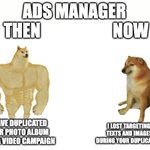
Meta ads in 2015:
1. Take a photo of product with iPhone. Open Power Editor, launch ad in under 2 mins.
2. Refresh PE and see 1:1 conversions in under an hour, scale within 3-4 hrs.
3. Spend the rest of the day coming up with fun ideas for new offers, new landing page ideas, new product ideas, new copy ideas.
Meta ads in 2026:
1. Hire creative strategist -> Who hire creative agencies / editors -> who build batches of creative.
2. Open ads manager, go through 25-30 prompts of things you have really no clue about, but Meta is insistent it'll lower your CPA by 7.9% based on a study from 2 advertisers in 2022. Click publish after 1 hr of building out 10 new concepts.
3. You're then hit with an error publish with messages like: "you have no shops select," or "you don't have page permissions," or "this creative has expired, please try a new one" you finally are able to hit publish.
4. Finally, you can go on with your day. But wait, client sees that they are getting discounts on the ads you just launched coming in. You open up ads manager and go to ad level to go through multiple areas to figure out why.
5. Ah, Meta has randomly turned the promotions automatically on. No worries, you pause it. On with your day.
6. Someone who knows someone at the company for whose ads you just launched flags to friend that the ads are appearing with a dubstep version of a Beethoven song and seem out of touch for the brand. You're then texted to go pause the music.
7. Open ads manager, navigate to ad level, pause music. You're then hit with a prompt from Meta: "WHY ARE YOU TURNING THIS OFF?!" You hastily respond, "BECAUSE IT SUCKS!"
8. Visibly irritated now over Meta you finally settle in to do the other part of your job, analysis!
9. But wait, there appears to be an outage! Everyone texting, "Is Shopify down?," "Is it Cloudflare?," "Is it AWS?," "No! It's Meta!" Ok, well now you're in fight of flight. Should we wait? Should we pause? Let's wait, yeah let's wait. This is just a minor blip.
10. Meanwhile you're not left refreshing things every 5 min instead of doing analysis and research.
Finally, it is night time and you can relax (not)!
On this particular day you managed to launch 10 ad sets and do nothing else. Feeling defeated because what once took 2-5 min to do now feels daunting. It feels like you now spend the majority of your day in defense mode. Not because the work has changed or the people, but the process for doing it all has.
And that's why you're feeling burnt out media buying friends and creative friends.
Daniel Silha retweeted

The events of the last 6 months in technology are arguable amongst the most important in human history
The tools now increasingly exist for recursive self improvement of models & agents
We are likely in very early lift off & exponential
Largely unnoticed outside of tech
Daniel Silha retweeted

it’s in gemini, just create it in ai studio. oh, that’s for your personal google one account. for workspace you need gemini business. no, not gemini advanced, that’s ai pro now. unless you need ai ultra. oh agents? you do that in spark actually. no, not gemini api managed agents, that’s different. for coding use jules. unless you mean the agentic ide, that’s antigravity. no, that’s the old antigravity, download the new one. actually gemini cli is being deprecated, use antigravity cli. no the flash model is smarter than the pro model. unless you need pro. if it’s video, use flow. no, flow uses veo. no, nano banana is images. actually that’s in gemini now. unless you’re in search, then it’s ai mode. no, research is notebooklm. anyway it’s all very simple.
Daniel Silha retweeted
Personal update: I've joined Anthropic. I think the next few years at the frontier of LLMs will be especially formative. I am very excited to join the team here and get back to R&D. I remain deeply passionate about education and plan to resume my work on it in time.
Daniel Silha retweeted

Meta media buyers, LOOK OUT 👀
If you go to EDIT an ad, even just to look at an ad's setting without changing anything, the system automatically adds Related Media.
It won't publish automatically, buuuut, it will queue to publish the next time you publish other changes. Super sneaky.
So this means, new ads and duplicated ads will be impacted too. If you're moving quickly and not expecting it, you'll completely miss it.
I've seen this in a few accounts and heard about it a bunch.
How to prevent/avoid for now:
If you see the green Publish button light up in the bottom right of your edit screen, make sure to smash the DISCARD button before moving on.
Before hitting the blue review and publish, always check the number of things being published and make sure it adds up to what you changed. Double check other ads aren't being updated unintentionally.
Please make noise about this issue. This is NOT ok. Tell your Meta rep, chat support, make sure they know this is NOT OK

Daniel Silha retweeted

We’ve put together a playbook of proven Meta strategies that are working right now for 8 and 9 figure DTC brands.
Meta advertising has changed more in the last two years than in the five before it. The algorithm is smarter, the competition is heavier, and the old playbook (stack your targeting, run your best creative, scale what works) doesn’t cut it anymore.
The brands pulling away from the pack aren't spending more. They're thinking differently.
They've shifted from audience-first to persona-first, from volume to variety, from optimising individual ads to building creative systems. They're feeding the algorithm better signals and getting better results in return.
This is a comprehensive guide of what those brands are actually doing right now - the strategies, structures, and thinking that are moving the needle on Meta right now.
Here’s what you can expect:
1️⃣ Understand how Meta actually works in 2026 - learn how Andromeda's individual-level ad matching has changed the rules of creative strategy, and what it means for how you build, structure, and scale your account.
2️⃣ Build a persona framework that drives real incremental reach - go beyond demographics into the psychological fears, desires, and cognitive biases that tell Meta exactly who to find, and stop wasting spend reaching the same people repeatedly.
3️⃣ Create ads that stop the scroll - discover the creative principles, narrative structures, and emotional frameworks behind the highest-performing Meta ads right now, with real case studies and measurable results.
4️⃣ Scale without starting from scratch - learn the systems, hierarchies, and portfolio thinking that the fastest-growing DTC brands use to keep creative output fresh, efficient, and compounding over time.
Get a full-funnel playbook you can apply immediately - from account structure and partnership ads to AI tools, organic strategy, and multi-channel thinking, every chapter is built around what's working right now.
Want it?
Retweet this post
Comment "meta guide" and I'll send it over
Daniel Silha retweeted

wow, this exploded. here's the rest of our conversation last night
xitter.cf/josephdviviano/status/…

Daniel Silha retweeted

🚨Did you see what Karpathy just said? Stop everything and read this.
3 years ago this man was teaching the world how to build neural networks from scratch.. Stanford lectures. YouTube tutorials.. "Here's how to write a GPT from zero."
> Now he's saying don't write code at all. Just manage the agents that write it for you.
The same guy who literally taught a generation of engineers how to code is now telling them their job is to sit in a command center and babysit AI workers. He compared it to a tmux grid. Yuchen Jin in the replies compared it to StarCraft.
These people are not joking. They're designing a future where "software engineer" means "guy who watches 12 AI agents on 6 monitors and makes sure none of them crashed."
And then.. AND THEN.. he casually says you'll be able to fork entire companies. Not code. Companies. Copy-paste someone's whole operation like it's an open source repo..
The man who mass produced software engineers just mass produced CEOs. And he did it in a tweet.
If you spent the last 5 years grinding LeetCode and building a résumé to get into FAANG, I genuinely don't know what to tell you right now.
The guy who wrote the playbook just burned it.
Daniel Silha retweeted

A company with $24 billion in revenue and 24% gross profit growth just cut 4,000 people while raising 2026 guidance to $12.2 billion in gross profit. Stock ripped 20% after hours. The market added roughly $6 billion in market cap. That's ~$1.5 million in enterprise value created per eliminated role.
Block is the canary in the coal mine. And they're not alone.
ASML cut 1,700 jobs last month while reporting record orders and said they were "choosing to make these changes at a moment of strength." Salesforce cut 5,000 after AI agents started handling 50% of customer interactions. Amazon cut 16,000 in January on top of 14,000 in October. Every one of these companies was growing when they did it.
Dorsey said the quiet part out loud: intelligence tools paired with smaller teams have already changed what it means to run a company. He chose one massive cut over repeated rounds because, his words, gradual cuts destroy morale and trust. The restructuring charges are $450-500 million. At the operating income Block is guiding, that pays for itself in two quarters. After that, pure margin expansion. That's why Wall Street rewarded it instantly.
Here's what's coming. Goldman estimates AI is already responsible for 5,000 to 10,000 net monthly job losses in exposed U.S. industries. Citigroup is planning 20,000 cuts. Dow just slashed 4,500. 40% of employers surveyed say they expect to reduce headcount because of AI. 30,700 tech jobs gone in the first six weeks of 2026 alone.
Block went from 10,000 to 6,000 while growing revenue and raising guidance. Every CEO running a company with more than a few thousand employees is doing this math tonight. The canary just stopped singing.

we're making @blocks smaller today. here's my note to the company.
####
today we're making one of the hardest decisions in the history of our company: we're reducing our organization by nearly half, from over 10,000 people to just under 6,000. that means over 4,000 of you are being asked to leave or entering into consultation. i'll be straight about what's happening, why, and what it means for everyone.
first off, if you're one of the people affected, you'll receive your salary for 20 weeks + 1 week per year of tenure, equity vested through the end of may, 6 months of health care, your corporate devices, and $5,000 to put toward whatever you need to help you in this transition (if you’re outside the U.S. you’ll receive similar support but exact details are going to vary based on local requirements). i want you to know that before anything else. everyone will be notified today, whether you're being asked to leave, entering consultation, or asked to stay.
we're not making this decision because we're in trouble. our business is strong. gross profit continues to grow, we continue to serve more and more customers, and profitability is improving. but something has changed. we're already seeing that the intelligence tools we’re creating and using, paired with smaller and flatter teams, are enabling a new way of working which fundamentally changes what it means to build and run a company. and that's accelerating rapidly.
i had two options: cut gradually over months or years as this shift plays out, or be honest about where we are and act on it now. i chose the latter. repeated rounds of cuts are destructive to morale, to focus, and to the trust that customers and shareholders place in our ability to lead. i'd rather take a hard, clear action now and build from a position we believe in than manage a slow reduction of people toward the same outcome. a smaller company also gives us the space to grow our business the right way, on our own terms, instead of constantly reacting to market pressures.
a decision at this scale carries risk. but so does standing still. we've done a full review to determine the roles and people we require to reliably grow the business from here, and we've pressure-tested those decisions from multiple angles. i accept that we may have gotten some of them wrong, and we've built in flexibility to account for that, and do the right thing for our customers.
we're not going to just disappear people from slack and email and pretend they were never here. communication channels will stay open through thursday evening (pacific) so everyone can say goodbye properly, and share whatever you wish. i'll also be hosting a live video session to thank everyone at 3:35pm pacific. i know doing it this way might feel awkward. i'd rather it feel awkward and human than efficient and cold.
to those of you leaving…i’m grateful for you, and i’m sorry to put you through this. you built what this company is today. that's a fact that i'll honor forever. this decision is not a reflection of what you contributed. you will be a great contributor to any organization going forward.
to those staying…i made this decision, and i'll own it. what i'm asking of you is to build with me. we're going to build this company with intelligence at the core of everything we do. how we work, how we create, how we serve our customers. our customers will feel this shift too, and we're going to help them navigate it: towards a future where they can build their own features directly, composed of our capabilities and served through our interfaces. that's what i'm focused on now. expect a note from me tomorrow.
jack
Daniel Silha retweeted

Today, we’re introducing Pomelli’s latest feature update, ‘Photoshoot’
With Photoshoot, you can start from a single image of your product and easily create high quality, customized product shots to elevate your marketing.
Available free of charge in the US, Canada, Australia & New Zealand! Get started with Pomelli today at labs.google/pomelli
Daniel Silha retweeted

Nedostupnost bydlení. “Tehdy” a teď.
Pojďme těmto debatám utnout tipec jednou pro vždy. Dávám proto veřejně interní dataset vyjádřený grafem, ze kterého můžete vyčíst 3 zajímavosti:
1️⃣ Rok 2023 byl z hlediska nedostupnosti bydlení nejextrémnější a v historickém srovnání nemá obdobu.
Neb se potkaly všechny negativní faktory najednou: Extrémní nominální ceny, prudký pád reálných příjmů a vysoké úroky hypoték. Tento stav s mírným náznakem zlepšení trvá nadále.
2️⃣ V 90s byly hypotéky po čertech drahé. Ale platy byly vhledem k cenám bytů tak vysoko, že i s vyšším úrokem byla cesta k vlastnímu bydlení pro pracujícího člověka výrazně snazší než dnes.
V roce 97 jste si za 5 ročních platů koupili byt, dnes za 5 let většinou našetříte na akontaci, díky které si můžete vzít hypotéku na 35 let.
3️⃣ Výnos z nájmu setrvale klesá.
To je jeden ze 3 důvodů, proč dokola opakuju, že investice do cihel aktuálně dává smysl jen relativně úzké kategorii investorů. Zbytek právě dělá zásadní chybu a ještě u toho tupě lepí záporné cashflow skrze nepřiměřené LTV.
Co si z toho vzít? S dovolením svou odpověď rozdělím pro dvě různá publika.
Co mají dělat mlaďoši? 🚼
Že za svou práci dostaneme na realitním trhu sotva polovinu toho, co naši rodiče, je na lejno, ale nedá se svítit. Tenhle balíček karet jsme nemíchali my a už s tím nic neuděláme. Řešení reálně přinese až zlom demografické křivky.
Maximálně to teď můžeme hecnout, pracovat násobně usilovněji a více než vyšší průměr a pak si splnit sen o vlastní cihle. Jenom si každý musí uvážit, jestli to za to stojí 🤷
Nájem dnes totiž není žádné stigma. Je to zcela racionální ekonomická volba a pokud tuto kartu zahrajete dobře, budete z toho benefitovat až do konce hry.
Toto je můj způsob uvažování a říkám to veřejně už několik let. Jenom u toho teda stejně pracuju výrazně více a usilovněji než běžný průměr 😁
Co mají dělat ti, co za svůj život měli víc než 45 Vánočních stromečků? 🎄🎄🎄
Pokud z vás padají voloviny typu „mladí jsou netáhla a neví co by chtěli“ tak se prosím hluboce zamyslete nad tím, co je váš příspěvěk v mezigenerační štafetě, kterou všichni běžíme.
Dokážu vám přiznat spoustu zásluh a odpustit spoustu věcí, ale infrastrukturní dluh v podobě nedokončených tahů a sítí, dodrbané územní plány, nefunkční stavební zákon, neexistující penzijní reformu a rozpočet na hranici dluhové brzdy fakt ne.
Porevoluční sprint a roky příznivého ekonomického vývoje jste prožrali a spotřebovali pro svůj osobní prospěch a ještě u toho vedete blbé keci.
Ale nebojte se, my tu zatáčku vybereme za vás. Jenom nás to bude stát násobně víc úsilí, budeme u tohoto platit vyšší daně a budeme se u toho muset vypořádat sešněrovaní nesmyslnými regulacemi s řádově agilnější globální konkurencí.
Ale těm, kteří problematiku chápou a pomáhají ji řešit naopak upřímné díky. Snad budete slyšet víc, než vaši vrstevníci 🙂
Metodický disclaimer:
Ano, nominál vs. nominál je ekonomicky nejexaktnější. Nicméně mzda musí pokrýt běžnou inflaci (energie, potraviny, služby), aby člověk přežil. Teprve to, co zbude, může jít do nákupu aktiv, mezi které patří i nemovitosti. Z tohoto důvodu pracuju s reálnou kupní silou. Lépe to odráží realitu běžného života.
Zdroje dat:
ČSÚ, Eurostat, Dataligence, Swiss Life Hypoindex, ČNB (ARAD), CEIC Data, CERGE-EI
