

Raised on farm at Leaskdale, ON, U of Guelph, BSc (Agr) ‘71, MSc, PhD, EVP Canadian Seed Trade Association 1983-2012, QE II Diamond Jubilee Metal 2012, Retired
Ottawa, ON, Canada
Joined July 2010
- Tweets614
- Following81
- Followers99
- Likes785

William Leask retweeted

Meet Anthony Parker from Canada, new President of the UPOV Council.
The UPOV Council provides UPOV members with a platform to take key decisions on the functioning of the Union and discuss matters relating to the development and implementation of the UPOV Convention, including strategic planning, the review of the work of its committees, and the adoption of rules and guidelines.
More: upov.int/en/about-upov/overv…

William Leask retweeted

Just wait for the court cases to start.
It’s the same playbook as glyphosate.
William Leask retweeted

Canada's agricultural potential is held back by outdated policies, not science. @Darcytwheat with @wheatgrowers writes that Canada needs bold regulatory reform to foster innovation and competitiveness.
The editorial: ow.ly/7zB850WWFP0 #westcdnag #agpolicy #farming #agriculture


When I was a kid, our home party line phone number was “one, six, two, ring four”. The operator would connect the caller to line 162 and ring it four times. Everyone on the 162 line would hear the ring and know who was using the phone.

William Leask retweeted

At the FAO biotech conference it's very interesting to observe that numberous activists spoke on the first day then left, confirming they have no interest in evidence. This confirms that eNGOs have no right to participate in global discussions about innovation, ag & environment.
William Leask retweeted

In the 1930s, US corn yields averaged 26 bushels per acre. Today, that number is 179.3 bushels per acre—with top-performing farms reaching an astonishing 624 bushels. @HumanProgress
newsletter.humanprogress.org…

Varroa mites, not pesticides, are by far the largest threat to honeybee health. Developing RNAi technology shows promise in addressing that crisis geneticliteracyproject.org/2… via @GeneticLiteracy
I would suggest that your introductory comment can be modified to read:
Using fear, deception, and bad science. It’s not about safety. It’s about identifying any issue that can create a successful fundraiser.

They don’t want you to know the truth.
For decades, activists have followed the same 5-step playbook to turn public opinion against GMOs.
Using fear, deception, and bad science. It’s not about safety. It’s about control.
The Anti-GMO Playbook follows a predictable pattern used by activists to spread fear and misinformation.
Here are the five key steps:
1. Manufacture Fear:
Frame GMOs as dangerous and unnatural.
Use alarming language like “Frankenfood” to trigger an emotional reaction.
Emphasize unknown risks, even when none exist, to create doubt.
2. Cherry-Pick Data:
Highlight rare or flawed studies that suggest harm, even if they’ve been debunked.
Ignore the overwhelming scientific consensus that GMOs are safe.
Misrepresent correlations as causation (e.g., linking GMOs to autism or cancer).
3. Exploit Public Distrust:
Paint biotech companies as evil corporations controlling the food supply.
Accuse regulators of being in the pocket of industry.
Frame independent scientists supporting GMOs as biased or corrupt.
4. Push the Appeal to Nature Fallacy:
Claim “natural” foods are always better, even if they contain harmful toxins.
Demonize modern agriculture while ignoring centuries of human intervention in crops.
Market organic and non-GMO labels as morally superior choices.
5. Use Activism to Influence Policy:
Pressure governments to ban GMOs despite scientific evidence.
Spread misinformation through petitions, social media campaigns, and protests.
Attack journalists, scientists, or farmers who speak in favor of biotechnology.
Don’t fall for the propaganda. Challenge the misinformation.
Demand policies based on facts, not fear.
The future of food security, innovation, and sustainability depends on it.
William Leask retweeted

"Over the past 20 years, no agreement has stifled innovation, reduced sustainability and had a negative impact on reducing food insecurity more than the Cartagena Protocol on Biosafety."
@stuartsmyth66
producer.com/opinion/cartage…


William Leask retweeted

🧬🌱Euroseeds Manager Plant Breeding Innovation Advocacy @PJorasch sees the trend that 20 countries are already regulating #NGTs in a more differentiated way. Europe should finally catch up with enabling laws and promote innovation. 🇪🇺 💡
#GrowingTheFuture #NewGenomicTechniques #SeedScience #seedinnovations
I have many memories of attending the local one-room school for 8 years, grades 1 - 8. Family are impressed when I tell them that I stood third in my Grade 8 graduation class. Later, I admit there was only three in the class.

Great story about the Dickie Settlement School near Cambridge.
I did not go to it as an elementary school, but did go to a one-room school that was very similar. I remember the outdoor toilets and the "Quebec" stove in the middle of the room for warmth.
cbc.ca/news/canada/kitchener…

Unless there is moderation, opposition will grow and lack of funding will cause the swing back to the start.
Always interesting to see what the National Post likes best. This one is still featured after 4 days.
The article does make you think, however, about priorities for scarce public funds - university woke agendas or more support for health care and homeless.
nationalpost.com/opinion/def…

Agree. Typically what starts as a legitimate need for reform swings to the opposite extreme.
Always interesting to see what the National Post likes best. This one is still featured after 4 days.
The article does make you think, however, about priorities for scarce public funds - university woke agendas or more support for health care and homeless.
nationalpost.com/opinion/def…
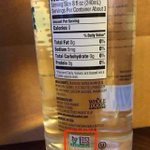
Add bottled water from your “local municipal source” to your list on “NONGMO”

Non-GMO Salt.
Utter nonsense.
The idea of "non-GMO salt" is fundamentally flawed and reveals a misunderstanding of what GMOs (genetically modified organisms) actually are.
To clarify, GMOs refer to living organisms - plants, animals, or microbes - whose genetic material has been intentionally modified.
Salt, however, is not an organism. It’s an inorganic compound, primarily sodium chloride (NaCl), with no DNA or genetic material to modify.
For something to be genetically modified, it must have genes. This is why GMO applies to living things like crops or bacteria, but not to non-living, inorganic substances like salt.
Labeling salt as "non-GMO" is scientifically meaningless. It’s a marketing gimmick designed to exploit consumer fears about GMOs, even though GMOs have no relevance to a substance like salt.
These labels don’t inform—they mislead, creating unnecessary confusion and fostering misconceptions about basic science. Far from protecting consumers, they undermine scientific literacy and fuel mistrust in legitimate food labeling practices.

William Leask retweeted

What a merry start to the #CPKCHolidayTrain 🚂. Huge thanks to everyone who came out to support their local food banks. Check out the highlights!
Ready for more holiday cheer? We’ve got three weeks left—see when we’re stopping by YOUR town: cpkcr.com/en/community/Holid…
GAG!

FIRST READING: Trudeau’s $9 million bet on edible crickets runs into trouble nationalpost.com/opinion/tru…

William Leask retweeted

FIRST READING: Trudeau’s $9 million bet on edible crickets runs into trouble nationalpost.com/opinion/tru…
Rather than think of the extreme left and extreme right as polar opposites, the extreme ideologies of the two “sides” actually merge together to form a full circle.
