

We study #HumanDevelopment #Embryology #Genetics and #RareDisease at @KAUST. Led by Bruno @reversade.
Saudi Arabia
Joined September 2016
- Tweets290
- Following202
- Followers467
- Likes492





Reversade Lab retweeted

📢New today!
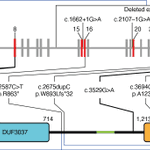
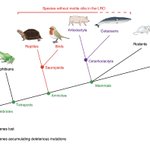
📰CIROZ is dispensable in ancestral vertebrates but essential for left-right patterning in humans
🧑🤝🧑@reversadelab & colleagues
cell.com/ajhg/abstract/S0002…
Reversade Lab retweeted

Online! A progeroid syndrome caused by a deep intronic variant in TAPT1 is revealed by RNA/SI-NET sequencing.
#progeroid_syndrome
By A. Mayer, B. Reversade & colleagues @ReversadeLab @mayer_lab
🗞️#openaccess: doi.org/10.15252/emmm.202216…

Reversade Lab retweeted

Handmade time-lapse of zebrafish development. Credit to @andro_pantru. #ZebrafishZunday
Reversade Lab retweeted

"In the present manuscript, Wong et al describe for the first time the human phenotype resulting from the bi-allelic germline T543M mutation in the RAF1 proto-oncogene. "
Rev #1

"<i>A</i> Progeroid Syndrome Caused <i>by RAF1</i> deficiency Underscores the importance of RTK signaling for Human Development"
#RefereedPreprint
Samantha Wong, @ReversadeLab et al
medrxiv.org/content/10.1101/…

Reversade Lab retweeted

Deciphering the consequence of deep intronic variants: a progeroid syndrome caused by a TAPT1 mutation is revealed by combined RNA/SI-NET sequencing medrxiv.org/cgi/content/shor… #medRxiv
Reversade Lab retweeted

New work from @Wagnerlab_RNA and @ReversadeLab just out in @NatureComms 👇
Mutations in INTS13 cause a ciliopathy and disrupt Integrator module interactions; the findings underscore the importance of Integrator to human development urmc.info/y2 #URochesterResearch


Reversade Lab retweeted

My thesis work is out now in Nature Communications! The #IntegratorComplex is destabilized by rare mutations in INTS13. This change in Integrator function leads to upregulation of a set of ciliary genes, causing a #ciliopathy in 4 individuals
nature.com/articles/s41467-0…
Reversade Lab retweeted

Huge congrats to @UMCDB PhD student @ReneeConway and team (@joshhwu @tristanfrum @_Alyssa_J_ and collaborators)!
R-SPONDIN2+ mesenchymal cells form the bud tip progenitor niche during human lung development, in @Dev_Cell
cell.com/developmental-cell/…
#organoids

Reversade Lab retweeted

Omics profiling identifies the regulatory functions of the MAPK/ERK pathway in nephron progenitor metabolism
An #OpenAccess Research Article from Hyuk Nam Kwon, Kristen Kurtzeborn, Satu Kuure @shkuure and colleagues
journals.biologists.com/dev/…

ALT Control and Pycr1/2 double-knockout kidneys immunostained with cadherin 6 (CDH6, white), and calbindin (CALB, green).
Reversade Lab retweeted

Early Embryogenesis and Epiegenetics (EEE) conference @WeizmannScience February 2023- Registration and abstract submission are now open. Will be great fun and many short talks to be selected from submitted abstracts. weizmann.ac.il/conferences/e…

Reversade Lab retweeted

Great exchange between two large-scale national projects @QatarGenome & Precision Health Research Program #PRECISE #Singapore during #PMFG2022 , to advance health &clinical breakthroughs in both countries

Reversade Lab retweeted

Tune in to radio CNA938's Health Matters with Daniel Martin tomorrow, 23 August, at 4:10pm for Prof Bruno Reversade's interview on FOCAD.
Read more: a-star.edu.sg/gis/news-event…
Reversade Lab retweeted

After lunch more exciting science and #diseasemodeling by @ReversadeLab on novel heterotaxy genes characterization!

Reversade Lab retweeted

Happy to share our latest work on the role of maternal SMCHD1 in regulating #HOX expression @NatureComms with @ReversadeLab @MathuruLab. This project survived a job change, maternity and pandemic. 🧵 nature.com/articles/s41467-0… 1/n
Reversade Lab retweeted

Nanopore sequencing is coupled with machine learning models to directly identify A-to-I edits in RNA molecules from the characteristic reads. @MengHowTan1
nature.com/articles/s41592-0…

Reversade Lab retweeted

Great session on left/right patterning at #ESHG2022 including talk by Bruno Reversade showing the role of CIROP in heterotaxia. More here 👇on its evo-devo discovered

Excited to share our latest collaborative work @NatureGenet: we find a genetic module of 5 genes essential for Left-Right asymmetry in humans and other vertebrates dependent on motile-cilia in their L-R Organizers. Spearheaded by Emma Szenker-Ravi. (1/6) nature.com/articles/s41588-0…
Reversade Lab retweeted

🎇 ICYMI #RareDiseaseDay2022 @NatureGenet
📰 Discovery of a genetic module essential for assigning left–right asymmetry in humans and ancestral vertebrates
🧑🏾🤝🧑🏼 @ReversadeLab Emmanuelle Szenker-Ravi, Martin Blum, Patrice Bouvagnet, and team
⬇️
go.nature.com/3HsU9fe
Reversade Lab retweeted
🚨Online now @NatureGenet
⬅️🧬➡️ Discovery of a genetic module essential for assigning left–right asymmetry in humans and ancestral vertebrates
✍️🏻@ReversadeLab Emmanuelle Szenker-Ravi, Patrice Bouvagnet, and team
👇🏻👇🏼👇🏾
go.nature.com/3lWFnpl
Reversade Lab retweeted

The dark proteome: translation from noncanonical open reading frames. #NonCanonicalORFs #Translatome
cell.com/trends/cell-biology… @TrendsCellBio
Reversade Lab retweeted

A paper in @NatureComms suggests that identical twins have a specific epigenetic signature in their DNA that persists from conception to adulthood. The finding provides insights into the biology surrounding identical twin conception. go.nature.com/3D1WY5k
