
Telecom | Digital | Innovation | Cricket |
England, United Kingdom
Joined November 2015
- Tweets1.7K
- Following1.9K
- Followers119
- Likes6.4K
Swapnil Kulkarni retweeted

This is f*cking insane. The man who wrote Sapiens, Yuval Noah Harari, just told 3,000 business leaders in Milan:
"In the coming years, millions of AI bureaucrats will make decisions about our lives. AI bankers will decide whether you get a loan. AI judges will decide whether you go to jail. Military AIs will decide whether to bomb your home
Just as cows don't understand the financial system that controls their lives, we won't understand the AI systems that will control ours"
In this free 40-minute talk, he explains why AI is the first invention that isn't a tool, how it's hacking the code of civilization and why the species that cooperates better will rule the world
Words → Code → Agents → AI Bureaucrats → Humans Out Of The Loop
I've seen $5,000 courses that don't cover what he says in the first 30 seconds
Bookmark it and watch the whole talk tonight
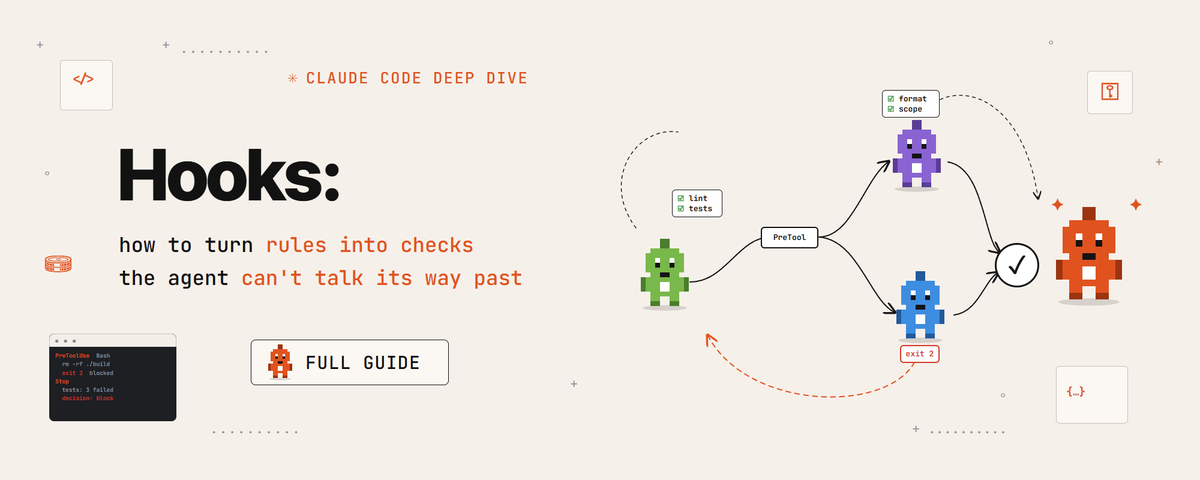
Then read why your agent skips the rules you give it, and what finally makes it obey ↓

Swapnil Kulkarni retweeted

The 17 most common AI asks we're getting from mid-market companies right now (in no particular order):
1. AI Enablement - Workshops, hackathons, and a recorded training library built around their own tech so the whole team becomes AI native.
2. AI Audit / ROI Blueprint - Interview every department, map the processes, rank automation opportunities by projected ROI, and get a phased build plan before spending money on development.
3. Context Layer - SOPs, pricing, client history, and past decisions in one place that every AI tool and agent pulls from.
4. Company-Wide AI Rollout - Company Enterprise AI accounts, connected to their drive, CRM, and SOPs, so staff stop putting client data into personal accounts.
5. AI Policy and Governance - Acceptable-use rules, an approved tool list, data handling, and a review process for every agent and connector before it goes live.
6. Private AI - Open-source or private models running in their own cloud, or on their own hardware, for regulated data that can't go through a public tool.
7. Custom Software Over SaaS - Replacing overlapping subscriptions with one custom app built on their own data. CRMs and internal admin tools go first.
8. Client Portals - One login where clients see project status, files, invoices, and reports instead of emailing the team for updates.
9. Quoting and Estimating - Getting pricing knowledge out of the owner's head so drawings and specs turn into accurate quotes the same day.
10. Voice and Chat Agents - Inbound calls, texts, and forms answered in seconds, qualified, and booked, handling 60-70% of inbound volume without a human.
11. Ops Agents - Agents working inside email, Slack, and the CRM that triage requests, chase updates, and keep records current.
12. Back-Office Finance - Invoices read and matched automatically, weekly reconciliations off the team's plate, and unbilled work flagged before month-end.
13. Client Onboarding - Signed contract to kickoff with intake, documents, and account setup running without anyone chasing paperwork.
14. Automated Reporting - Dashboards and weekly reports pulled from the CRM, ERP, and accounting system with zero manual input.
15. Data Cleanup - Scattered spreadsheets, inboxes, and legacy systems pulled into one clean, queryable place, since bad data is where most AI projects stall.
16. AI ROI and Observability Tracking - Baselines before the build and a live dashboard after, so leadership can prove what the AI spend returned.
17. AI Search Visibility - Getting the company cited when buyers ask LLMs.


Swapnil Kulkarni retweeted

How can a man best improve his speaking skills?
Give me 3 minutes, and I'll boost your communication skills more than 4 years of college could...

Swapnil Kulkarni retweeted

Pooja Makhija is a clinical nutritionist who studies how protein, glucose, sleep, and meal timing affect weight.
She says everyday habits may be making fat loss harder than it needs to be:
Here are 8 habits that can support fat loss (THREAD):
1) Eat more earlier in the day
Swapnil Kulkarni retweeted

你越催他越拖,哈佛研究发现,让孩子主动学习,最快的方法,就是利用鸟笼效应。
喊了八百遍快去写作业,孩子屁股像粘在沙发上,坐到书桌前,一会儿抠橡皮一会儿发呆,半小时的作业能磨到半夜。你越催,他越拖;你越盯,他越走神。很多家长第一反应是,这孩子就是懒,于是催得更紧,骂得更凶,报更多的班。结果呢,孩子更磨蹭,甚至直接撂挑子不学了。
哈佛大学的一项心理学研究,早就给出了不一样的答案。想让孩子主动学习,最快的方法不是奖励,不是惩罚,而是一个极其简单的小技巧——鸟笼效应。孩子不是天生不爱学,很多时候是学习的入口没搭好,家长把路堵死了,还怪孩子不走。
什么是鸟笼效应,说个故事你就懂了。心理学家詹姆斯和朋友卡尔森打赌,说自己一定会让卡尔森养上一只鸟。卡尔森完全不信,说自己从来没想过养鸟。结果詹姆斯送了他一个精致的空鸟笼,挂在家里最显眼的地方。从那以后,每个来做客的人都会问:教授,您的鸟死了吗?卡尔森解释了一遍又一遍,最后实在受不了,真的去买了一只鸟放进去。空着的鸟笼就这么被填满了。这就是鸟笼效应:当我们拥有一个空容器的时候,大脑会本能地产生一种想要填满它的冲动,不是被人逼着去买鸟,而是那个空笼子摆在那儿,自己就觉得不填点什么,浑身不得劲。
把这个逻辑用到学习上,奇迹就发生了。空鸟笼不是套路孩子,是把学习变成他自己想填上的那个空。
传统做法为什么总是失败?因为大多数家长的做法是填鸭式驱动,定计划、报补习班、坐在旁边盯。这一套组合拳打下来,孩子感受到的全是外部压力,他的大脑会进入防御状态。学是为了应付你,而不是因为我想学。你越说快写,他越觉得这是给你写的。
而鸟笼效应的精妙之处在于,它不是从逼孩子学入手,而是从创造一个让孩子想学的入口入手,把“你必须学”变成“这里正好有个空位置”。孩子自己走过来,和你拽着他过来,是两码事。
下面这些空鸟笼,不用花钱报班,在家就能搭起来。
第一,书桌留白法。你看看孩子的书桌,课外书、玩具、水杯、小纸条堆得满满当当。这种环境,孩子一坐下就想东摸摸西玩玩,哪还有心思写作业。正确的做法是,只留下当下要用的那本作业和一支笔,其余全部清走。一个干净得只剩学习任务的书桌,就是一个天然的空鸟笼。孩子坐在那儿,手边没有别的可碰,无聊之下,自然而然就会拿起笔来写两个字,写着写着,状态就进去了。
同样的道理,把书放在沙发扶手、餐桌一角、床头柜上,不需要刻意说去看书。只要孩子闲下来的时候,视线里恰好有一本书,翻开看看的冲动就会自己冒出来。这个鸟笼,就是随手可得的阅读入口。关键就一点,空,才有驱动力。东西越少,注意力越往里钻,书桌上少一堆杂物,孩子就少一堆分心的理由。
第二,角色加冕法。你越催,孩子越觉得学习是你的事。换个思路,给他一个头衔,让他为了演好这个角色而主动去学。比如晚饭后,你跟孩子说:今天数学课学的那道题,你当小老师教我一遍呗,我小时候这类题老做错。孩子为了在你面前像个真老师,会认认真真地回忆、讲解,这一讲,知识点自己就巩固了。还可以给他封官,家庭历史讲解员、生活小记账员、旅行小导航。为了对得起这个头衔,他会主动去查资料、算数字、看地图,这不就是主动学习。这个鸟笼就是一个好听的称号,孩子会忍不住用行动去把它填满。头衔不是虚的,孩子会为了配得上它,自己去找事做。
第三,好奇心留一半。孩子问为什么天是蓝的,不要急着百度百科全盘托出。你可以说,这个问题问得好,妈妈只知道和光线散射有关,但具体怎么散射的,咱们一起去查查。留下一半悬念,就等于在孩子的大脑里挂了一个空鸟笼,他会忍不住想自己去找到那个答案。人天生讨厌不完整的故事,这种未完成感会推着他往前走。你一次把答案倒干净,他听完就完了;你留一半,他才会自己追着问。
第四,成果上墙法。孩子的画、写得不错的作文、解出一道难题的草稿纸,都可以贴在家里的光荣墙上。这个展示本身就是一只空鸟笼。当他看到自己的成果被看见,被重视,潜意识里就会冒出一个念头:我还想再放一张上去。这种来自内在的价值感,比任何外部奖励都更能驱动持续学习。客人来家里看到墙上的作文,夸一句,孩子心里就会想下次再写一篇更好的,墙上空着的位置,就是他的下一个目标。
第五,打卡留空法。很多家长让孩子用打卡表,一上来就是每天背二十个单词,格子太多,任务太重,孩子一看就直接摆烂。高手的做法是,先做一张只有五个空格的打卡表,并且第一天就让他轻轻松松填满三个,剩下的两个空格空在那儿,就像空鸟笼摆在那里一样。第二天不用你催,他自己就想把那两个格子也涂满。核心就一句话,任务要小,进度要看得见,空缺要刺眼。人天生讨厌不完整的东西,那个空着的格子就是最好的发动机。打卡表贴在冰箱上,孩子每天路过都看见那两个缺口,心里就会痒。

Swapnil Kulkarni retweeted

LinkedIn completely changed in the past 6 months and you're getting fucked if you haven't noticed
Everyone's still posting the same corporate slop wondering why their reach dropped 90%
Meanwhile guys who understand the new game are printing distribution
Here's what's actually working:
The new AI-powered ranking system (your NICHE matters more than ever)
LinkedIn has been upgrading its feed ranking system with LLMs and AI-powered recommendation models
The algorithm is getting significantly better at understanding what your content is actually about and matching it to relevant audiences
It now considers things like:
- Your audience's industry and job responsibilities
- Topics they've recently shown interest in
- Their professional experience and skills
- How they interact with similar content
This means you don't necessarily need 100k followers to reach the right buyers
You need to become extremely relevant to a specific audience
Here's what I'd do:
1. Choose 3-4 content pillars around your ICP's problems
2. Make your profile positioning consistent with those topics
3. Reference specific industries, use cases and business problems
4. Analyze which types of decision-makers engage with each post
If you're selling RevOps software, post about forecasting, CRM architecture and pipeline efficiency
Give the algorithm enough context to understand exactly who should see your content
The AI slop crackdown (generic educational content is getting destroyed)
In September, LinkedIn reported reducing views of content classified as AI slop by 40%
They also introduced a "Seems Like AI Slop" feedback option, which more than 1 MILLION users reportedly used in its first two weeks
The platform is getting increasingly aggressive about reducing generic, repetitive content
And this is a massive problem for the founders publishing the same ChatGPT-generated educational posts every day
Everyone's sharing:
"5 lessons from scaling my startup"
"7 ways to improve your sales process"
"10 things every founder should know"
Except none of it contains anything original
Here's what I'd prioritize instead:
- Actual customer results with specific numbers
- Internal experiments and lessons from real implementations
- Industry breakdowns supported by original analysis
- Strong opinions backed by firsthand experience
- Case studies explaining exactly HOW a result happened
Use Claude to organize your knowledge, research ideas and improve drafts
But the actual insights should come from you
The comment quality shift (engagement automation is getting hammered)
LinkedIn has also started cracking down on inauthentic engagement
In July, it reported detecting more than 200,000 automated comment attempts daily
And it's improving comment ranking to prioritize relevant discussions while reducing generic and automated engagement
So the old playbook of having dozens of accounts leave AI-generated comments under every post is becoming increasingly risky
I'd approach engagement differently:
→ Find 20-30 relevant creators whose audiences overlap with your ICP
→ Leave comments with actual numbers, examples or opinions
→ Respond to people asking specific questions about your expertise
→ Build relationships with founders and creators in adjacent industries
One genuinely insightful comment under a relevant post can introduce you to more qualified people than 50 generic comments
The new creator discovery system (smaller accounts have a bigger opportunity)
LinkedIn also rebuilt its follow recommendation system using LLM-based semantic retrieval
It's designed to understand what individual creators are known for and match them with people interested in those topics
Instead of relying entirely on popularity and traditional connection signals, LinkedIn can make more relevant creator recommendations
This is especially interesting for smaller B2B accounts
You don't need to become another generic entrepreneurship influencer
You can become THE person in a very specific category
For example:
- AI SaaS founder: Enterprise AI adoption and implementation
- Agency owner: Acquisition systems and profitability
- Sales consultant: Pipeline generation and sales operations
- Technical founder: Product architecture and engineering
I'd make sure your headline, About section and posts consistently reinforce the expertise you want to be associated with
A narrowly positioned account gives both your audience and LinkedIn's recommendation systems a clearer understanding of why someone should follow you
The relevance-over-virality shift (stop chasing impressions at any cost)
LinkedIn's newer ranking systems use more context to determine which posts are relevant to each person
They're also working to reduce recycled content and obvious engagement bait
This changes how I'd evaluate content performance
A post generating 500k impressions from students and other creators might look impressive
But if you're selling $50k enterprise contracts, that audience might generate almost no pipeline
Meanwhile, a post reaching 15k people where half the engagement comes from your ICP could be significantly more valuable
We saw this recently with one of our B2B clients
A regular LinkedIn post generated 600k+ impressions WITHOUT a lead magnet
And over 50% of the engagement came from people matching their ideal customer profile
That's the combination I'd optimize for
Here's the content mix I'd use:
1. Distribution posts to reach new audiences
2. Proprietary insights to establish authority
3. Case studies to demonstrate actual results
4. Lead magnets to capture relevant demand
5. Conversion posts addressing buying objections
Then measure which formats attract relevant decision-makers, generate qualified conversations and eventually contribute to revenue
The game has COMPLETELY shifted
LinkedIn's AI is getting better at understanding content, generic AI posts are facing greater scrutiny, automated engagement is being restricted and creator discovery is becoming more relevance-driven
The biggest opportunity is no longer just reaching as many people as possible
It's consistently getting your expertise in front of the people who could actually become customers
And the founders who figure that out are going to have a massive advantage
Swapnil Kulkarni retweeted

Today I turn 56.
I’m the fittest, sharpest, and happiest I’ve ever been.
If I’m an outlier, it’s not because I’m built different or discovered a secret formula. The truth is far less glamorous:
It’s a million tiny choices, compounded over decades.
Here are 56 of them:
1. Walk 20+ miles a week, even if you do other exercise. Humans are uniquely made to move slowly over long distances. It’s critical to longevity.
2. Develop a writing practice. It’s the single best way to sharpen your mind. And remember, you don’t have to be a good writer to write. Start with 10 minutes a day.
3. Swap out your toothpaste, deodorant, lotions, soap, shampoo, and other personal care products for natural versions. Here’s a rule of thumb: Don’t put anything on your skin that you couldn’t safely eat.
4. If you have a positive thought about someone, don’t keep it to yourself. Share it immediately. Encouragement defies the laws of physics: When you give energy, you also receive it.
5. Wear shoes with a wide forefoot (I like Topo Athletic) and wear toe spreaders around the house (search “yoga toes” on Amazon). Spine health begins with the feet.
6. Get sunlight regularly. Moderate sun exposure (without sunscreen) is hugely important for overall health.
7. Do a 3-minute deep squat every morning. Deep squats are often called the anti-aging exercise. It’s been said that “It’s not that you can’t do deep squats because you’re old, it’s that you’re old because you can’t do deep squats.”
8. Explore minimalism (it’s not what you think it is).
9. Set boundaries on toxic relationships. We tend to cling to relationships past their expiration date, and it takes a bigger toll on our health than we recognize.
10. Eat real food. Not too much. Don’t eat garbage. Binge occasionally. Fast occasionally. That’s the diet.
11. Learn about FIRE. It’s a great (but misunderstood) framework for financial success.
12. Don’t take antibiotics except in emergency situations. They’re massively over-prescribed and aren’t needed in most cases. Antibiotics have done untold damage to our guts, which is where health begins. Great natural alternatives are out there (check out AlliUltra).
13. Get 8 hours of quality sleep each night. To optimize sleep:
>Don’t eat after 6pm
>Get blackout shades and cover LEDs with black tape
>No screens 2 hours before bed
>Try ashwagandha (an herb) to calm the nervous system
14. Stop drinking, even in moderation. People find all sorts of ways to justify drinking, but there’s no escaping the simple fact that alcohol is a toxin and it limits your potential.
15. Travel as much as possible. Nothing expands the mind like seeing the world. And travel doesn’t have to be expensive. The best experiences happen outside of fancy resorts, when you live like a local.
16. Let go of resentment. When you forgive someone, you release the prisoner, and the prisoner isn’t them… it’s you.
17. Show up on time, every time. Poor time management limits success more than most people realize. If you struggle with punctuality, stop everything else and fix that first.
18. Spend lots of time in nature and touch the earth. Humans evolved over 300k years to live in harmony with nature, and only recently have we retreated indoors. If you don’t spend time outside, you’re fighting biology (hint: You won’t win.)
19. Stop doing dumb things. As Leo Tolstoy said, “People try to do all sorts of clever and difficult things to improve life instead of doing the simplest, easiest thing: refusing to participate in activities that make life bad.”
20. Find your happy place and (eventually) move there. Most people live where they live because... that's where they live. We are products of our environment. Choose yours carefully.
21. Find a hobby and pursue mastery. You can’t have a happy life without a passionate pursuit that isn’t your vocation. Even if you enjoy your work, it’s not enough.
22. Avoid mainstream medicine except as a last resort. The results are in: Our healthcare (or more appropriately, sick care) system is badly broken and only makes people sicker.
23. Have a mindset of abundance. The problem with being a pessimist is even if you’re right, it’s a miserable way to live. In a very real way, whatever you believe, you’re right!
24. Do hard things. Choose courage over comfort. Everything you want is on the other side of fear and hard work. As Jerzy Gregorik said, “Hard choices, easy life. Easy choices, hard life.”
25. Ignore haters. Hurt people hurt people. Negative people live in a prison of their own design. Don’t join them!
26. Play the long game. Most things in life are a war of attrition. In your career, relationships, or any pursuit, you can go very far by simply outlasting the rest. You can do it the hard way, through extreme discipline. Or the easy way, by choosing pursuits you love.
27. Become a water snob. As an alien said on Star Trek, humans are “ugly bags of mostly water.” You literally are what you drink! We have Mountain Valley Spring water delivered in glass 5-gallon jugs and also have a whole-house water filter (Aquasana Rhino).
28. Stop drinking sodas and sugary energy drinks. After a few weeks you won’t miss them, and a few months later they’ll seem disgusting. Refined sugar causes inflammation, which is the root of most disease.
29. If you’re over 35, find a good functional/longevity medicine doctor and start tracking your hormones. Modern life is hell on the endocrine system and restoring healthy hormone levels can change your life. As we get older, we either accept a slow decline in performance or we do something about it. Choose the latter!
30. Develop a morning routine and follow it faithfully. Win the morning, win the day!
31. Invest in experiences, not things. People frequently regret buying things, but rarely regret investing in great experiences (especially when shared with loved ones). Remember, there’s nothing you can buy in a mall that you’ll remember in ten years.
32. Explore spirituality. It’s arrogant and small-minded to believe there’s nothing happening in our universe that is beyond our comprehension. We know less about our universe than an ant meandering on a sidewalk understands about this planet.
33. Shoot your shot. Have a strong bias toward action. If you ask a bunch of old people about their regrets, they’ll talk about the things they *didn't* do, the shots they didn’t take, more than the things they did do (even if things went wrong). As Wayne Gretzky famously said, “You miss 100% of the shots you don’t take.”
34. Stay lean. Men in particular are obsessed with muscle mass these days, but bulk doesn’t age well. The goal is to be strong but lean. The fittest guys in their 50s and beyond aren’t meatheads, they’re lean guys who are serious about a sport.
35. Curate your inner circle carefully. Surround yourself with people you admire and who challenge you to grow. Remember, we’re the average of our five closest relationships.
36. Become the fittest version of yourself. Your body is your only vessel for experiencing life—so treat it as such. Fitness isn’t working out a few times a week, it’s a lifestyle. The older you get, the more time you need to devote to your health.
37. Take the time to appreciate art and beauty in all its forms.
38. Think globally, but act locally. Too many people put their energy into far-away problems they don’t understand and can’t impact, while ignoring problems right under their nose. Want to change the world? Start at home.
39. Try psychedelics. It’s one of those things everyone should do at least once, and it might be the breakthrough you’ve been looking for.
40. Limit bad habits, including unhealthy thought patterns. We all have them. Practice avoidance and find substitutes. Get professional help if needed.
41. Be a lifelong learner. Your brain is just like a muscle. If you don’t feed and flex it regularly, it will atrophy.
42. Find your purpose. People with a strong sense of purpose are happier and live longer. Lack of purpose sucks energy and magnifies depression.
43. Only take advice from people who embody the traits you want to have. Talk is cheap. Emulate those who have DONE it.
44. The goal is not to retire and do nothing. It’s to build a great day-to-day life that you don’t need to escape. A life of leisure is a slow death. Happiness isn’t possible without a little skin in the game.
45. Have fun! Do frivolous and silly things that make you smile. As George Bernard Shaw famously said, “We don't stop playing because we grow old; we grow old because we stop playing.”
46. Whatever you want to do or achieve in life, start NOW. Don’t fall victim to “someday thinking” because someday never comes.
47. Accumulate assets. Things that grow in value over time. It’s the #1 habit of rich people, and it can be done in tiny chunks. Instead of spending $100 on an impulse purchase that has no lasting value, put that money into an index fund. It becomes addictive (in a good way).
48. Don’t ignore the big 3 canaries in the coal mine for health:
> Low libido (and ED)
> Frequent sinus & respiratory issues
> Depression
These usually aren’t medical conditions in themselves. They’re symptoms of an underlying problem. Find a good doc (outside of the mainstream) and figure out the root cause.
49. Have a clear vision for your future. How can you decide which direction to go if you haven’t clearly defined the destination? It sounds obvious, but 95% of people haven’t defined their “Ideal End State” in detail and in writing. (Check out my thread on this topic.)
50. Make your own decisions. We live in an era where most of what society tells us is wrong. Don’t be afraid to go against the grain. If people say you’re crazy, it’s a sign that you’re doing something right.
51. Get hardcore about mobility exercise. As you age, it’s usually the knees, hips, and lower back that limit physical performance. 30 min a couple times a week can spare you a lifetime of pain. YouTube is a great resource.
52. Go all in on family. Get married, stay married, have kids. Burn the boats. In the end, family is all that matters.
53. Be ruthless with your time. Money comes and goes. Time only goes. Audit your calendar ruthlessly. Cut the trivial, double down on the meaningful, and spend your hours like your life depends on it. Because it does. If it’s not a “hell yes,” it’s a no.
54. Embrace uncertainty. We spend our lives trying to eliminate risk and make ourselves comfortable. But comfort is overrated. Some of life’s greatest rewards come from stepping into the unknown, where the outcome isn't guaranteed. If the outcome is certain, it's not an adventure!
55. Reinvent yourself every decade. Over time, we slowly drift off course from our priorities, values, and true identity. Take stock and don’t be afraid to hit the reset button. Bold, calculated moves made for the right reasons almost always pay off… usually even more than you can imagine.
56. Own your days. We’re born with an unknown number of days. How many will you sell and how many will you keep for yourself? Once you make enough money to stop worrying about basic expenses, the greatest luxury isn’t owning more things. It’s owning more days. That’s true wealth.
🎁 P.S. If you enjoyed this post, would you give me a birthday gift? Repost or comment with the item number(s) you liked best?
Also, I’m writing a book soon! Sign up for my email list (link in bio @camp4) to stay in the loop.

Swapnil Kulkarni retweeted

suniel shetty discussed his diet and fitness routine on nikhil kamath's podcast.
honestly, this is a masterclass in simplifying nutrition.
here are the lessons you can directly apply to your lifestyle:
Swapnil Kulkarni retweeted

This is f*cking insane. Anthropic CEO Dario Amodei just went on live TV and put a number on the white-collar wipeout:
"80% of entry-level lawyers, consultants and finance people will be gone within the next 1 to 5 years
The ones who survive won't be the smartest people in the room. They'll be the ones who know how to put AI agents to work"
In 4 minutes, he explains who survives and why almost nobody is ready for it
Chatbots → Agents → AI Employees → Entire Departments Run By AI
The job won't vanish in one day. The person who never learned to run agents will
These 4 minutes are worth more than most $1,000 AI career courses
Bookmark it and watch it today
Swapnil Kulkarni retweeted

This is f*cking insane. The man who picks which startups Y Combinator funds just showed how he runs Claude Code as a whole engineering team, and he doesn't write prompts anymore:
Garry Tan's entire setup fits in four words: "thin harness, fat skills". Ask him how he prompts and he says he doesn't, the skills are the prompts
In 2 minutes, he walks through it live: a CEO skill, a designer, an eng manager and QA, each one a file Claude follows
Prompts → Skills → A Team Of Specialists → A Startup Built By Agents → A 10-Person Company Worth $1B
One of his skills runs YC office hours: tens of thousands of hours from 16 YC partners, packed into one file Claude follows
Do a workflow once, turn it into a skill, and it runs that way forever
Everything below is free:
GStack (his 23 Claude Code skills: CEO, designer, eng manager, QA)
github.com/garrytan/gstack
GBrain (his open-source second brain)
github.com/garrytan/gbrain
How to make Claude Code your AI engineering team (YC)
youtube.com/watch?v=wkv2ifxP…
Don't Build Agents, Build Skills Instead (Anthropic)
youtube.com/watch?v=CEvIs9y1…
How Perplexity designs and maintains agent skills
perplexity.ai/hub/blog/desig…
Anthropic's official skills repo
github.com/anthropics/skills
Agent Skills docs
platform.claude.com/docs/en/…
How Anthropic equips agents with skills
anthropic.com/research/equip…
Agent Skills open standard
agentskills.io
Free Agent Skills course with Anthropic
deeplearning.ai/courses/agen…
All of this costs $0
Prompting is dead. Skills are next. And 99% are still typing the same prompts from scratch every morning
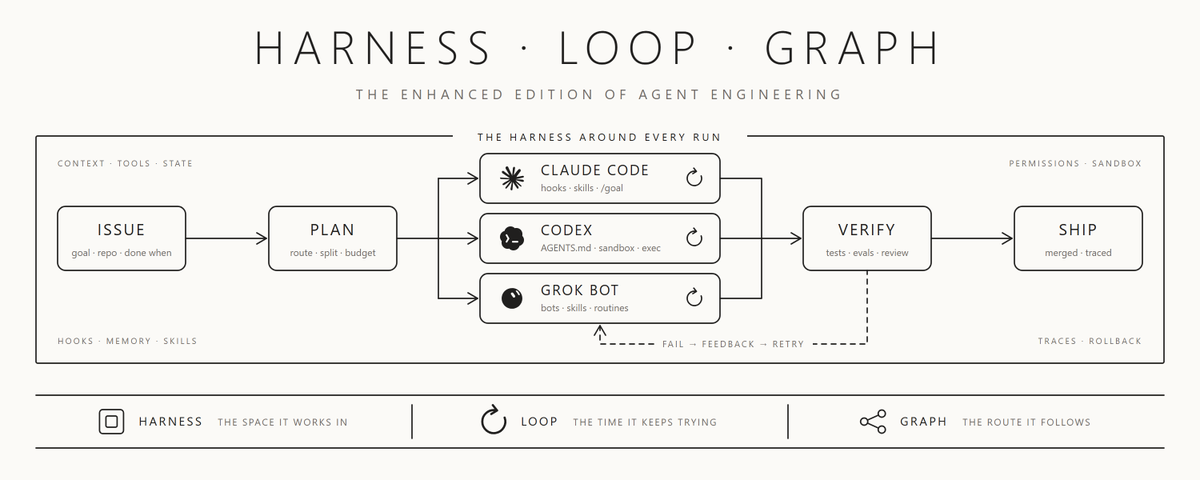
Then see how thin harness, fat skills fits with loops and graphs in the guide below ↓

Swapnil Kulkarni retweeted

After 3 years using Claude, I can say it’s the technology that has revolutionized my life.
Here are 10 prompts I use daily that have transformed my day to day; they could do the same for you:
(Save this 🔖)
Swapnil Kulkarni retweeted

According to neuroscience, repeating these 4 phrases each morning can help rewire your brain to become more positive, confident, and grateful:
1. “Show me how good today gets.”
This activates your brain’s Reticular Activating System (RAS) to notice more opportunities.
2. “I’m grateful for…”
Practicing gratitude increases dopamine and serotonin, shifting your nervous system into a more regulated, positive state.
3. “I can handle anything that comes my way today.”
This builds self-efficacy and reduces your brain’s threat response.
4. “I am allowed to take things one step at a time.”
This lowers cortisol levels and keeps your prefrontal cortex engaged, preventing overwhelm and decision fatigue.
Swapnil Kulkarni retweeted
🚨 BREAKING: If you're not using Claude at your job, you're already behind.
Copy these 08 prompts:
Swapnil Kulkarni retweeted

80-90% of major "AI incidents" that cause real harm have no attacker, just an agent tripping up on a poor codebase.
i turned the latest research into into a prompt that checks your setup for the most common causes. Hand it to your agent ->
github.com/jdpru/cover-your-…


Swapnil Kulkarni retweeted

How to reprogram your subconscious mind before January 2027 (start today):
1. Brush your teeth with your opposite hand.
