

Fascinated as well as irritated by politics. M.A. Political Science. Affiliated with @BSWbund. https://xitter.cf/t.co/sMvAuDMBnK
post-reason Germany
Joined November 2021
- Tweets20.6K
- Following2.1K
- Followers1.3K
- Likes13.7K




Robert Schwierkus retweeted

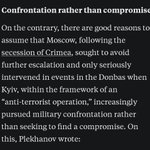
In 2014 hat der Chefredakteur von Foreign Affairs (Gideon Rose) in bemerkenswerter Offenheit dargestellt, wie die USA die Ukraine in ihre Einflusssphäre ziehen wollten. Das Risiko einer militärischen Eskalation wurde klar gesehen (die USA wären bei Mexiko oder Kanada sofort eingeschritten, siehe auch Kuba-Krise).
Damals war nur eine Minderheit der Ukrainer für eine NATO-Mitgliedschaft! Via @Glenn_Diesen
Robert Schwierkus retweeted

Bloomberg says it as it is: The time for Anti-Fascist Economics is here.
“Weber’s underlying economic philosophy, which prioritizes making the necessities of life affordable for every citizen of a democracy, has gained momentum.”
bloomberg.com/news/articles/…

Robert Schwierkus retweeted

Wer so denkt und redet wie Merz im Bloomberg-Interview vom 19.10.26, der ist nicht fähig zu einer diplomatischen Lösung. Dieser Kanzler ist ein Kriegskanzler und sollte so schnell es geht abgewählt werden. #RausAusDerEskalationsspirale
Robert Schwierkus retweeted

Eine echte Linke würde nicht aufs Symptom abzielen, sondern die wirtschaftspolitischen Ursachen bekämpfen, die die Verarmung der breiten Massen bedeuten - lokal und global… Dass die Machthaber das nicht zulassen und dafür jedes Mittel recht ist, ist nicht neu und erwartbar.

Robert Schwierkus retweeted

Fjodor Lukjanow über Deutschland: „Strategisches Denken entsteht nicht einfach so über Nacht. (…) Es geht darum, dass jene Bereiche staatlichen Handelns und Denkens, die Deutschland nach 1945 schlicht verboten wurden (‚Hier geht ihr nicht hin, ... (1/4)


Robert Schwierkus retweeted

In Sangerhausen könnte ein israelischer Rüstungskonzern eine Fabrik bauen. Das BSW will die Ansiedlung verhindern. Doch die Linke verweigert die Zusammenarbeit. berliner-zeitung.de/article/…
Robert Schwierkus retweeted

Pat Buchanan, 1999:
“By moving NATO onto Russia’s front porch, we have scheduled a twenty-first century confrontation. … America will face a hellish dilemma: risk confrontation with a nuclear-armed Russia determined to recreate its old sphere of influence, or renege on solemn commitments and see NATO collapse.”
Therefore, he said, “Offering NATO memberships to Estonia, Latvia, Lithuania, and, as some urge, Ukraine is rashness bordering on madness.” Referring to maps the Clinton team must have ignored, Buchanan warned, “This would put the Russian base at Kaliningrad behind NATO lines and bring into a U.S.-led alliance three nations with huge Russian minorities.” Foreseeing future conflict, he observed that “Latvia is almost half Russian; eastern Ukraine, almost entirely Russian. America could neither defend nor liberate these nations without the risk of nuclear war.”
Pat Buchanan, A Republic, Not an Empire: Reclaiming America’s Destiny (New York: Regnery, 1999), 17–18, 22.


Robert Schwierkus retweeted

Ein Redakteur, der Goebbels nicht von Karl Kraus unterscheiden kann, ist im Grunde emblematisch für unsere Zeit.

Robert Schwierkus retweeted

Um die ernste Befragung der Haupt-Akteure zu verhindern, wurde die Enquete-Kommission von den Betreiber-Fraktionen des Corona-Regimes eingerichtet. Sie funktioniert wie geplant. Meine Kolumne in der @berlinerzeitung und @OstdeutscheAZ.
berliner-zeitung.de/article/…

Robert Schwierkus retweeted

An excellent thread on the Molotov-Ribbentrop Pact, and a welcome corrective to some of the historical revisionism now in fashion.
Hitler’s invasion of Poland, Munich, Stalin’s calculations and the failure of collective security all deserve serious examination, but history is complicated enough without rewriting it to suit the political prejudices of the present.

Much like Munich in 1938, the Molotov-Ribbentrop Pact is often treated more as a rhetorical device than as a significant historical event. The discussion typically centres on two main narratives, neither of which is particularly illuminating: one insists that Stalin more or less triggered World War II, while the other contends that Western appeasement left Moscow with no choice and that the pact simply delayed conflict. So, let’s look at what the document says (WARNING: It’s old material I used for RWN. I edited it slightly to reduce bibliography-heaviness, but it might still not be very engaging).
- What did the pact actually do?
Signed on 23 August 1939, its secret protocol carved Eastern Europe into spheres of interest. Finland, Estonia and Latvia went to Moscow; Lithuania, at first, to Germany. Poland was split roughly along the Narew, Vistula and San, leaving the survival of any Polish state open. Germany also acknowledged Soviet interest in Bessarabia.
As it turns out, in 1939 EVERYONE was hedging. Poland had signed a non-aggression declaration with Germany in 1934 and took Teschen when Czechoslovakia was carved up in 1938. Hitler hoped to make Poland a junior partner against the USSR (see Rolf-Dieter Müller, Enemy in the East). When Warsaw refused his terms on Danzig, he ordered planning for an attack. The date: 3 April 1939, months before the pact signing.
Soviet Union had spent most of the 1930s as one of the most vocal advocates of a common front against Hitler: League membership in 1934, mutual assistance pacts with France and Czechoslovakia in 1935 (the Czech one binding only if France acted first). Paris never gave its pact a military convention, and London, wary of communism and doubtful of the Red Army after the purges, kept its distance. The Red Army could reach Czechoslovakia only through Poland or Romania, and neither would let it through. Historians still argue whether Stalin was ever fully committed to collective security or kept a German option open. But Munich, settled without Prague and without Moscow, gave him good reason to doubt the West.
The 1939 negotiations between Britain, France and the Soviet Union stalled for similar reasons. Warsaw refused to let Soviet troops in, while Moscow sought a free hand against what it called “indirect aggression” in the Baltic. Paris was keener on a deal than London, which showed little urgency: the Anglo-French military mission travelled to Moscow by sea (Chamberlain had flown to Hitler three times the previous September), and its British head had no written authority to sign anything. In May, Molotov replaced Litvinov, the main champion of collective security.
Meanwhile Estonia and Latvia, both under authoritarian regimes, signed non-aggression treaties with Germany, helping Hitler keep Soviet and British influence out of the region before his invasion of Poland. Estonia’s military leaders had intelligence ties with Berlin and hoped for German support against the USSR. A German report by Georg Dertinger described a secret Baltic understanding to consult Berlin on defence against the Soviet Union, with German help envisaged where necessary.
At this stage Germany could offer the Soviet Union what the West couldn’t or wouldn’t: neutrality, a territorial buffer, and a (shaky) ringside seat while the capitalist powers fought each other. The Red Army was also fighting Japan at Khalkhin Gol/Nomonhan. Stalin could have tried staying neutral without the deal, but how safe that would have been is another question. So he took the German offer.
- What happened after the treaty was signed?
By 17 September, when the Red Army invaded, the Wehrmacht had already inflicted a severe defeat on the Polish forces, though Warsaw resisted until the 28th. Stalin feared Germany might occupy the entire country, and Moscow justified its move by claiming to protect Ukrainians and Belarusians, who had indeed faced discrimination under Polish rule. Britain and France did not declare war on the USSR. Formally, the Anglo-Polish agreement limited British obligations to Germany. In practice, they could hardly have fought Germany and the Soviet Union at once, and after Poland fell there was little fighting on land in the West until spring 1940.
The treaty of 28 September fixed the border, moved Lithuania into the Soviet sphere in exchange for more Polish territory for Germany, and committed both sides to suppress Polish agitation against the other. Then each occupier remade its half. On the German side, tens of thousands of Poles, above all the educated elite, were shot in the first months, hundreds of thousands were expelled, and Jews were stripped of their rights and forced into ghettos: the first stage of what became full-scale genocide. On the Soviet side, the NKVD arrested officers, police, officials, landowners and clergy, moved hundreds of thousands of people to the Soviet interior in 1940–41, and in spring 1940 shot some 22,000 Polish officers and officials at Katyn and other sites.
Trade agreements came alongside the pact, in August 1939 and February 1940. Soviet oil, grain and raw materials went west; German machinery and military technology went east; Soviet transit routes helped Germany get around the British blockade. Berlin found the deal far less comfortable than it looks: Soviet demands competed with German rearmament, and Hitler disliked depending on Soviet supplies. The urge to seize Soviet resources fed into Barbarossa, though it can’t explain it alone.
- Did the pact cause the war?
No. Hitler decided to attack Poland well before signing the pact. The pact removed the immediate Soviet risk and made his timing much easier. Whether he would have struck without it, we can’t know. What turned a German-Polish war into a European one in September 1939 was Britain and France’s decision to stick to their guarantee to Poland. And the pact didn’t create Nazi expansionism: as we argued in the Radio War Nerd Munich series, Hitler and much of his military leadership wanted war sooner or later. Nor did it make Soviet expansion inevitable.
- Were the two regimes the same?
No. Both Germany and the Soviet Union were totalitarian states. But Stalin did not pursue the Nazis’ genocidal goals, and his ideology, however bloody and hostile to liberal democracy, was profoundly different from Nazism. By late 1939, about 1.5 million Jews, including refugees from German-occupied Poland, were under Soviet control. Many were killed after Germany invaded in 1941. But between 160,000 and 230,000 Polish Jews survived in the Soviet interior, having fled, been evacuated or been deported there. For some, Soviet action had the (sometimes unintended) effect of saving them from the Nazis. That doesn’t make the Soviet Union guiltless. The Winter War, mass deportations, Katyn and the annexation of the Baltic states all followed. In Stalin’s mind, security and expansion were never opposites.
- Did the pact buy the Soviet Union time?
Yes: nearly two years, and a frontier pushed west by 200–300 km in Poland and more in the Baltic. The new defences were unfinished, Soviet forces were packed too far forward, and they lost much of that depth within days in June 1941. Stalin had expected a long war in the West. France fell in six weeks, and he then read the German build-up as pressure ahead of negotiations, moving to full mobilisation way too late. But those gains still mattered.
The panzer spearheads reached the Dnieper within three weeks, but the infantry and horse-drawn supply columns needed to hold the ground had to cover the same distance on foot. That gap, German supply problems and ferocious Soviet resistance, above all around Smolensk, left Barbarossa badly behind schedule by the end of July.
- Was it a real alliance?
No. There was never a military alliance: no joint command, no common long-term strategy and, of course, no Soviet war on Britain or France. It was of course more than neutrality: a joint call for peace in September 1939, substantial trade, even the handover by the Soviets of some German and Austrian communist refugees to the Gestapo.
The relationship was tense from the beginning. After the Soviet Union invaded Finland in November 1939, Finland grew closer to Germany within a year and fought alongside it in 1941. The annexation of Bessarabia, which was recognized as a Soviet interest in the protocol, and northern Bukovina, which was not explicitly mentioned, brought Romania nearer to Berlin. In November 1940, Molotov visited Berlin to discuss joining the Tripartite Pact. Moscow’s tough demands (about Finland, Bulgaria, and the Turkish Straits) went unanswered, while Hitler had already ordered preparations in the East to continue regardless of the talks' outcome. The Barbarossa directive was issued in December, ironically followed by a new trade deal in January 1941. By then, both sides were mainly buying time.
- The bottom line
Great powers had long bargained at the expense of smaller nations, and they still do. A year earlier, at Munich, Britain and France had agreed to hand over the Sudetenland without consulting Prague. What set 1939 apart was how explicitly Berlin and Moscow divided Eastern Europe, and what followed on each side of the line.
The pact was neither the root cause of the war nor simply a Soviet land grab. It was a strategic arrangement between two vastly different regimes that, for a while, shared short-term interests while remaining mortal enemies. Stalin sought territory, depth and time, hoping Germany would exhaust itself in the West. Hitler gained a free hand against Poland, Soviet resources and temporary security in the east. Both gained, and both misjudged: Stalin misjudged Hitler’s timing, but Hitler misjudged the Soviet Union’s durability, which ultimately proved fatal for him.
Robert Schwierkus retweeted

Als ich vorgestern dieses „Ratespiel“ einstellte, ahnte ich nicht, dass lediglich einer das richtig zuordnen würde und selbst Grok dabei kläglich versagt.
Das Zitat datiert vom 09.04.1999 und stammt vom damaligen russischen Präsidenten Boris Jelzin in Reaktion auf die öffentlichen Überlegungen der NATO, den Angriff auf Jugoslawien mit Bodentruppen zu ergänzen.
Die Bedeutung dieses (wirklich) ersten Angriffskriegs auf europäischem Boden nach Ende des zweiten WK und dessen einschneidende Folgen, insbesondere in Russland, dessen engster europäischer Verbündeter Jugoslawien war, kommen m.E. in den heutigen Debatten immer wieder zu kurz, denn er hat ursächlich zu den wesentlichen tektonischen Verschiebungen in der russischen Wahrnehmung geführt.
Es war ein Signal von Seiten der NATO, das selbst bei dem versoffenen und machtbesessenen Jelzin einen Rest an Verstand und Vaterlandsliebe erweckte und dazu führte, dass bereits am 09. August 1999 eine bis dahin weitgehend unbekannte Person von ihm als Ministerpräsident ernannt wurde, der er bereits knapp 5 Monate später dann auch das Präsidentenamt übergab. Sein Name - Wladimir Putin.
Wer seitdem, egal in welchem Kontext, noch davon sprach, dass all die NATO-Erweiterungen, Ausstiege aus Abrüstungsverträgen usw. nichts mit Russland zu tun hätten, will nicht nur die Russen sondern auch uns für blöd verkaufen.


Robert Schwierkus retweeted

Another leading Ukrainian dissident has spoken at the European Parliament about Ukrainians' anti-war attitudes and desire for peace, and this time there has been no scandal (yet 😉). Watch @Volod_Ishchenko's short, powerful presentation!

Watch the full record here:
left.eu/events/conscientious…

Robert Schwierkus retweeted

Massive congrats to my friend @IsabellaMWeber for her excellent new book out in the UK this week. We need it today more than ever. As many of us have been arguing, a different economy is possible—-but it must be fought for. Also great review in the @guardian today: theguardian.com/business/202…

Robert Schwierkus retweeted

Kaliningrad is not another sanctions target.
It is Russian sovereign territory, a major military outpost and a declared red line.
Treating its isolation as a manageable exercise in economic pressure could prove to be one of NATO's gravest strategic misjudgments.
Read today's analysis free on Substack.
theduran.substack.com/p/kali…
Subscribe to The Duran Daily for independent geopolitical analysis and informed commentary on the forces reshaping international affairs.

Robert Schwierkus retweeted

Economist Anwar Shaikh challenges one of the foundational assumptions of neoclassical economics: that people are rational, self-interested individuals relentlessly pursuing their own advantage.
Is this really a scientific description of human nature—or an ideological assumption masquerading as one?
Video link in comments. Credit @INETeconomics
Robert Schwierkus retweeted

Exactly. Mearsheimer is routinely tarred and feathered for slip-ups in interviews, while his academic opponents are let off the hook for their regularly wrong predictions, ideology replacing analysis, systematic wishful thinking and denialism, even in reputable outlets. Not to mention the everyday propaganda on social networks, to which many contribute.
This is how the academic field functions. It is easily overtaken by an active minority, which can rely on the dominant ideology, the mainstream media framings, and elite interests to establish groupthink. The majority are conformist and put their heads in the sand. They are afraid of criticizing the dominant moods even in academic venues, grumbling only during coffee breaks and in private chats. The critical minority is ostracized, deplatformed, and denied grants and positions.
The result is that academic institutions, which are supposed to be THE places for critical debate and scrutiny opposed to the dominant ideology, are THE places where the dominant ideology is legitimated by academic status.
Importantly, this problem runs much deeper than the lack of expertise or serious research, which poor commentary on the war is typically blamed on. Even a native command of languages, years of research, and dozens of scholarly books and articles are not sufficient to produce adequate explanations and predictions if, for the “big picture,” one relies not on a strong, historically and comparatively valid macrosocial theory but effectively on the dominant ideology of the disintegrating US-centered order. It structured so much of post-Soviet studies and is increasingly detached from post-Soviet realities now. Under such conditions, plausible claims to expertise, academic status, and “rich empirical data” legitimate rather than question the articulation and reproduction of the dominant ideology and the systematic intellectual failures.
Some will write fascinating sociology-of-knowledge studies on the intellectual production during the Russia-Ukraine war, theorizing all these problems, once it is no longer so dangerous for junior scholars’ careers.

Robert Schwierkus retweeted

Völlig richtig. Ein Phänomen, welches nicht zuletzt Symptom unserer heutigen Verbotskultur ist, umfasst die zur Unart gewordene Gepflogenheit, als Alibi und aus Konformitätsdruck Narrative so lange zu kürzen, bis sie in das eigene ideologische Fenster passen, man sich nicht mehr mit Widerspruch oder Einwand auseinandersetzen muss.
Kontextualisierung bedeutet gerade nicht Relativierung, sondern Differenzierung. Sie wird dort geschmäht, wo man nach einfachen Antworten sucht. Die Einpassung in einen gesamthistorischen Rahmen, welcher den Blick auf die Vogelperspektive auf diesen geopolitischen Globus weitet, ist Kunst statt Kult.
Putin hat eine Entscheidung zum Krieg getroffen, doch sind Hybris, das Ignorieren absehbarer Reaktionen und die Schaffung von Sicherheitsdilemmata durch den Westen mitursächlich gewesen. Schon der Triumphalismus und die Behandlung Russlands als besiegte Macht zweiter Klasse nach 1991 gehören zu den "hellsten aller roten Linien für die Moskauer Elite", welche William Burns als damaliger Botschafter zeichnete.
Ob nun der Bukarest-Gipfel 2008 mit der Mitgliedsperspektive für Kiew, die NATO-Intervention im Kosovo 1999 ohne UN-Sicherheitsratsmandat als Signal für eine offensive Rolle des Militärbündnisses oder die Behandlung der Ukraine aus US-Sicht primär als Objekt statt Subjekt, all diese Bausteine fassen recht gut zusammen, was der frühere Verteidigungsminister und CIA-Direktor Robert Gates so trefflich zusammenfasste.
Er sagte: "Die Arroganz amerikanischer Regierungsvertreter, Akademiker, Geschäftsleute und Politiker nach dem Zusammenbruch, die den Russen sagten, wie sie ihre inneren und äußeren Angelegenheiten zu führen hätten, plus der psychologische Schock des plötzlichen Superpower-Verlusts, haben zu tiefem und lang anhaltendem Groll und Verbitterung im Kreml geführt".

