



Opitz Lab retweeted

International Brain Stimulation Conference starts with @Opitz_Lab talk in Kobe Japan


Opitz Lab retweeted

#UMNproud to receive a $4 million grant to advance transcranial magnetic stimulation. The project is co-led by @Opitz_Lab & aims to develop innovative technologies that could revolutionize treatment for psychiatric disorders.
cse.umn.edu/bme/news/alexand…

ALT Circular graphic showing TMS trigger leads to online EEG recording leads to online phase recording to forward prediction (and then through the loop again)
Opitz Lab retweeted

We are delighted to announce that Walter Paulus is the recipient of the 2025 International Brain Stimulation Award. Join us at #BrainStimConf Feb 23-26, 2025, Kobe, Japan, where Dr. Paulus will deliver a plenary lecture.
poster/symposia deadline 27 Sept. elsevier.com/events/conferen…

Congrats Ivan! Second lab alumni who is starting their own independent position this year!

Excited to share that I will start as an Assistant Professor of Psychiatry and Behav Sciences at Northwestern University this fall! My lab will do closed-loop brain stimulation and imaging.
I look forward to doing cool science together with brilliant colleagues @NUFeinbergMed.

Opitz Lab retweeted

Congratulations to Dr. Sangjun Lee (Mentor: Dr. Alex Opitz) who received the 2024-2025 #MnDRIVE Neuromodulation Research Fellowship for his project titled, "A novel method for modulation of cognitive functions using traveling wave transcranial alternating current stimulation".


Opitz Lab retweeted

Please consider applying if you are interested in joining a team focused on adapting and innovating neurotherapeutics for youth
Research Fellow - Psychology & Psychiatry jobs.mayoclinic.org/job/roch…
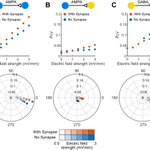
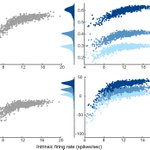
5/n Synaptic connections affect the entrainment of the postsynaptic neuron with excitatory synapses enhancing neural entrainment

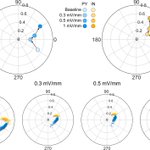
4/n These de-entrainment and re-entrainment effects are frequency-specific. Furthermore, phase-locking depends also on the natural firing rate of the neurons, with higher firing rates resulting in higher phase-locking values.

3/n At e-fields of <0.3 V/m tACS de-entrains the neurons, while at higher intensities it re-entrains. Consistent with our previous work (Wischnewski et al., nat commun, 2024) we see that the tACS induced entrainment happens with a phase shift.

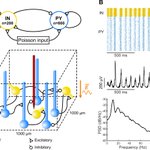
2/n We connected 800 two-compartment pyramidal neurons and 200 fast-spiking interneurons in a 3D volume and investigated the effects of tACS entrainment. Neuron models were structured to mimic the orientation of cortical neurons, and the network contains endogenous oscillations

‼️Check out our new paper‼️ spearheaded by our fantastic PhD candidate @Zhao1505. We modeled the effects of transcranial alternating current stimulation (#tACS) in a neuronal network model using intensities that are realistically achievable in humans.
iopscience.iop.org/article/1…
Opitz Lab retweeted

CSE researchers showed that non-invasive brain stimulation can change a specific brain mechanism that is directly related to human behavior. This could lead to new therapies for brain disorders. Read more at z.umn.edu/BrainStimulation
@Opitz_Lab @UMNBME @UMNResearch @UMNews @NIH
Check out our new paper from the lab!

Check out our new publication in @natcomms w/ @Opitz_Lab & @_janzimmermann_ where we show that neural phase precession can be induced by transcranial alternating current stimulation. #tACS #neuroscience #brainstimulation #science
doi.org/10.1038/s41467-024-4…
Very proud of your success! Well deserved!
I am so excited to share that I will be joining the @univgroningen as an assistant professor at the department of Experimental Psychology!
Looking forward to meeting new colleagues and doing cool science!

Great work by Nipun Perera (@nipunWD), as well as all the others, @IvanAlekseichuk, @SShirinpour, @MilesWischnews1, and our collaborators in NY, Gary Linn, Kurt Masiello, Brent Butler, @RussBEneuro, Charles Schroeder, and Arnaud Falchier!
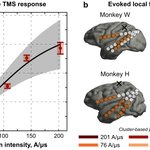
Our findings hopefully provide insights to TMS-evoked potential research in human using non-invasive #EEG recordings, as well as clinical research using EEG-guided #TMStherapy. 5/5
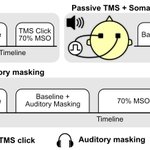
These location- and intensity-dependent TMS effects cannot be explained by auditory or somatosensory co-stimulation, as demonstrated by a series of control conditions, including imitation of the TMS click, auditory masking, and peripheral somatosensory stimulation. 4/5


