

Brain Stimulation aims to be the premier journal for publication of original research in the field of neuromodulation.
Joined April 2019
- Tweets739
- Following123
- Followers4.4K
- Likes335





Pinned Tweet
Please mark your calendar and share with your colleagues — we can’t wait to welcome the community to Lyon in 2027.
elsevier.com/events/conferen…

How does focal brain stimulation spread across the cortex?
Francesco Resta, Alessandro Scaglione et al. show optical activity follows direct wiring first, before brain state shapes integration.
doi.org/10.1016/j.brs.2026.1…
@brainstimj #Neuroscience #BrainStim

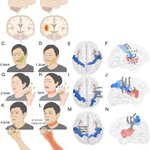
Can dual-site stimulation unlock richer artificial touch? Takamitsu Iwata et al. show simultaneous S1 and insula stimulation elicits multicomponent sensory percepts beyond simple paresthesia.
brainstimjrnl.com/article/S1…
@brainstimj #NeuroTech #BrainStimulation

Deadline today! Last chance to submit your symposium proposal or poster abstract for the 7th International Brain Stimulation Conference.
Don’t miss your chance to be part of the program in Lyon! #BrainStimConf
elsevier.com/events/conferen…
Can brain response to TMS reveal suicide risk in depression?
Noah Stapper et al. show prefrontal TMS-EEG N100 amplitude tracks suicidal ideation severity across 5 sites (n=237).
doi.org/10.1016/j.brs.2026.1…
@brainstimj #TMS #EEG #MentalHealth

Time is running out! Submit your symposium proposal or poster abstract for the 7th International Brain Stimulation Conference by 18 September.
Be part of the scientific program in Lyon. #BrainStimConf
elsevier.com/events/conferen…
Deadline extended! Submit your symposium proposal or poster abstract for the 7th International Brain Stimulation Conference by 18 September.
Share your research and join us in Lyon! #BrainStimConf
elsevier.com/events/conferen…
Brain Stimulation retweeted

New work in @brainstimj. A novel hemispheric device, sham/active design, personalized targeting approach, and densely-sampled single-subject fMRI, we demonstrated acute disruptions in cingulate-based connectivity, which rebounded by 24-hours.
brainstimjrnl.com/article/S1…

Liu et al. tested 30 patients. 130 Hz SN-DBS cut motor symptoms by 43.6% & increased stride length by 13.5%, matching standard STN-DBS efficacy.
brainstimjrnl.com/article/S1…
@brainstimj #Parkinsons #DBS

Alexandra Griffin et al. evaluated fully remote, supervised tDCS in children with cerebral palsy, finding strong feasibility and no serious adverse events.
brainstimjrnl.com/article/S1…
@brainstimj #CerebralPalsy #tDCS #Neuromodulation

Brain Stimulation retweeted

Austin Messner's paper proposing component control for TMS trials is out in @brainstimj .
brainstimjrnl.com/article/S1…
The problem it addresses is one most of us in the TMS field have run into. A modern accelerated protocol varies several things at once: how the target is chosen, pulses per session, sessions per day, total treatment days. When the protocol works, the trial has told us the package works. It has not told us which component carries the effect, and often the design could not have told us even in principle.
We propose two things.
A Component Map: a figure accompanying each multicomponent trial that shows which components were manipulated and which were experimentally isolated versus confounded.
The Component Control Index (CCI): the ratio of controlled to total manipulated components, ranging from 0 to 1. A component counts as controlled when at least one contrast in the design varies that component alone.
What CCI is not is as important as what it is. It is a descriptive reporting tool, not a quality metric and not a ranking. A proof-of-concept trial of a novel bundled protocol will have a low CCI, and that is appropriate; establishing that something works comes first. Decomposing it is the complementary next step. The index simply makes the inferential boundary of each design explicit.
What CCI is not is as important as what it is. It is a descriptive reporting tool, not a quality metric and not a ranking. A proof-of-concept trial of a novel bundled protocol will have a low CCI, and that is appropriate; establishing that something works comes first. Decomposing it is the complementary next step. The index simply makes each design's inferential boundary explicit.
Precedent shows why this matters. Psychotherapy research spent years dismantling treatment packages after they were already in widespread use, and found that behavioral activation alone accounted for much of CBT's effect in depression. That finding produced more parsimonious and more scalable treatments - but it arrived late. Neuromodulation is at the point in its development where that work can be done early rather than retrospectively.
Proud of Austin Messner, who led this work! Wouldn't have been possible without @tgroveradams and Elizabeth Arnold.

Daneshzand et al. developed a modular array that electronically steers the E-field hotspot by 1cm. In vivo tests (n=3) confirm it mimics physical movement.
brainstimjrnl.com/article/S1…
@brainstimj #TMS #Neurotech

Brain Stimulation retweeted

What does panic look like in the human brain?
In our new paper in @brainstimj , we captured its neural and autonomic signature during DBS: a surge in prefrontal theta, with tract engagement to the amygdala and insula.
Grateful to be part of this work with @drpouratian and @SameerShethMD
brainstimjrnl.com/article/S1…
@UTSWNeurosurg @UTSWBrain

Can electric field models be harmonized across MRI sites?
Hayek & Antonenko et al. show high inter-scanner reliability (ICC 0.86-0.97) for tDCS simulations, enabling individualized multicenter dosing.
brainstimjrnl.com/article/S1…
@brainstimj #tDCS #MRI #Efield

Can rapid sEEG transform surgery for severe facial pain?
Huang, McGeoch, et al. mapped multi-node brain networks using 5-day sEEG to deliver personalized DBS.
brainstimjrnl.com/article/S1…
@brainstimj #DBS #ChronicPain #Neuroscience

Can focused ultrasound tune deep brain networks to enhance attention?
Dr. Caulfield & team show 50s of 25Hz LIFU to the bilateral thalamus speeds reaction time, linked to EEG markers of alertness.
brainstimjrnl.com/article/S1…
@brainstimj #LIFU #Neuroscience

Shimizu et al. built an MRI-guided TMS platform for marmosets using 3D-printed headgear to deliver focal theta burst protocols.
Read: doi.org/10.1016/j.brs.2026.1…
@brainstimj #TMS #Neuroscience

A new study reveals that a rodent model of Rett syndrome exhibits significant locus coeruleus hypoexcitability during vagus nerve stimulation, but optimizing VNS parameters can successfully rescue this neural activation.
brainstimjrnl.com/article/S1…
#RettSyndrome #Neuromodulation

New in @brainstimj by Kim et al: pTES modulates central pain pathways, significantly increasing acute pressure pain thresholds during arm M1 stimulation (p<0.0005). Mechanics: [n=9, fibromyalgia, 1000 AMT pulses].
Read full text:
doi.org/10.1016/j.brs.2026.1…
#tDCS #Psychiatry

New paper by Alireza Majdi and Liyi Chen in @BrainStimJournal: tES doesn't just modulate cortical neurons. It co-stimulates peripheral nerves, engaging brainstem nuclei to drive network activity. A new dual-route framework.
🔗 brainstimjrnl.com/article/S1…

Brain Stimulation retweeted

Great application of Heart-Brain Coupling: Investigating effects of TMS pulse-width and pulse-shape on frontal excitability, just out in @brainstimj
Here we find that short square pulses (95us) induce stronger HBC relative to longer square pulses (400us) - as currently used in most TMS machines - with a large ES (d=1.4). Furthermore, HBC quantified frontal excitability thresholds were generally lower than traditional motor-threshold, especially at the short square pulses, also with large ES (are we possibly overdosing frontal TMS?).
Congrats @L_Zwienenberg and great thanks to collaborators @cjstagg and @JonathanDownar for the conception and realisation of this study!
doi.org/10.1016/j.brs.2026.1…
