

Leading economic indicators, yield curve, and decoding the VIX
Joined December 2020
- Tweets885
- Following1.7K
- Followers303
- Likes73.2K



Nick Bogle retweeted

You heard that Juan Perón destroyed Argentina's economy, but what actually happened?
Perón nationalized Argentina's central bank in March 1946 and handed price-setting power over beef and wheat exports to a state agency called IAPI. That single move strangled the two industries that fed the country.
IAPI bought grain from farmers at prices it set, then sold that grain on world markets at actual prices, pocketing the spread. Farmers received roughly half the international price for wheat throughout the late 1940s. They responded the only rational way: they planted less. Cattle ranchers faced identical incentives and reduced their herds. Argentina's beef exports fell from 400,000 tons in 1946 to under 200,000 tons by 1952.
The central bank nationalization meant Perón controlled credit allocation directly. He flooded industry with cheap loans while agriculture starved of capital. Foreign exchange reserves accumulated before 1946 were gone by 1952.
The price signal is the only tool an economy has to communicate scarcity and opportunity across millions of producers simultaneously. Suppress that signal in two of your most productive sectors and output collapses.
By 1955, when the military removed Perón, Argentina's share of world wheat trade had collapsed from a dominant position to near irrelevance. A country that once fed Europe had engineered its own agricultural decline through deliberate, economically illiterate, socialist policy.

Nick Bogle retweeted
Germany destroyed its own price controls in 1948 and watched an economy resurrect itself inside eighteen months.
Ludwig Erhard did it unilaterally. On June 20, 1948, he abolished the Nazi-era price and wage controls that the Allied occupation forces had maintained, then went on radio to tell Germans what he had done before anyone could stop him. The American occupation authorities were furious. General Lucius Clay demanded an explanation. Erhard told him he had not reformed the controls, he had abolished them.
The results were immediate. Goods reappeared on shop shelves within days. Germans who had been hoarding anything of tangible value started trading again because currency reform and price liberalization made holding marks rational for the first time in years. Industrial output rose 50 percent in the six months following the reform.
The villain in this story is price controls, and the economists and bureaucrats who insist they tame chaos rather than create it. Price controls tell producers to stop producing and tell consumers to hoard. Every time. The postwar German black market proved it: the official economy was starving while the illegal economy fed people. Erhard simply liberated the black market by freeing prices.
You benefit from this history whether you know it or not, because it settled an empirical argument that interventionists have been trying to reopen ever since. Free prices coordinate production without a central planner. Suppress them and you get empty shelves and queues. Germany in 1946 had both. Germany in late 1948 had neither.
The so-called Wirtschaftswunder, the economic miracle, was not miraculous; Erhard applied basic economic logic that Friedrich Hayek had already formalized in 1945 in "The Use of Knowledge in Society." No central authority possesses the dispersed, local, constantly changing information that prices aggregate and transmit. Bureaucrats trying to set correct prices are not just inefficient; they are epistemically incapable of the task. Hayek made the theoretical case, thrn Erhard ran the experiment on a starving nation, and proved it.
West Germany grew at roughly 8 percent annually through the 1950s. East Germany, running Soviet central planning across the same ethnic population with similar prewar industrial infrastructure, stagnated and eventually built a wall to prevent its citizens from leaving. That comparison is about as clean a controlled experiment as political economy ever produces. Same people, same history, radically different institutions.
The lesson: prosperity flows from secure property rights, sound money, and voluntary exchange. Erhard gave West Germans all three in one afternoon.

Nick Bogle retweeted

LNG and FLNG aren't 2 different products.
Same gas, cooled to the same -162°C liquid.
The difference is where that cooling happens.
Conventional LNG travels by pipeline to an onshore plant.
FLNG does the processing, liquefying, storing and offloading right at the offshore field, on a floating vessel, no pipeline needed.
That's why it's opening up gas fields that were previously stranded.
themerchantsnews.substack.co…

Nick Bogle retweeted
European natural gas futures have SOARED to their highest level since 2022.
Europe is heading into winter with gas storage facilities just 68% full, well below the 15-year average of ~85%.
STAY LONG NATURAL GAS.

Nick Bogle retweeted
US data centers are projected to consume 15 billion cubic feet of natural gas per day by 2035. That is MORE THAN ANY NATION except China, Russia, Iran, and the US itself.
AI WILL NOT BE A FREE LUNCH.
🤖 Made with AI

Nick Bogle retweeted

Nvidia just posted record revenue. The stock popped. Everyone's celebrating.
Meanwhile, the cost of insuring Nvidia's own debt against default has more than DOUBLED since May.
Why would credit markets get nervous about a company printing $96B a quarter?
Because Nvidia isn't just selling chips anymore. It's the lender, the guarantor, and the equity investor in the same AI companies buying those chips. When you finance your own customer's ability to pay you, your revenue and your risk become the same number.
The stock market cheered the sales. The bond market is pricing the circularity.
Nick Bogle retweeted
As constrained LNG exports through the Strait of Hormuz squeeze global supply, Goldman Sachs warns that European natural gas prices need to surge to €100 per megawatt-hour to refill winter storage.
STAY LONG NATURAL GAS.
🤖 Made with AI

Nick Bogle retweeted

So far, Bessent has bought back ~$150B of long-term USTs through the end of July.
Despite that, long-term yields are already at, or about to hit, ~2-decade highs.
For this quarter he plans to spend just $83B... hardly enough to stop yields from surging.
The longer this war goes on, the faster the US will need YCC.





Nick Bogle retweeted
🛢️🚨Shell, in a single day:
-Pauses its $3B share buyback.
-Prepares to sell $1B of offshore wind farms.
-Pushes toward closing a $16.4B gas acquisition, its biggest deal in a decade.
That's one company telling you its thesis.
💰The deal:
The ARC Resources acquisition is Shell's largest since BG in 2016 and the logic is geographic.
ARC's gas sits next to Shell's fields feeding LNG Canada (Shell: 40%).
LNG Canada ships to Asia without touching Hormuz, Suez OR Panama. The shortest safe route on the map.
Why Shell needs it?
Shell's quiet problem are aging fields and dwindling reserves.
Analysts said it needed a big discovery or a big deal.
It chose the deal paid 75% in shares, at a 20% premium.
When a supermajor pays up with its own equity, it's telling you which assets it thinks outlast the cycle.
Same day: wind farms for sale, India renewables under review, buyback already cut from $3.5B to preserve cash after war-related strain.
Under Sawan, Shell isn't an "energy company" anymore. It's becoming a gas-and-LNG machine with an oil business attached.
Follow the full year: Gunvor buys US shale gas.
Shell signs in Venezuela, blocks rivals at Browse, now $16.4B for Canadian gas while selling wind.
The biggest players have stopped debating the transition's pace.
They're positioning for a long gas era.

Nick Bogle retweeted

Welcome to the most asymmetric trade in modern financial history.
The thread below lays out why. The opportunity exists because capital has chased the AI trade while ignoring the physical assets AI requires to run — assets that have quietly become the best-performing asset class of the decade. Since October 2020 when we first called for the commodity super cycle: QCI Total Return +217%, GSCI Total Return +205%, Gold +140%. NASDAQ trails at +130%. S&P 500 at +85%. The top three are all commodities. Yet oil cannot get out of its own way while copper and the broader atom complex prints fresh highs . That is the dislocation. That is the trade.
Get long. Buckle in. Hang on for the ride.
Forgive the longer posts in this thread — attempting to mimic my old 10-bullet commodity takes. On to it.
Nick Bogle retweeted

🚨 THE BANK OF JAPAN IS ABOUT TO DUMP $2.86 BILLION IN U.S. TREASURIES
This would be the largest Japanese Treasury liquidation in 30 years
The last time Japan did this - the stock market crashed 15%
When the second largest holder of U.S. debt starts selling, it puts pressure on yields and triggers risk-off across every market
- Stocks
- Crypto
- Bonds
Nothing is safe when this kind of liquidity leaves the system
Watch this closely
NOTIFS ON!
Nick Bogle retweeted
I have said for over 2 years Japan will panic.
I did not relent.
I will not relent.
2 years wrong.
10 years right.
We are closer than ever to the Main Event.
Goodnight.


Nick Bogle retweeted

The Bond Market Is Forcing Washington To Choose
The U.S. bond market is not selling off because investors forgot about AI or overreacted to Iran.
It is selling off because fiscal dominance is colliding with an energy driven inflation shock.
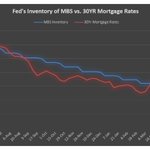
That is the message behind the 30 year moving back above 5% and the 10 year pushing toward 4.50%. The long end is demanding more compensation for inflation risk, Treasury supply, fiscal stress, and policy uncertainty.
The Spark Is Oil
The immediate trigger is the Iran and Strait of Hormuz crisis.
Oil above $100 changes the Fed calculus. It keeps headline inflation sticky and pushes gasoline, diesel, freight, food distribution, utilities, insurance, and transportation costs higher.
The April CPI report already showed the pressure. Headline CPI rose 0.6% in one month. Energy rose 3.8%. Gasoline rose 5.4%. Energy was up 17.9% over the year. This is not clean disinflation. It is a supply shock moving through the cost structure of the real economy.
The Fire Is Fiscal
The deeper problem is that this oil shock is hitting a country already running huge deficits and issuing massive amounts of debt.
The U.S. is asking investors to absorb more Treasury supply while inflation volatility is rising and fiscal credibility is weakening. Investors are no longer willing to lock up capital for 10 to 30 years at low real yields just because Washington says everything is under control.
That is the return of term premium.
The Fed can control the front end. It can set the overnight rate. But it cannot force investors to buy long duration Treasuries at yields they no longer believe compensate them for inflation, deficits, and currency risk.
The 30 year above 5% is the bond market saying the fiscal path is no longer free.
The Fed May Need Demand Destruction
This is where it gets darker.
The Fed would never openly say it wants global demand destruction. But functionally, a controlled growth scare solves several problems at once.
If global demand weakens, oil demand cools. Commodity pressure eases. Inflation expectations soften. Long duration Treasuries catch a bid. Mortgage rates can fall. The dollar funding system stabilizes. And the Fed gets cover to cut without looking like it is surrendering to inflation.
That means the Fed may tolerate tighter financial conditions until demand destruction does part of the disinflationary work for them.
Not because they want pain.
Because the bond market will not give them an easy cut while oil is high, deficits are huge, and inflation is reaccelerating.
The Real Economy Is Already Weakening
This is dangerous because yields are not rising into a clean boom.
Real wages are already being squeezed. The April Real Earnings report showed nominal hourly earnings rose 0.2%, but CPI rose 0.6%, so real average hourly earnings fell 0.5%.
The paycheck got bigger.
The worker got poorer.
Housing is already strained. Mortgage rates near 7% freeze affordability.
Credit is tightening.
CRE is still rolling through refinancing stress.
Small businesses are under pressure.
Consumers are paying more for necessities while discretionary demand weakens underneath.
That is demand destruction in its early form.
Not a crash yet.
A squeeze.
My Take
The Fed is trapped.
If it cuts too soon, the bond market worries inflation and fiscal policy are not under control.
If it waits too long, higher oil, higher yields, falling real wages, frozen housing, and tighter credit turn the inflation shock into recession.
So the bond market is forcing Washington to choose.
Lower energy pressure.
Fiscal discipline.
Liquidity support.
Or a growth scare large enough to bring back the Treasury bid.
This is not an apocalyptic bond collapse yet.
But it is a serious warning shot.
The danger is not just that yields rise.
The danger is that yields rise while the economy is already losing its ability to carry them.


The US bond market crisis is intensifying.
While everyone is focused on AI and the Iran War, the US bond market is in a complete meltdown.
The 30Y Yield is now above 5.00% and the 10Y Yield is nearing the pivotal 4.50% level, which resulted in President Trump's "90-day tariff pause" in April 2025.
Long-term yields are now ABOVE levels seen prior to Fed rate cuts in another brutal reminder that the Fed can not contain the long-end of the yield curve.
At the current pace, we will likely see US mortgage rates rise back above 7.00% this year.
The question then becomes:
How much longer can markets (or the US government) ignore the yield crisis?
And, who folds first?

Nick Bogle retweeted

THIS COULD BE THE LARGEST INSIDER TRADING SCANDAL IN OIL HISTORY.
According to The Kobeissi Letter, about $920 million in crude oil shorts were placed at 3:40 AM ET today, 70 minutes before any news went live.
TIMELINE:
3:40 AM ET: 10,000 contracts ($920M) shorted oil with no news.
4:50 AM ET: Axios reported a "14-point deal" to end the Iran war.
7:00 AM ET: Oil crashed 12%, handing those shorts a $125 million profit.
Whistleblowers now claim news was coordinated with insiders, leaking order info up to 30 minutes before the reports went live. Former Rep. Marjorie Taylor Greene and analysts like Mohammad Marandi are calling this "war/peace" rhetoric a cover for massive insider trading.
And this was not the first time. Since March, more than $3.5 billion worth of perfectly timed oil shorts have been placed before major Iran war headlines.
A $500-$580M short appeared before Trump delayed strikes on Iran, a $950M position was entered before the two-week ceasefire announcement, a $760M short came minutes before Iran reopened the Strait of Hormuz, and another $430M bearish trade appeared before the ceasefire extension.
Every single trade happened before the public got the news, and every single headline crashed oil prices immediately after.
