

Kongsberg NanoAvionics is a #smallsat bus manufacturer and mission integrator focused on improving time to space and time in space. 🌎 USA & Europe.
Vilnius, Lithuania
Joined April 2015
- Tweets1.9K
- Following440
- Followers6.2K
- Likes1.6K






Pinned Tweet
Notice the Moon photobombing our MP42 #microsatellite selfie, captured by its deployable 4K camera in orbit above #Australia? If not, turn on full-screen and audio!🔊
Learn why we chose a consumer camera for the task in our press release below, where you can also watch it in 4K.
✅ Some satellite operators want to build and test their own satellites.
❌ But they don't want to build the bus as well.
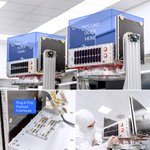
✅ That's why we offer the option of pre-integrated satellite buses:
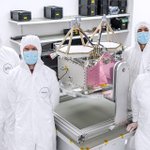
We deliver a fully assembled, functionally tested bus, ready for "Plug & Play" payload integration. From there, the customer takes over, integrates their payload, runs their own test campaign, and brings the mission to flight readiness.
It's a model that gives organizations control of the most mission-specific work, without the years of bus development that usually come with it. For national programs with "built locally" or classified requirements, it's a natural fit, as a significant share of the integration and testing work happens in-house.
We offer multiple bus options, ranging from 10 to 500 kg in spacecraft mass, and with lead times starting at just a few months.
For missions with distinct payload interface, CONOPS, or orbital requirements, we also develop tailored configurations that match your specific needs.
More than a dozen commercial, governmental, and national security organizations already use our pre-integrated buses for their Earth observation, signals intelligence, and science missions.
Explore our satellite bus range and specs using the link in the comments.

With over 60 satellites launched and more than 300 in production, we have developed a formula for reliable, scalable, and adaptable satellite platforms:
nanoavionics.com/small-satel…

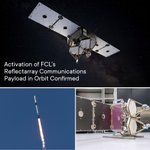
✅ Successful Transporter-18 launch with @MeridianSpace' First Customer Link (FCL) satellite
✅ Contact on 1st pass; all systems activated, including Meridian’s payload
✅ Major step toward affordable LEO broadband networks for governments and organizations
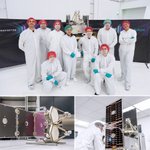
Built on our MP42 microsatellite bus, FCL carries Meridian’s novel reflectarray communications payload, designed to enable smaller, more power-efficient satellites and reduce the cost and complexity of deploying dedicated broadband networks.
The mission went from kickoff to orbit in just over a year. FCL will now allow Meridian to validate its technology in space, while both teams use operational learnings from the mission to inform the constellation-optimized satellites already in development.
Under our €122.5 million contract, we will build 280 satellites for Meridian. Combined with our serial satellite manufacturing capacity, Meridian aims to make customer-owned LEO broadband networks financially feasible for more governments and organizations worldwide.
The launch continues our 100% first-contact success record across more than 60 launched customer satellites and carried multiple communication and power systems we supplied to repeat customers as well.
Learn more about the launch and the path to more affordable sovereign LEO broadband networks in our blog in the comments below.
-
*Launch image courtesy of SpaceX.

FCL will validate Meridian’s novel broadband architecture, designed to enable governments and commercial organizations to deploy, own, and control their own LEO constellations:
nanoavionics.com/news/meridi…

Kongsberg NanoAvionics retweeted

.@MeridianSpace: Our first Customer Link sat is healthy in orbit after separation following @SpaceX Transporter 18 launch. Will demo electronically steerable beams & payload performance up to 1.1 Gbps for future constellation customers. Sat uses @NanoAvionics MP42 platform.

Next stop: Space!
The #Transporter18 mission is set to launch in under 2 hours on October 1st at 18:22 UTC.
Here's what's heading to Sun-synchronous orbit from California this time:
🛰️ The @MeridianSpace First Customer Link (FCL) satellite:
Built on our MP42 microsatellite bus, FCL will demonstrate Meridian’s proprietary 5G communications technology, including two advanced reflectarray antennas, in orbit. The mission will validate the technology for a constellation-optimized satellite we are designing together for serial manufacturing at a rate of 100s of units per year. Meridian's compact, power-efficient reflectarray design, paired with our buses, will enable high-capacity sovereign SatCom constellations that can be independently owned and controlled by governments and enterprises.
🛰️ Communication and power systems supporting other missions:
We supplied several other customer satellites aboard Transporter-18 with our flight-proven hardware, including communication and complete power solutions comprising electrical power systems, battery packs, and solar panels, powering an undisclosed customer's constellation.
Explore FCL, the Meridian Space constellation, or our buses and subsystems in the comments below.
To watch the launch, visit SpaceX's website.
*Launch integration images: SpaceX.


More about the Meridian Space constellation:
nanoavionics.com/news/nanoav…

Even if you've met MP42D, our new 500 kg satellite bus, you can now download it's CAD file for payload fit-checks via our online configurator - just like our smaller Gen-2 MP42 and MP42H microsatellite buses:
Follow the link below, enter your payload specs and mission requirements, see which of our buses fit your needs, explore their capabilities, prices, and lead times, and download CADs for payload fit-checks.
Configure your bus in seconds: eu1.hubs.ly/H0yK5N00
It's been just over a year since project kickoff, and @MeridianSpace's First Customer Link (FCL) satellite is sitting atop its launch vehicle, ready to demonstrate Meridian's proprietary 5G communications technology in orbit.
Set to launch aboard Transporter-18 on October 1st at 18:18 UTC, FCL carries Meridian's proprietary communications payload, including two advanced reflectarray antennas, aboard our MP42 microsatellite bus.
These systems will lay the foundation for what's coming next:
A constellation-optimized satellite we are designing together for scalable manufacturing, with a compact, power-efficient design that makes the most of launch vehicle payload volume and reduces deployment costs as Meridian scales toward its high-capacity LEO constellation.
For governments and enterprises, this will open up more accessible, sovereign broadband infrastructure that they can own and control independently.
Learn more about broadband constellations designed for sovereign affordability in the comments below and stay tuned for more launch updates.
Launch integration image courtesy of SpaceX.

In addition to our recent 500 kg-class MP42D satellite bus announcement, we introduced significant Gen-2 upgrades to our smaller microsatellite buses - the (now) 200 kg-class MP42 and the 100 kg-class MP42H:
— Max payload mass increased to 100 kg for MP42 and 35 kg for MP42H
— All microsatellite lifetimes increased from 5 years in a 600 km SSO to 7 years in a 750 km SSO
— X-band data downlink rates increased to 650 Mbps
— Rad-tolerant data storage increased to > 512 GB
— Greater GNSS jamming and spoofing resistance
— Higher satellite agility and greater pointing accuracy at all times
The first handful of Gen-2 MP42 microsatellite buses have already been built, tested, and are getting ready to launch soon.
Yours can be ready in as little as 9 months from project kickoff.
See the full specs of our smallsat bus portfolio in the comments below.
See our product catalog for full satellite bus specs: nanoavionics.com/brochures/

EYCORE has released the first radar imagery of Earth's surface captured by EYCORE-1, Poland's first SAR satellite.
Launched in May, using our MP42 satellite bus, @Eycore_PL's SAR payload has laid the groundwork for an all-European, military-grade SAR solution with:
— Rapid and sovereign access to sub-meter imagery,
— Day-and-night, all-weather Earth observation,
— Imaging modes ranging from wide-area surveillance to detailed inspection of priority targets.
Showing Monte Darwin in Chile, the image from August confirms the successful operation of the complete system under real orbital conditions, from nominal X-band radar functionality to data delivery and processing.
Our flight-proven MP42 bus provides the mission power, precise pointing, data storage, and downlink required for demanding SAR operations. With this achievement, Eycore has become the second private company in Europe to demonstrate its own SAR technology successfully in space.
Congratulations to the entire team on this major milestone for Poland and Europe’s sovereign Earth observation capabilities.
To learn more about the mission, visit our blog in the comments.


Our 500 kg-class MP42D satellite bus offers 1,200 mm of payload height for large optical instruments, SAR antennas, phased arrays, and other demanding payloads.
Very high-resolution optical imaging was one of MP42D's key design drivers.
Working closely with optical payload providers, we created enough vertical clearance to accommodate the long optical tubes required for imaging at 50 cm GSD and below, while retaining space for bus avionics, large actuators, and load damping, all within a common launch vehicle rideshare envelope.
This volume and flexible bus design, combined with up to 250 kg of payload capacity, support a wide range of payloads for commercial, civil, and national security applications.
MP42D builds on the proven design heritage of our Gen-1 microsatellite platforms and offers a seven-year design lifetime at 750 km SSO, up to 3.4 kWh of energy storage, optional 2.5 Gbps optical intersatellite links, and more.
Explore the full MP42D specifications and download our product catalog through the link in the comments.
Explore MP42D specifications:
nanoavionics.com/small-satel…
Learn more in our full announcement:
nanoavionics.com/news/nanoav…

Our 500 kg-class MP42D satellite bus offers 1,200 mm of payload height for large optical instruments, SAR antennas, phased arrays, and other demanding payloads.
Very high-resolution optical imaging was one of MP42D's key design drivers.
Working closely with optical payload providers, we created enough vertical clearance to accommodate the long optical tubes required for imaging at 50 cm GSD and below, while retaining space for bus avionics, large actuators, and load damping, all within a common launch vehicle rideshare envelope.
This volume and flexible bus design, combined with up to 250 kg of payload capacity, support a wide range of payloads for commercial, civil, and national security applications.
MP42D builds on the proven design heritage of our Gen-1 microsatellite platforms and offers a seven-year design lifetime at 750 km SSO, up to 3.4 kWh of energy storage, optional 2.5 Gbps optical intersatellite links, and more.
Explore the full MP42D specifications and download our product catalog through the link in the comments.
Hello Salt Lake City, hello #SmallSat26!
Our team, satellites, subsystems, and coffee machine are at your service at booth #429. Visit us to discover MP42D, our expansion into the 500 kg-class, introduced this Monday:
— It has 250 kg of payload capacity
— 3.4 kW’s of power storage
— 2.5 Gbps optical intersatellite links
— 7-year lifetime in a 750 km SSO
— High resilience to radiation and GNSS interference
— Is designed for very high resolution optical, thermal, SAR, and other demanding payloads
See you at booth #429, or simply around!
Find all MP42D specs and our full announcement in the comments below.

Explore MP42D specifications:
nanoavionics.com/small-satel…
Read our blog for more details:
nanoavionics.com/news/nanoav…
Meet MP42D, our 500 kg-class satellite platform, designed for commercial, civil, and national security missions demanding high resilience, agility, responsive tasking, collection, and data delivery.
MP42D allows any mission to:
Stay operational for longer
- 7-year mission life in a 750 km sun-synchronous orbit
- Resilient to GNSS jamming and spoofing
- Immune to destructive single-event effects validated with 200 MeV protons, and critical components also tested against heavy ions
Shift focus quickly to observe more
- Retarget between areas of interest tens of degrees apart within seconds
Get data where and when it is needed faster
- Optional 2.5 Gbps optical intersatellite links enable near-real-time tasking, collection, and data delivery for enhanced situational awareness and timely decision-making during critical situations.
Many of these improvements are also part of our Gen-2 MP42 and MP42H satellite bus upgrades, alongside their increased payload mass and volume, more radiation-tolerant data storage, and higher downlink rates.
Read about all the upgrades on our blog, or download our product catalog in the comments below.
You can also meet us at Booth 429 this week at #SmallSat26.
Visit us to hear more.
Explore our upgraded satellite bus specifications:
nanoavionics.com/small-satel…
Read our blog for more details:
nanoavionics.com/news/nanoav…
