



Michael Button retweeted
In 1890, workers digging in a Russian peat bog uncovered a wooden figure covered in strange faces and geometric markings.
It became known as the Shigir Idol.
But nobody realised just how old it was.
More than a century later, scientific dating placed it over 12,000 years in the past. Thousands of years before the pyramids, someone had carved this extraordinary object using stone tools.
We still don’t know exactly what its markings meant.
But its survival raises a bigger question.
Stone survives. Wood usually rots.
How much of the prehistoric world looks simple to us because its most extraordinary creations have disappeared?

Michael Button retweeted
In 1542, Francisco de Orellana took a small Spanish party down an Amazon tributary looking for food.
But the current was too strong to return. They ended up travelling all the way to the Atlantic.
What they encountered was extraordinary.
Their chronicler described huge settlements, roads leading inland, abundant food and riverbanks so densely populated that one settlement seemed to follow another for miles.
This was a landscape full of people.
But later explorers found a very different Amazon. The enormous populations described in the account were nowhere to be seen.
It was just jungle.
For centuries, scholars dismissed the story as exaggeration or fantasy.
But European diseases and colonisation had devastated Indigenous communities. The later explorers were seeing the aftermath.
Now archaeology is revealing vast ancient settlement networks beneath the rainforest.
Orellana’s expedition had glimpsed a world that was about to disappear.

Michael Button retweeted
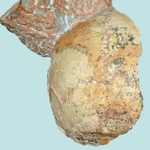
This fossil is casting serious doubt on the Out of Africa theory.
It’s part of a skull discovered in a Greek cave in the 1970s. Researchers initially thought it belonged to a Neanderthal.
But a later analysis reached a startling conclusion.
It appeared to be Homo sapiens. And it was at least 210,000 years old.
Our species, in Europe, more than 150,000 years before the major migration out of Africa traced in our DNA.
So how does that make sense?
Well, we already had evidence of earlier journeys. Human fossils in Israel showed our species had ventured beyond Africa long before that major migration.
But Greece was much further away. And this skull suggested a much earlier arrival.
There is, however, a possible explanation.
Your DNA tells the story of people who passed their genes down to you. But it can’t reveal every population that ever existed.
Some may have travelled far, survived for thousands of years, then disappeared without leaving descendants alive today.
Fossils can reveal those missing people. And perhaps that’s who this skull belonged to.
An early wave of humans who left Africa, reached Europe…
And became a branch of our family with nobody left to remember them.

Michael Button retweeted
The world's oldest shipwreck has just been discovered off the coast of Turkey
Archaeologists dated it to 4,400-4,700 years old, which is around the same time that the Great Pyramid was being built.

Michael Button retweeted
We’ve always assumed we were the first advanced civilisation on Earth.
But proving that is harder than you might think.
In 2018, two scientists, Gavin Schmidt and Adam Frank, published a paper called “The Silurian Hypothesis: Would it be possible to detect an industrial civilization in the geological record?”
They were exploring how we might find intelligent life on other worlds.
But that raised a disturbing question about our own.
If an industrial civilisation existed here millions of years before us… would we even know?
Their answer? We’d be very unlikely to find anything.
Cities. Machines. The remains of their world.
Over millions of years, erosion, burial and the recycling of Earth’s crust could erase those recognisable signs.
What might survive is something much harder to interpret: Unusual chemicals in the rocks. A sudden shift in carbon. Traces of a planet being transformed.
But natural catastrophes can leave similar fingerprints.
Now they weren’t saying an earlier civilisation existed.
They were asking whether we could recognise one if it had.
Because before we search other planets for vanished civilisations…
How certain are we that we’d spot one on our own?

Michael Button retweeted
Something weird is happening in Turkey.
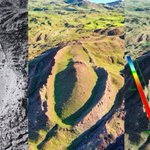
For decades, people have claimed this enormous boat-shaped formation near Mount Ararat could actually be the remains of Noah’s Ark.
Most scientists dismissed it as a natural geological formation.
But recently, researchers scanned beneath it. And they say they detected strange linear and angular features underground.
Now, that does not mean they found a buried ship. Radar can pick up completely natural geological structures.
But this is where it gets interesting.
In 2026, an officially authorised research project involving Turkish academics and with the approval of the Turkish government began investigating the site.
And they've now drilled into it.
Physical samples have been taken from beneath the formation and sent for analysis.
If they find ordinary rock and sediment, this could finally settle the mystery.
But if they find ancient worked timber, artificial material, or evidence that those underground structures really are man-made...
Then we have a much bigger question.
Because even though that wouldn't prove this is Noah's Ark, it would mean something is buried underneath it.
And that could change history
The results should be published later this year - keep an eye out

Michael Button retweeted
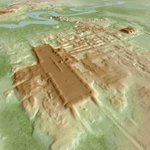
Around 3,000 years ago, in Mexico, people built an artificial plateau almost a mile long.
In places, it rose 15 metres above the surrounding ground. 9 broad causeways led towards it.
But this enormous monument went unrecognised by archaeologists until 2017.
It was so wide and flat that, from the ground, it looked like part of the landscape.
Then aerial laser mapping revealed its shape.
The site is called Aguada Fénix. Its main platform was built between about 1000 and 800 BC, long before the famous royal cities of the Classic Maya.
But the platform was only the beginning.
Researchers uncovered a wider arrangement of causeways, corridors and canals extending kilometres beyond it.
Then, inside a cross-shaped pit, they found coloured mineral pigments arranged according to the cardinal directions.
The researchers think the whole complex represented a model of the universe.
An idea laid out across a landscape.
And despite the scale of the construction, they have found no clear evidence that a powerful king commanded it.
Thousands of years ago, a community reshaped the earth around a shared vision of the cosmos.
And we walked across it without recognising what it was.

Michael Button retweeted
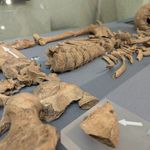
In a Roman cemetery in York, archaeologists uncovered a man’s skeleton with strange holes in his pelvis.
Something had bitten into the bone.
But when researchers compared the marks with damage made by modern animals, they found a disturbing match.
A large cat. Most likely a lion.
Yet this man had been buried in England.
We know the Romans used wild animals in arena spectacles. Fighters faced them. Condemned prisoners were thrown to them.
And a study published in 2025 suggests this skeleton preserves rare physical evidence of that brutality, far from the Colosseum.
But there’s another twist.
The bite marks suggest the animal was feeding on him around the time of his death. They don’t tell us whether it killed him.
And his head had been cut off.
Was he an arena fighter? A condemned prisoner? Why was he decapitated?
We still don’t know.
Somewhere in Roman York, a man’s body ended up between a big cat’s jaws.
And Nearly two thousand years later, its teeth are still telling the story.

Michael Button retweeted
We've been underestimating Neanderthals for a long time
Reminder: They inhabited the earth for roughly 360,000 years, which is longer than modern humans (Homo sapiens) have existed so far

Michael Button retweeted
More than 146,000 years ago, a human lived in what is now northeastern China.
They had a huge skull. Heavy brow ridges. A broad face.
But when scientists studied the skull, it was so unusual that they proposed a new species. They called it Dragon Man.
Yet in 2025, researchers found something that changed the story. Ancient DNA had survived in the hardened plaque on one of its teeth.
And it linked this individual to the Denisovans.
For years, these ancient humans had been an extraordinary puzzle. We knew they existed from DNA and a handful of fragmentary remains. We knew they had children with our ancestors, because some people alive today still carry Denisovan DNA.
But we had very little fossil evidence showing what their heads actually looked like.
Now we had a nearly complete skull.
An entire human population had become known to science largely through genetic traces.
Some of those traces survived inside living people. Others survived in the plaque on an ancient tooth.
And together, they helped reconnect a mysterious skull with a lost branch of our own family.

Michael Button retweeted
It doesn't make sense
Humans reached isolated islands in southern Asia over 1,000,000 years ago, yet nobody made it to Americas until only 20k y/a?
Come on.
Human history in the Americas is MUCH older than we're told


Michael Button retweeted
At Chichén Itzá in Mexico, archaeologists found the remains of children buried in an underground chamber.
For years, nobody knew exactly who they were.
But then DNA revealed something extraordinary: every one of the 64 children tested was male. And among them were two pairs of identical twins.
The burials had accumulated over centuries. These were not the victims of one terrible afternoon. Close relatives were buried there too, suggesting some families may have been drawn into the rituals more than once.
But why twins?
Well, in Maya stories, a pair of Hero Twins enters the underworld and confronts its gods.
The underground setting and the DNA finding make that connection hard to ignore.

Michael Button retweeted
Beneath the Baltic Sea, researchers found a line of stones stretching for almost a kilometre.
It contains 1,673 individual rocks, carefully arranged side by side. Someone appears to have built it deliberately.
Researchers call the structure the Blinkerwall.
But when it was constructed, there was no sea above it.
More than 10,000 years ago, this landscape was dry land occupied by Stone Age hunter-gatherers.
Its stones follow the edge of an ancient lake or marsh, and their arrangement is extremely difficult to explain through glaciers, currents or other natural processes.
But it was probably not a defensive wall.
Most of the stones are too small, and the structure is too low.
Instead, researchers think hunters may have used it to guide migrating reindeer. The animals could be driven along the barrier towards a narrow point where people waited with spears or bows.
If that interpretation is correct, a relatively small population constructed one of the largest known Stone Age structures in Europe.

Michael Button retweeted
Something huge was just discovered and you probably missed it.
Deep inside a South African cave, archaeologists discovered the remains of an extinct human relative.
They named it Homo naledi.
But now its teeth have revealed something nobody expected.
Researchers extracted ancient proteins from the enamel of 20 different individuals.
Every one of them appears to be female.
The scientists searched for two forms of a protein called amelogenin. AMELX can occur in both sexes. AMELY normally indicates a biological male.
They found plenty of AMELX.
But no AMELY at all.
Even skeletons previously described as probable males now appear female.
But this does not mean Homo naledi had no males.
The cave might contain a deliberately selected group. Males might have been deposited somewhere else. Or this population could have possessed a rare deletion that prevented AMELY from appearing.
However, if the individuals were deliberately placed inside the cave, the result could point towards some form of sex-based treatment of the dead.
All we can say with confidence is that every one of the 20 individuals tested produced no male protein marker.
And nobody yet knows why.
Michael Button retweeted
More than 20,000 years ago, people walked across what is now White Sands, New Mexico. Their footprints are still there.
But beside some of them, archaeologists found something unexpected.
Long, straight grooves dragged through the mud.
The marks sometimes form a single line. Others appear as two lines that cross or spread into a V-shape. And they repeatedly occur alongside human footprints.
Researchers believe these may be the tracks of travois: simple transport devices made from wooden poles tied together and dragged behind a person.
No wooden frame survived. But when the researchers built replicas and pulled them across mud, they produced remarkably similar patterns.
This would have allowed Ice Age families to move food, firewood, tools or even children across the landscape.
And they were doing it thousands of years before the invention of the wheel.
But this was not necessarily a road or organised transport network. What survives is evidence of individual devices being pulled across soft ground.
We may be looking at some of the earliest transport technology ever discovered.
But what the people were carrying, and where they were taking it, vanished with them.
