



Pinned Tweet
Back with the legend @joerogan to talk history & ancient civilizations!
Thanks for having me again Joe, this one was WILD


Divers just found Aboriginal stone tools beside a drowned freshwater spring, in landscapes swallowed by the ocean at least 9,000 years ago.
Some stone originated approximately 23 kilometres away, demonstrating movement of valued materials across what is now seabed.
Researchers believe this is part of a much larger submerged cultural landscape whose true scale remains unknown

In 2018, researchers scanned more than 2,000 square kilometres of northern Guatemala using lasers fired from aircraft.
They were looking for traces of the ancient Maya beneath the forest.
But the results revealed something staggering: more than 60,000 structures.
Homes. Palaces. Roads. Fortifications. Vast areas of modified farmland.
Familiar archaeological sites turned out to be parts of a much larger, interconnected landscape.
The trees had hidden the scale of what was there.

Michael Button retweeted
In 1890, workers digging in a Russian peat bog uncovered a wooden figure covered in strange faces and geometric markings.
It became known as the Shigir Idol.
But nobody realised just how old it was.
More than a century later, scientific dating placed it over 12,000 years in the past. Thousands of years before the pyramids, someone had carved this extraordinary object using stone tools.
We still don’t know exactly what its markings meant.
But its survival raises a bigger question.
Stone survives. Wood usually rots.
How much of the prehistoric world looks simple to us because its most extraordinary creations have disappeared?

Michael Button retweeted
In 1542, Francisco de Orellana took a small Spanish party down an Amazon tributary looking for food.
But the current was too strong to return. They ended up travelling all the way to the Atlantic.
What they encountered was extraordinary.
Their chronicler described huge settlements, roads leading inland, abundant food and riverbanks so densely populated that one settlement seemed to follow another for miles.
This was a landscape full of people.
But later explorers found a very different Amazon. The enormous populations described in the account were nowhere to be seen.
It was just jungle.
For centuries, scholars dismissed the story as exaggeration or fantasy.
But European diseases and colonisation had devastated Indigenous communities. The later explorers were seeing the aftermath.
Now archaeology is revealing vast ancient settlement networks beneath the rainforest.
Orellana’s expedition had glimpsed a world that was about to disappear.

In 1890, workers digging in a Russian peat bog uncovered a wooden figure covered in strange faces and geometric markings.
It became known as the Shigir Idol.
But nobody realised just how old it was.
More than a century later, scientific dating placed it over 12,000 years in the past. Thousands of years before the pyramids, someone had carved this extraordinary object using stone tools.
We still don’t know exactly what its markings meant.
But its survival raises a bigger question.
Stone survives. Wood usually rots.
How much of the prehistoric world looks simple to us because its most extraordinary creations have disappeared?
Michael Button retweeted
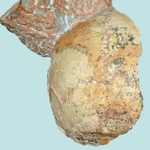
This fossil is casting serious doubt on the Out of Africa theory.
It’s part of a skull discovered in a Greek cave in the 1970s. Researchers initially thought it belonged to a Neanderthal.
But a later analysis reached a startling conclusion.
It appeared to be Homo sapiens. And it was at least 210,000 years old.
Our species, in Europe, more than 150,000 years before the major migration out of Africa traced in our DNA.
So how does that make sense?
Well, we already had evidence of earlier journeys. Human fossils in Israel showed our species had ventured beyond Africa long before that major migration.
But Greece was much further away. And this skull suggested a much earlier arrival.
There is, however, a possible explanation.
Your DNA tells the story of people who passed their genes down to you. But it can’t reveal every population that ever existed.
Some may have travelled far, survived for thousands of years, then disappeared without leaving descendants alive today.
Fossils can reveal those missing people. And perhaps that’s who this skull belonged to.
An early wave of humans who left Africa, reached Europe…
And became a branch of our family with nobody left to remember them.

In 1542, Francisco de Orellana took a small Spanish party down an Amazon tributary looking for food.
But the current was too strong to return. They ended up travelling all the way to the Atlantic.
What they encountered was extraordinary.
Their chronicler described huge settlements, roads leading inland, abundant food and riverbanks so densely populated that one settlement seemed to follow another for miles.
This was a landscape full of people.
But later explorers found a very different Amazon. The enormous populations described in the account were nowhere to be seen.
It was just jungle.
For centuries, scholars dismissed the story as exaggeration or fantasy.
But European diseases and colonisation had devastated Indigenous communities. The later explorers were seeing the aftermath.
Now archaeology is revealing vast ancient settlement networks beneath the rainforest.
Orellana’s expedition had glimpsed a world that was about to disappear.
This fossil is casting serious doubt on the Out of Africa theory.
It’s part of a skull discovered in a Greek cave in the 1970s. Researchers initially thought it belonged to a Neanderthal.
But a later analysis reached a startling conclusion.
It appeared to be Homo sapiens. And it was at least 210,000 years old.
Our species, in Europe, more than 150,000 years before the major migration out of Africa traced in our DNA.
So how does that make sense?
Well, we already had evidence of earlier journeys. Human fossils in Israel showed our species had ventured beyond Africa long before that major migration.
But Greece was much further away. And this skull suggested a much earlier arrival.
There is, however, a possible explanation.
Your DNA tells the story of people who passed their genes down to you. But it can’t reveal every population that ever existed.
Some may have travelled far, survived for thousands of years, then disappeared without leaving descendants alive today.
Fossils can reveal those missing people. And perhaps that’s who this skull belonged to.
An early wave of humans who left Africa, reached Europe…
And became a branch of our family with nobody left to remember them.
Michael Button retweeted
The world's oldest shipwreck has just been discovered off the coast of Turkey
Archaeologists dated it to 4,400-4,700 years old, which is around the same time that the Great Pyramid was being built.

Michael Button retweeted
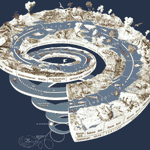
We’ve always assumed we were the first advanced civilisation on Earth.
But proving that is harder than you might think.
In 2018, two scientists, Gavin Schmidt and Adam Frank, published a paper called “The Silurian Hypothesis: Would it be possible to detect an industrial civilization in the geological record?”
They were exploring how we might find intelligent life on other worlds.
But that raised a disturbing question about our own.
If an industrial civilisation existed here millions of years before us… would we even know?
Their answer? We’d be very unlikely to find anything.
Cities. Machines. The remains of their world.
Over millions of years, erosion, burial and the recycling of Earth’s crust could erase those recognisable signs.
What might survive is something much harder to interpret: Unusual chemicals in the rocks. A sudden shift in carbon. Traces of a planet being transformed.
But natural catastrophes can leave similar fingerprints.
Now they weren’t saying an earlier civilisation existed.
They were asking whether we could recognise one if it had.
Because before we search other planets for vanished civilisations…
How certain are we that we’d spot one on our own?


The world's oldest shipwreck has just been discovered off the coast of Turkey
Archaeologists dated it to 4,400-4,700 years old, which is around the same time that the Great Pyramid was being built.
We’ve always assumed we were the first advanced civilisation on Earth.
But proving that is harder than you might think.
In 2018, two scientists, Gavin Schmidt and Adam Frank, published a paper called “The Silurian Hypothesis: Would it be possible to detect an industrial civilization in the geological record?”
They were exploring how we might find intelligent life on other worlds.
But that raised a disturbing question about our own.
If an industrial civilisation existed here millions of years before us… would we even know?
Their answer? We’d be very unlikely to find anything.
Cities. Machines. The remains of their world.
Over millions of years, erosion, burial and the recycling of Earth’s crust could erase those recognisable signs.
What might survive is something much harder to interpret: Unusual chemicals in the rocks. A sudden shift in carbon. Traces of a planet being transformed.
But natural catastrophes can leave similar fingerprints.
Now they weren’t saying an earlier civilisation existed.
They were asking whether we could recognise one if it had.
Because before we search other planets for vanished civilisations…
How certain are we that we’d spot one on our own?
Michael Button retweeted
Something weird is happening in Turkey.
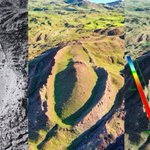
For decades, people have claimed this enormous boat-shaped formation near Mount Ararat could actually be the remains of Noah’s Ark.
Most scientists dismissed it as a natural geological formation.
But recently, researchers scanned beneath it. And they say they detected strange linear and angular features underground.
Now, that does not mean they found a buried ship. Radar can pick up completely natural geological structures.
But this is where it gets interesting.
In 2026, an officially authorised research project involving Turkish academics and with the approval of the Turkish government began investigating the site.
And they've now drilled into it.
Physical samples have been taken from beneath the formation and sent for analysis.
If they find ordinary rock and sediment, this could finally settle the mystery.
But if they find ancient worked timber, artificial material, or evidence that those underground structures really are man-made...
Then we have a much bigger question.
Because even though that wouldn't prove this is Noah's Ark, it would mean something is buried underneath it.
And that could change history
The results should be published later this year - keep an eye out
Michael Button retweeted
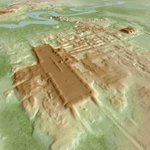
Around 3,000 years ago, in Mexico, people built an artificial plateau almost a mile long.
In places, it rose 15 metres above the surrounding ground. 9 broad causeways led towards it.
But this enormous monument went unrecognised by archaeologists until 2017.
It was so wide and flat that, from the ground, it looked like part of the landscape.
Then aerial laser mapping revealed its shape.
The site is called Aguada Fénix. Its main platform was built between about 1000 and 800 BC, long before the famous royal cities of the Classic Maya.
But the platform was only the beginning.
Researchers uncovered a wider arrangement of causeways, corridors and canals extending kilometres beyond it.
Then, inside a cross-shaped pit, they found coloured mineral pigments arranged according to the cardinal directions.
The researchers think the whole complex represented a model of the universe.
An idea laid out across a landscape.
And despite the scale of the construction, they have found no clear evidence that a powerful king commanded it.
Thousands of years ago, a community reshaped the earth around a shared vision of the cosmos.
And we walked across it without recognising what it was.
Michael Button retweeted
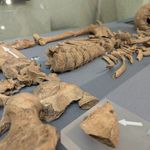
In a Roman cemetery in York, archaeologists uncovered a man’s skeleton with strange holes in his pelvis.
Something had bitten into the bone.
But when researchers compared the marks with damage made by modern animals, they found a disturbing match.
A large cat. Most likely a lion.
Yet this man had been buried in England.
We know the Romans used wild animals in arena spectacles. Fighters faced them. Condemned prisoners were thrown to them.
And a study published in 2025 suggests this skeleton preserves rare physical evidence of that brutality, far from the Colosseum.
But there’s another twist.
The bite marks suggest the animal was feeding on him around the time of his death. They don’t tell us whether it killed him.
And his head had been cut off.
Was he an arena fighter? A condemned prisoner? Why was he decapitated?
We still don’t know.
Somewhere in Roman York, a man’s body ended up between a big cat’s jaws.
And Nearly two thousand years later, its teeth are still telling the story.
